Photo: Wikipedia
Political ClimatePolitical Climate in Columbia County
Showing district-level results — no local-only data available.
Local Political AnalysisPolitical Analysis of Columbia County
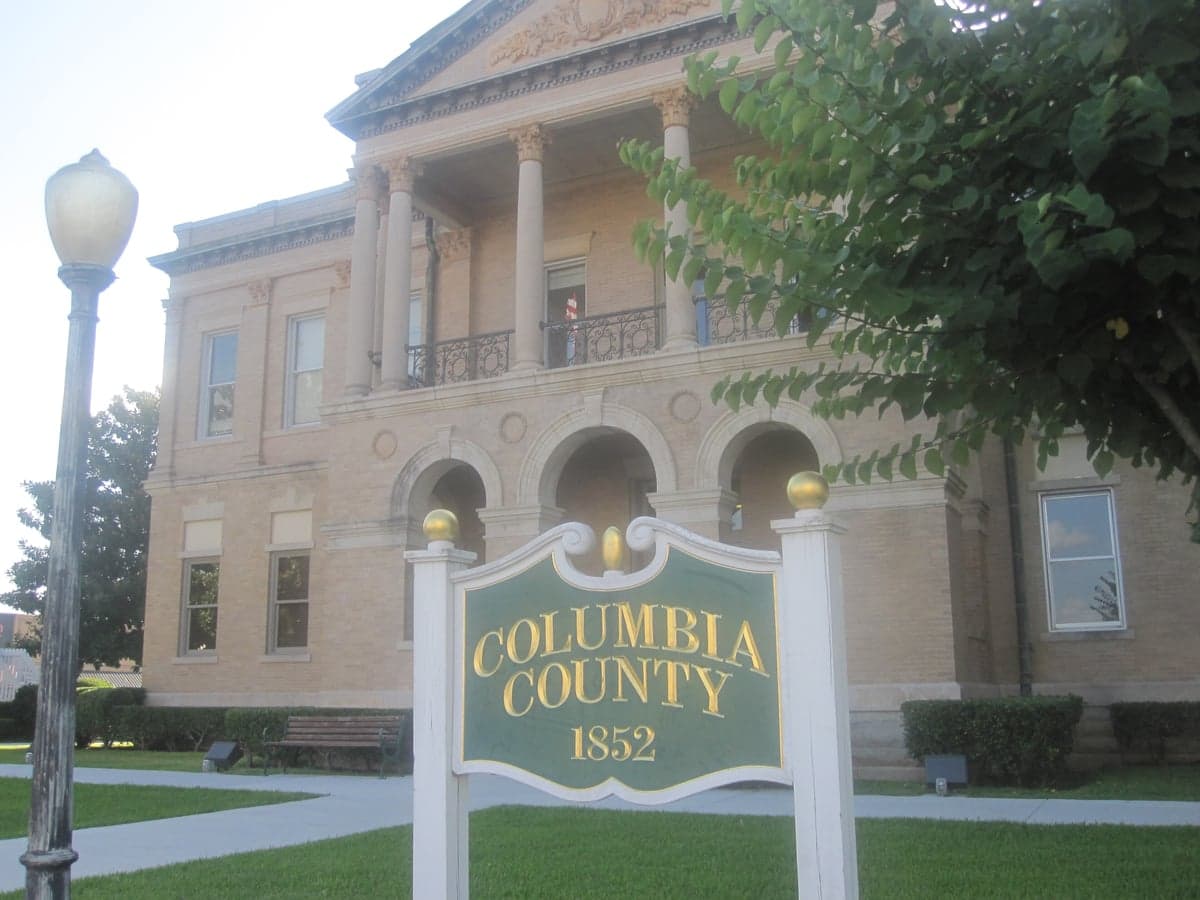
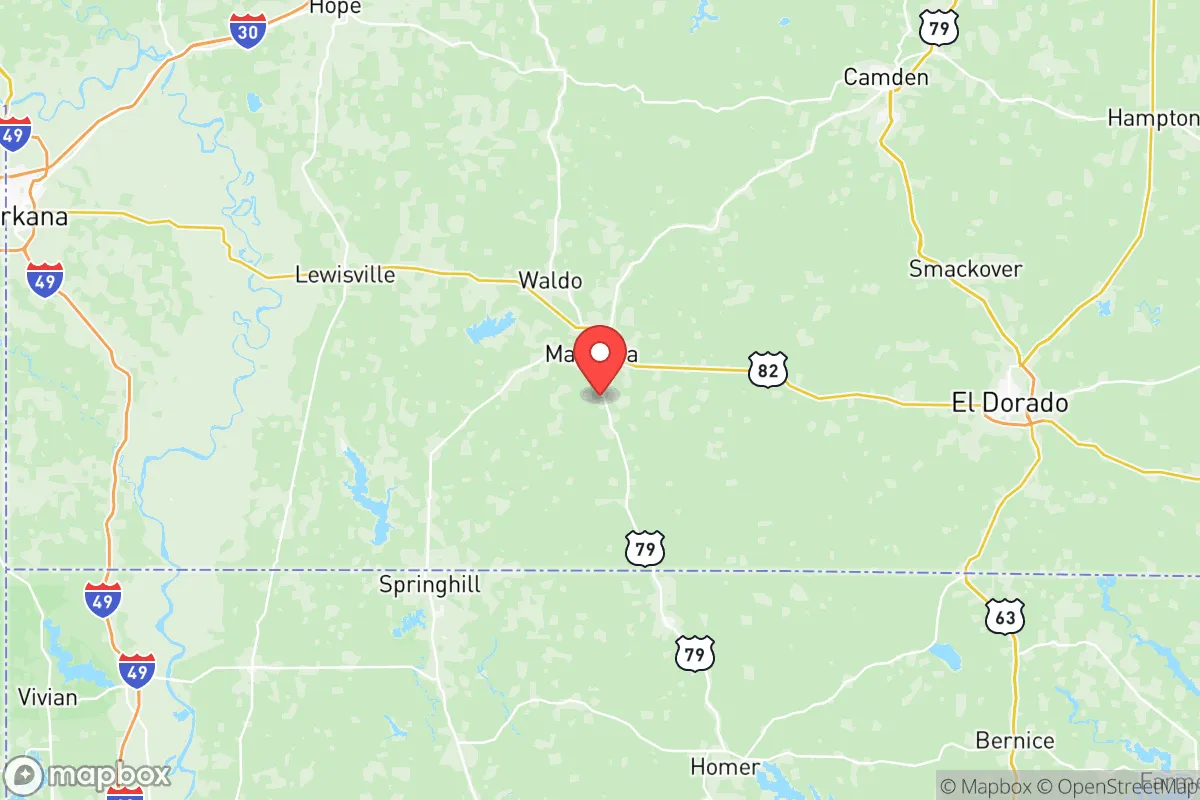
Columbia County, Arkansas, is a reliably Republican stronghold with a Cook PVI of R+20, making it noticeably more conservative than the state of Arkansas as a whole, which sits at R+16. This isn't a new development; the county has been trending red for decades, but the shift has accelerated since the early 2000s, particularly in the rural precincts outside the county seat of Magnolia. While the county as a whole hasn't voted for a Democratic presidential candidate since 1996, the margins have widened considerably—George W. Bush won it by about 12 points in 2004, but Donald Trump carried it by over 30 points in both 2020 and 2024. The real story, though, is the internal variation: the city of Magnolia itself, home to Southern Arkansas University, is a blue dot in a red sea, with several precincts around the campus and downtown core consistently voting Democratic by 5-10 points. Meanwhile, towns like Taylor, Waldo, and Emerson are deeply conservative, often voting Republican by 40 points or more. The swing precincts are in the unincorporated areas along Highway 82 and Highway 79, where independent and moderate voters can tip a local race by a few hundred votes.
How it compares
Compared to the state of Arkansas, Columbia County is about 4 points more Republican on the Cook PVI scale, which is significant but not extreme. For context, neighboring Union County is R+19, while Lafayette County to the west is R+22, so Columbia sits right in the middle of the region's conservative belt. The key difference from the state average is the county's rural character: Arkansas's R+16 rating is pulled slightly left by the Democratic lean of Pulaski County (Little Rock) and the growing suburbs of Northwest Arkansas. Columbia County has no such counterbalance—Magnolia's liberal precincts are too small to move the needle much. In state-level races, this means Columbia County reliably delivers 65-70% of its vote to Republican candidates, while the state as a whole hovers around 60-62%. The county's Republican primary is often more competitive than the general election, with local races for county judge, sheriff, and quorum court seats drawing the most attention and spending.
What this means for residents
For conservative residents, the political climate is comfortable and affirming. Local government, school boards, and law enforcement are overwhelmingly Republican, and policy debates tend to center on tax rates, road funding, and economic development rather than social issues. For liberal residents, the reality is more nuanced. While they are a clear minority, they are not isolated—Magnolia provides a social and political bubble where Democratic voters can find community, particularly through university-affiliated groups and the local Democratic Party chapter, which remains active despite long odds. The practical impact is that liberal residents often focus their energy on local issues like public education funding and downtown revitalization, where bipartisan cooperation is common, rather than national politics. The county's political trajectory is unlikely to change in the near term; demographic trends—aging population, slow growth, and outmigration of younger residents—suggest the Republican lean will persist or even deepen over the next decade.
One cultural distinction worth noting is the county's strong tradition of civic engagement that transcends party lines. The annual Magnolia Blossom Festival and the World Championship Steak Cook-Off draw residents from every political stripe, and local charities like the Columbia County Community Foundation enjoy broad support. The county's political identity is also shaped by its economic base—timber, agriculture, and oil and gas—which tends to reinforce conservative values around property rights and limited regulation. At the same time, the presence of Southern Arkansas University brings a steady stream of younger, more diverse residents who occasionally shift the political conversation, particularly on issues like LGBTQ+ rights and environmental policy. For anyone moving to the area, the advice is simple: politics is a part of life here, but it rarely dominates daily interactions. Most people are more interested in whether you're a good neighbor than who you voted for.

State Political ClimatePolitical Climate in Arkansas
State Political AnalysisPolitical Environment in the State
Arkansas is a deeply red state with a Cook PVI of R+16, meaning it votes about 16 points more Republican than the national average in presidential elections. This wasn't always the case — as recently as the 1990s, Arkansas was a reliably Democratic state in state and local elections, but a realignment over the past two decades has made it one of the most solidly Republican states in the country. The shift accelerated after 2010, when the state legislature flipped and then-Governor Mike Beebe was the last Democrat to hold statewide office; today, every statewide elected official is a Republican, and the party holds supermajorities in both chambers of the General Assembly.
Urban vs. rural divide
The political map breaks down along familiar urban-rural lines, but with a twist. The state's two major metro areas — Little Rock (Pulaski County) and Fayetteville/Springdale (Washington and Benton Counties in Northwest Arkansas) — are the only real blue or purple zones. Pulaski County voted for Joe Biden in 2020 by about 10 points, while Washington and Benton Counties have been trending purple as the region booms with transplants from California and Texas; Benton County actually flipped from red to blue in the 2020 presidential race by a narrow margin, though it swung back toward Trump in 2024. Outside these two corridors, the state is overwhelmingly Republican. Jonesboro in the northeast, Fort Smith in the west, and Texarkana in the southwest are all reliably red. The rural Delta counties along the Mississippi River, which were once Democratic strongholds due to Black voters, have seen their populations decline and their political influence wane; many of these counties now vote Republican at the presidential level, though local offices can still be competitive.
Policy environment
Arkansas has one of the lowest tax burdens in the country. The state income tax was cut from a top rate of 6.9% to 4.9% under Governor Sarah Huckabee Sanders, with a goal of eventually reaching 3.9%. The state sales tax is 6.5%, but local options push it higher in some cities — Little Rock and Fayetteville both have combined rates around 9.5%. Property taxes are low, averaging about 0.6% of assessed value, and there is no state-level property tax. The regulatory posture is business-friendly, with right-to-work laws and a tort reform system that caps noneconomic damages in medical malpractice cases at $500,000. Education policy has been a flashpoint: the LEARNS Act, passed in 2023, created a universal school voucher program, raised teacher salaries to $50,000 minimum, and banned the teaching of critical race theory and "indoctrination" in public schools. On healthcare, Arkansas expanded Medicaid under the private option model, but the state has also imposed work requirements for able-bodied adults. Election laws have tightened: voter ID is required, early voting is available but limited to 15 days, and the state purged over 100,000 inactive voters from the rolls in 2024.
Recent policy direction
The last three years have seen a flurry of legislation that signals where the state is headed. On gun and self-defense law, Arkansas became a permitless carry state in 2021, allowing any adult who can legally possess a firearm to carry it concealed without a license. On parental and education rights, the LEARNS Act is the marquee achievement, but the state also passed a law requiring schools to notify parents if a student requests a name or pronoun change, and another banning transgender girls from female sports. On speech and privacy, the state passed a social media age verification law (Act 689) requiring minors to get parental consent to open accounts, though it's been challenged in court. On medical and bodily autonomy, Arkansas has one of the strictest abortion bans in the country, with no exceptions for rape or incest, only to save the mother's life. On property rights, the state has strong eminent domain protections and no statewide zoning mandates, leaving land use decisions to local governments. On taxation, the trend is clearly downward: the income tax rate is scheduled to drop further, and there's talk of eventually eliminating it entirely. On voting and ballot access, the state has moved to restrict mail-in voting, requiring an excuse, and has shortened the window for absentee ballot requests.
Civil unrest & political movements
Arkansas has not seen the kind of large-scale protests common in coastal states, but there have been notable flashpoints. In 2020, Little Rock saw several nights of protests after George Floyd's murder, with some property damage and a heavy police response, but the movement fizzled quickly compared to larger cities. The state has a small but active progressive activist scene centered in Fayetteville and Little Rock, focused on criminal justice reform and LGBTQ rights. On the right, the Arkansas Republican Party has been pulled further right by groups like the Arkansas Family Council and the state's chapter of Moms for Liberty, which have been influential in pushing the LEARNS Act and anti-trans legislation. Immigration politics are less heated here than in border states, but there was a controversy in 2023 when Governor Sanders sent Arkansas National Guard troops to the Texas border as part of Operation Lone Star. There is no serious secession or nullification movement in Arkansas, though there is a strong strain of localism and distrust of federal authority, particularly around gun laws and environmental regulations. Election integrity has been a recurring theme: the state's Republican secretary of state, John Thurston, has been aggressive in voter roll maintenance, which has drawn lawsuits from voting rights groups.
Projection
Over the next 5-10 years, Arkansas is likely to become even more Republican, but with a twist. The Northwest Arkansas corridor — Fayetteville, Springdale, Rogers, and Bentonville — is growing fast, driven by Walmart's headquarters and the broader supply chain ecosystem. This influx includes many out-of-state transplants who tend to be more moderate or even left-leaning, which could make Benton and Washington Counties competitive at the local level. However, the rest of the state is shrinking or stagnant, and the rural counties that are losing population are also the most conservative. The net effect is that the state's overall partisan lean may hold steady or even deepen, but the internal geography will become more polarized — a few blue islands in a sea of red. The tax-cutting trajectory will likely continue, with the income tax possibly eliminated by 2030. The cultural policy agenda — school vouchers, parental rights, gun rights — will remain a priority for the Republican supermajority. Someone moving to Arkansas now should expect a state that is firmly conservative in its governance, with low taxes and limited regulation, but with growing cultural and political diversity in its two main metro areas.
For a new resident, the bottom line is this: Arkansas offers a low-cost, low-tax environment with a government that is actively pushing conservative cultural and economic policies. If you align with that direction, you'll find the state welcoming and responsive. If you don't, you'll still find a place where the cost of living allows you to carve out your own life, but you'll have limited political influence outside of Little Rock or Fayetteville. The state is not a political battleground — it's a settled red state with a clear trajectory, and the practical effect is that your vote in state and local elections will matter far less than your choice of neighborhood and school district.
* Values derived from national, state, county, city and local statistics and may differ in a specific area. Last updated: 2026-06-23T12:51:58.000Z
Narrative content on this page is AI-generated and may contain mistakes. Verify any details that matter before acting on them.
ReloMaps may earn a commission from affiliate links at no extra cost to you.

