Photo: Wikipedia
Demographics of Columbia County
Affluence Level in Columbia County
A below-average socioeconomic profile. Incomes, home values, and educational attainment trail the U.S., with higher poverty and unemployment.
People of Columbia County
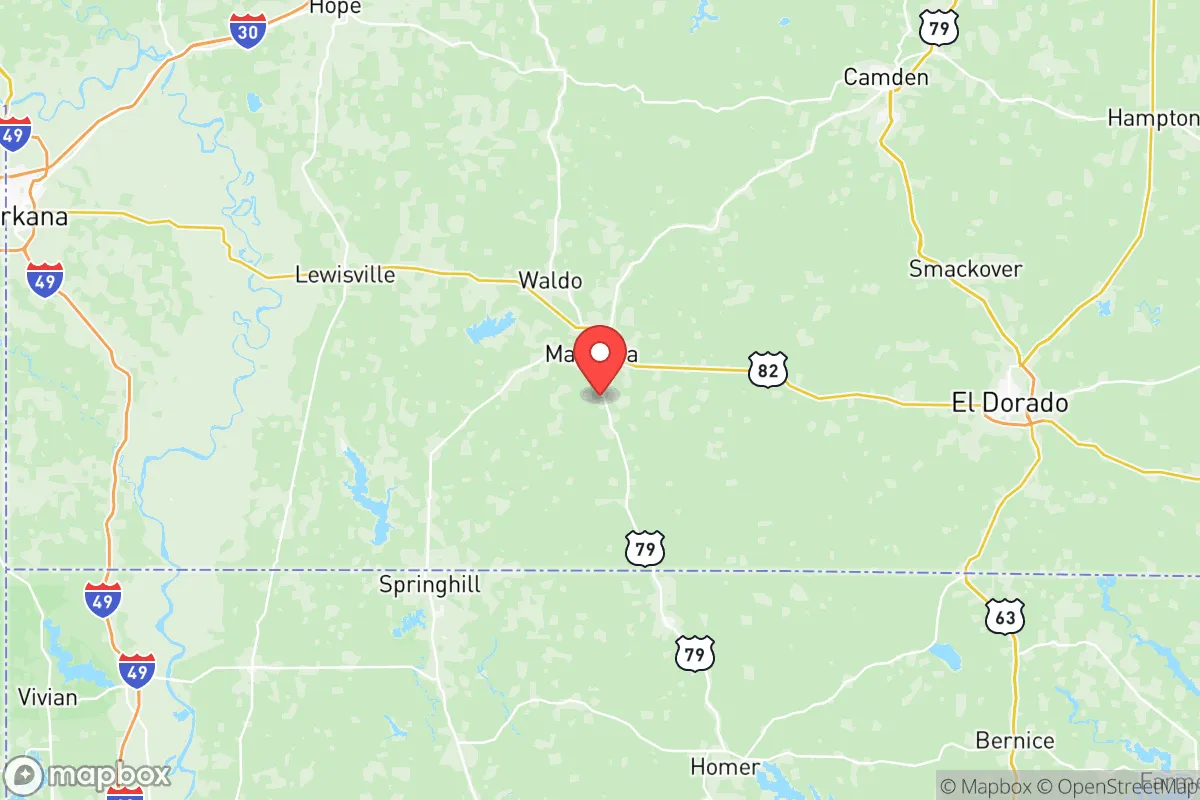
The people of Columbia County, Arkansas today number 22,527, forming a community that is distinctly biracial — 58.5% white and 34.9% Black — with a very small foreign-born population of just 1.6%. The county is notably less diverse than the national average in terms of immigration, with Hispanic residents making up 3.4% and East/Southeast Asian and Indian-subcontinent communities each accounting for less than half a percent. With a college attainment rate of 20.4%, the county's population is rooted in a working-class heritage shaped by timber, agriculture, and manufacturing, and its character remains deeply Southern and rural, centered on the twin hubs of Magnolia and Waldo.
Settlement & growth (pre-1960)
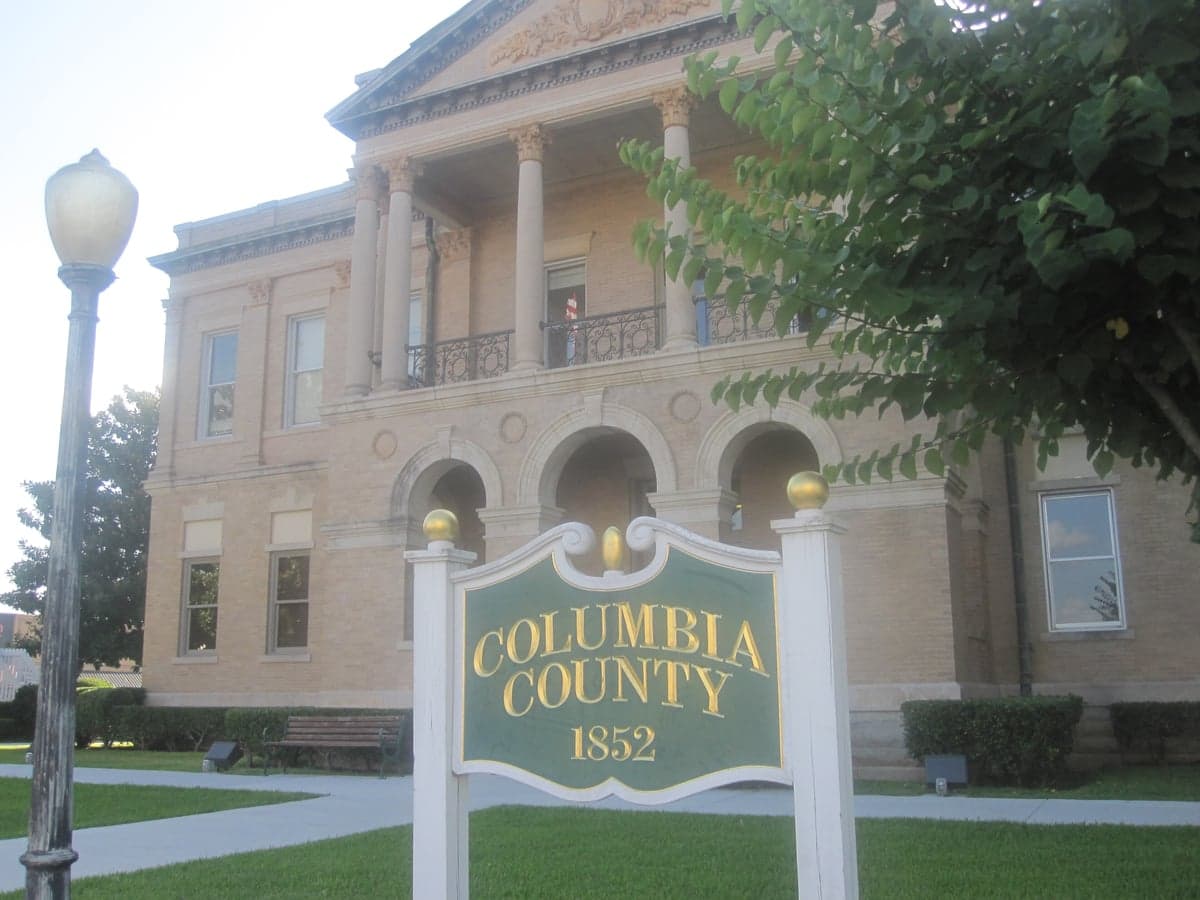
Before American settlement, the area that became Columbia County was part of the ancestral territory of the Caddo Nation, whose villages and trade networks extended across the Red River valley. The Caddo were largely displaced through treaties and removal in the 1830s, opening the land to Anglo-American settlers. Columbia County was formed in 1852 from parts of Hempstead, Lafayette, and Ouachita counties, and the first major wave of settlers were Scotch-Irish and English yeoman farmers moving west from the older Southern states of Tennessee, Kentucky, and the Carolinas. They were drawn by the promise of cheap, fertile land in the piney woods and bottomlands, and they established small farms and timber operations.
The county's seat, Magnolia, was founded in 1853 and quickly became the commercial and political center. A second wave of settlement came after the Civil War during Reconstruction, when freed African Americans established communities throughout the county, often on land they farmed as sharecroppers or small landowners. By the late 19th century, the county's economy was dominated by timber and cotton, and the railroad's arrival in the 1880s spurred growth in towns like Waldo, Taylor, and Emerson. These towns became market centers for the surrounding agricultural and timber economy, and their populations were a mix of white landowners and Black laborers.
The early 20th century brought a third wave: the expansion of the oil and gas industry in southern Arkansas. The discovery of the Smackover oil field in the 1920s, though centered just north of Columbia County, brought a transient population of workers and speculators to the region, with some settling in Magnolia and Village. The Great Depression and the Dust Bowl had a muted effect here compared to the Plains states, but the county's population remained stable as people clung to subsistence farming and timber work. The post-World War II period saw the rise of manufacturing, with companies like Potlatch (now Evergreen Packaging) establishing a major paper mill in Magnolia in the 1950s, drawing workers from across the region and anchoring the county's economy for decades.
Modern era (post-1965)
The 1965 Hart-Cellar Act, which reshaped U.S. immigration, had a minimal direct impact on Columbia County. The foreign-born population remains at just 1.6%, and the county has not seen the emergence of the immigrant enclaves common in larger Southern cities. Instead, the demographic story of the modern era is one of domestic migration and suburbanization. Since the 1970s, Columbia County has experienced a slow but steady population decline from a peak of roughly 26,000 in 1960, as younger residents left for job opportunities in Little Rock, Dallas, and Houston. The county's racial composition has remained relatively stable, with the Black population holding steady at around 35% and the white population declining slightly as a share of the total.
The most significant domestic migration has been the return of some African American families from Northern and Midwestern cities, part of a broader "reverse Great Migration" to the South. These returnees, often retirees or those seeking lower costs of living, have settled primarily in Magnolia and Waldo, reinforcing the county's historic Black communities. Meanwhile, the county has attracted a small number of white retirees and remote workers from higher-cost states, drawn by the low cost of living and the proximity to outdoor recreation at Lake Columbia and Logoly State Park. The Hispanic population, while still small at 3.4%, has grown modestly since 2000, with families working in poultry processing and agriculture settling in Magnolia and the surrounding rural areas.
The future
Columbia County's population is projected to remain stable or decline slightly over the next 10-20 years, as the county's birth rate is low and outmigration of young adults continues. The county is not becoming more diverse in the way that much of the South is; the foreign-born share is likely to remain below 3%, and the Hispanic population may grow to 5-6% but will not transform the county's character. The most significant demographic shift will be aging: the median age is already above the national average, and the county will see a growing share of retirees, particularly in Magnolia and around Lake Columbia. New residents will likely continue to be domestic migrants — retirees, remote workers, and a trickle of families seeking affordable housing — rather than immigrants. The county's cultural identity will remain rooted in its Southern, biracial heritage, with the timber and manufacturing economy providing a stable but slow-growing base.
For someone moving in now, Columbia County offers a quiet, affordable, and deeply traditional Southern lifestyle, but with limited economic dynamism and little demographic change on the horizon. The community is welcoming to those who fit its existing character, but it is not a place of rapid growth or transformation. The county's future is one of stability, not reinvention.

* Values derived from national, state, county, city and local statistics and may differ in a specific area. Last updated: 2026-06-23T12:51:58.000Z
Narrative content on this page is AI-generated and may contain mistakes. Verify any details that matter before acting on them.
ReloMaps may earn a commission from affiliate links at no extra cost to you.

