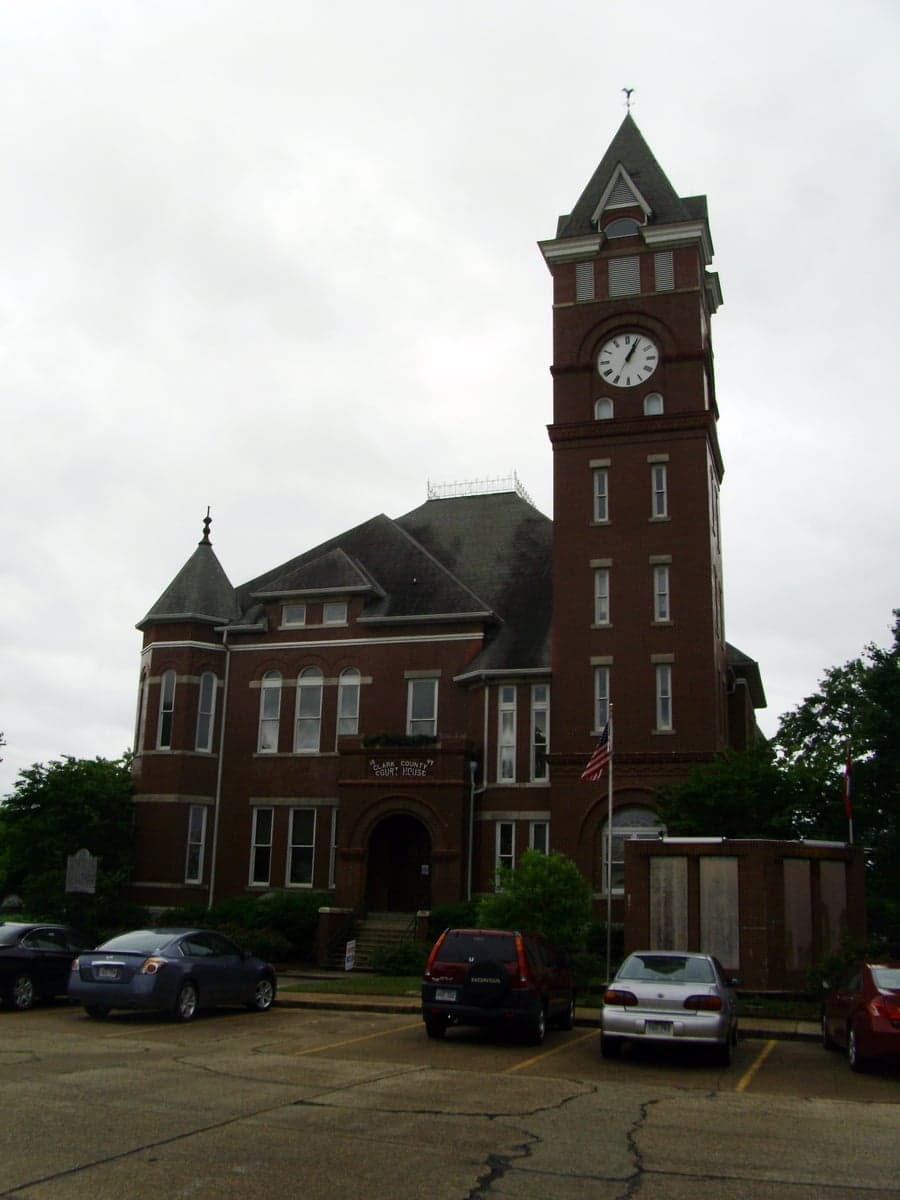
Photo: Wikipedia
Strategic Assessment of Clark County
Strong survivability profile. Good buffer from population centers, with manageable environmental and tactical risks.
What does the Strategic Assessment tell us?
Our Strategic Assessment grades tactical survivability of an area. Major population centers, military targets, fallout zones, natural disasters, and border exposure all drive risk — lower exposure means a more defensible position in a crisis.
This is heavily inspired by Joel Skousen's Strategic Relocation book. Highly recommended you checkout the book ($)What does this tell us?
Our Strategic Assessment grades tactical survivability of an area. Major population centers, military targets, fallout zones, natural disasters, and border exposure all drive risk — lower exposure means a more defensible position in a crisis.
This is heavily inspired by Joel Skousen's Strategic Relocation book. Highly recommended you checkout the book ($)Strategic Pillars

Key Distances
Strategic Assessment Analysis
Clark County, Arkansas, presents a compelling case for the relocation-minded reader prioritizing resilience and self-sufficiency, offering a blend of geographic isolation, resource abundance, and low population density that is increasingly rare in the continental United States. Anchored by the county seat of Arkadelphia, this region of roughly 22,000 residents sits at a strategic crossroads—far enough from major metropolitan centers to avoid their cascading risks, yet close enough to essential infrastructure for practical resupply. For the conservative-leaning individual or family assessing long-term stability, Clark County’s position within the Ouachita Mountains and its access to the Ouachita River provide a natural buffer against both man-made and natural disruptions, making it a quietly resilient pocket in the mid-South.
Geographic position and natural advantages for long-term stability
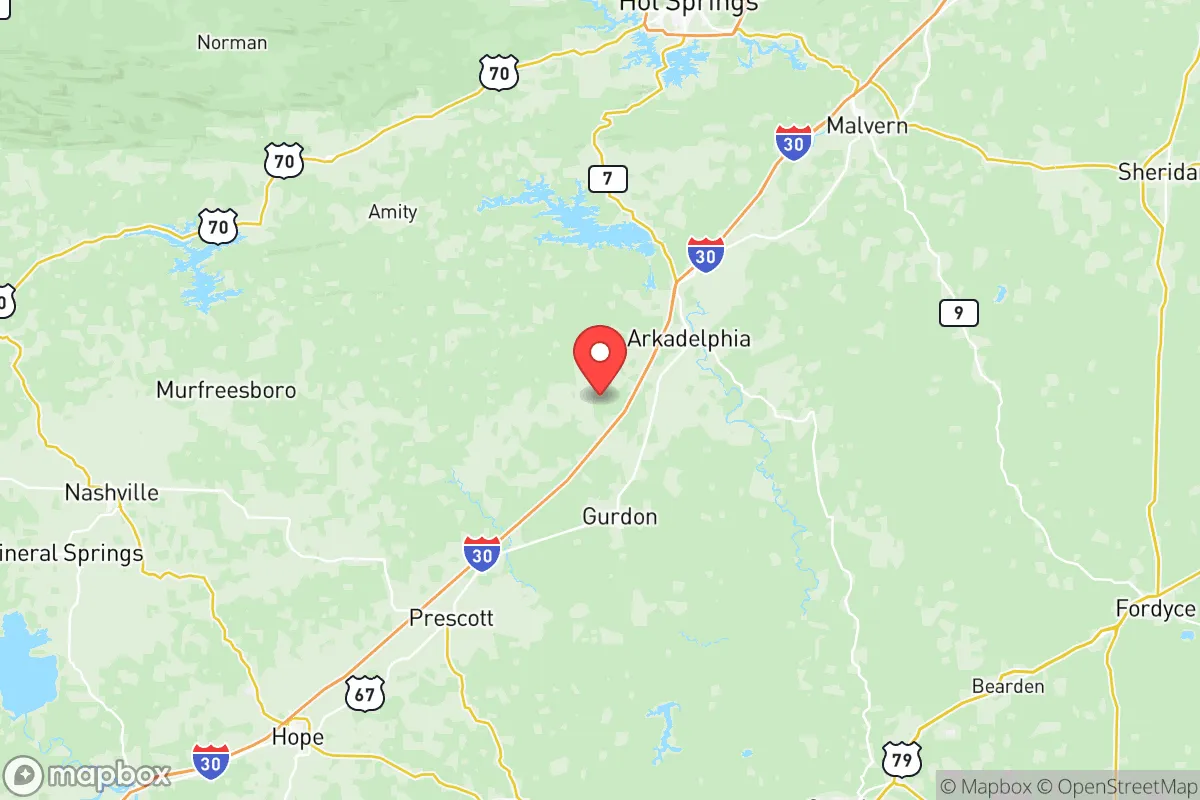
Clark County’s geography is its primary strategic asset. The county lies in the Ouachita Mountain foothills, a region of folded ridges and forested valleys that offer natural defensibility and reduced vulnerability to large-scale weather events. Unlike the flat, flood-prone Delta to the east, Clark County’s terrain provides elevation advantages—most of the population centers, including Arkadelphia, Gurdon, and the smaller community of Okolona, sit above the 200-foot contour line, well clear of the Ouachita River’s floodplain. The county is also situated roughly 70 miles southwest of Little Rock and 90 miles northeast of Texarkana, placing it outside the immediate blast and fallout zones of those cities while still allowing for periodic supply runs. The Ouachita National Forest, which borders the county to the west, offers a vast, sparsely populated buffer zone of over 1.8 million acres, rich in timber, wildlife, and water sources. For a relocator, this means the area is not only physically isolated but also ecologically productive—a key factor for long-term food and fuel security. The region’s moderate climate, with average annual rainfall of 52 inches and a growing season of 220 days, supports year-round gardening and livestock grazing, reducing dependence on external supply chains.
Risks, exposures, and proximity to fallout-relevant landmarks
While Clark County is not a high-risk zone, it is not immune to threats. The most significant man-made risk comes from its proximity to the Arkansas Nuclear One plant, located just 25 miles southeast of Arkadelphia in Russellville, Arkansas. This two-unit pressurized water reactor, operated by Entergy, is the only nuclear facility in the state and sits within the 50-mile emergency planning zone that covers all of Clark County. A major incident at this plant—whether from accident, sabotage, or natural disaster—could produce a radioactive plume that, depending on wind patterns, might affect the county’s air and water. Additionally, the county lies within 100 miles of the Pine Bluff Arsenal, a U.S. Army chemical weapons storage and demilitarization facility, and the Little Rock Air Force Base, a major C-130 transport hub. While these are not direct fallout targets in a conventional conflict, they are potential secondary targets in a broader national emergency. On the natural hazard side, Clark County faces moderate tornado risk—it sits in the southern edge of Tornado Alley—and occasional ice storms that can knock out power for days. The county’s low population density (roughly 28 people per square mile) is a double-edged sword: it reduces the risk of cascading infrastructure failures but also means that emergency services are spread thin, with volunteer fire departments covering most rural areas. For the relocator, the key takeaway is that Clark County is not a zero-risk zone, but its risks are manageable with proper preparation—unlike coastal or urban areas where threats are both more frequent and more severe.
Practical resilience for a relocator: food, water, energy, and defensibility
For the self-reliant individual or family, Clark County offers a strong foundation for practical resilience. Water is abundant: the Ouachita River and its tributaries—including the Caddo River and Terre Noire Creek—provide surface water, while the county’s underlying aquifer, the Sparta Sand, yields high-quality groundwater at depths of 200-400 feet. Many rural properties already have private wells, and the county’s average annual rainfall ensures that rainwater catchment systems are viable. Food production is equally feasible. The county has a strong agricultural tradition, with row crops (soybeans, corn, hay) and livestock (cattle, poultry) dominating the landscape. The Arkadelphia Farmers Market operates seasonally, and local feed stores in Gurdon and Okolona supply seeds, tools, and animal feed. For those looking to hunt or fish, the Ouachita National Forest and the DeGray Lake Recreation Area—a 13,800-acre reservoir just north of Arkadelphia—offer ample opportunities for wild game (deer, turkey, squirrel) and freshwater fish (bass, crappie, catfish). Energy resilience is more mixed. The county is served by Entergy Arkansas and several rural electric cooperatives, but the grid is vulnerable to ice storms and summer thunderstorms. Solar potential is moderate—the area receives about 4.5 peak sun hours per day—but off-grid solar systems are increasingly common among rural landowners. Wood heating is a practical alternative, given the county’s forest cover (over 60% of land area). Defensibility is a standout feature: the county’s terrain of ridges, hollows, and narrow valleys creates natural chokepoints, and the low population density means that a well-chosen property—say, a 20-acre parcel off a county road near the Caddo River—can be effectively isolated and monitored. The local culture, rooted in hunting, fishing, and small-scale farming, aligns well with a preparedness mindset, and the county’s conservative political leanings (Clark County voted +28 R in the 2024 presidential election) mean that local governance is generally supportive of property rights and self-reliance.
The overall strategic picture for Clark County is one of quiet, understated resilience. It is not a flashy or high-profile relocation destination—there are no prepper compounds or survivalist enclaves here—but it offers a solid, low-cost foundation for a self-sufficient lifestyle. The county’s geographic isolation, abundant natural resources, and low exposure to major man-made threats make it a strong candidate for the relocator who values stability over spectacle. The primary trade-offs are the need to manage moderate tornado and ice storm risks, the proximity to the Arkansas Nuclear One plant, and the limited access to specialized medical care (the nearest Level 1 trauma center is in Little Rock, 70 miles away). For the family or individual willing to invest in well water, solar panels, and a wood stove, Clark County provides a defensible, productive, and affordable base of operations in a region that is likely to remain relatively stable even in a broader national disruption. It is a place where the old virtues of self-reliance and neighborly mutual aid are not just remembered but practiced—a quiet anchor in an uncertain world.

* Values derived from national, state, county, city and local statistics and may differ in a specific area. Last updated: 2026-07-13T18:55:42.000Z
Narrative content on this page is AI-generated and may contain mistakes. Verify any details that matter before acting on them.
ReloMaps may earn a commission from affiliate links at no extra cost to you.

