Photo: Wikipedia
Demographics of Clark County
Affluence Level in Clark County
A below-average socioeconomic profile. Incomes, home values, and educational attainment trail the U.S., with higher poverty and unemployment.
People of Clark County
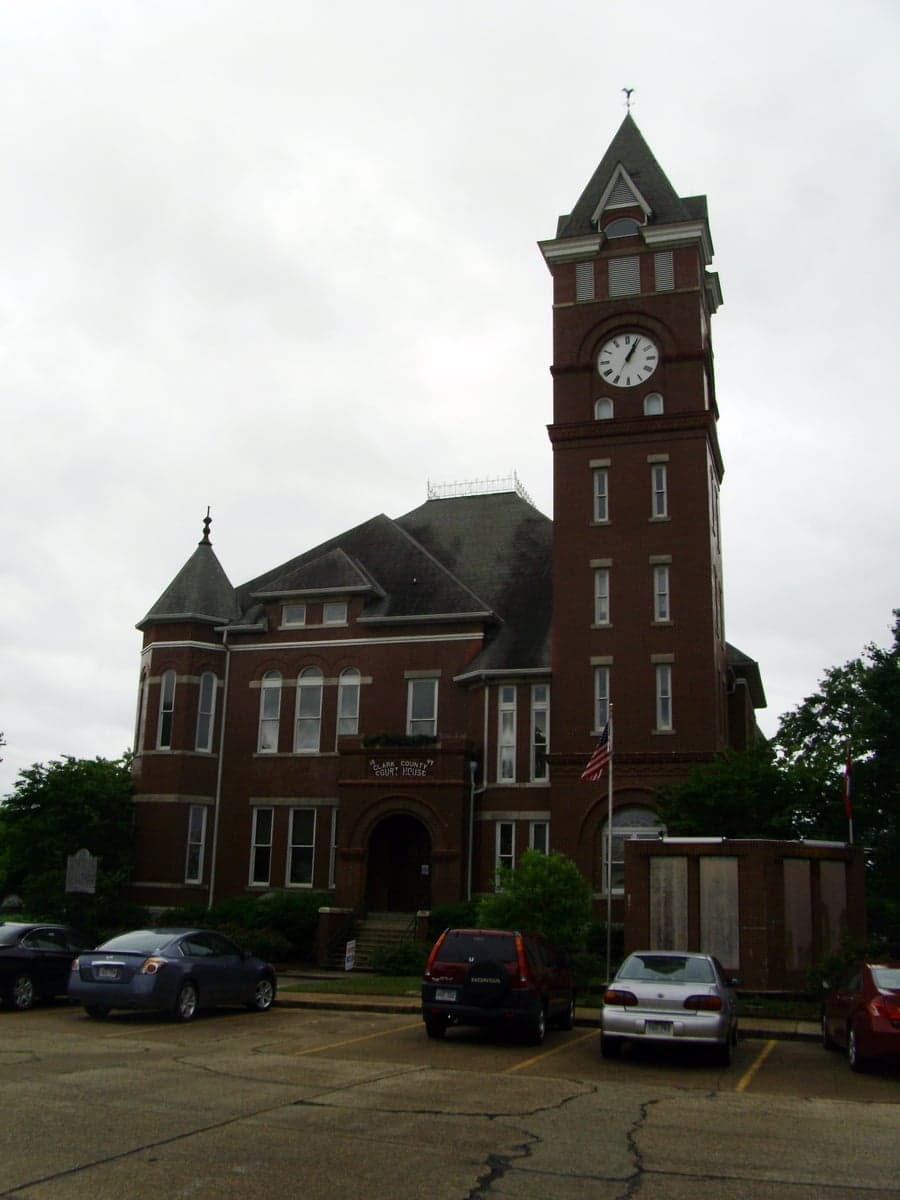
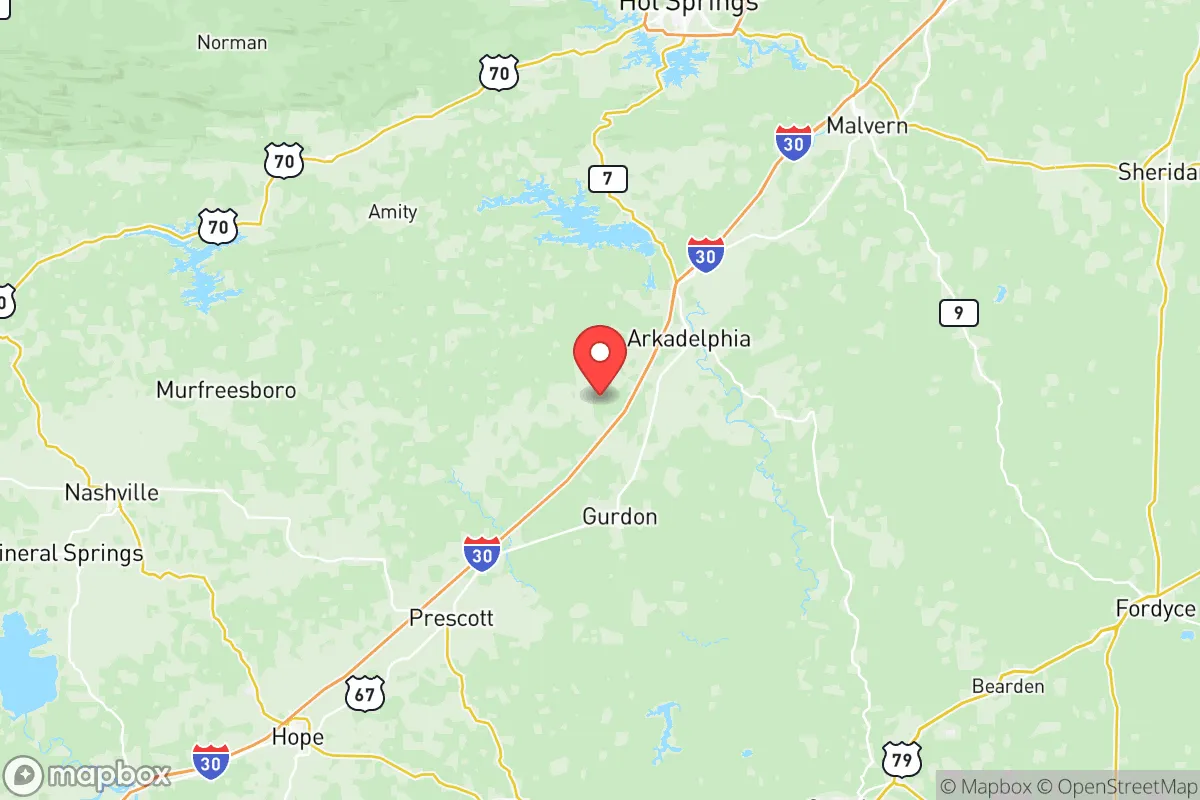
Clark County, Arkansas, is a predominantly rural community of 21,378 residents where the population is notably older and less diverse than the state average, with a strong Black minority presence concentrated in the county seat of Arkadelphia. The county’s character is defined by its twin anchors—Arkadelphia, home to two universities, and the smaller towns of Gurdon and Amity—where a quiet, family-oriented lifestyle prevails. With a foreign-born population of just 1.3% and a college attainment rate of 25.5%, the county reflects a deeply rooted, native-born population whose history is one of gradual, rather than dramatic, change.
Settlement & growth (pre-1960)
Long before European settlement, the land that is now Clark County was part of the hunting and trading territory of the Caddo and Quapaw nations. These groups maintained seasonal villages along the Ouachita River, which runs through the county, but no permanent large settlements existed. The first European presence came with French explorers and trappers in the late 1600s, but significant American settlement did not begin until after the Louisiana Purchase in 1803.
The first major wave of American settlers arrived in the 1810s and 1820s, primarily Scots-Irish and English families moving west from Tennessee, Kentucky, and the Carolinas. They were drawn by the promise of cheap, fertile land along the Ouachita River and its tributaries. These early settlers established the first permanent community, Arkadelphia, in the 1830s, which became the county seat in 1842. The town’s location on the river made it a natural trading post and transportation hub. A second wave of settlers, also largely of Scots-Irish stock, pushed into the county’s interior, founding Gurdon in the 1870s as a railroad town along the Cairo and Fulton Railroad (later the Missouri Pacific). The railroad’s arrival spurred a timber boom, and Gurdon quickly became a center for lumber and railroad workers.
The county’s Black population has deep roots in the post-Civil War era. Following emancipation, many formerly enslaved people remained in the area as sharecroppers and tenant farmers, particularly in the rural areas around Amity and Okolona. By 1900, Black residents made up roughly 40% of the county’s population, a share that has since declined but remains significant. The town of Whelen Springs, a small railroad stop, also saw a concentration of Black families working in the timber industry. The early 20th century brought a small influx of white families from the Ozarks and the Mississippi Delta, but no large-scale immigration from Europe or Asia occurred. The county’s population peaked at around 24,000 in 1940 and then began a slow decline as mechanized agriculture reduced the need for farm labor.
Modern era (post-1965)
The 1965 Hart-Cellar Act, which opened immigration to non-European nations, had almost no direct impact on Clark County. The foreign-born population remains at just 1.3%, one of the lowest rates in Arkansas. The county’s demographic changes since 1965 have been driven almost entirely by domestic migration and natural population trends, not international arrivals.
The most significant shift has been the steady out-migration of young adults, particularly Black residents, to larger cities like Little Rock and Dallas for better economic opportunities. This has caused the county’s Black population share to decline from roughly 30% in 1970 to 23.6% today. Meanwhile, the white population has aged in place, with many younger white families also leaving for urban areas. The Hispanic population, though small at 5.4%, has grown modestly since the 1990s, primarily as a result of families moving from Texas and Mexico to work in the poultry processing plants and timber industry around Arkadelphia and Gurdon. These families are largely dispersed rather than concentrated in a single enclave.
The county’s two universities—Henderson State University (public) and Ouachita Baptist University (private)—have been a stabilizing force, attracting a small number of out-of-state students and faculty. However, most graduates leave the county after finishing their degrees. The East/Southeast Asian population (0.4%) and Indian subcontinent population (0.0%) are negligible, reflecting the county’s lack of the high-skilled job markets that typically attract these groups. Suburbanization has been minimal; the only notable growth area is the southern edge of Arkadelphia near Interstate 30, where a few new subdivisions and retail centers have appeared.
The future
Clark County’s population is projected to remain flat or decline slightly over the next 10-20 years, as the aging white population continues to shrink and out-migration of young adults persists. The county’s median age (roughly 40) is already above the national average, and without significant in-migration, the population will continue to gray. The Hispanic share is likely to grow slowly, perhaps reaching 8-10% by 2040, as families are drawn to the same industries that brought the first wave. However, the county is unlikely to see the kind of rapid diversification seen in larger Arkansas cities like Springdale or Rogers.
The Black population share is expected to stabilize or decline slightly, as younger Black residents continue to leave for urban centers. The county’s cultural identity will remain rooted in its rural, Southern, and religious character, with the two universities providing a modest counterbalance of academic and cultural activity. New residential development will likely concentrate in the Arkadelphia area, particularly near the I-30 corridor, while the smaller towns of Gurdon, Amity, and Okolona will continue to lose population.
For someone moving in now, Clark County offers a low-cost, slow-paced lifestyle with strong community ties and a deeply traditional culture. The population is overwhelmingly native-born, English-speaking, and Christian, with little of the ethnic or religious diversity found in larger metropolitan areas. The county’s future is one of stability, not transformation—a place where the past remains a strong presence in the present.

* Values derived from national, state, county, city and local statistics and may differ in a specific area. Last updated: 2026-07-13T18:55:42.000Z
Narrative content on this page is AI-generated and may contain mistakes. Verify any details that matter before acting on them.
ReloMaps may earn a commission from affiliate links at no extra cost to you.

