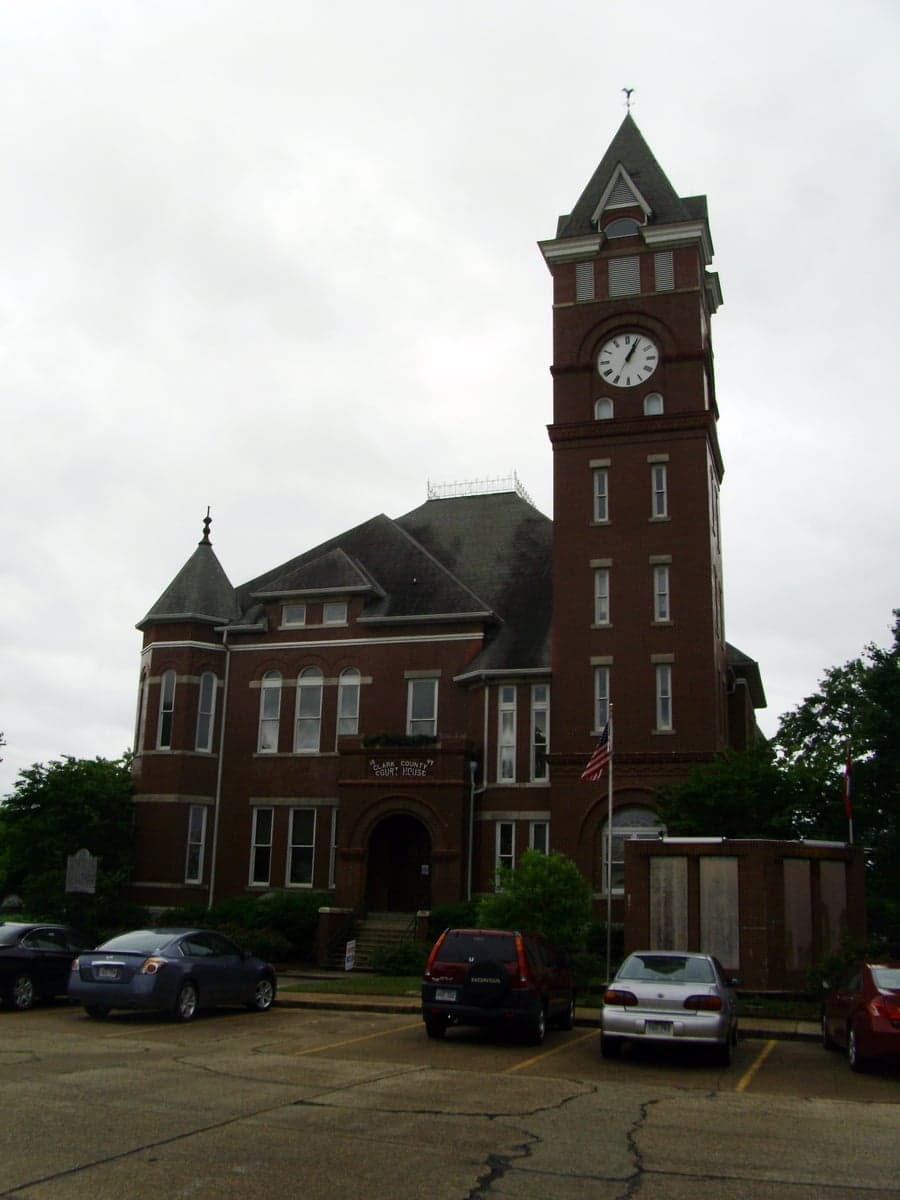
Photo: Wikipedia
Quality of Life in Clark County
A livable area that tracks near national norms for affordability, walkability, and neighborhood health.
What does Quality of Life tell us?
Quality of Life measures an area by evaluating factors like cost of living, nearby amenities, country club access, airport proximity, socioeconomic signals and neighborhood character. For large states, this is a general average — quality of life can vary dramatically between metro areas, suburbs, and rural communities within the same state.
What does this tell us?
Quality of Life measures an area by evaluating factors like cost of living, nearby amenities, country club access, airport proximity, socioeconomic signals and neighborhood character. For large states, this is a general average — quality of life can vary dramatically between metro areas, suburbs, and rural communities within the same state.
Cost of Living
41% below national average
121%
The Real Cost of Living in Clark County for 2026
| Tier | Individual | Family (4) |
|---|---|---|
| Survival | $12k | $22k |
| Comfortable | $29k | $42k |
| Luxury | $89k+ | $138k+ |
| Elite (Top 5%) | $105k+ | $162k+ |
Quality-of-Life Analysis
Clark County, Arkansas offers a spectrum of living environments that range from the historic river town of Arkadelphia to sparsely populated rural crossroads, attracting everyone from university faculty and healthcare workers to retirees seeking low taxes and remote workers looking for a low cost of living. The county’s character is defined by its position along the Ouachita River and Interstate 30, with the largest concentration of jobs and services in Arkadelphia, while smaller communities like Gurdon and Okolona provide a quieter, more agrarian pace of life. With a cost of living index of 59 (well below the US average of 100), the county draws people who prioritize affordability and space over urban amenities.
Largest town(s) & population centers
Arkadelphia, the county seat and home to roughly 10,000 residents, is the undisputed hub of Clark County. Daily life here revolves around two major institutions: Henderson State University and Ouachita Baptist University, which together shape the town’s cultural calendar and provide a steady stream of events, from college sports to concerts. The downtown area along Main Street features a mix of local restaurants, antique shops, and the historic Arkadelphia Aquatic Park. Employment is concentrated in education, healthcare (Baptist Health Medical Center-Arkadelphia is a major employer), and manufacturing. The average commute in the county is a swift 20.3 minutes, meaning most residents can reach work, grocery stores, and schools within a short drive. Arkadelphia offers the most diverse housing stock, from historic homes near the universities to newer subdivisions on the outskirts, with a median home value of $147,100 and median rent of $734.
Smaller towns & rural pockets
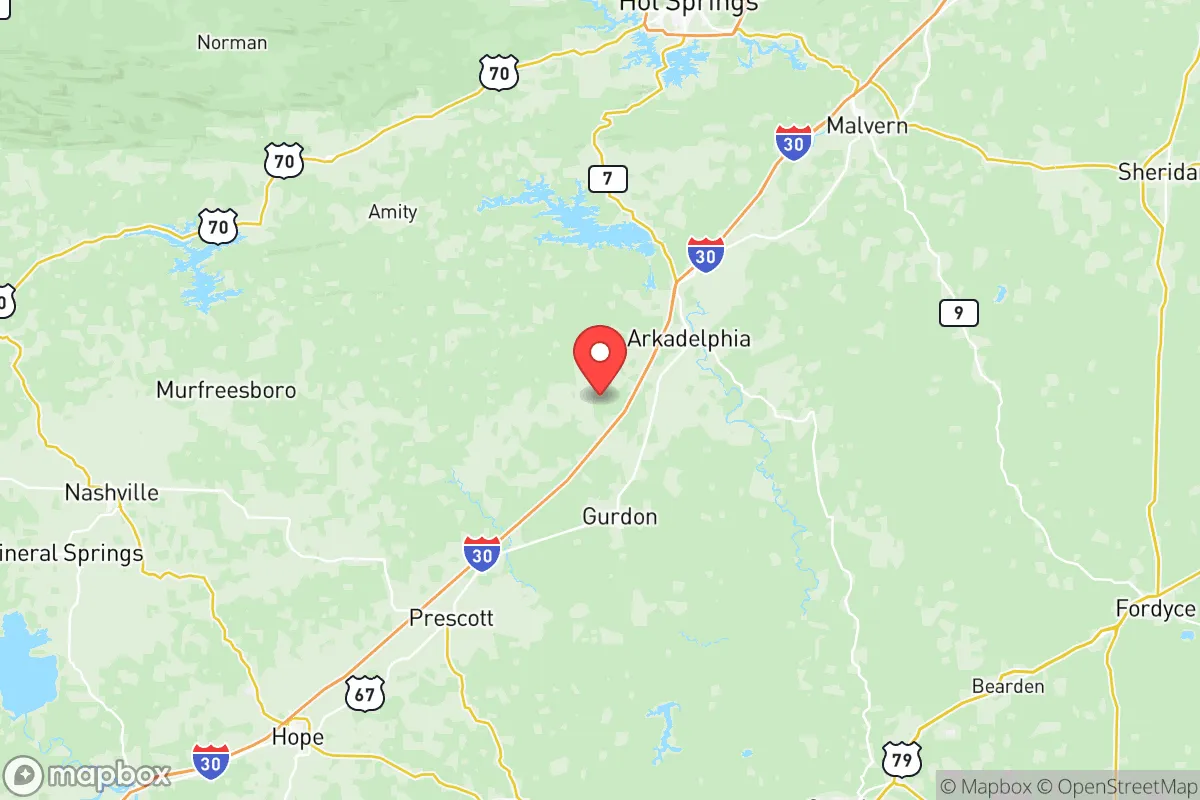
South of Arkadelphia, Gurdon (population ~2,000) is a classic railroad town with a quiet downtown and a strong sense of community, anchored by the annual Gurdon Watermelon Festival. It offers a slower pace and lower home prices than Arkadelphia, often under $100,000 for a fixer-upper. Further east, Okolona (population ~150) is a tiny unincorporated community where life is defined by agriculture and proximity to the Little Missouri River. The unincorporated area of Whelen Springs and the rural stretches along Highway 67 offer true seclusion, with large tracts of timberland and few neighbors. These areas lack major retail or healthcare facilities, requiring a 20-30 minute drive to Arkadelphia for most errands. For those seeking a rural lifestyle with access to outdoor recreation, the DeGray Lake area (partly in Clark County) provides lakefront cabins and campgrounds, though property values there can be higher than the county average due to water access.
Cost & lifestyle range
The cost of living in Clark County is remarkably consistent in its affordability, but the lifestyle trade-offs are real. At the low end, rural properties near Okolona or Whelen Springs can be found for under $80,000, with rents as low as $500 for a small house or mobile home. These areas offer maximum privacy and minimal property taxes but require self-reliance for services like trash pickup and internet access (satellite or fixed wireless is common). At the higher end, Arkadelphia’s newer subdivisions (e.g., the DeGray Lake Estates area) feature homes in the $200,000–$300,000 range, with larger lots and access to the lake. Renters in Arkadelphia pay a median of $734, which is about half the national average, but options are limited to older duplexes and apartment complexes near the universities. The county’s overall cost of living index of 59 means groceries, utilities, and transportation are all significantly cheaper than the US norm, but the trade-off is a narrower range of dining, entertainment, and shopping options—most residents drive to Hot Springs (30 minutes north) or Little Rock (1 hour north) for major retail or specialized healthcare.
Clark County is best suited for people who value low expenses, short commutes, and a tight-knit community over urban convenience. Retirees on fixed incomes, university faculty and staff, and remote workers who can tolerate limited broadband in rural areas will find the most value here. Families with young children may prefer Arkadelphia for its schools and activities, while hunters, anglers, and homesteaders will appreciate the affordability and space of the county’s rural pockets. The county’s mix of college-town energy and deep-country quiet means there is a niche for nearly anyone willing to adapt to a slower, more self-sufficient rhythm of life.

Crime in Clark County
Crime rates similar to the national median for U.S. locations.
Violent CrimeViolent Crime Analysis
Property CrimeProperty Crime Analysis
Crime Analysis
Clark County, Arkansas, reports a violent crime rate of 523.1 per 100,000 residents and a property crime rate of 1,552.8 per 100,000, placing it above both state and national averages for serious offenses. These figures, drawn from the most recent FBI Uniform Crime Reporting data, indicate that the county faces significant public safety challenges, particularly in its largest population center, Arkadelphia. While the county is not uniformly dangerous, the overall risk profile is elevated compared to safer rural counties in the state, such as nearby Montgomery or Pike counties.
Crime in context
Clark County’s violent crime rate of 523.1 per 100,000 is roughly 50% higher than the national average of approximately 380 per 100,000 and significantly exceeds the Arkansas state average of around 540 per 100,000. Property crime in the county, at 1,552.8 per 100,000, is also elevated, running about 20% above the national rate. The city of Arkadelphia, home to Henderson State University and Ouachita Baptist University, drives the bulk of these figures. By contrast, smaller communities like Gurdon and Caddo Valley report lower incident densities, though their smaller populations can produce volatile year-to-year rates. The Arkadelphia Police Department and the Clark County Sheriff’s Office share jurisdiction, with the sheriff’s office covering the unincorporated areas and smaller towns.
What residents experience
Residents in Arkadelphia frequently cite property crime—particularly theft from vehicles and burglary—as the most common public safety concern. The presence of two universities contributes to a transient population, which can correlate with higher rates of larceny and vehicle break-ins near campus areas. Violent crime, while less frequent, is concentrated in specific neighborhoods and often involves domestic disputes or drug-related altercations. The Eighth Judicial District, which covers Clark and several surrounding counties, has seen a mixed record on prosecution. Critics note that progressive-leaning judicial philosophies in some Arkansas districts have led to more diversion programs and reduced sentences for nonviolent offenders, which can result in repeat property crimes. In Clark County, the district attorney’s office has maintained a moderately tough stance on violent felonies, but property crime offenders often receive probation or short jail terms, contributing to a perception among residents that the justice system is not fully deterring theft.
Neighborhood-level variation
Safety varies considerably within Clark County. Arkadelphia’s downtown and areas near Interstate 30 see higher foot traffic and more police patrols, but also report more theft and occasional assaults. The south side of Arkadelphia, near the industrial corridor, has a higher concentration of reported violent incidents. In contrast, the rural communities of Okolona and Whelen Springs experience very low crime rates, with residents often leaving doors unlocked—a stark difference from the city. The Lake DeGray area, a popular recreation spot, sees seasonal spikes in property crime, particularly vehicle break-ins at trailheads. For those considering relocation, neighborhoods in the northern part of Arkadelphia near the Ouachita River and the newer subdivisions off Highway 7 tend to have fewer reported incidents. Overall, while Clark County is not a high-crime area by national urban standards, its rates are elevated for a rural county, and the effectiveness of the local justice system in deterring repeat offenses remains a point of concern for long-term residents.
* Values derived from national, state, county, city and local statistics and may differ in a specific area. Last updated: 2026-07-13T18:55:42.000Z
Narrative content on this page is AI-generated and may contain mistakes. Verify any details that matter before acting on them.
ReloMaps may earn a commission from affiliate links at no extra cost to you.

