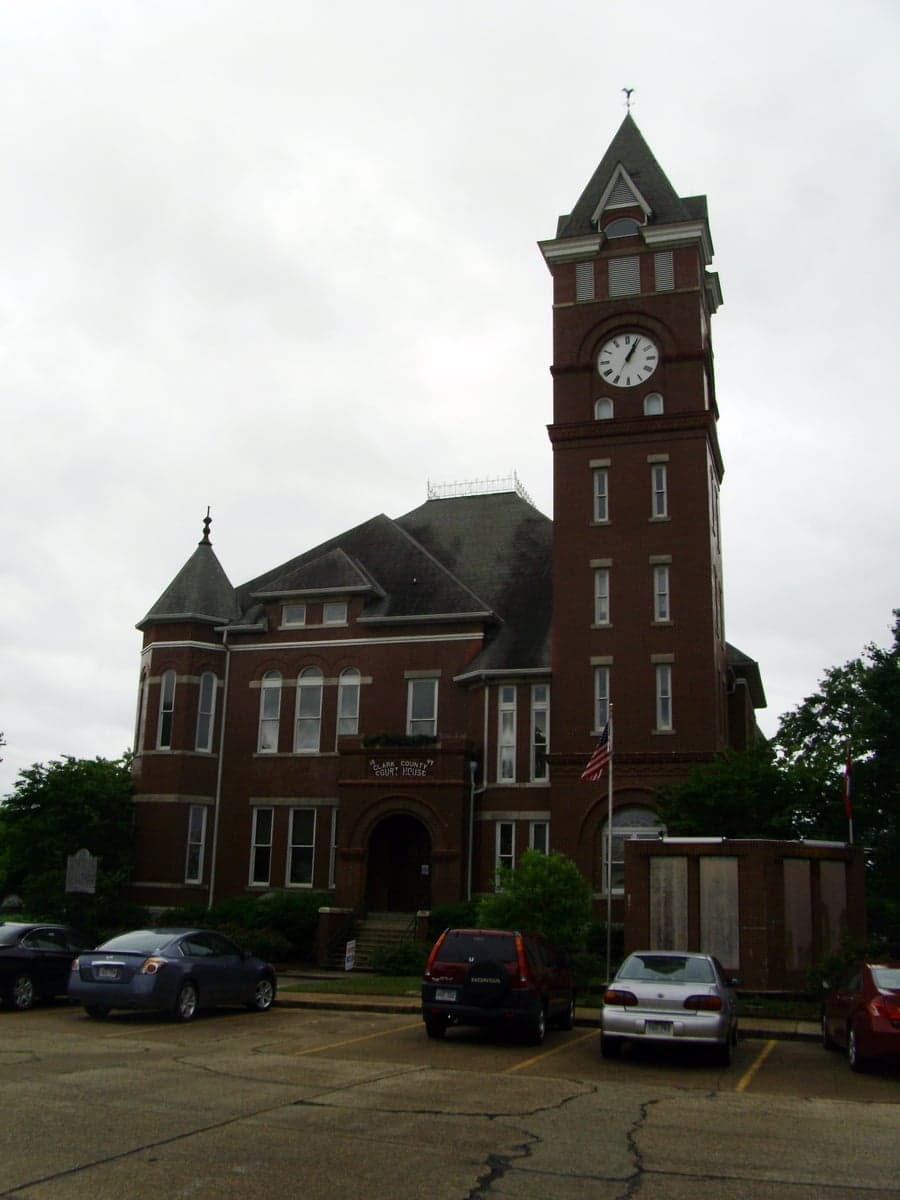
Photo: Wikipedia
Personal Sovereignty in Clark County
Viable for self-reliance. Generally workable, though some barriers may limit total independence.
What does Personal Sovereignty tell us?
Personal Sovereignty measures your capacity for self-reliance and independence with minimal government friction. Higher scores mean fewer barriers between you and the way you want to live... but it assumes you have the space you need and good neighbors.
What does this tell us?
Personal Sovereignty measures your capacity for self-reliance and independence with minimal government friction. Higher scores mean fewer barriers between you and the way you want to live... but it assumes you have the space you need and good neighbors.
State Policy
Energy independence: Importer (35% of energy produced in-state)
Personal Liberty
Homesteading

Personal Liberty Analysis
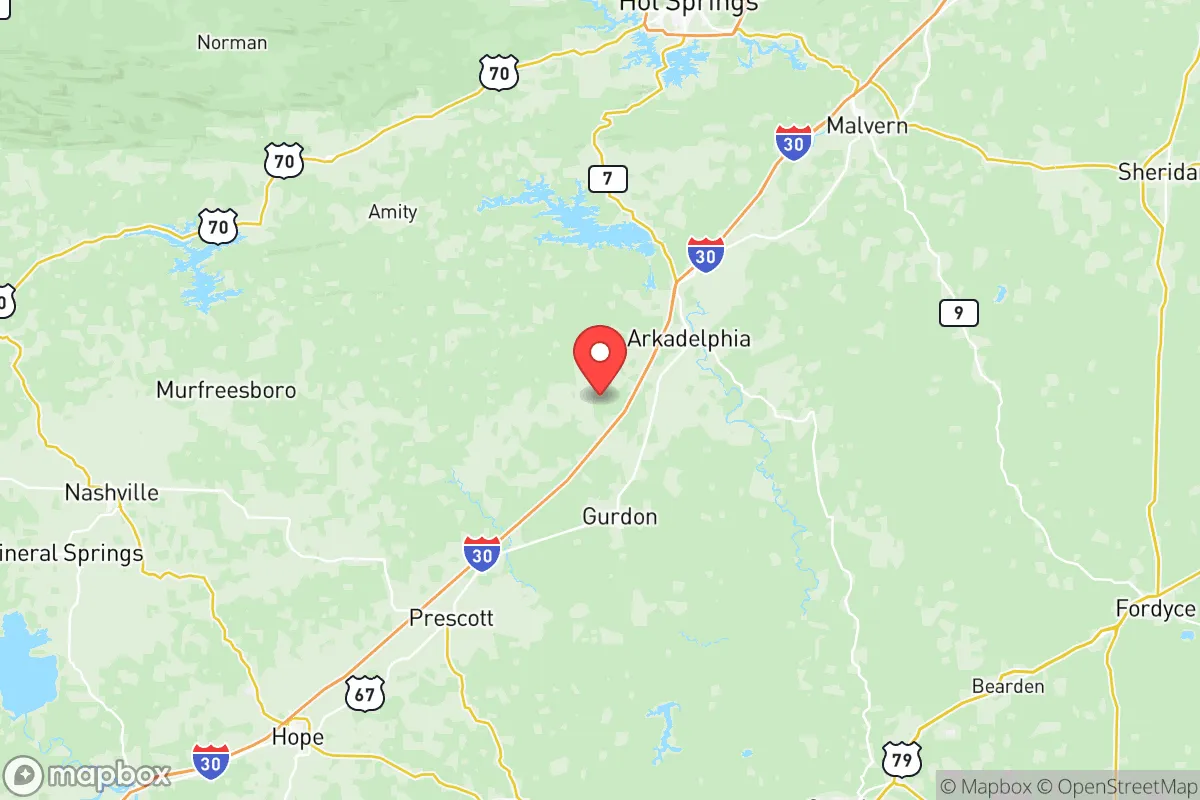
Clark County, Arkansas offers a notably high degree of personal sovereignty compared to much of the rest of the state and the nation, driven by a light regulatory touch, low taxes, and a deeply ingrained culture of self-reliance. The county seat, Arkadelphia, anchors the region with a mix of small-town governance and rural independence, while outlying communities like Gurdon, Caddo Valley, and Amity present even fewer constraints on individual autonomy. For a conservative-leaning individual or family seeking to maximize personal freedom, Clark County provides a legal and cultural environment where government intervention in daily life is minimal, though the specific flavor of that freedom varies across the county’s 883 square miles.
Tax burden and regulatory posture in Clark County
Arkansas is a low-tax state overall, and Clark County aligns with that posture. The state’s income tax is a flat 4.4% as of 2026, with no local income tax, and the county’s property tax rate is among the lowest in the state—roughly 0.5% of assessed value, or about $500 annually on a $100,000 home. Sales tax in Arkadelphia is 9.5% (state plus local), but in unincorporated areas like Amity and Okolona, the rate drops to 8.5% because no city tax applies. This differential is meaningful for a family buying vehicles, building materials, or large appliances. The regulatory environment is equally light: Clark County has no county-wide zoning ordinance outside of Arkadelphia’s city limits. In rural areas such as Gurdon and Caddo Valley, you can build a home, erect a workshop, or start a small business without navigating a permitting maze. The Arkansas Department of Environmental Quality has a presence, but enforcement is complaint-driven and sparse in a county with only 22,000 residents. For a reader prioritizing low overhead and minimal bureaucracy, Clark County’s tax and regulatory posture is a clear advantage over neighboring states like Texas (which has no income tax but higher property taxes) or Louisiana (which has higher combined sales taxes).
Self-defense and gun law specifics in Clark County
Arkansas is a constitutional carry state, meaning no permit is required to carry a concealed handgun for anyone 18 or older who can legally possess a firearm. Clark County’s sheriff’s office, led by Sheriff Jason Watson, is known for a pro-Second Amendment stance, and the county has no local ordinances restricting firearms beyond state law. In Arkadelphia, you can carry openly or concealed in most public spaces, including parks and restaurants that serve alcohol (provided you are not consuming). The only exceptions are federal buildings, schools (with a separate enhanced carry permit), and private property with posted signage. For a family, this means self-defense is a personal responsibility with minimal government interference. Gun ranges are available at the Arkadelphia Shooting Range (a public facility operated by the Arkansas Game and Fish Commission) and private clubs near Gurdon and Amity. The county’s rural character also means that discharging a firearm on your own property is generally legal, provided you are not within city limits or violating a 100-foot setback from a dwelling. This contrasts sharply with more restrictive states like California or New York, where magazine capacity limits and waiting periods are the norm. For a reader who views self-defense as a fundamental right, Clark County’s legal framework is among the most permissive in the South.
Self-reliance and homesteading viability in Clark County
Homesteading and off-grid living are not just possible in Clark County—they are a way of life for many residents. Outside of Arkadelphia’s city limits, zoning is virtually nonexistent, and building codes are only enforced if you seek a conventional mortgage or insurance. In communities like Amity and Okolona, you can purchase undeveloped land for $1,500 to $3,000 per acre, often with no HOA or restrictive covenants. Lot sizes in rural areas start at 1 acre and go up to 40 acres or more, giving ample room for gardens, livestock, and alternative energy systems. Off-grid feasibility is high: Arkansas law does not require grid connection for a primary residence, and solar panels, rainwater collection, and composting toilets are all legal. The county’s water table is accessible via well drilling (typically $3,000–$5,000 for a 200-foot well), and septic systems are permitted through the county health department with a simple application. In Caddo Valley, near the Caddo River, properties often have both well and river access, making self-sufficient water supply straightforward. The only potential friction point is in Arkadelphia itself, where city ordinances require connection to municipal water and sewer if available, and building permits are required for new construction. But even there, the city’s code is lenient compared to urban centers like Little Rock or Fayetteville. For a family aiming to reduce reliance on external systems, Clark County’s rural areas offer a blank slate.
Personal liberties in Clark County: parental rights, medical autonomy, speech, and property
Arkansas has enacted several laws in recent years that bolster personal liberties, and Clark County reflects that state-level trend. Parental rights are strong: the state’s 2023 LEARNS Act expanded school choice, allowing families in Arkadelphia, Gurdon, and Amity to use public funds for private or homeschool expenses. Homeschooling is straightforward—file a notice with the local school district, and no curriculum approval or testing is required. Medical autonomy is similarly broad: Arkansas has no vaccine mandate for adults, and the state’s 2021 law prohibits employers from requiring COVID-19 vaccination as a condition of employment. In Clark County, this means a family can choose their healthcare path without government or corporate pressure. Free speech is protected under the Arkansas Constitution, which explicitly guarantees the right to peacefully assemble and petition the government—a provision that has been tested in Arkadelphia during local zoning disputes but has held firm. Property rights are perhaps the strongest liberty: Arkansas is a “right to farm” state, meaning agricultural operations (including backyard livestock) are protected from nuisance lawsuits if they predate a nearby residence. In practice, this means a family in Amity can raise chickens, goats, or even a few cattle without fear of a neighbor’s complaint shutting them down. The only notable limitation is that Clark County does not have a county-wide planning board, so disputes over property use are handled at the circuit court level, which can be slow but generally favors the landowner. For a reader who values the ability to live, speak, and raise a family without government overreach, Clark County’s legal environment is a strong match.
Overall, Clark County ranks among the top 20% of U.S. counties for personal sovereignty, according to a 2025 analysis by the Mercatus Center’s Freedom in the 50 States project. The combination of low taxes, permissive gun laws, off-grid viability, and strong personal liberties creates an environment where a self-reliant individual or family can operate with minimal friction. The trade-off is that this freedom comes with limited services—rural roads are maintained by the county, emergency response times can exceed 20 minutes in areas like Okolona, and the nearest major airport is 70 miles away in Little Rock. But for a reader who prioritizes autonomy over convenience, Clark County offers a rare balance of legal permissiveness and practical affordability that is increasingly hard to find in the United States.

* Values derived from national, state, county, city and local statistics and may differ in a specific area. Last updated: 2026-07-13T18:55:42.000Z
Narrative content on this page is AI-generated and may contain mistakes. Verify any details that matter before acting on them.
ReloMaps may earn a commission from affiliate links at no extra cost to you.

