
Photo: Wikipedia
Quality of Life in Yuma County
A livable area that tracks near national norms for affordability, walkability, and neighborhood health.
What does Quality of Life tell us?
Quality of Life measures an area by evaluating factors like cost of living, nearby amenities, country club access, airport proximity, socioeconomic signals and neighborhood character. For large states, this is a general average — quality of life can vary dramatically between metro areas, suburbs, and rural communities within the same state.
What does this tell us?
Quality of Life measures an area by evaluating factors like cost of living, nearby amenities, country club access, airport proximity, socioeconomic signals and neighborhood character. For large states, this is a general average — quality of life can vary dramatically between metro areas, suburbs, and rural communities within the same state.
Cost of Living
22% below national average
108%
The Real Cost of Living in Yuma County for 2026
| Tier | Individual | Family (4) |
|---|---|---|
| Survival | $16k | $29k |
| Comfortable | $38k | $56k |
| Luxury | $102k+ | $159k+ |
| Elite (Top 5%) | $120k+ | $187k+ |
Quality-of-Life Analysis
Yuma County, Arizona, spans a spectrum from the urban hub of Yuma city to remote desert communities and agricultural pockets along the Colorado River, offering distinctly different lifestyles within a single county. The county's overall cost of living index of 78 (well below the US average of 100) and median home value of $195,700 attract a mix of military families, agricultural workers, winter visitors (snowbirds), and retirees seeking affordable warmth, while its more isolated areas appeal to those wanting off-grid living or small-town quiet. The character of daily life shifts dramatically depending on whether one lives in the county's largest population center, a smaller river town, or a rural agricultural settlement.
Largest town(s) & population centers
Yuma city is the county's dominant population center, home to roughly 100,000 residents and serving as the commercial, medical, and employment hub for the entire region. Daily life in Yuma revolves around its strong military presence (Marine Corps Air Station Yuma), a thriving winter vegetable agriculture industry, and a large seasonal snowbird population that swells the city from November through March. The city offers the widest range of amenities in the county, including the Yuma Palms Regional Center shopping mall, Yuma Regional Medical Center (the county's only major hospital), Arizona Western College, and multiple grocery and retail chains. Median rent in the county sits at $983, and within Yuma city, rents and home prices cluster near that county average, with newer subdivisions in the Foothills area (south of I-8) commanding higher prices. The average commute across the county is just under 21 minutes, and within Yuma city, most residents can reach work, school, or shopping in 15-20 minutes, a notably short drive compared to Phoenix or Tucson.
Smaller towns & rural pockets
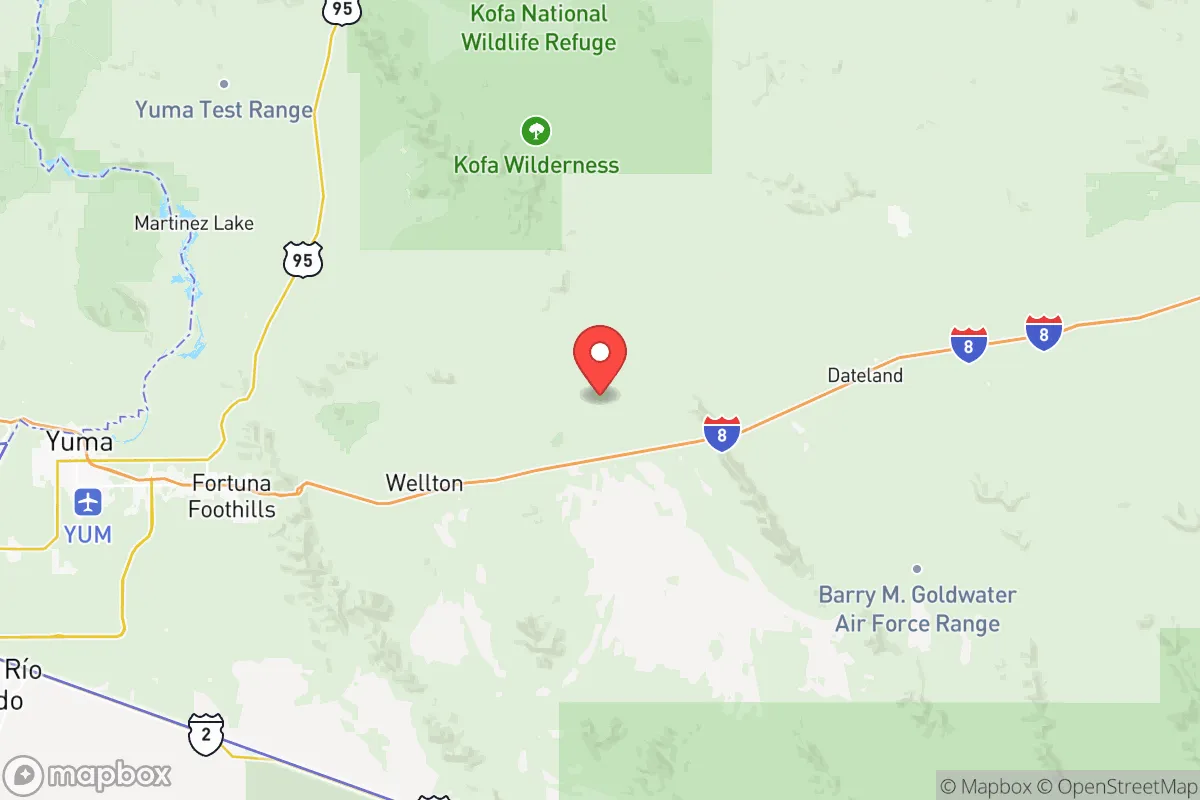
Beyond Yuma city, the county contains several distinct smaller communities. Somerton, about 10 miles south of Yuma, is a predominantly Hispanic community of roughly 14,000 with a quieter, more family-oriented feel and a historic downtown centered on Main Street. San Luis, directly on the Mexican border, is a fast-growing city of over 30,000 residents that functions as a major port of entry and retail destination for shoppers from San Luis Río Colorado, Sonora; its daily life is heavily binational, with Spanish widely spoken and a lower cost of living than Yuma city. Wellton, 30 miles east of Yuma along I-8, is a small agricultural town of about 3,000 with a handful of local businesses and a strong snowbird presence in its RV parks. Fortuna Foothills is an unincorporated census-designated place just south of Yuma city, offering larger lots, desert views, and a more suburban-rural hybrid lifestyle popular with retirees and families wanting space without total isolation. Remote areas like Martinez Lake and Imperial Dam along the Colorado River attract those seeking fishing, boating, and off-grid recreational living, with very limited services and long drives to Yuma for groceries or medical care.
Cost & lifestyle range
The cost of living and available amenities vary significantly across Yuma County. At the lower end, San Luis and Somerton offer median home values well below the county average of $195,700, with some homes available under $150,000, and rents that can dip below $800 for a one-bedroom; these areas have fewer retail and dining options but lower utility costs and proximity to Mexico for affordable goods and healthcare. At the higher end, the Foothills area (Fortuna Foothills and surrounding subdivisions) features newer homes on one- to five-acre lots with mountain views, with median prices often ranging from $250,000 to $400,000, and residents trade a longer commute (20-30 minutes into Yuma) for space and privacy. Yuma city itself occupies the middle ground, with a mix of older homes near downtown (some under $180,000) and newer developments near the Foothills and east Yuma. The county's overall low cost of living means that even the pricier areas remain affordable compared to Phoenix or California, but the trade-off is limited job diversity, extreme summer heat (average July highs of 107°F), and fewer cultural and entertainment options than larger metro areas.
Yuma County best suits those who value affordability, warm winters, and outdoor recreation (boating, off-roading, golf) over urban amenities and career diversity. Military personnel stationed at MCAS Yuma, agricultural workers, retirees on fixed incomes, and snowbirds seeking a low-cost winter home all find viable options across the county's spectrum, from the full-service city of Yuma to the quiet border towns of San Luis and Somerton to the riverfront solitude of Martinez Lake. The county's wide range of housing costs and community types means that a single person renting a cheap apartment in San Luis and a family buying a foothills acreage home can both find a place that fits their budget and lifestyle, as long as they are comfortable with the region's desert climate and limited economic base.

Crime in Yuma County
Crime rates similar to the national median for U.S. locations.
Violent CrimeViolent Crime Analysis
Property CrimeProperty Crime Analysis
Crime Analysis
Yuma County, Arizona, reports a violent crime rate of 372 incidents per 100,000 residents and a property crime rate of 1,496.4 per 100,000, placing it above national averages for both categories. The county’s overall safety picture is shaped by a mix of urban centers like the city of Yuma and smaller, quieter communities such as Wellton and Somerton, where crime patterns differ significantly. While the county is not among Arizona’s most dangerous, its rates warrant careful consideration for anyone relocating to the region, particularly regarding property theft and drug-related offenses tied to its border location.
Crime in context
Yuma County’s violent crime rate of 372 per 100,000 is roughly 6% higher than the national average of 350 per 100,000 and significantly above the Arizona state average of approximately 280 per 100,000. Property crime in the county, at 1,496.4 per 100,000, exceeds the national rate of about 1,342 per 100,000 and is notably higher than the Arizona state average of roughly 1,200 per 100,000. The city of Yuma itself drives much of this elevated crime, with higher concentrations of theft, burglary, and aggravated assault compared to outlying areas. In contrast, communities like Wellton and the Foothills area report substantially lower crime rates, often falling below state averages, making them more attractive for families and retirees seeking safer environments. The county’s proximity to the U.S.-Mexico border also contributes to drug trafficking and related violence, though these incidents are often concentrated in specific corridors rather than spread evenly across the region.
What residents experience
Residents in Yuma County most frequently encounter property crimes such as larceny-theft, vehicle break-ins, and burglary, which together account for the majority of reported incidents. Violent crime, while less common, includes aggravated assault and robbery, with domestic violence incidents making up a notable portion of the aggravated assault category. The city of Yuma, particularly areas near downtown and major commercial corridors like 16th Street and 4th Avenue, sees higher foot traffic and opportunistic crime. In contrast, the town of Somerton experiences more property crime relative to its population, while San Luis, another border community, faces challenges with drug-related offenses and vehicle theft. Residents in the Yuma Foothills and Wellton often report feeling safer, with lower instances of both violent and property crime, though no area is entirely immune. Law enforcement presence varies, with the Yuma Police Department covering the city and the Yuma County Sheriff’s Office patrolling unincorporated areas, which can affect response times and community engagement.
Neighborhood-level variation in Yuma County is pronounced, with the safest areas typically located in the Yuma Foothills, a suburban and semi-rural area east of the city, and in Wellton, a small town about 30 miles east. These areas benefit from lower population density and less transient traffic. Conversely, the city of Yuma’s central and southern neighborhoods, especially those near the border crossing, report higher crime rates. Progressive judicial policies in Yuma County’s justice system have raised concerns among some residents, as lenient sentencing and diversion programs for property and drug offenders may contribute to repeat offenses and a perception of insufficient consequences. This is particularly relevant in the city of Yuma, where the local district attorney’s office has faced criticism for prioritizing rehabilitation over incarceration, potentially leading to more criminals on the street. For those considering a move, consulting local crime maps and speaking with residents in specific neighborhoods is advisable to gauge real-world safety beyond aggregate statistics.
* Values derived from national, state, county, city and local statistics and may differ in a specific area. Last updated: 2026-07-10T15:42:52.000Z
Narrative content on this page is AI-generated and may contain mistakes. Verify any details that matter before acting on them.
ReloMaps may earn a commission from affiliate links at no extra cost to you.

