
Photo: Wikipedia
Personal Sovereignty in Yuma County
Viable for self-reliance. Generally workable, though some barriers may limit total independence.
What does Personal Sovereignty tell us?
Personal Sovereignty measures your capacity for self-reliance and independence with minimal government friction. Higher scores mean fewer barriers between you and the way you want to live... but it assumes you have the space you need and good neighbors.
What does this tell us?
Personal Sovereignty measures your capacity for self-reliance and independence with minimal government friction. Higher scores mean fewer barriers between you and the way you want to live... but it assumes you have the space you need and good neighbors.
State Policy
Energy independence: Importer (20% of energy produced in-state)
Personal Liberty
Homesteading

Personal Liberty Analysis
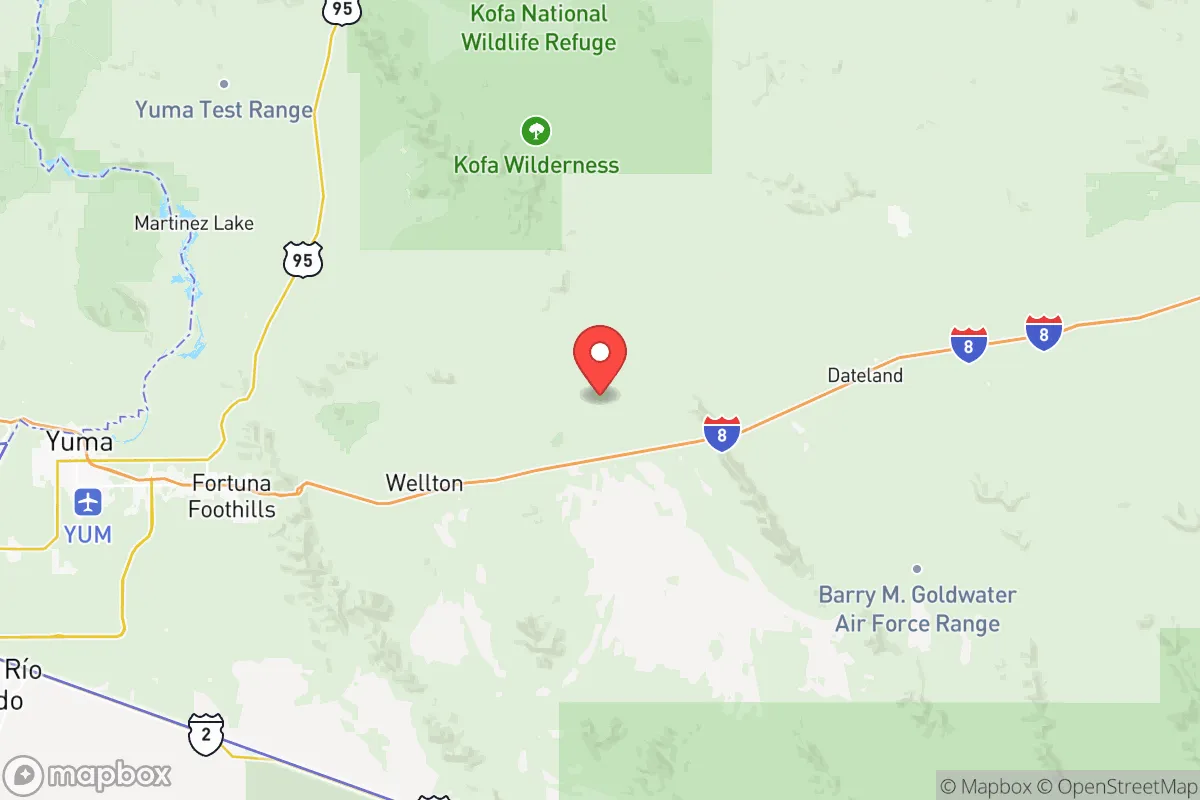
Yuma County, Arizona, offers a notably high degree of personal sovereignty, anchored in Arizona’s strong preemption laws, low property taxes, and a culture of self-reliance that permeates both its agricultural heartland and its desert outposts. Unlike the more regulated urban corridors of Phoenix or Tucson, Yuma County’s regulatory environment is light-touch, particularly in unincorporated areas and smaller communities like Wellton, Somerton, and San Luis, where county oversight is minimal and local ordinances are sparse. For individuals and families who prioritize autonomy—whether in financial decisions, self-defense, or lifestyle choices—this corner of the state presents a compelling balance of freedom and practicality, though the degree of sovereignty varies significantly between the city of Yuma itself and its rural surroundings.
Tax burden and regulatory posture in Yuma County
Arizona’s state-level tax structure is among the most favorable in the nation for those seeking to keep more of their earnings, and Yuma County amplifies this advantage. The state imposes a flat income tax rate of 2.5%, and Yuma County’s property tax rate is one of the lowest in Arizona, with an effective rate around 0.55% of assessed home value—well below the national average. There is no state-level property tax on vehicles or business inventory, and the county’s sales tax rate of 8.35% (combining state, county, and city levies) is moderate. Crucially, regulatory oversight is minimal in unincorporated areas: there are no county-wide building codes in many rural zones, and zoning restrictions are far looser than in incorporated cities. For example, in Fortuna Foothills, a large unincorporated community east of Yuma, residents can operate home-based businesses, keep livestock, and build without the permitting delays common in more regulated jurisdictions. The city of Yuma itself imposes stricter codes, but even there, the permitting process is streamlined compared to Phoenix or Tucson. This light-touch regulatory posture extends to land use: agricultural exemptions are generous, and there are no county-level rent control or business licensing hurdles that would impede self-employment or small-scale farming.
Self-defense and gun law specifics in Yuma County
Arizona is a constitutional carry state, and Yuma County fully reflects that ethos. No permit is required to carry a concealed firearm for anyone legally allowed to possess one, and the state preempts all local gun ordinances, meaning cities like Yuma, San Luis, and Somerton cannot enact their own restrictions beyond state law. This preemption is vigorously enforced; in 2023, the Arizona legislature strengthened penalties for local governments that attempt to regulate firearms, ensuring uniform access across the county. Stand-your-ground laws are in effect, with no duty to retreat in any place where a person is lawfully present. The county sheriff’s office, led by Sheriff Leon Wilmot, has a publicly stated pro-Second Amendment stance, and concealed carry permit applications (still useful for reciprocity in other states) are processed quickly, typically within 30 days. For those living in remote areas like Martinez Lake or Dateland, where law enforcement response times can exceed 30 minutes, the ability to defend oneself without legal ambiguity is a practical necessity. There are no magazine capacity restrictions, no assault weapon bans, and no waiting periods for firearm purchases in Yuma County, making it one of the most gun-friendly jurisdictions in the Southwest.
Self-reliance and homesteading viability in Yuma County
Homesteading and off-grid living are not just possible in Yuma County—they are a way of life for many residents, particularly in the vast unincorporated areas. Lot sizes in rural zones start at one acre in many subdivisions, but parcels of 5, 10, or 40 acres are common in areas like Wellton Hills and Mohawk Valley, where land prices remain affordable (often under $5,000 per acre). Zoning in unincorporated Yuma County is permissive: there are no county-wide restrictions on rainwater harvesting, composting toilets, or solar panel installation, and off-grid power systems are explicitly allowed. The county does not require building permits for structures under 200 square feet in many rural zones, and owner-builder permits are available for larger homes, allowing residents to act as their own general contractor. Water rights are a critical consideration: most rural parcels require a well permit from the Arizona Department of Water Resources, and in the Yuma area, groundwater is generally accessible at depths of 100-300 feet, with drilling costs averaging $15-$25 per foot. The county’s agricultural heritage means that livestock—chickens, goats, even cattle—are permitted on parcels as small as one acre in most rural zones, and there are no county-level noise ordinances that would restrict farm equipment or animal husbandry. For those seeking maximum self-reliance, the Gila River Valley and Castle Dome Mountains areas offer true off-grid potential, with no HOA restrictions and minimal county oversight, though buyers should verify water availability and access easements before purchasing.
Personal liberties in Yuma County: parental rights, medical autonomy, and property
Arizona’s strong parental rights laws are fully operative in Yuma County. The state’s 2022 law (HB 2492) requires parental consent for most medical procedures on minors, and the county’s school districts—including Yuma Union High School District and Crane Elementary—have adopted policies that require parental notification for any health services beyond basic emergency care. Medical autonomy for adults is also robust: Arizona does not have a state-level vaccine mandate, and there are no county health orders that restrict access to alternative or complementary medicine. The state’s Right to Try Act and expanded access to experimental treatments are available to Yuma County residents, and there are no county-level restrictions on the practice of naturopathy or homeopathy. Property rights are strongly protected under Arizona’s Proposition 207 (2006), which requires the government to compensate landowners for any reduction in property value caused by zoning changes or land-use regulations. This has effectively limited the county’s ability to impose new restrictions without significant cost. In practice, this means that a landowner in Somerton or Tacna can develop their property with minimal interference, as long as they comply with basic health and safety codes. Free speech is protected under state law, and there are no county-level hate speech ordinances or social media restrictions that would limit expression. The county’s political culture is predominantly conservative, with a strong emphasis on individual responsibility, which translates into a hands-off approach to lifestyle choices—whether that means homeschooling, running a home-based business, or practicing alternative medicine.
Overall, Yuma County ranks among the most sovereignty-friendly areas in the Southwest, particularly for those willing to live outside the city limits of Yuma itself. The combination of low taxes, constitutional carry, permissive zoning, and strong property rights creates an environment where self-reliance is not just tolerated but actively supported. Compared to neighboring Imperial County, California, where regulatory burdens are significantly higher and property taxes are double, Yuma County offers a stark contrast in personal freedom. For families and individuals who value autonomy over convenience, and who are prepared to navigate the realities of desert living—water access, extreme heat, and distance from urban amenities—this area provides a legal and cultural framework that maximizes personal sovereignty. The key is location: Fortuna Foothills, Wellton, and the rural stretches of the Gila River Valley offer the greatest freedom, while the city of Yuma itself, though still relatively light-touch, imposes more structure. For those prioritizing maximum independence, the unincorporated areas of Yuma County are hard to beat.

* Values derived from national, state, county, city and local statistics and may differ in a specific area. Last updated: 2026-07-10T15:42:52.000Z
Narrative content on this page is AI-generated and may contain mistakes. Verify any details that matter before acting on them.
ReloMaps may earn a commission from affiliate links at no extra cost to you.

