Photo: Wikipedia
Demographics of Apache County
Affluence Level in Apache County
A below-average socioeconomic profile. Incomes, home values, and educational attainment trail the U.S., with higher poverty and unemployment.
People of Apache County
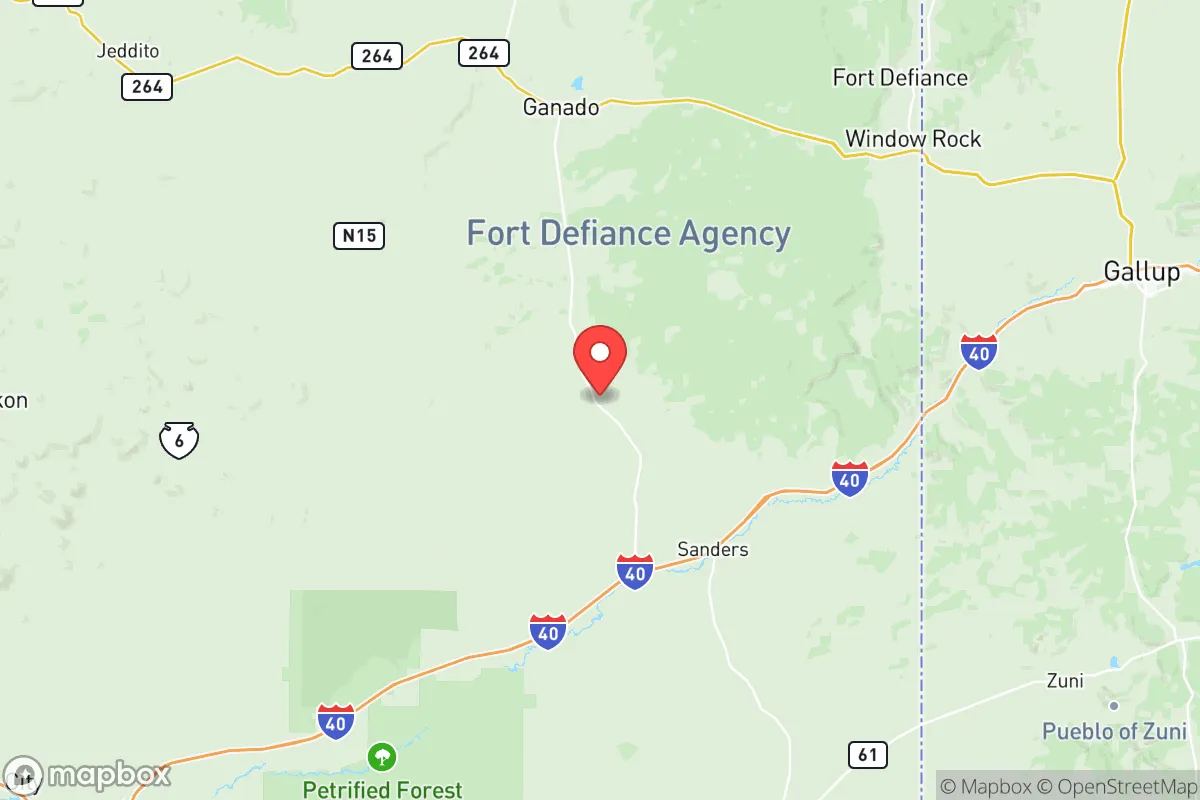
The people of Apache County, Arizona today are overwhelmingly Native American, with 73.8% of the 65,680 residents identifying as such, making it one of the most indigenous-majority counties in the United States. This population is spread across a vast, rural high-desert landscape of 11,218 square miles, yielding a density of just 5.9 people per square mile, and is concentrated in the Navajo Nation and Fort Apache Indian Reservation. The county's distinctive identity is rooted in the enduring presence of the Navajo and Apache nations, with a small but established white and Hispanic minority, and a foreign-born population of just 0.7% — the lowest in Arizona — reflecting minimal recent international immigration.
Settlement & growth (pre-1960)
Apache County's human history begins with the Ancestral Puebloans, who left cliff dwellings and petroglyphs across the region, particularly in Canyon de Chelly (within the modern-day Navajo Nation). By the time of European contact, the area was home to the Navajo (Diné) and Western Apache peoples, who had developed a semi-nomadic, pastoral and agricultural lifestyle. The first non-Native presence came with Spanish exploration in the 16th and 17th centuries, but no permanent Spanish settlements took root in this remote, arid corner of what is now Arizona.
The United States acquired the territory in 1848 after the Mexican-American War, and Apache County was formally created in 1879 from the eastern portion of Yavapai County. The first major non-Native influx came in the 1880s with the arrival of the Atlantic and Pacific Railroad (later the Santa Fe), which laid tracks through the southern part of the county. This railroad brought a wave of Anglo-American settlers, merchants, and ranchers, who founded the towns of Holbrook (the county seat), St. Johns, and Springerville. These communities served as supply hubs for the region's nascent livestock industry, primarily sheep and cattle ranching on the vast open range.
A second, smaller wave of settlement occurred in the early 1900s with the expansion of the timber industry. The Apache-Sitgreaves National Forests, established in 1908, drew loggers and mill workers to towns like Eagar and Greer, which became small company towns. This period also saw the arrival of a modest number of Mexican and Mexican-American laborers, who worked on ranches, railroads, and in the forests, establishing the Hispanic communities that remain in places like St. Johns and Springerville today. However, the county's population remained overwhelmingly Native American, as the Navajo and Apache reservations were established and expanded through a series of executive orders and acts of Congress, including the Navajo Treaty of 1868 and the creation of the Fort Apache Indian Reservation in 1891. By 1960, the county's population was approximately 25,000, with the vast majority living on tribal lands.
Modern era (post-1965)
The 1965 Hart-Cellar Act had virtually no impact on Apache County's demographics, as the foreign-born population remains at 0.7% — the lowest in Arizona. Instead, the county's modern demographic story is one of natural increase and domestic migration, primarily within the Native American population. The Navajo Nation and the White Mountain Apache Tribe have experienced steady population growth through high birth rates, with the county's population rising from 52,108 in 1990 to 65,680 in 2020. This growth has been concentrated in the reservation communities of Chinle, Window Rock (the capital of the Navajo Nation), Fort Defiance, and Whiteriver (the seat of the White Mountain Apache Tribe).
The white population, which peaked at around 25% in the 1980s, has declined to 18.6% as of the 2020 Census, as younger, non-Native residents have left for urban job markets in Phoenix, Flagstaff, and Albuquerque. The Hispanic share has remained stable at 6.2%, concentrated in the Mormon-settled towns of St. Johns and Springerville, where families have deep roots in ranching and agriculture. The Black (0.9%), East/Southeast Asian (0.5%), and Indian subcontinent (0.1%) populations are negligible, reflecting the county's isolation and lack of economic diversification. Suburbanization has not occurred in any meaningful way; the county's few incorporated towns remain small, with Holbrook (population 5,000) being the largest, and most residents live in unincorporated reservation communities.
The future
Apache County's population is projected to remain stable or grow slowly, driven entirely by the Native American population. The Navajo Nation and White Mountain Apache Tribe both have relatively young age structures, with a median age of 31 compared to the county's overall 38, suggesting continued natural increase. However, the county faces significant out-migration of young adults — both Native and non-Native — who leave for educational and employment opportunities elsewhere, a trend that may temper overall growth. The county is becoming slightly more diverse in the sense that the white share is declining, but it is not becoming more diverse through immigration; the foreign-born share is expected to remain near zero. New residential development is concentrated in the reservation communities of Chinle and Window Rock, where tribal housing programs and a growing government sector (tribal administration, Indian Health Service, Bureau of Indian Affairs) provide stable employment.
Culturally, Apache County is becoming more assertively Native American, with the Navajo and Apache languages and traditions being revitalized in schools and public life. The county's non-Native population, while shrinking, remains concentrated in the Mormon and ranching communities of the south, creating a cultural divide between the reservation north and the "border towns" of St. Johns and Springerville. The next 10-20 years will likely see a continuation of these trends: a slowly growing, younger, and more predominantly Native population, with the non-Native share continuing to decline as older residents age out and younger ones leave.
For someone moving in now, Apache County offers a unique experience: a place where Native American culture is not a historical footnote but the living, dominant reality, and where the pace of life is dictated by the vast, open landscape rather than urban growth. It is a place for those seeking a deep connection to the land and a community rooted in tradition, but it is not a place of rapid demographic change or economic dynamism. The county's future is one of stability, not transformation, and its character will remain defined by the Navajo and Apache peoples who have called it home for centuries.

* Values derived from national, state, county, city and local statistics and may differ in a specific area. Last updated: 2026-08-27T16:43:31.000Z
Narrative content on this page is AI-generated and may contain mistakes. Verify any details that matter before acting on them.
ReloMaps may earn a commission from affiliate links at no extra cost to you.

