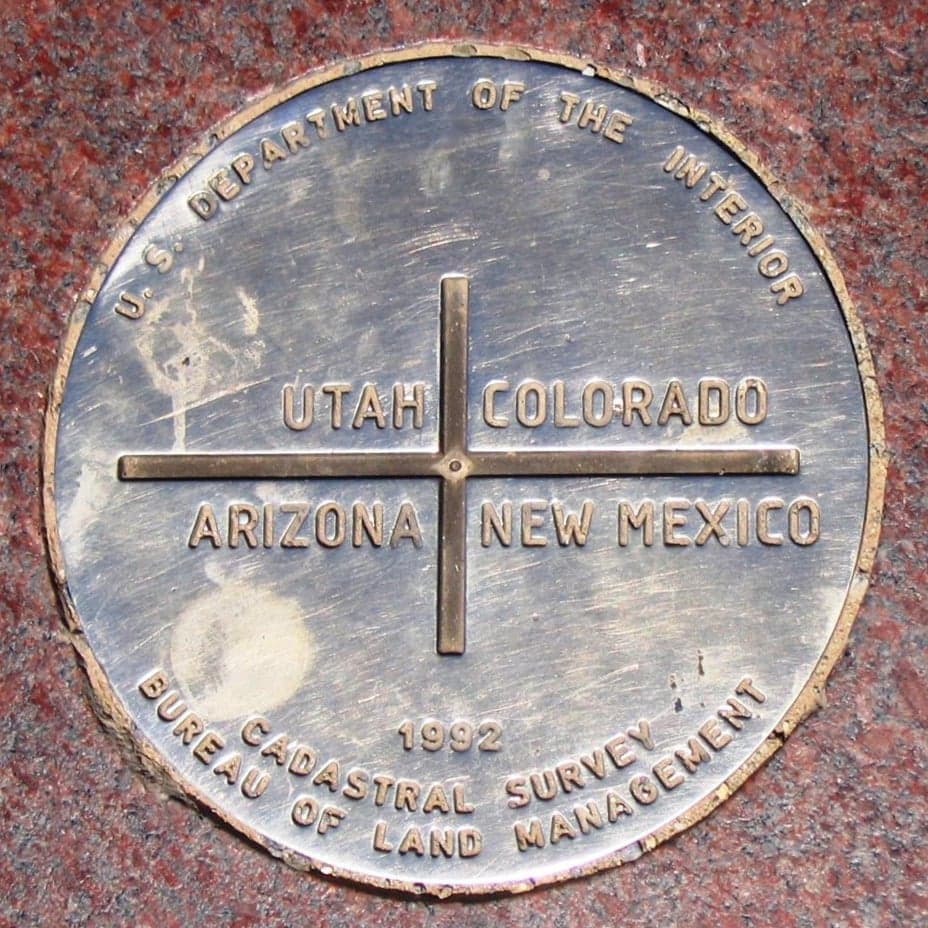
Photo: Wikipedia
Personal Sovereignty in Apache County
Viable for self-reliance. Generally workable, though some barriers may limit total independence.
What does Personal Sovereignty tell us?
Personal Sovereignty measures your capacity for self-reliance and independence with minimal government friction. Higher scores mean fewer barriers between you and the way you want to live... but it assumes you have the space you need and good neighbors.
What does this tell us?
Personal Sovereignty measures your capacity for self-reliance and independence with minimal government friction. Higher scores mean fewer barriers between you and the way you want to live... but it assumes you have the space you need and good neighbors.
State Policy
Energy independence: Importer (20% of energy produced in-state)
Personal Liberty
Homesteading

Personal Liberty Analysis
Apache County offers one of the most robust environments for personal sovereignty in Arizona, where state-level preemption laws and a deeply rural character create a regulatory landscape that prioritizes individual autonomy over government oversight. The county spans over 11,000 square miles of high desert, pine forests, and canyon country, with a population density of roughly 4 people per square mile—meaning the practical reality of daily life is one of minimal interference, whether from local code enforcement or state agencies. For a relocation audience seeking freedom from overreach, the key variables are tax burden, gun laws, homesteading feasibility, and the breadth of personal liberties, all of which vary meaningfully between communities like St. Johns, Springerville, Eagar, and the Navajo Nation areas.
Tax burden and regulatory posture: How light is the government footprint?
Arizona is a low-tax state overall, and Apache County operates within that framework with a notably light regulatory touch. The state has a flat income tax rate of 2.5% as of 2025, and no estate or inheritance tax. Property taxes in Apache County are among the lowest in Arizona, with an average effective rate around 0.6% of assessed value—roughly half the national average. Sales tax in the county is 8.35% (state plus county), but many rural transactions, especially private land sales and livestock trades, occur outside formal retail channels. The county government is small and under-resourced, meaning permitting processes for things like home construction or business licensing are often streamlined by necessity. In towns like St. Johns and Springerville, zoning is minimal outside designated commercial corridors, and building codes are less strictly enforced than in Phoenix or Tucson. However, the Navajo Nation and the Fort Apache Indian Reservation, which cover large portions of the county, operate under tribal regulatory systems that can be more restrictive for non-tribal members—anyone considering land within those boundaries should expect additional layers of tribal approval for construction or business activity. Overall, the regulatory posture is best described as "hands-off by design and by circumstance," with the caveat that tribal jurisdictions introduce complexity.
Self-defense and gun law specifics: What can you legally do to protect yourself?
Arizona is a constitutional carry state, meaning no permit is required to carry a concealed firearm for anyone legally allowed to possess one. Apache County Sheriff’s Office and local law enforcement in towns like Eagar and St. Johns are known for a pro-Second Amendment stance, and there are no county-level restrictions beyond state law. The state preempts all local firearm ordinances, so you won’t find the kind of city-level magazine bans or waiting periods common in California or Colorado. Stand-your-ground and castle doctrine laws are fully in effect, with no duty to retreat in any place where you are lawfully present. For those who want a permit for reciprocity purposes, the Arizona concealed carry permit is shall-issue and requires a 4-hour class. In practice, the culture in Apache County is heavily armed—hunting, ranching, and personal defense are normalized, and you’ll see firearms openly carried in rural stores and on public land without incident. The only notable restriction is that carrying on tribal land requires compliance with tribal law, which can be more restrictive; the Navajo Nation, for example, prohibits firearms in certain administrative buildings and requires tribal permits for hunting. For most residents, however, self-defense rights are as broad as anywhere in the United States.
Self-reliance and homesteading viability: Lot sizes, zoning, and off-grid feasibility
Apache County is one of the best places in Arizona for off-grid living and homesteading, provided you choose the right location. Outside incorporated towns, there is no county-wide zoning for most rural parcels, meaning you can build a cabin, install solar panels, dig a well, and set up composting toilets without needing a parade of permits. Minimum lot sizes vary: in unincorporated areas, you can often build on 1-acre parcels, but many homesteaders target 5- to 40-acre plots for water access and privacy. In St. Johns and Springerville, the towns have basic building codes for structures within city limits, but enforcement is lax for owner-built homes. Off-grid solar is common, and net metering is available through the local electric cooperative, though many residents simply go fully independent. Water is the critical variable—well drilling is permitted, but depths can exceed 500 feet in some areas, costing $10,000–$20,000. Rainwater catchment is legal and encouraged. The county does not require a permit for a private well on parcels over 5 acres, but you must register it with the Arizona Department of Water Resources. For those seeking true self-reliance, the areas around Greer, Alpine, and Nutrioso offer forested land with springs and creeks, while the desert flats near Sanders and Chambers require more investment in water infrastructure. The Navajo Nation has its own land-use rules that generally prohibit non-tribal members from owning land outright, so homesteading there is not feasible for most relocators.
Personal liberties: Parental rights, medical autonomy, speech, and property
Arizona law provides strong protections for parental rights, including a 2022 law that prohibits government entities from overriding parental decisions on medical care, education, and religious upbringing without a court order. In Apache County, this translates to a school environment where parents in towns like St. Johns and Eagar have significant influence over curriculum and activities—school boards are locally elected and responsive to conservative values. Medical autonomy is more complex: Arizona does not have a state-level right-to-try law for experimental treatments beyond federal provisions, but it does allow direct primary care agreements and has relatively loose scope-of-practice laws for naturopaths and chiropractors. Vaccine mandates are prohibited for public school attendance, and there is no state-level vaccine passport system. Free speech is protected under the Arizona Constitution, which explicitly guarantees the right to speak, write, and publish freely, and Apache County has no local ordinances restricting political speech or assembly. Property rights are strong, with Arizona’s private property rights act requiring just compensation for any regulatory taking that reduces property value by more than 20%. In practice, this means county officials are hesitant to impose land-use restrictions that could trigger compensation claims. The only notable limitation is on tribal land, where tribal courts and councils have authority over many civil liberties issues for non-tribal members—so if you value maximum personal autonomy, stick to the non-tribal portions of the county.
Overall, Apache County ranks among the top-tier areas in the Southwest for personal sovereignty, comparable to rural counties in Idaho or Montana but with a lower cost of land and a more permissive regulatory environment. The combination of constitutional carry, minimal zoning, low taxes, and strong property rights creates a place where a determined individual can live largely on their own terms. The trade-offs are real: limited healthcare access, long distances to supplies, and the need for self-sufficiency in utilities and emergency services. For the relocation reader who prioritizes freedom over convenience, and who is willing to navigate the tribal jurisdiction boundaries, Apache County delivers a level of autonomy that is increasingly rare in the United States.

* Values derived from national, state, county, city and local statistics and may differ in a specific area. Last updated: 2026-08-27T16:43:31.000Z
Narrative content on this page is AI-generated and may contain mistakes. Verify any details that matter before acting on them.
ReloMaps may earn a commission from affiliate links at no extra cost to you.

