
Photo: Wikipedia
Quality of Life in Apache County
A livable area that tracks near national norms for affordability, walkability, and neighborhood health.
What does Quality of Life tell us?
Quality of Life measures an area by evaluating factors like cost of living, nearby amenities, country club access, airport proximity, socioeconomic signals and neighborhood character. For large states, this is a general average — quality of life can vary dramatically between metro areas, suburbs, and rural communities within the same state.
What does this tell us?
Quality of Life measures an area by evaluating factors like cost of living, nearby amenities, country club access, airport proximity, socioeconomic signals and neighborhood character. For large states, this is a general average — quality of life can vary dramatically between metro areas, suburbs, and rural communities within the same state.
Cost of Living
57% below national average
149%
The Real Cost of Living in Apache County for 2026
| Tier | Individual | Family (4) |
|---|---|---|
| Survival | $10k | $19k |
| Comfortable | $18k | $27k |
| Luxury | $73k+ | $113k+ |
| Elite (Top 5%) | $98k+ | $152k+ |
Quality-of-Life Analysis
Apache County, Arizona, offers a quality-of-life spectrum that ranges from the modest commercial hub of St. Johns to the remote, high-desert homesteads of the Navajo Nation and the White Mountains. The county is defined by its extreme rurality, with a cost of living index of 43 (well below the US average of 100) and a median home value of just $68,500, attracting a mix of Native American communities, off-grid homesteaders, and budget-conscious retirees seeking solitude. The character of daily life shifts dramatically depending on whether one lives in a county seat, a small border town, or a dispersed settlement on the vast Colorado Plateau.
Largest town(s) & population centers
The primary population center is St. Johns, the county seat, which houses roughly 3,500 residents and serves as the commercial and administrative hub for the county's eastern half. Daily life here revolves around county government jobs, the local school district, and essential services like the hospital and grocery stores. Springerville and its twin town Eagar, located near the White Mountains, form the second major population cluster with a combined population of around 8,000. These towns offer a slightly more amenity-rich lifestyle, including access to the Apache-Sitgreaves National Forests, a regional medical center, and a small airport. Life in these towns is slower than in urban Arizona but includes paved roads, chain grocery stores, and a predictable grid of residential streets.
Smaller towns & rural pockets
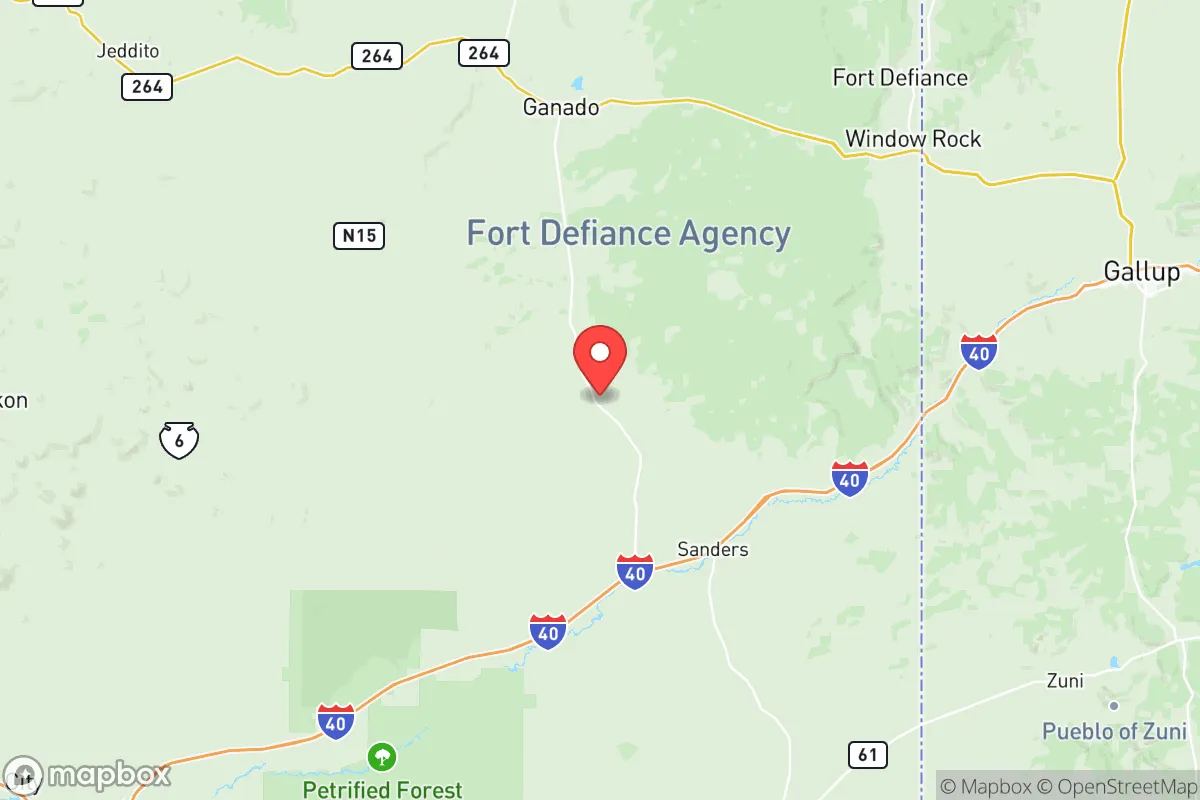
Beyond the main towns, Apache County is dotted with smaller communities that offer a distinctly different lifestyle. Chambers and Sanders, located along Interstate 40, are small unincorporated communities that serve as service stops for travelers and provide a sparse, high-desert living experience. Round Valley encompasses the area around Springerville and Eagar but includes more dispersed ranchettes and farmland. On the vast Navajo Nation, communities like Ganado, Chinle, and Window Rock (the Navajo Nation capital) are unincorporated but function as dense, walkable villages with tribal government offices, trading posts, and schools. These areas lack the typical suburban infrastructure of St. Johns or Springerville, with many homes on dirt roads and relying on well water and propane. The most remote pockets are found in the White Mountain Apache Reservation communities like Whiteriver and Fort Apache, where daily life is deeply tied to tribal governance, forestry, and seasonal tourism at the Sunrise Park Resort.
Cost & lifestyle range
The cost of living in Apache County is among the lowest in Arizona, but the trade-offs vary significantly by location. At the low-cost end, Chinle and Window Rock offer median rents near the county average of $647 and home values well below $70,000, but residents face limited grocery options, few healthcare specialists, and the longest commutes — the county average commute is 28 minutes, but many residents on the Navajo Nation drive 45 minutes or more to reach a full-service supermarket. At the higher-amenity end, Springerville and Eagar have slightly higher home values (often $100,000–$150,000 for a single-family home) but offer better access to healthcare, dining, and recreation like fishing at Lyman Lake or skiing at Sunrise. St. Johns sits in the middle: affordable housing with a median home value around $68,500, but with fewer retail options than Springerville. The lifestyle range is stark: a resident in Eagar might have a 10-minute commute to a modern hospital, while a resident in Ganado may drive 30 minutes to the nearest gas station and rely on a wood stove for heat.
Apache County is best suited for individuals and families who prioritize extreme affordability, wide-open spaces, and a slower pace over urban amenities and convenience. Those who thrive here are often self-sufficient — comfortable with long drives for supplies, well water, and limited internet connectivity — and are drawn to the area's strong Native American cultural presence, hunting and fishing opportunities, and the quiet of the high desert. It is not a place for those seeking nightlife, diverse dining, or rapid career growth, but for budget-conscious homesteaders, remote workers with satellite internet, and tribal employees, it offers a quality of life that is both economically sustainable and deeply connected to the land.

Crime in Apache County
Crime rates similar to the national median for U.S. locations.
Violent CrimeViolent Crime Analysis
Property CrimeProperty Crime Analysis
Crime Analysis
Apache County, Arizona, reports a violent crime rate of 374 incidents per 100,000 residents and a property crime rate of 1,506.2 per 100,000, placing it above national averages for both categories. This vast, rural county in the northeastern corner of the state presents a mixed safety picture, where crime risks are not evenly distributed across its communities. Residents in towns like St. Johns, the county seat, and Eagar often experience different conditions than those in more remote areas or along major transportation corridors.
Crime in context
Apache County's violent crime rate of 374 per 100,000 is roughly 7% higher than the national average of approximately 350 per 100,000 and significantly above Arizona's statewide rate of about 280 per 100,000. Property crime in the county, at 1,506.2 per 100,000, also exceeds both the national benchmark (around 1,450) and the Arizona average (approximately 1,300). These figures place Apache County among the higher-crime rural counties in Arizona, though still below the most dangerous urban jurisdictions. The county's vast geography and low population density — roughly 70,000 residents spread across 11,000 square miles — mean that crime statistics can be skewed by activity in specific corridors, particularly along Interstate 40 near Holbrook and the New Mexico border, where drug trafficking and property theft are more concentrated.
What residents experience
Property crime is the most common public safety concern in Apache County, with theft, burglary, and motor vehicle theft accounting for the majority of reported incidents. The rate of 1,506.2 per 100,000 translates to roughly 1 in 67 residents experiencing a property crime annually — a tangible risk for homeowners and small business owners. Violent crime, while less frequent, includes aggravated assault as the most common offense, followed by robbery and a small number of homicides. The county's judicial system operates under the Apache County Attorney's Office, which prosecutes cases in the Apache County Superior Court in St. Johns. Residents in communities like Springerville and Round Valley generally report feeling safer than those in unincorporated areas near the Navajo Nation border, where law enforcement response times can be longer due to jurisdictional complexities. The presence of progressive prosecutorial policies in some nearby urban jurisdictions has raised concerns among residents about recidivism, though Apache County's rural character and conservative judicial approach have historically resulted in more consistent sentencing for violent offenders.
Neighborhood-level variation
Safety conditions vary considerably across Apache County's communities. St. Johns and Eagar tend to have lower crime rates than the county average, benefiting from tighter-knit populations and more responsive local police departments. Holbrook, located along I-40, experiences elevated property crime due to transient traffic and drug-related activity. Chambers and other small unincorporated settlements see very low violent crime but face risks from isolated theft and vandalism. The county's proximity to the Navajo Nation introduces additional complexity, as tribal law enforcement handles incidents on reservation land, while the Apache County Sheriff's Office patrols non-tribal areas. Residents considering relocation should examine specific town-level data and speak with local law enforcement about neighborhood conditions, as the county's averages mask significant disparities between its safest and most challenged areas.
* Values derived from national, state, county, city and local statistics and may differ in a specific area. Last updated: 2026-08-27T16:43:31.000Z
Narrative content on this page is AI-generated and may contain mistakes. Verify any details that matter before acting on them.
ReloMaps may earn a commission from affiliate links at no extra cost to you.

