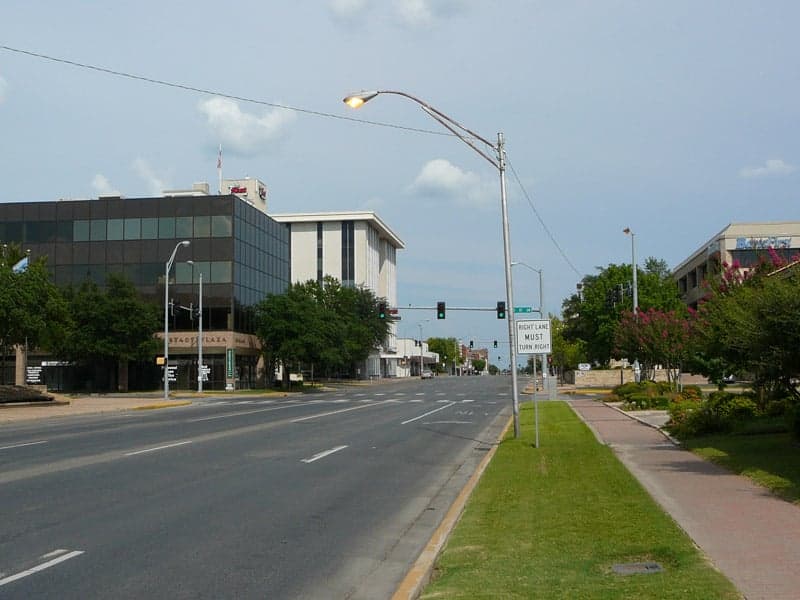
Photo: Wikipedia
Strategic Assessment of Ardmore, OK
Meaningful friction. Expect exposure to either population pressure, blast zones, or natural disaster risk. Consider buying a retreat property.
What does the Strategic Assessment tell us?
Our Strategic Assessment grades tactical survivability of an area. Major population centers, military targets, fallout zones, natural disasters, and border exposure all drive risk — lower exposure means a more defensible position in a crisis.
This is heavily inspired by Joel Skousen's Strategic Relocation book. Highly recommended you checkout the book ($)What does this tell us?
Our Strategic Assessment grades tactical survivability of an area. Major population centers, military targets, fallout zones, natural disasters, and border exposure all drive risk — lower exposure means a more defensible position in a crisis.
This is heavily inspired by Joel Skousen's Strategic Relocation book. Highly recommended you checkout the book ($)Strategic Pillars

Key Distances
Regional Safe Places
Below is our recommended "safe zones" in Oklahoma and the surrounding area based on our strategic heuristics. For most people, it's unrealistic to live in a “safe zone” full-time due to work, family or other personal reasons. They tend to be more rural. However, many of these areas are perfect for second homes and retreat properties that double as a vacation home or even a short-term rental.
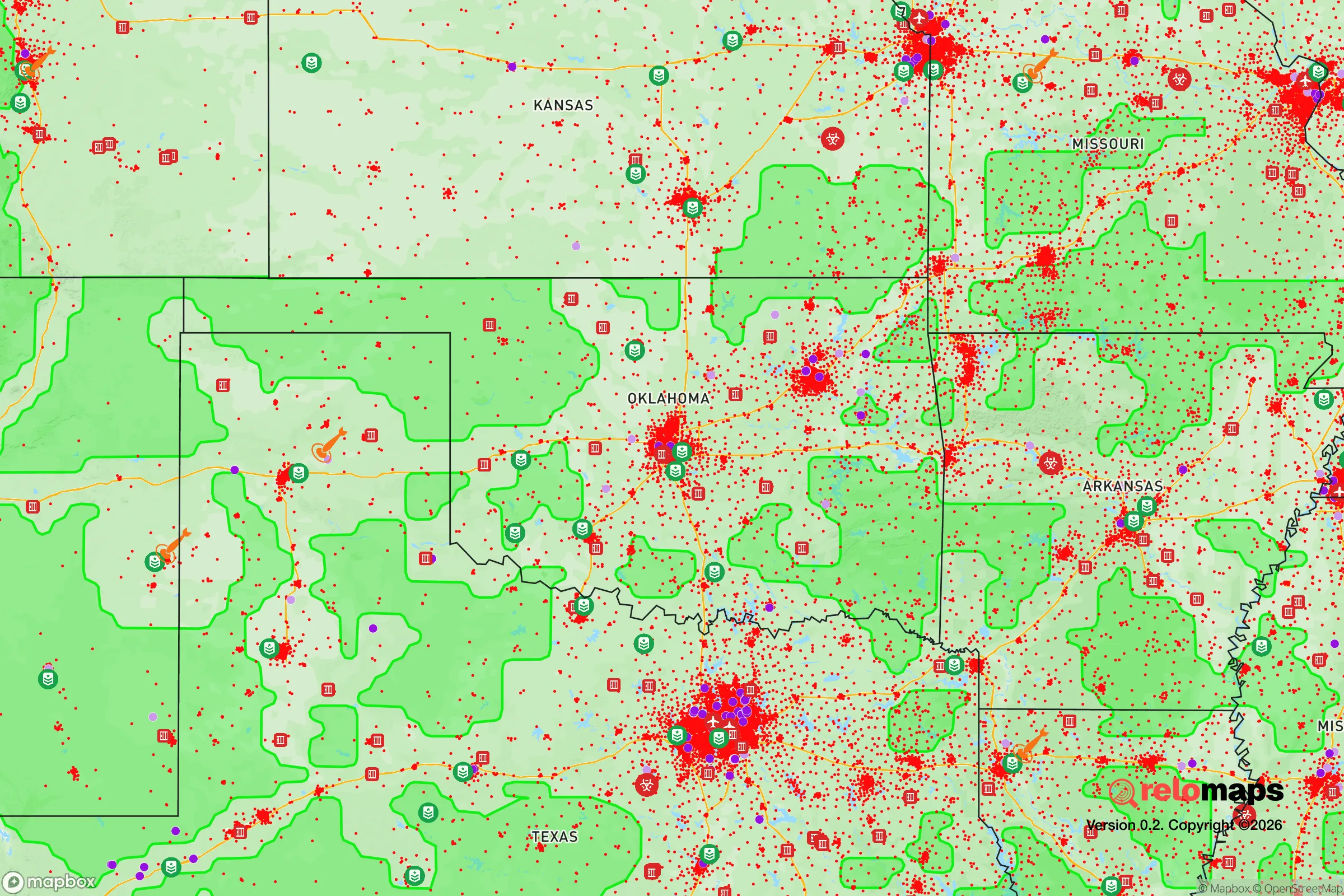
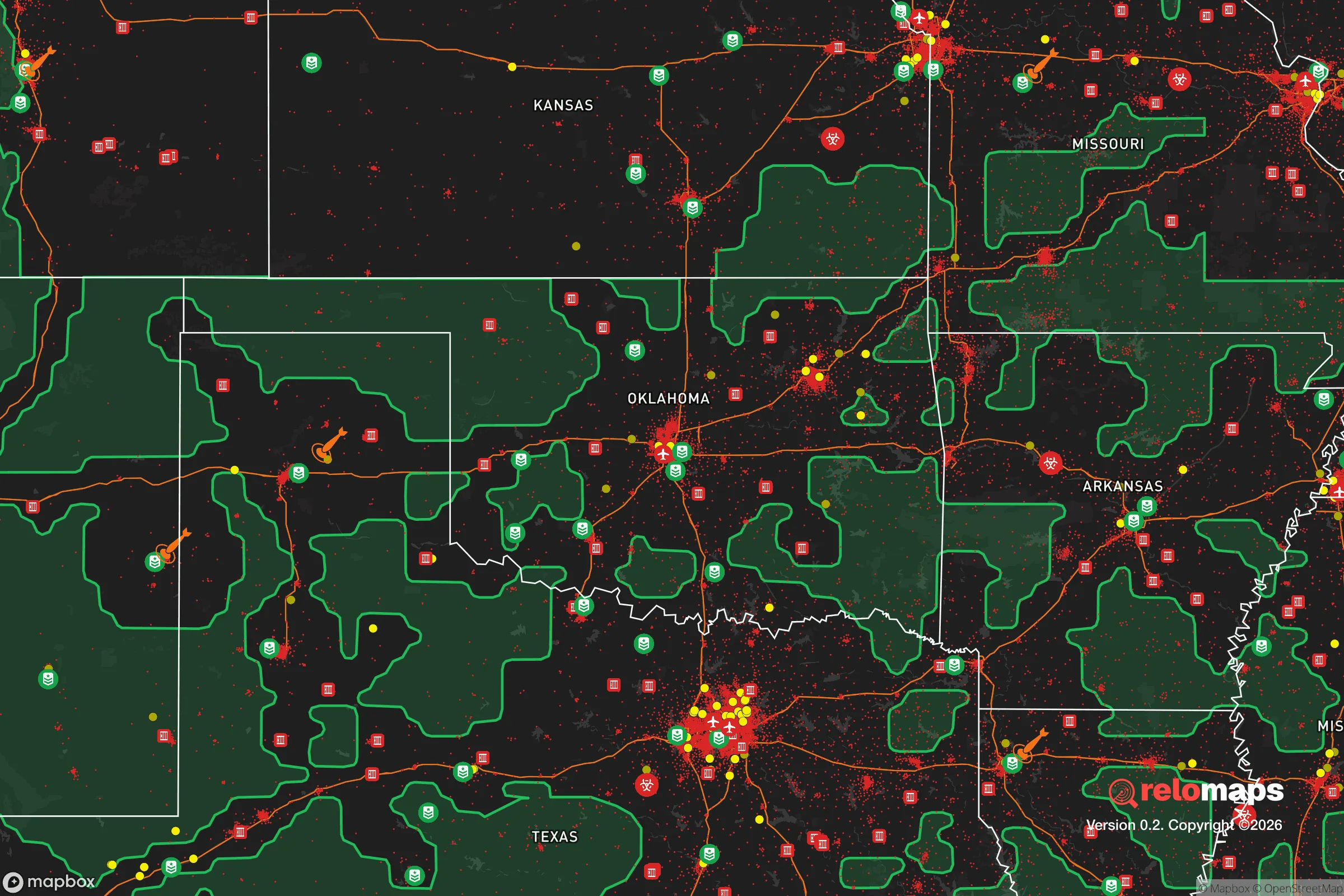


Important Note: For informational purposes only. This does not mean nothing bad ever happens in the green zones. Please use common sense. This is based on public data and modeled with AI. We tried to take a conservative approach but mistakes happen. We update this regularly as new information becomes available.
Solar Generator Recommendations
Backup power matters more here than in safer locations. We've picked three solar generators across budgets and capacity tiers — start with the budget unit if you only need a few essentials, or step up if you want to run a fridge and HVAC for days at a time.

Jackery Portable Power Station Explorer 300
Budget OptionPower on the Go: Weighing only 11 lbs, it's convenient to set up and store with book-sized foldable solar panels

BLUETTI Portable Power Station AC180
Designed for both indoor and outdoor scenarios, AC180 is highly capable as it has a robost capacity and continuous output power.

EF ECOFLOW DELTA Pro Ultra Power Station
Upgraded PickEcoFlow DELTA Pro Ultra is a whole-home energy system designed to grow with your family. Integrated with the Smart Home Panel 2, it scales to meet your evolving energy needs — keeping your home powered, intelligent, and secure through every stage of life.
We earn a commission, at no additional cost to you.
Strategic Assessment Analysis
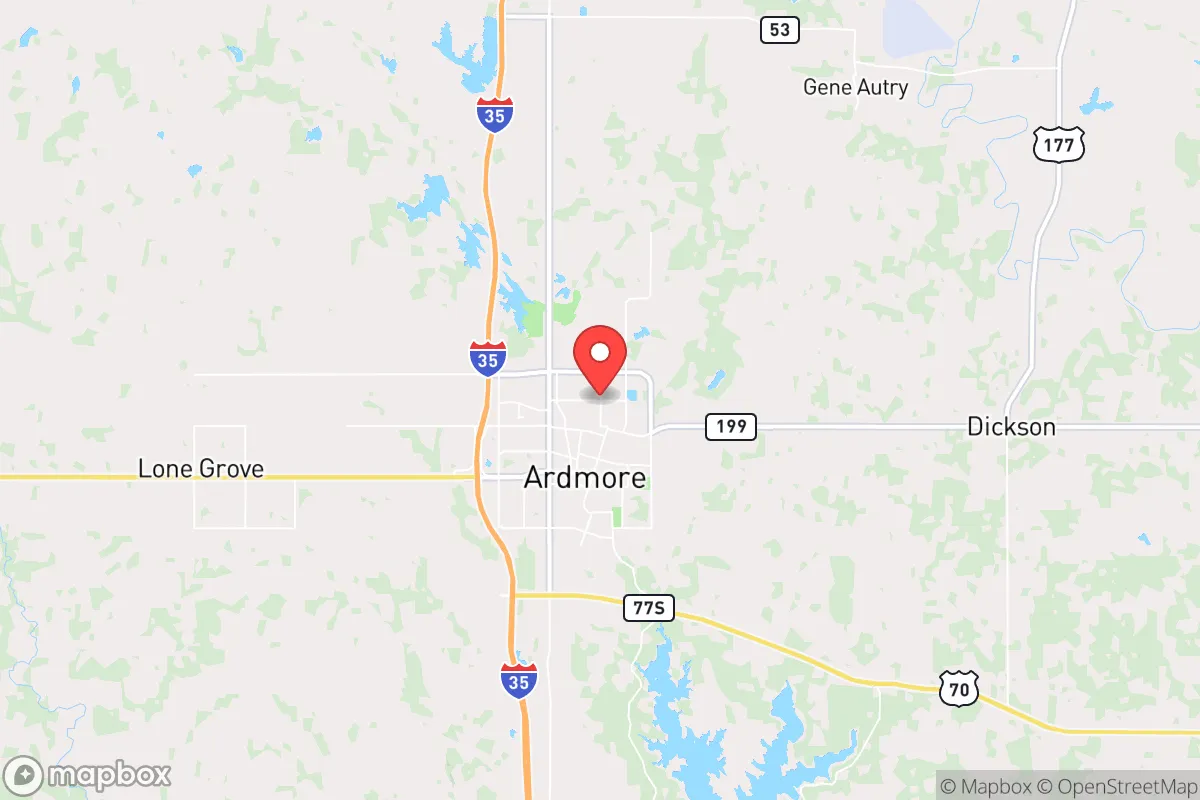
Ardmore, Oklahoma, offers a surprisingly resilient strategic position for those prioritizing self-sufficiency and distance from major metropolitan collapse zones, while still maintaining critical logistical access. Located roughly 90 miles from both Dallas-Fort Worth and Oklahoma City, the city sits in a sweet spot—close enough for supply runs or medical evacuation, but far enough to avoid the immediate fallout of urban unrest, grid collapse, or a major disaster event. The area’s low population density, strong agricultural base, and access to the Red River watershed provide a foundation for long-term sustainability that many relocation destinations lack.
Geographic position and natural advantages for long-term security
Ardmore’s location in south-central Oklahoma, just north of the Texas border, places it in a region with distinct natural buffers. The Arbuckle Mountains to the east and the rolling plains to the west create varied terrain that complicates large-scale movement—a defensive advantage in a breakdown scenario. The area sits atop the Arbuckle-Simpson Aquifer, one of the most productive freshwater sources in the southern plains, which means water security is a genuine asset here, unlike much of the drought-prone Southwest. The Red River, forming the southern boundary, provides an additional water source and a natural barrier to vehicle-based incursions from the south. Winters are mild enough to avoid catastrophic freeze events, and summers, while hot, are manageable with passive cooling strategies. The region’s agricultural capacity is substantial: Carter County has over 1,200 farms, producing cattle, hay, wheat, and sorghum, which translates to local food availability even if supply chains falter.
Risks, exposures, and proximity to fallout-relevant landmarks
No location is immune to risk, and Ardmore has specific exposures that a strategic relocator must weigh. The most significant is its proximity to the Dallas-Fort Worth metroplex—a population center of over 7 million that would become a humanitarian crisis zone in the event of a major disaster, civil unrest, or a biological event. Refugee flow from DFW is the primary threat, as I-35 runs directly through Ardmore, making it a natural choke point for northbound evacuees. The city is also within 150 miles of the Pantex nuclear weapons plant near Amarillo, Texas, and the Cushing oil storage hub in northern Oklahoma—both potential targets for state-level adversaries. A conventional or dirty bomb strike on either would not directly threaten Ardmore, but fallout patterns could affect the region depending on wind direction. Tornado risk is real but manageable with a reinforced safe room; Carter County averages 3-5 tornado warnings per year, with the most recent EF-2 occurring in 2023. Flooding along the Red River and its tributaries is a periodic concern, but most residential areas in Ardmore sit on higher ground. The city’s industrial base—including a Michelin tire plant and a Valero refinery—adds economic resilience but also introduces chemical hazard risks if those facilities are compromised during a crisis.
Practical resilience for a relocator: food, water, energy, and defensibility
For a prepper or survivalist-minded individual, Ardmore’s practical resilience metrics are strong but require deliberate planning. Water is the standout advantage: the Arbuckle-Simpson Aquifer provides reliable groundwater at depths of 100-300 feet, making well drilling a viable option for most rural properties. Municipal water from Lake Murray and the aquifer is treated but generally clean; a simple Berkey or ceramic filter system would suffice for post-collapse needs. Food security is bolstered by the local agricultural economy—farmers’ markets, livestock auctions, and direct-from-ranch beef are readily available. The city has a Tractor Supply Co. and several feed stores, so seeds, tools, and animal supplies are accessible without long drives. Energy infrastructure is mixed: OG&E provides grid power with moderate reliability (outages average 2-4 hours per month), but solar potential is excellent with over 230 sunny days per year, and net metering policies allow grid-tied systems to offset costs. For off-grid setups, propane delivery is common, and wood for heating is abundant in the surrounding forests. Defensibility is where Ardmore requires honest assessment. The city itself is not defensible against a determined mob—it’s a typical small city with multiple entry points and a police force of about 50 officers. However, rural properties within a 15-20 minute drive offer excellent natural chokepoints: gravel roads, creek crossings, and hilltop sightlines. The local gun culture is strong, with multiple ranges and gun shops, and Oklahoma’s constitutional carry law means no permit is needed for concealed carry. The sheriff’s office is responsive but realistically cannot cover remote areas quickly; a neighborhood watch or mutual assistance group is advisable. Medical resilience is a weak point: Ardmore has Mercy Hospital (a 150-bed facility) and a few clinics, but trauma care is limited—major injuries would require a 90-minute helicopter ride to Oklahoma City or Dallas. Stockpiling trauma kits, antibiotics, and training in field medicine is non-negotiable for anyone serious about long-term preparedness.
The overall strategic picture for Ardmore is one of calculated trade-offs. It offers genuine water security, agricultural access, and distance from primary urban collapse zones, but it sits on a major evacuation corridor and has limited medical infrastructure. For a conservative-leaning relocator who values self-reliance, community ties, and a lower cost of living (median home price around $180,000), Ardmore is a viable base of operations—provided you invest in a well, solar backup, and a rural property with defensible terrain. It is not a bug-out location for a weekend warrior; it is a place to build a life with resilience baked in, where you can raise a family, store supplies, and wait out the storm without being overrun by the chaos of the cities. The key is to be prepared, not paranoid, and Ardmore gives you the space to do that without cutting yourself off from the world entirely.

* Values derived from national, state, county, city and local statistics and may differ in a specific area. Last updated: 2026-04-25T13:48:24.000Z
Narrative content on this page is AI-generated and may contain mistakes. Verify any details that matter before acting on them.
ReloMaps may earn a commission from affiliate links at no extra cost to you.

