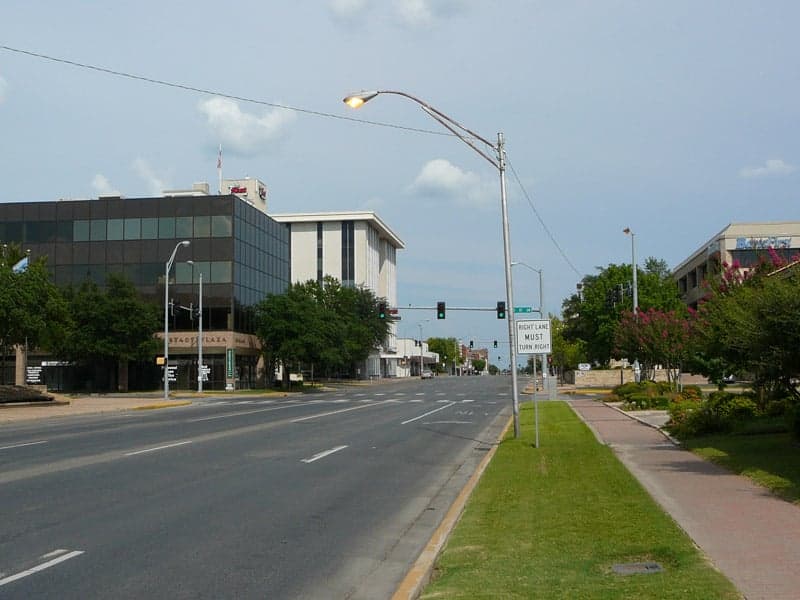
Photo: Wikipedia
Quality of Life in Ardmore, OK
A high quality of life with strong walkability, manageable living costs, healthy neighborhood signals, and solid amenity access.
What does Quality of Life tell us?
Quality of Life blends cost of living, nearby amenities, socioeconomic signals, and neighborhood character. City-level scores represent the whole municipality; individual neighborhoods can differ.
What does this tell us?
Quality of Life blends cost of living, nearby amenities, socioeconomic signals, and neighborhood character. City-level scores represent the whole municipality; individual neighborhoods can differ.
Cost of Living
28% below national average
The Real Cost of Living in Ardmore, OK for 2026
| Tier | Individual | Family (4) |
|---|---|---|
| Survival | $15k | $29k |
| Comfortable | $31k | $45k |
| Luxury | $96k+ | $148k+ |
| Elite (Top 5%) | $125k+ | $194k+ |
117%
The Area Signal
A metric tracking the socioeconomic signals of the area.
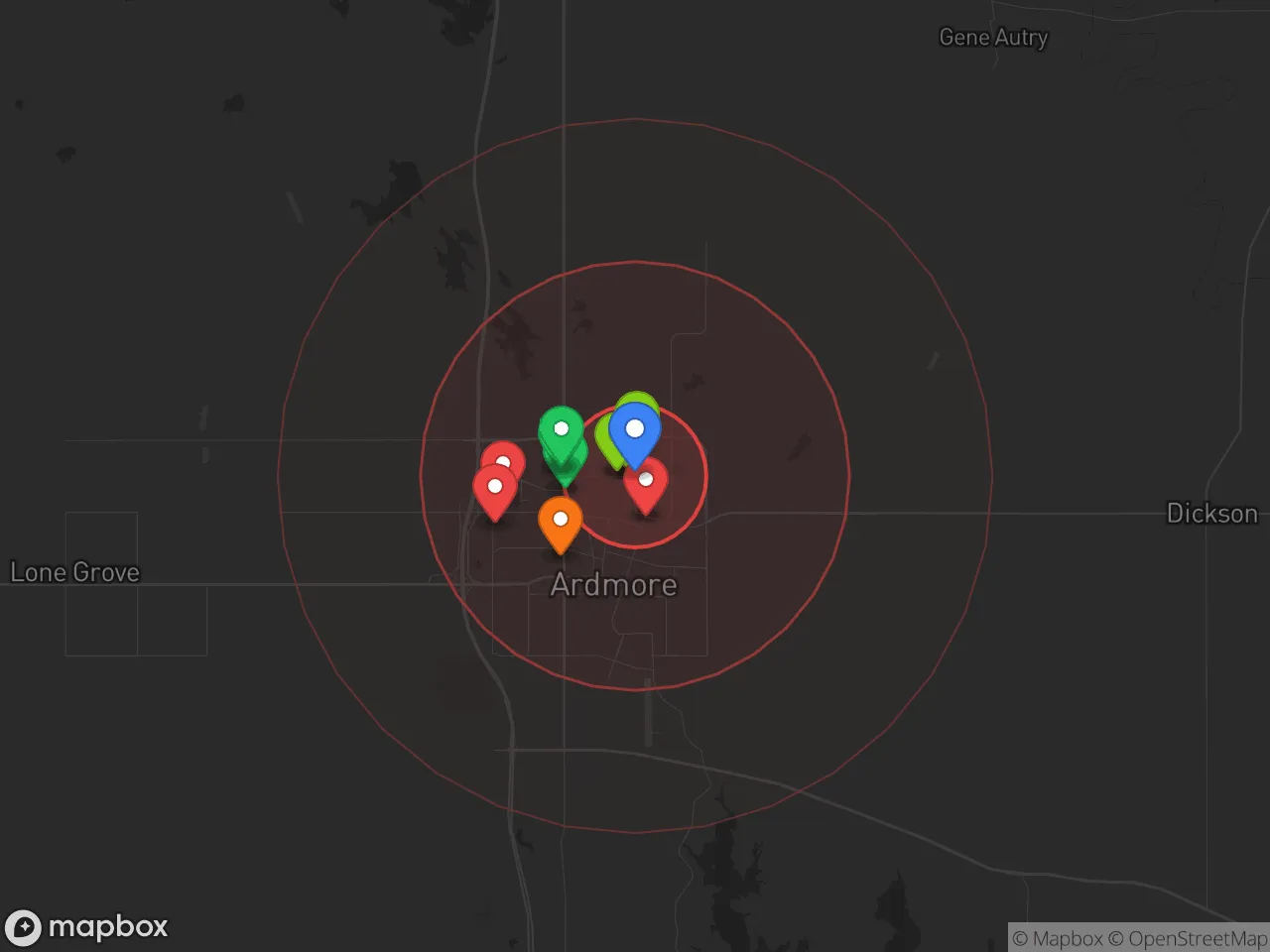
Hobbies
Explore the areaGroceries
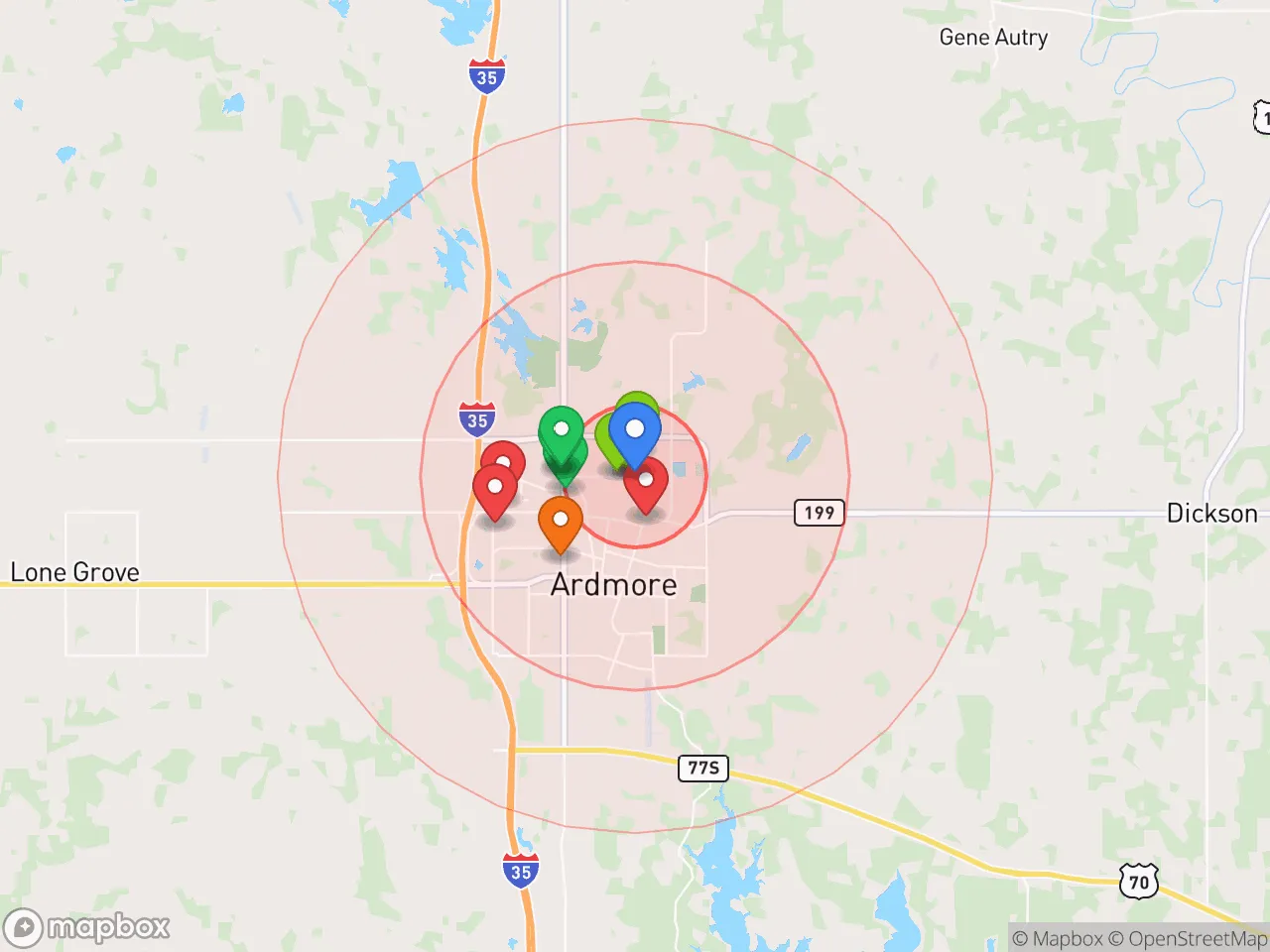
2 within 10 miles
Gas
20 within 10 miles
Hospital
3 within 20 miles
Airport
DFW — Dallas/Fort Worth International
Post Office
USPS — Ardmore, OK
Critical Amenities
Quality-of-Life Analysis
Ardmore, Oklahoma, offers a notably affordable quality of life that attracts a mix of working families, retirees, and professionals seeking a slower pace without sacrificing access to regional amenities. With a cost of living index of 72—well below the national average of 100—the city provides a financial cushion that allows residents to stretch their incomes further than in many other parts of the country. The median home value sits at $158,800, and the median rent is $959, figures that position Ardmore as one of the more budget-friendly communities in south-central Oklahoma.
Cost of living, housing affordability, and how Ardmore compares to nearby cities
Ardmore’s housing market is a primary draw, with home values roughly half the national median and rents that undercut those in larger regional hubs like Oklahoma City (about 90 miles north) and Dallas (roughly 100 miles south). The typical commute of 22.4 minutes is slightly shorter than the national average, reflecting the city’s manageable size and limited traffic congestion. For context, a household earning the local median income can comfortably afford the median-priced home, a scenario increasingly rare in many U.S. metros. Renters also benefit: the average lease payment of $959 is significantly lower than in nearby Norman or Edmond, where rents often exceed $1,200. While property taxes in Carter County are modest, residents should note that Oklahoma’s state income tax (ranging from 0.25% to 4.75%) applies, though the overall tax burden remains low compared to neighboring Texas, which has no state income tax but higher property taxes.
Local amenities, schools, and what daily life is like for families
Daily life in Ardmore centers on a compact downtown with locally owned restaurants, a historic depot, and the Ardmore Convention Center. The city’s public schools, part of Ardmore City Schools, serve roughly 3,800 students and include Ardmore High School, which offers Advanced Placement courses and career-tech programs. For outdoor recreation, Lake Murray State Park—Oklahoma’s oldest and largest state park—lies just 10 minutes south, providing hiking, fishing, and boating. The Ardmore Regional Park features sports fields and a splash pad, while the nearby Turner Falls Park in Davis offers swimming holes and scenic trails. Healthcare access is solid, with Mercy Hospital Ardmore and several clinics within city limits. Residents frequently commute to Oklahoma City or Dallas for specialized shopping, medical care, or major entertainment, but most daily errands—groceries, dining, and retail—are handled locally. The city’s rhythm is unhurried, with a strong sense of community evident in events like the annual Ardmore Main Street Art Festival and the Carter County Free Fair.
Ardmore is best suited for those who prioritize affordability and a relaxed lifestyle over urban density and career variety. Families will appreciate the low cost of housing and access to outdoor recreation, while remote workers can leverage the short commute and lower expenses. Retirees on fixed incomes find the financial predictability appealing, though those seeking high-end dining, nightlife, or diverse job markets may find the options limited. For anyone willing to trade metropolitan bustle for financial breathing room and a close-knit community, Ardmore delivers a stable, comfortable base in south-central Oklahoma.

Crime in Ardmore, OK
Crime rates similar to the national median for U.S. locations.
Violent CrimeViolent Crime Analysis
Property CrimeProperty Crime Analysis
Crime Analysis
Ardmore, Oklahoma, presents a safety profile that demands close scrutiny, with violent crime rates significantly exceeding both state and national averages. The city's violent crime rate of 1,045.8 incidents per 100,000 residents is roughly three times the national average, placing it among the more dangerous communities in Oklahoma for its size. Property crime, at 2,433.6 per 100,000, also runs well above the national benchmark, indicating a persistent challenge for residents and local law enforcement.
Crime in context
To understand Ardmore's crime landscape, it is essential to compare it to broader benchmarks. The national violent crime rate hovers around 380 per 100,000, while Oklahoma's state average is approximately 450 per 100,000. Ardmore's rate of 1,045.8 is more than double the state average and nearly triple the national figure. Property crime in Ardmore, at 2,433.6 per 100,000, also exceeds the national average of roughly 1,950 per 100,000 and the Oklahoma average of about 2,200 per 100,000. These elevated numbers suggest systemic issues rather than isolated spikes. While Ardmore is not a large metropolitan area, it is the largest city in Carter County and functions as a regional hub for commerce and services along Interstate 35. The presence of progressive judicial philosophies in any jurisdiction—characterized by lenient sentencing and a focus on offender rehabilitation over public safety—can exacerbate crime problems by reducing the deterrent effect of prosecution. Readers should be aware that such ideological approaches, if present in local courts, can directly contribute to higher recidivism and more criminals on the street, undermining justice for victims.
What residents experience
For those living in Ardmore, the high crime rates translate into tangible daily concerns. Violent offenses—including aggravated assault, robbery, and homicide—occur at a frequency that makes them a realistic worry, not just a statistical abstraction. Property crimes such as burglary, theft, and motor vehicle theft are even more common, affecting neighborhoods across the city. Residents often report feeling the need for heightened security measures, such as alarm systems, surveillance cameras, and neighborhood watch participation. The sense of safety can vary significantly by time of day and location, with certain areas near the downtown core and along major commercial corridors experiencing higher incident densities. The local police department works to address these issues, but the sheer volume of crime relative to the population size stretches resources thin.
Neighborhood-level variation in Ardmore is notable, though specific block-by-block data is limited. Generally, areas west of Interstate 35, particularly around the historic downtown and older residential districts, tend to report higher crime concentrations. Newer subdivisions on the city's east and south sides, such as those near the Ardmore Regional Park, often see lower incident rates. However, property crime can occur anywhere, and no neighborhood is entirely immune. Prospective residents are strongly advised to consult local police crime maps, speak with current residents, and visit potential neighborhoods at different times of day to gauge real-world conditions. Given the city's elevated crime rates and the potential for progressive criminal justice policies to worsen public safety outcomes, a thorough, on-the-ground assessment is critical before making a relocation decision.
* Values derived from national, state, county, city and local statistics and may differ in a specific area. Last updated: 2026-04-25T13:48:24.000Z
Narrative content on this page is AI-generated and may contain mistakes. Verify any details that matter before acting on them.
ReloMaps may earn a commission from affiliate links at no extra cost to you.

