Political ClimatePolitical Climate in Annetta North, TX
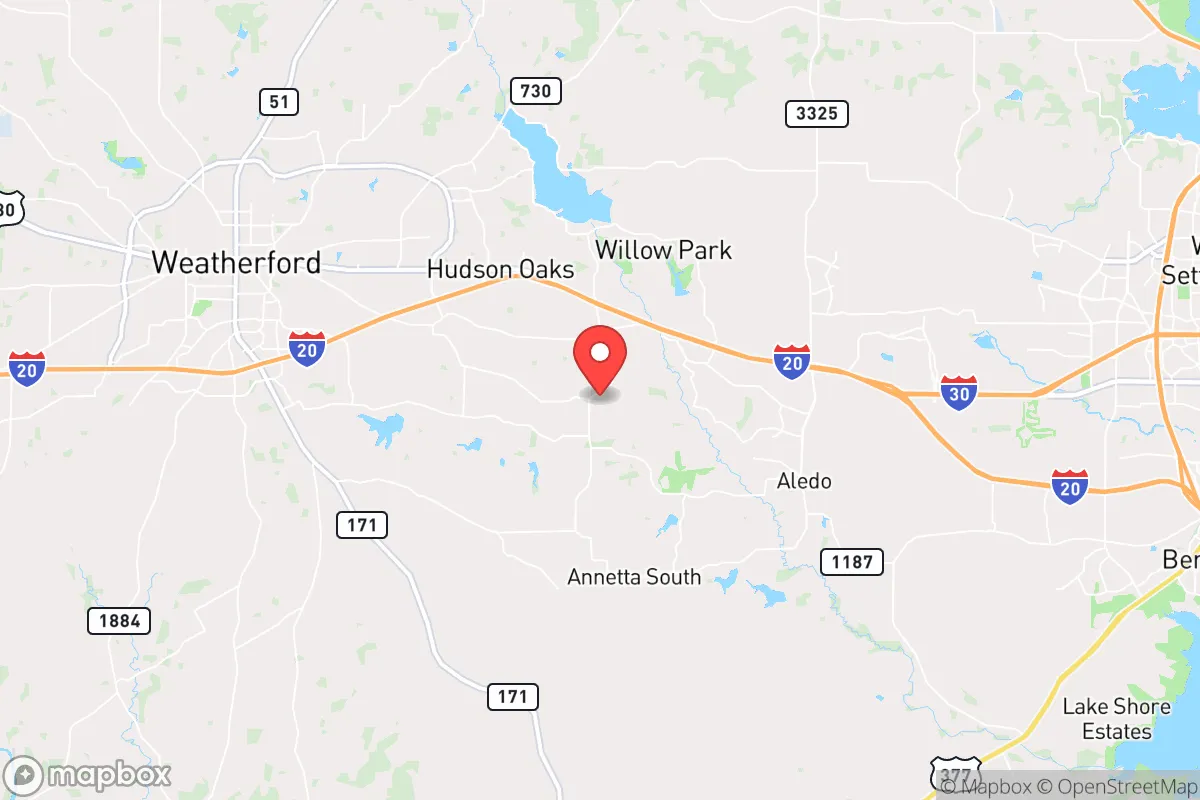
District shown is the primary district for this city’s centroid. Cities may span multiple districts.
Local Political AnalysisPolitical Analysis of Annetta North, TX
Annetta North, Texas, is about as solidly conservative as it gets in the Lone Star State, and that’s not changing anytime soon. With a Cook Partisan Voting Index of R+18, this small Parker County town votes Republican by a margin nearly 20 points above the national average. If you look at the 2024 presidential results, Parker County as a whole went +34 for the GOP, and Annetta North’s precincts were right in that wheelhouse. The trajectory here is steady—if anything, the area has hardened its conservative stance over the past decade as nearby Fort Worth has drifted leftward. You won’t find much hand-wringing over election results here; folks know what they believe and vote accordingly.
How it compares
Drive ten miles east into Tarrant County and you hit a different world. Fort Worth’s western suburbs—like Benbrook or even parts of Aledo—have seen a slow creep of purple-leaning voters, especially among younger transplants. But Annetta North sits in Parker County, which is still deeply rural and ranching-oriented. Compare it to Weatherford, the county seat: Weatherford is reliably red but has a slightly more moderate streak due to its larger population and retail economy. Annetta North, by contrast, is a tiny, incorporated enclave of about 500 homes where the local politics are run by neighbors who’ve been here for generations. The contrast with a place like Arlington or Dallas is night and day—those cities are now solidly blue, with policies on taxes, zoning, and policing that would make most Annetta North residents cringe. Even nearby Hudson Oaks, just a few miles south, has a slightly more mixed political vibe because it’s closer to the commercial corridor. Annetta North remains a bastion of old-school Texas conservatism, and the locals like it that way.
What this means for residents
For someone moving here, the political climate translates directly into daily life. Property taxes are relatively low compared to Tarrant County, and there’s no city income tax—Texas’s lack of a state income tax is a given, but Parker County keeps its appraisal rates reasonable. The local government is small and hands-off; you won’t see the kind of overreach that plagues bigger cities, like mask mandates or business shutdowns. The school board for the Aledo Independent School District, which serves Annetta North, has consistently pushed back against progressive curriculum changes and critical race theory. If you value the Second Amendment, you’ll find no local restrictions beyond state law—open carry is common, and the sheriff’s office is pro-gun. The biggest concern among long-time residents is the slow trickle of newcomers from blue states who might bring different voting habits. So far, the community has held firm, but there’s a quiet watchfulness about it. In the long term, as the Dallas-Fort Worth metroplex expands westward, Annetta North could face pressure to annex or adopt more regional policies. But for now, it’s a place where your personal freedoms are respected, and the government stays out of your business.
Culturally, Annetta North is defined by its rural roots and a strong sense of self-reliance. There’s no downtown strip or city hall drama—just a volunteer fire department, a homeowners’ association that mostly handles roads and drainage, and a lot of acreage. The annual Fourth of July parade is a big deal, and church attendance is high. You won’t find any progressive activism here; the closest thing to a political debate is whether the county should spend more on road maintenance or keep taxes flat. The policy distinction that stands out most is the town’s resistance to zoning changes that would allow dense housing or commercial development. That’s a deliberate choice to preserve the rural character and keep out the kind of growth that brings higher crime and more government intrusion. If you’re looking for a place where your vote actually counts and your voice isn’t drowned out by a city council with a progressive agenda, Annetta North is about as good as it gets in North Texas. Just don’t expect it to stay exactly the same forever—the pressure from the east is real, and it’s something to keep an eye on.

State Political ClimatePolitical Climate in Texas
State Political AnalysisPolitical Environment in the State
Texas has been a reliably Republican state for the past three decades, but the political climate is far from monolithic. The GOP holds every statewide office and both legislative chambers, but the margin of victory has narrowed from double digits in the 2000s to roughly 5.5 points in the 2024 presidential race. The dominant coalition is a mix of rural conservatives, suburban moderates, and a growing number of Hispanic voters in the Rio Grande Valley who have shifted rightward. Over the last 10-20 years, the state has seen a slow but steady Democratic creep in the suburbs, offset by a red wave in the borderlands and rural areas, creating a more volatile but still conservative overall landscape.
Urban vs. rural divide
The political map of Texas is a tale of three regions. The major urban centers—Austin, Dallas, Houston, and San Antonio—are deep blue, with Austin’s Travis County delivering a 50-point margin for Democrats in 2024. These cities drive the state’s leftward shift, fueled by transplants from California and New York and a young, college-educated workforce. In contrast, the vast rural expanse—places like Lubbock, Amarillo, and the Piney Woods of East Texas—votes 70-80% Republican. The real battleground is the suburbs. Collin County (north of Dallas) was once a GOP stronghold but has become a swing county, with Democrats winning it in 2020 before it flipped back to Trump in 2024 by a slim 3 points. Meanwhile, Hidalgo County in the Rio Grande Valley, which voted for Hillary Clinton by 40 points in 2016, went for Trump by 5 points in 2024—a stunning 45-point swing that signals a major realignment among working-class Hispanic voters.
Policy environment
Texas’s policy environment is defined by its low-tax, low-regulation posture. There is no state income tax, and the property tax burden is high but capped by a 2023 law (SB 2) that limits appraisal increases to 10% annually. The regulatory climate is business-friendly, with no state-level minimum wage above the federal $7.25 and a right-to-work law that keeps unions weak. On education, the state passed a school voucher-like program in 2023 (HB 3) that allows parents to use public funds for private school tuition, a major win for school choice advocates. Healthcare policy is conservative: Texas did not expand Medicaid under the ACA, leaving roughly 1.5 million uninsured residents, but the state has invested in rural hospital subsidies. Election laws tightened after 2020 with SB 1, which banned drive-through voting and 24-hour polling places, and added ID requirements for mail ballots. The state also enacted a near-total abortion ban (SB 8, 2021) with no exceptions for rape or incest, enforced through private civil lawsuits.
Trajectory & freedom
On personal liberty, Texas has moved in two directions. On the positive side for conservatives, the state expanded gun rights with permitless carry (HB 1927, 2021), allowing any law-abiding adult to carry a handgun without a license. Parental rights were strengthened by a 2023 law (HB 900) that requires age verification for library materials and restricts sexually explicit content in schools. Medical autonomy saw a win with the ban on COVID-19 vaccine mandates for private employers (SB 7, 2023). Property rights were bolstered by a 2021 law (HB 4348) that limits homeowners’ association restrictions on solar panels and water conservation. However, there are concerning trends. The state’s heavy-handed approach to border security—Operation Lone Star, launched in 2021—has led to National Guard deployments and arrests of migrants for trespassing, which some see as federal overreach. The state also passed a law (SB 14, 2023) banning gender-affirming care for minors, which critics argue infringes on medical decisions. The overall trajectory is toward more state-level control over social issues, which is a double-edged sword for freedom-minded residents.
Civil unrest & political movements
Texas has seen its share of political flashpoints. The 2020 Black Lives Matter protests in Austin and Dallas were large and sometimes violent, leading to property damage and a police reform backlash. On the right, the “Trump Train” convoys in 2020 and the “Take Our Border Back” rallies in 2024 have been organized but mostly peaceful. Immigration politics are the hottest button: the state’s busing of migrants to sanctuary cities like New York and Chicago has been a national story, and the 2024 law (SB 4) allowing state police to arrest illegal border crossers is currently tied up in court. Secession rhetoric, while fringe, has a real presence—the Texas Nationalist Movement claims over 450,000 supporters, and a 2024 poll showed 18% of Texans support secession. Election integrity remains a sore point: the 2022 primary saw a high-profile dispute in Harris County (Houston) over paper ballot shortages, leading to a state takeover of the county’s elections in 2023. A new resident will notice the constant political tension, especially in the suburbs where yard signs for both parties are common.
Projection
Over the next 5-10 years, Texas will likely remain Republican but with a narrower margin. The key demographic driver is the Hispanic vote: if the shift seen in the Rio Grande Valley continues, the GOP could solidify a multi-ethnic coalition that offsets losses in the suburbs. However, the influx of 1,000+ people per day, mostly from blue states, is slowly turning the Dallas-Fort Worth and Houston suburbs purple. By 2030, expect Collin County and Fort Bend County to be true swing counties, while rural areas stay deep red. The state’s policy environment will likely see a push for school choice expansion, further property tax relief, and possibly a state-level immigration enforcement system. The biggest wildcard is the federal government: if a Democratic administration in 2028 tries to force Medicaid expansion or voting rights changes, Texas will fight it in court, creating years of uncertainty. For someone moving in now, expect a state that is still conservative but increasingly contested, with more political ads and local activism than a decade ago.
For a new resident, the bottom line is this: Texas offers a low-tax, high-freedom environment on paper, but the political climate is heating up. You’ll find strong gun rights, school choice, and a business-friendly government, but you’ll also see growing polarization in the suburbs and constant battles over immigration and education. If you’re looking for a place where your values are the default, the smaller cities and rural areas are your best bet. If you’re moving to a major metro, be prepared for a blue island in a red state—and a political landscape that’s only going to get more interesting.
* Values derived from national, state, county, city and local statistics and may differ in a specific area. Last updated: 2026-04-27T02:19:27.000Z
Narrative content on this page is AI-generated and may contain mistakes. Verify any details that matter before acting on them.
ReloMaps may earn a commission from affiliate links at no extra cost to you.

