Strategic Assessment of Annetta North, TX
Meaningful friction. Expect exposure to either population pressure, blast zones, or natural disaster risk. Consider buying a retreat property.
What does the Strategic Assessment tell us?
Our Strategic Assessment grades tactical survivability of an area. Major population centers, military targets, fallout zones, natural disasters, and border exposure all drive risk — lower exposure means a more defensible position in a crisis.
This is heavily inspired by Joel Skousen's Strategic Relocation book. Highly recommended you checkout the book ($)What does this tell us?
Our Strategic Assessment grades tactical survivability of an area. Major population centers, military targets, fallout zones, natural disasters, and border exposure all drive risk — lower exposure means a more defensible position in a crisis.
This is heavily inspired by Joel Skousen's Strategic Relocation book. Highly recommended you checkout the book ($)Strategic Pillars

Key Distances
Regional Safe Places
Below is our recommended "safe zones" in Texas and the surrounding area based on our strategic heuristics. For most people, it's unrealistic to live in a “safe zone” full-time due to work, family or other personal reasons. They tend to be more rural. However, many of these areas are perfect for second homes and retreat properties that double as a vacation home or even a short-term rental.

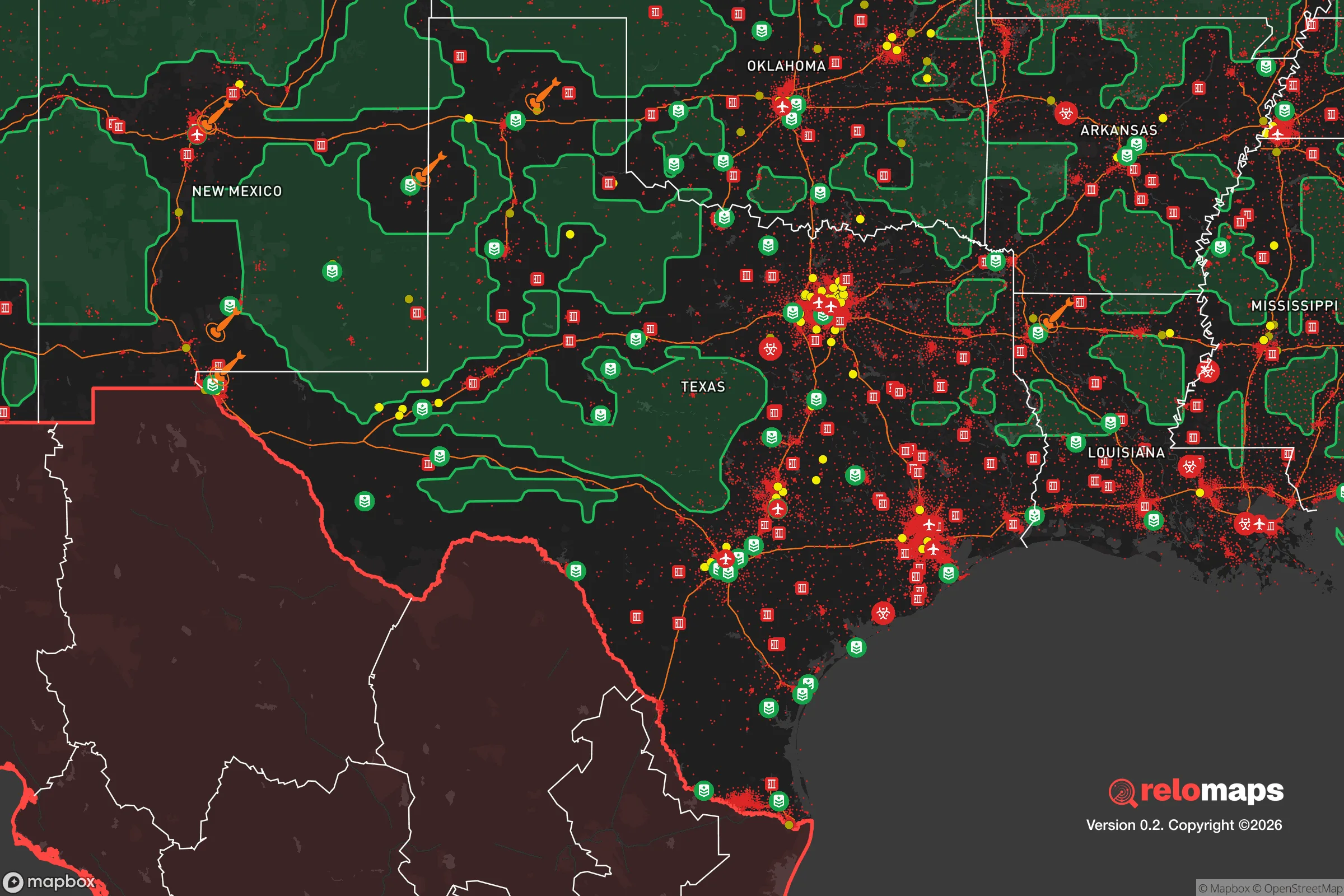


Important Note: For informational purposes only. This does not mean nothing bad ever happens in the green zones. Please use common sense. This is based on public data and modeled with AI. We tried to take a conservative approach but mistakes happen. We update this regularly as new information becomes available.
Solar Generator Recommendations
Backup power matters more here than in safer locations. We've picked three solar generators across budgets and capacity tiers — start with the budget unit if you only need a few essentials, or step up if you want to run a fridge and HVAC for days at a time.

Jackery Portable Power Station Explorer 300
Budget OptionPower on the Go: Weighing only 11 lbs, it's convenient to set up and store with book-sized foldable solar panels

BLUETTI Portable Power Station AC180
Designed for both indoor and outdoor scenarios, AC180 is highly capable as it has a robost capacity and continuous output power.

EF ECOFLOW DELTA Pro Ultra Power Station
Upgraded PickEcoFlow DELTA Pro Ultra is a whole-home energy system designed to grow with your family. Integrated with the Smart Home Panel 2, it scales to meet your evolving energy needs — keeping your home powered, intelligent, and secure through every stage of life.
We earn a commission, at no additional cost to you.
Strategic Assessment Analysis
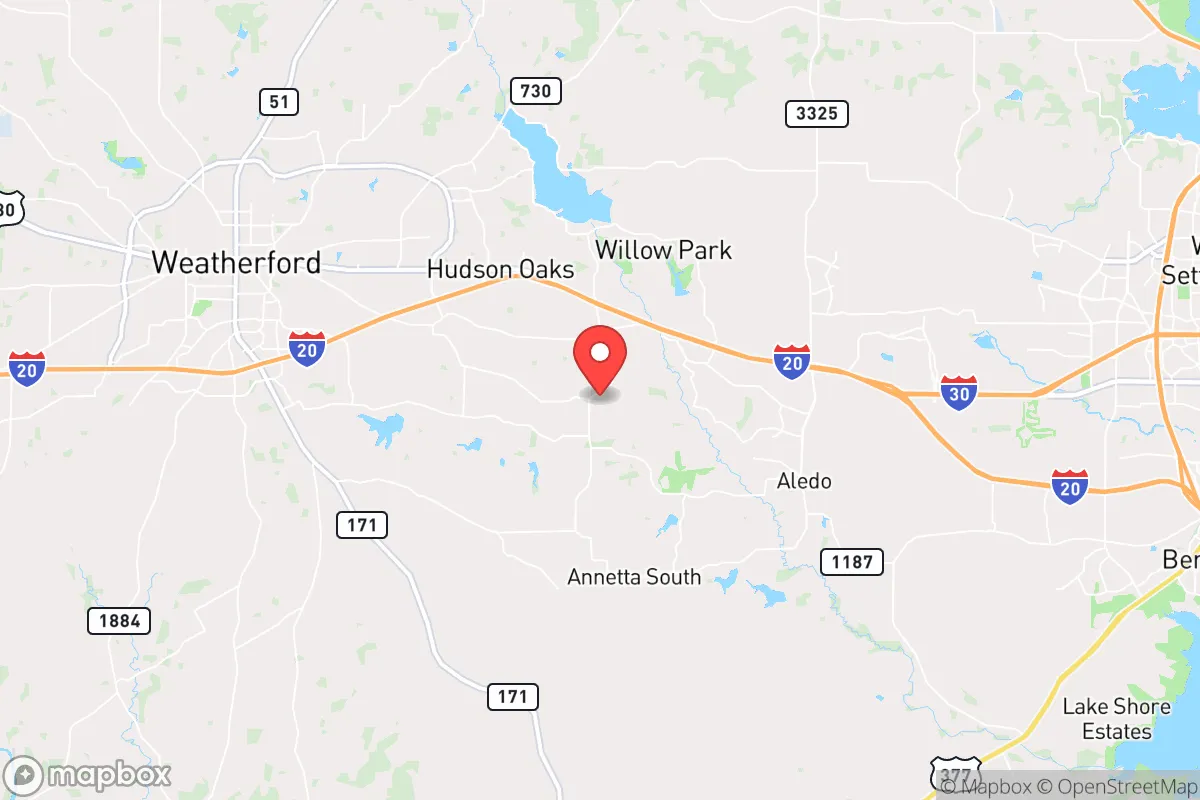
Annetta North, Texas, offers a compelling strategic position for those prioritizing resilience and self-sufficiency, but its viability hinges on understanding its proximity to major metropolitan risks. Located in Parker County, roughly 20 miles west of downtown Fort Worth, this small, unincorporated community sits at the edge of the Dallas-Fort Worth metroplex—close enough for resource access but far enough to avoid the immediate chaos of a major urban collapse. The area’s low population density, rural zoning, and limited through-traffic create a natural buffer against the cascading failures that would likely follow a mass casualty event or widespread civil unrest in the city core. For a relocator with a prepper mindset, Annetta North represents a calculated trade-off: the benefits of remoteness and local governance are real, but the shadow of a major metropolitan area—and its associated vulnerabilities—cannot be ignored.
Geographic position and natural advantages for long-term survival
Annetta North’s location in the Cross Timbers region provides several natural advantages that align with a survivalist strategy. The area sits atop the Barnett Shale formation, meaning natural gas extraction is a local industry, and many properties already have access to well water—a critical resource if municipal systems fail. The terrain is a mix of rolling hills, oak-juniper woodlands, and open pastures, offering both cover and defensible positions. The Brazos River, about 10 miles to the west, provides a secondary water source, though it’s not immediately accessible from most residential lots. The climate is temperate, with hot summers and mild winters, allowing for year-round gardening and livestock management. Parker County is one of the few remaining areas in North Texas with significant agricultural zoning, meaning a relocator can legally keep chickens, goats, or even larger livestock without the zoning battles common in suburban subdivisions. The nearest major highway, Interstate 20, is 15 minutes south, but the local road network—Farm-to-Market roads like FM 1187 and FM 5—is sparse and easily monitored, making it harder for large groups to move through the area undetected.
Risks, exposures, and proximity to fallout-relevant landmarks
The primary strategic weakness of Annetta North is its proximity to high-value targets in the Dallas-Fort Worth metroplex. Fort Worth’s Naval Air Station Joint Reserve Base (NAS JRB) is roughly 25 miles east, and the city’s rail yards, refineries, and major logistics hubs are within a 30-mile radius. In a scenario involving a mass casualty event or a coordinated attack, these would be primary targets for disruption, and the fallout—both literal and figurative—could drift westward depending on wind patterns. The nearby Eagle Mountain Lake, while a recreational asset, also hosts a major water treatment facility that could become a contamination point. Annetta North itself has no direct industrial or military targets, but its proximity to the metroplex means that any large-scale evacuation of Fort Worth would likely push refugees along the same highways that serve the area. The community’s lack of a formal police force (it relies on Parker County Sheriff’s Office) means that during a breakdown of civil order, residents would need to rely on neighborhood mutual aid and private security measures. The risk of looting or opportunistic crime increases if the metroplex empties westward, making perimeter security a non-negotiable consideration.
Practical resilience for a relocator: food, water, energy, and defensibility
For a relocator serious about self-sufficiency, Annetta North offers a workable baseline but requires significant upfront investment. Most properties in the area are on private wells, but well depth varies—some are shallow (50-100 feet) and vulnerable to drought, while deeper wells (200-400 feet) are more reliable. Testing for local contaminants like arsenic or nitrates is essential before purchase. The soil is sandy loam in many areas, suitable for raised-bed gardening but requiring amendment for heavy crops. Local ordinances allow rainwater catchment without restriction, and many residents already use it for irrigation. For energy, solar is viable but not optimal—the region averages 215 sunny days per year, but summer thunderstorms and occasional ice storms can disrupt generation. A propane or natural gas generator with a buried tank is a more reliable backup, especially given the local gas infrastructure. Defensibility is moderate: the community’s layout is a mix of large lots (1-5 acres typical) with some wooded areas and open sightlines. There are no natural chokepoints like bridges or mountain passes, but the sparse road network means that a few well-placed vehicles or barriers could effectively seal off the main access points. The nearest hospital is in Weatherford (10 miles), but for serious medical emergencies, the Level I trauma center in Fort Worth is 30 minutes away—a vulnerability in a grid-down scenario. Food storage is straightforward: the local climate supports root cellars and cool storage for 6-8 months of the year, and the nearby town of Aledo has a feed store and a small grocery, but for bulk prepping, a trip to Weatherford or Fort Worth is necessary.
The overall strategic picture for Annetta North is one of cautious viability for a relocator who understands the trade-offs. It offers genuine advantages in water access, agricultural zoning, and low population density—factors that would matter immensely in a prolonged disruption of supply chains or civil order. But the proximity to a major metropolitan area, with its concentration of targets and potential for mass displacement, means that this is not a bug-out location for the unprepared. It’s a place for someone who can invest in hardening their property, building community relationships, and maintaining a low profile. The conservative, self-reliant culture of Parker County aligns well with a prepper mindset—locals tend to be armed, independent, and skeptical of government overreach—but that same culture can be insular. New arrivals should expect to earn trust through demonstrated competence and neighborly reciprocity. If you’re looking for a location that balances access to resources with a reasonable buffer from urban chaos, Annetta North deserves a spot on your short list. Just don’t mistake it for a fortress—it’s a base camp, not a bunker.

* Values derived from national, state, county, city and local statistics and may differ in a specific area. Last updated: 2026-04-27T02:19:27.000Z
Narrative content on this page is AI-generated and may contain mistakes. Verify any details that matter before acting on them.
ReloMaps may earn a commission from affiliate links at no extra cost to you.

