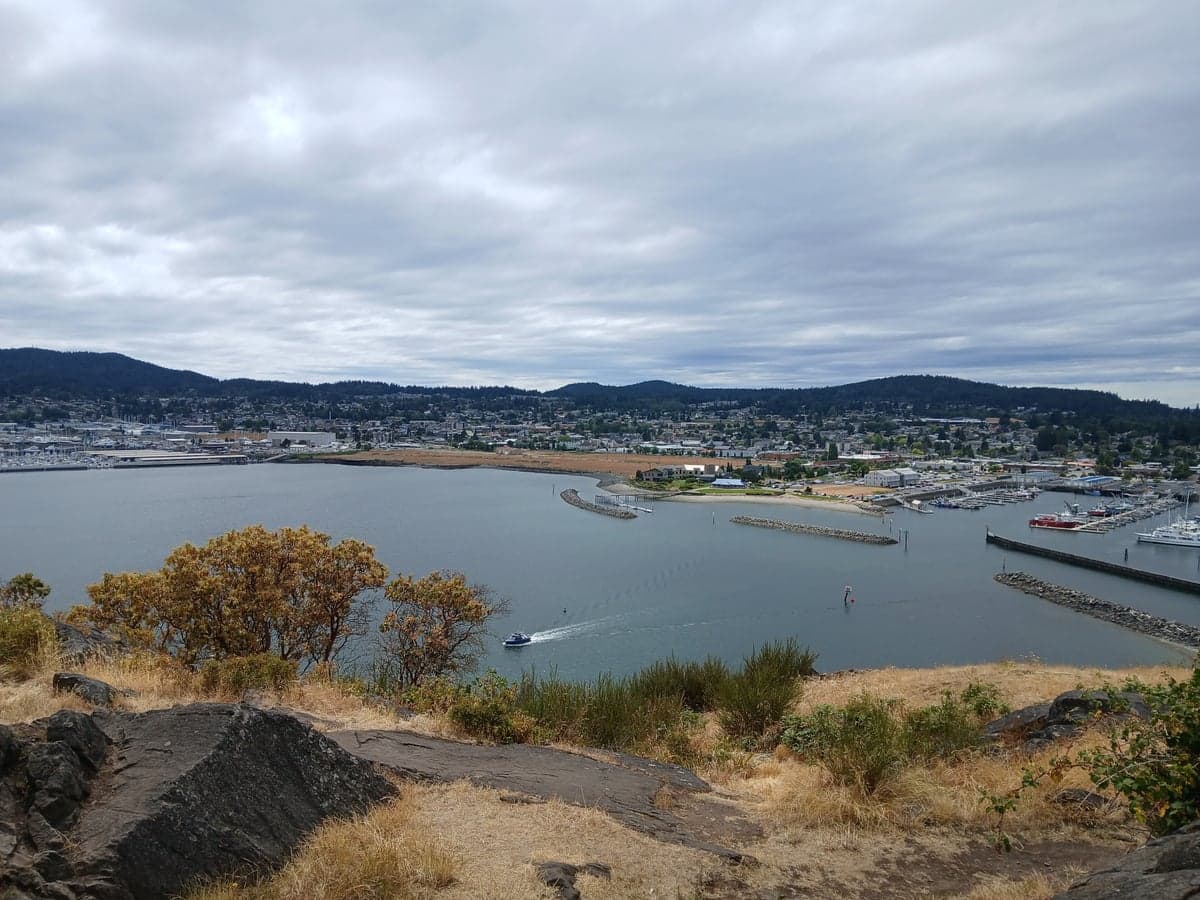
Photo: Wikipedia
Political ClimatePolitical Climate in Anacortes, WA
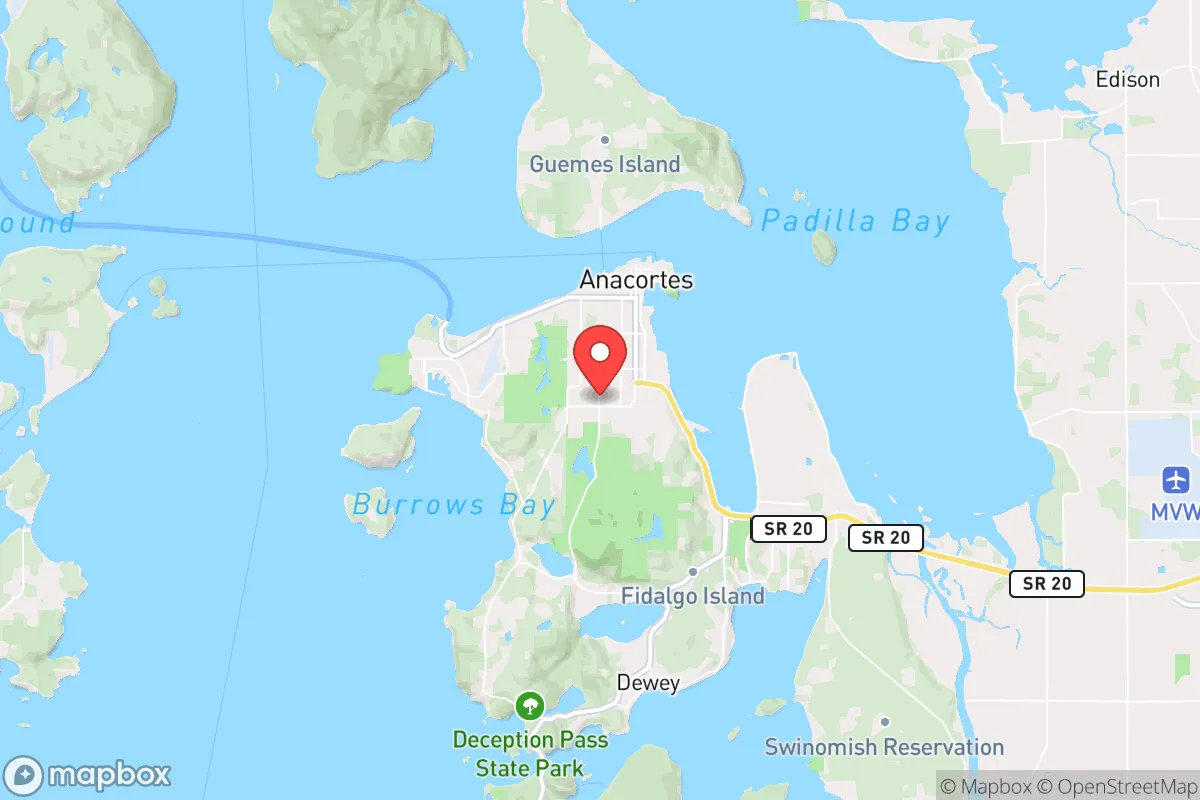
District shown is the primary district for this city’s centroid. Cities may span multiple districts.
Local Political AnalysisPolitical Analysis of Anacortes, WA
Anacortes leans solidly Democratic, with a Cook Partisan Voting Index of D+12, making it one of the more reliably blue communities in Skagit County. The town’s political trajectory has been steadily leftward over the past decade, driven by an influx of remote workers from Seattle and a growing retiree population drawn to the waterfront lifestyle. While the surrounding county as a whole is more competitive—often flipping between parties in local races—Anacortes itself has not voted Republican in a presidential election since 2004. The shift is palpable: where Fidalgo Island used to be a mix of fishing families and refinery workers with conservative leanings, today’s newcomers tend to prioritize environmental policy, public transit expansion, and affordable housing initiatives.
How it compares
Compared to Washington state as a whole—which has a Cook PVI of D+8—Anacortes is about four points more Democratic, placing it in the same league as Seattle’s inner suburbs rather than the more moderate coastal towns. For context, nearby Mount Vernon (Cook PVI roughly D+5) and Burlington (lean Republican, around R+4) offer stark contrasts. Drive 20 minutes east and you’ll find yourself in conservative Skagit Valley farm country, where signs for local GOP candidates outnumber Democratic ones by a wide margin. Anacortes’s D+12 rating puts it closer to Bellingham (D+14) than to the rest of Skagit County, which averages closer to D+2. The difference is especially visible in school board and city council races: Anacortes consistently elects progressive candidates, while nearby Sedro-Woolley and Concrete lean conservative. This political bubble effect means that national issues like gun rights and immigration play out differently here—town hall meetings on housing density draw 200 people, while the same topic in Mount Vernon might draw 50.
What this means for residents
For liberal residents, Anacortes feels like a safe harbor: local government is responsive on climate action (the city has a net-zero emissions goal by 2035) and social services, with the library system and senior center receiving robust funding. Conservative residents, however, aren’t marginalized—they just have to drive to Mount Vernon for a GOP club meeting or to Burlington for a gun show. The practical reality is that property taxes and local levies tend to pass easily, which keeps parks and marinas well-maintained but can feel like a burden to those on fixed incomes. Politically active conservatives often focus on school board races and the port commission, where they’ve had some success in slowing down what they see as overreach on environmental regulations affecting the refineries. The key distinction: Anacortes’s politics are less about culture war battles and more about land use, ferry schedules, and salmon habitat—issues that unite and divide across party lines.
Culturally, Anacortes stands out for its strong environmental stewardship ethos, which transcends party affiliation. The local paper, the Anacortes American, covers city council meetings in granular detail, and turnout in local elections regularly hits 60%—far above the national average. The biggest policy distinction from the rest of Washington is the city’s aggressive approach to shoreline management: building setbacks are stricter here than state law requires, a move that rankles some property owners but has preserved the working waterfront character. For newcomers, the political climate means you’ll hear more about orca recovery than tax cuts at the coffee shop, but you’ll also find a community that genuinely tries to hash out differences over potlucks and port commission hearings. It’s not a place where politics dominates daily life—it’s a place where the politics quietly shapes the view from the ferry dock.

State Political ClimatePolitical Climate in Washington
State Political AnalysisPolitical Environment in the State
Washington state has been a reliably Democratic stronghold for over a decade, but its politics are far more complex than a simple blue label. The state’s overall lean is driven by the massive, liberal-leaning population of King County (Seattle) and its surrounding suburbs, which consistently deliver margins of +30 to +40 points for Democrats. However, the rest of the state—eastern Washington, the Olympic Peninsula, and many rural areas—votes just as heavily Republican. Over the last 20 years, the state has shifted leftward, with Democrats gaining a supermajority in the legislature and holding every statewide office, but the 2024 election saw a slight tightening in some rural and suburban areas, suggesting the blue wave may be cresting.
Urban vs. rural divide
The political map of Washington is a tale of two states. The western third, anchored by Seattle, Bellevue, and Redmond, is overwhelmingly Democratic. King County alone casts about a third of the state’s votes and delivers a net margin of roughly 500,000 votes for Democrats—enough to offset the entire rest of the state. Spokane, the largest city east of the Cascades, is a swing area: the city itself leans Democratic, but the surrounding Spokane County is reliably red. Yakima and the Tri-Cities (Kennewick, Pasco, Richland) are conservative strongholds, with Pasco’s growing Latino population adding a new dynamic. The rural counties of Ferry, Stevens, and Pend Oreille in the northeast routinely vote 70-80% Republican. The divide isn’t just geographic—it’s cultural. A resident of Wenatchee or Port Angeles will experience a completely different political reality than someone in Capitol Hill, Seattle.
Policy environment
Washington’s policy environment is defined by a few key levers. There is no state income tax, which is a major draw for conservatives, but the state relies heavily on a high sales tax (6.5% state, plus local add-ons up to 10.6%) and high property taxes. The regulatory posture is among the most aggressive in the nation: the state has a strict carbon cap-and-trade program (Climate Commitment Act), a long-term care payroll tax (WA Cares Fund), and some of the nation’s strongest tenant protections. Education policy is dominated by the teachers’ union, with per-pupil spending among the highest in the U.S., but outcomes vary wildly by district. Healthcare is heavily regulated, with a state-based insurance exchange and a public option (Cascade Care). Election laws are among the most accessible: all-mail voting is universal, same-day registration is available, and ballots are automatically sent to every registered voter. This system produces high turnout but has drawn criticism from conservatives over ballot security concerns.
Recent policy direction
Recent legislation shows a clear trajectory toward expanded government services and individual liberties on social issues, but with significant restrictions on gun rights and property use. In 2023, the legislature passed a ban on the sale of assault weapons (HB 1240) and a 10-day waiting period for all firearm purchases (HB 1143), both signed by Governor Jay Inslee. A 2024 law (HB 2116) requires safe storage of firearms and imposes liability on gun owners if a minor gains access. On education, a 2023 law (SB 5599) allows minors 13 and older to receive shelter and services without parental consent if they are homeless or at risk of harm—a flashpoint for parental rights advocates. On privacy, the state passed the Washington My Health My Data Act in 2023, one of the nation’s strongest health data privacy laws, but it also expanded surveillance powers for police in certain cases. On bodily autonomy, abortion remains legal without gestational limits, and the state has a “shield law” protecting providers who serve out-of-state patients. Property rights are constrained by the Growth Management Act, which limits development in rural areas and has driven up housing costs. Ballot access remains easy, but a 2024 law (SB 5882) requires signature verification for all ballots, a response to election integrity concerns.
Civil unrest & political movements
Washington has a history of visible political activism. The 2020 protests in Seattle, including the Capitol Hill Autonomous Zone (CHAZ), were a national flashpoint. Since then, organized movements have become more entrenched. On the left, groups like Washington Bus and Moms Rising push for progressive policies, while the Washington State Labor Council remains a powerful force. On the right, the Washington State Republican Party has seen a rise in grassroots activism, particularly around election integrity and parental rights in schools. The sanctuary state law (2019’s Keep Washington Working Act) limits local law enforcement cooperation with federal immigration authorities, a frequent source of tension. In 2024, a secessionist movement in eastern Washington—the “Liberty State” proposal—gained some traction but remains fringe. Election integrity controversies flared in 2022 and 2024, with Republican candidates challenging results in close races, but no major fraud has been proven. A new resident in Olympia or Vancouver will see regular protests at the state capitol, while in Spokane Valley, the political energy is more likely to be at school board meetings.
Projection
Over the next 5-10 years, Washington’s political trajectory is likely to continue leftward on social and environmental issues, but with potential friction points. In-migration from California and other high-cost states is bringing more progressive voters to the Seattle suburbs, but also more fiscally conservative tech workers who may push back on taxes. The state’s aging population in rural areas is shrinking, while the Latino population in the Tri-Cities and Yakima is growing—a demographic that could shift some rural areas toward the center. The cap-and-trade program’s rising costs are already generating backlash, and a 2024 ballot initiative to repeal it (I-2117) failed, but the issue isn’t dead. Expect continued fights over gun laws, parental rights, and housing density. A conservative moving to Ridgefield or Battle Ground will find a growing community of like-minded people, but will still be governed by a Democratic supermajority in Olympia. A liberal moving to Bellingham or Port Townsend will find the political culture deeply aligned with their values, but will pay some of the highest taxes in the nation.
For a new resident, the bottom line is this: Washington offers a high degree of personal liberty on social issues and no income tax, but at the cost of heavy regulation, high sales and property taxes, and a political environment where your vote is likely to be overwhelmed by the Seattle metro area if you lean conservative. If you’re a conservative, you’ll find like-minded communities in the eastern half of the state and in exurbs like Yelm or Eatonville, but you’ll need to accept that state policy will often run counter to your values. If you’re a liberal, you’ll find a state that largely aligns with your views, but be prepared for a high cost of living and a growing backlash against progressive policies in rural areas. Either way, the state’s political reality is shaped by a deep urban-rural divide that shows no signs of healing.
* Values derived from national, state, county, city and local statistics and may differ in a specific area. Last updated: 2026-08-27T19:29:18.000Z
Narrative content on this page is AI-generated and may contain mistakes. Verify any details that matter before acting on them.
ReloMaps may earn a commission from affiliate links at no extra cost to you.

