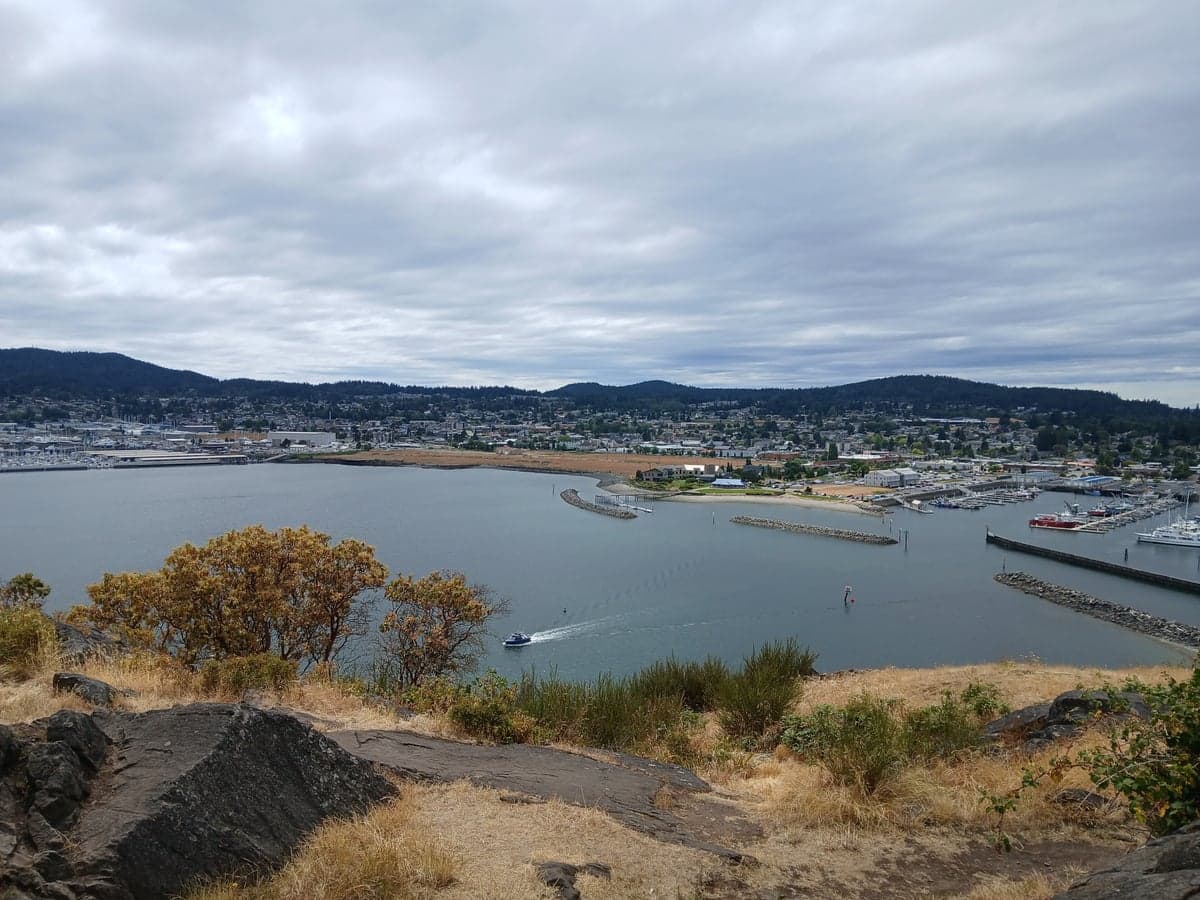
Photo: Wikipedia
Demographics of Anacortes, WA
Affluence Level in Anacortes, WA
An upper-middle-class area. Household wealth, education levels, and homeownership run ahead of national benchmarks.
People of Anacortes, WA
The people of Anacortes, Washington, today number roughly 17,800, forming a predominantly white (87.2%) and highly educated (45.7% college graduates) community with a notably low foreign-born share of just 1.7%. The city’s identity is shaped by its working-class maritime roots, a growing retirement and second-home population drawn to the San Juan Islands gateway, and a small but stable Hispanic (5.0%) and East/Southeast Asian (1.6%) presence. Residents describe a tight-knit, outdoors-oriented culture where the working waterfront and tourism economy coexist, and where neighborhood loyalties often trace back to the industry that built them.
How the city was settled and grew
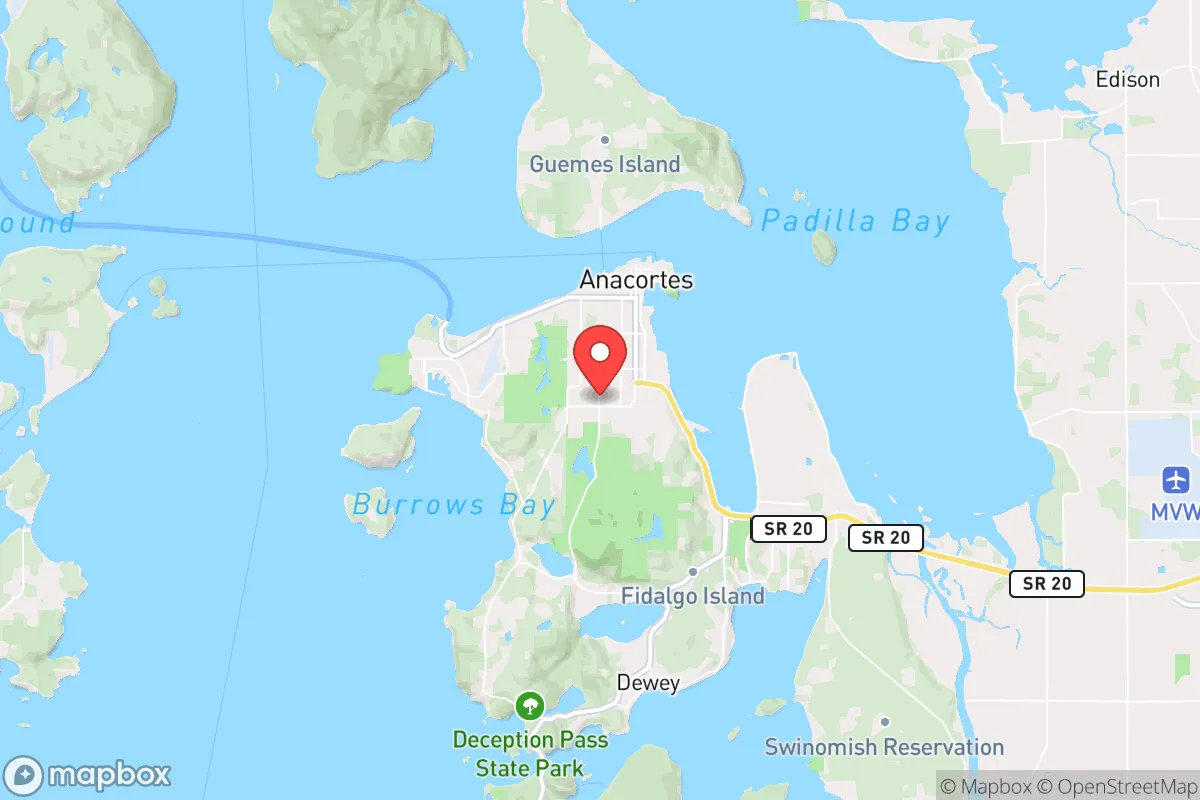
Anacortes was formally platted in 1876 by Amos Bowman, a Canadian surveyor who envisioned a major railroad terminus on Fidalgo Island. The original population was overwhelmingly white, drawn from New England and the Midwest, and the city’s early economy depended on lumber mills, fishing, and the promise of rail connections. The first major wave of non-white settlement came with Chinese and Japanese laborers who worked in the salmon canneries and hop fields during the 1880s and 1890s. These workers established a small enclave in what is now the Old Town district, near the waterfront along Commercial Avenue, where boarding houses and a handful of Chinese-owned businesses operated until anti-Asian exclusion laws and local hostility pushed most families out by the 1910s. A second wave arrived during World War I and the 1920s, when the Puget Sound Naval Shipyard in nearby Bremerton and the Anacortes shipyards drew Scandinavian and Northern European immigrants—primarily Swedes, Norwegians, and Finns—who settled in the Maritime Heights neighborhood, building modest homes on the hillsides above the shipyards. The Great Depression and World War II brought a third wave: defense workers and Navy personnel, many from the Midwest and Plains states, who filled the Sunset Beach area with wartime housing that later became permanent working-class neighborhoods. By 1950, Anacortes was 98% white, with the small Asian population concentrated in Old Town and a handful of Hispanic families working in the canneries living near the R Avenue corridor.
Modern era (post-1965)
The 1965 Hart-Cellar Act had minimal direct effect on Anacortes’ demographics, as the city’s remote location and limited industrial base attracted few post-1965 immigrants. The foreign-born share remains at 1.7%, far below the national average. The most significant demographic shift since the 1970s has been domestic in-migration: retirees and second-home buyers from the Seattle metro area and California, drawn by the lower cost of living and access to the San Juan Islands. These newcomers concentrated in the Cap Sante neighborhood, where historic Victorian homes were renovated, and in the newer Fidalgo Bay subdivisions built on the eastern edge of town. The Hispanic population grew from under 1% in 1980 to 5.0% today, driven by agricultural and construction workers, many of whom settled in the March’s Point area near the oil refinery and along the 32nd Street corridor, where rental housing is more affordable. The East/Southeast Asian population (1.6%) is largely composed of Filipino and Vietnamese families who arrived in the 1980s and 1990s, many connected to the fishing and seafood processing industries; they are dispersed across the city, with no single ethnic enclave. The Black population remains very small at 0.5%, and the Indian subcontinent population is negligible at 0.1%. The college-educated share has risen sharply from 22% in 1990 to 45.7% today, reflecting the influx of professionals and retirees.
The future
Anacortes’ population is projected to grow slowly, reaching roughly 20,000 by 2040, driven by continued retirement migration and limited new housing construction. The city is becoming slightly more diverse, but the pace is slow: the Hispanic share is expected to rise to 7-8% by 2040, while the white share will likely decline to the low 80% range. Newer residents—mostly white, college-educated, and older—are concentrating in the Skyline subdivision and the Marine View Drive area, while younger families and Hispanic households are more likely to settle in the R Avenue and 32nd Street corridors, where housing is less expensive. The cultural identity is evolving from a blue-collar fishing and refinery town toward a more affluent, amenity-driven community centered on tourism, outdoor recreation, and remote work. For a newcomer, this means a place where the old working-class ethos still lingers in neighborhoods like Old Town and Maritime Heights, but where the dominant social and economic energy is increasingly shaped by retirees and professionals who value the natural setting over industrial heritage.
Anacortes is becoming a quieter, older, and more expensive version of itself—a gateway community where the working waterfront persists but no longer defines the town’s character. For a conservative-leaning family or individual moving in, the appeal lies in the low crime rate, strong schools, and access to outdoor recreation, balanced against the reality of a limited job market and a population that is less diverse and less transient than most of the Pacific Northwest.

* Values derived from national, state, county, city and local statistics and may differ in a specific area. Last updated: 2026-08-27T19:29:18.000Z
Narrative content on this page is AI-generated and may contain mistakes. Verify any details that matter before acting on them.
ReloMaps may earn a commission from affiliate links at no extra cost to you.

