Political ClimatePolitical Climate in Aledo, TX
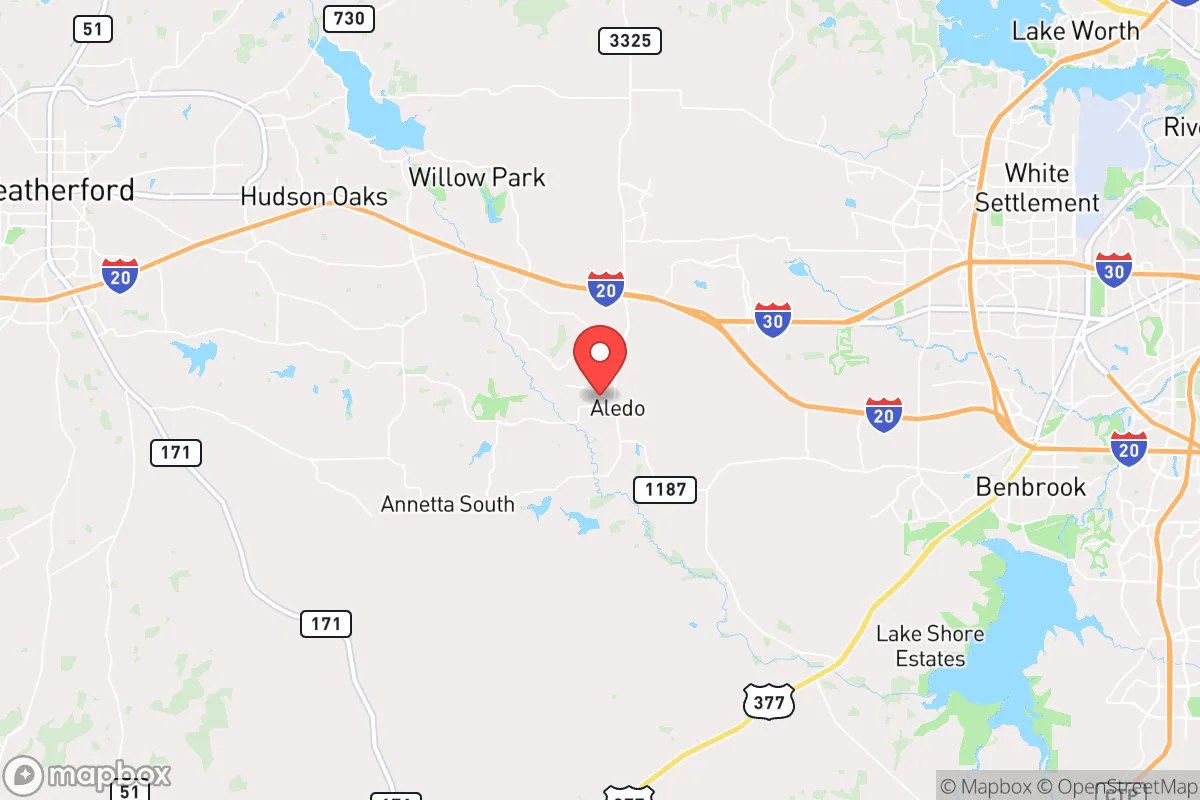
District shown is the primary district for this city’s centroid. Cities may span multiple districts.
Local Political AnalysisPolitical Analysis of Aledo, TX
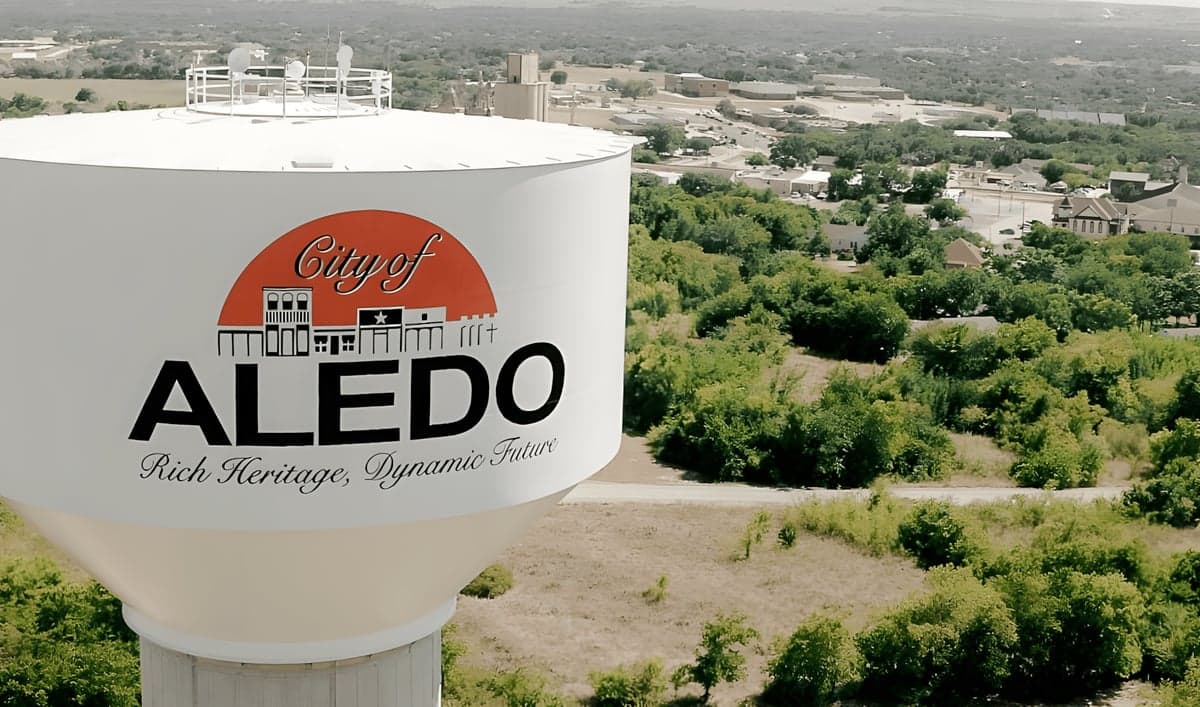
Aledo, Texas, is a solidly conservative community that has only deepened its Republican lean over the past decade, reflecting both its deep suburban roots and its rapid growth from a small farm town into an affluent bedroom community. The Cook Partisan Voting Index (PVI) for the area is rated at R+11, meaning the district is about 11 points more Republican than the national average. In practice, this means Republicans typically win local, state, and federal elections by comfortable double-digit margins, and the political conversation reflects a broadly small-government, pro-business, and socially conservative mindset. If you’re a conservative, you’ll find nearly every local elected official, school board member, and city council candidate campaigns on a platform of low taxes, law-and-order priorities, and property rights. If you’re a liberal or moderate, you are a clear minority, but you’re not alone—Aledo’s fast growth is bringing more professionals from diverse corporate backgrounds, which has softened some edges in day-to-day interactions, even if it hasn’t changed voting results.
How it compares
Compared to the broader state of Texas (whose statewide Cook PVI is not precisely quantified but is commonly rated between R+8 and R+10 at the presidential level), Aledo is notably more conservative than the state as a whole. While Texas is reliably Republican at the state and congressional levels, Aledo sits well to the right of even that baseline. To see the contrast firsthand, you only need to drive 15 miles east into Crowley or Burleson, which are more purple—especially in local races—or head into the more densely urbanized areas of east Tarrant County. Fort Worth proper, about 20 minutes east, is a real political contrast: it votes reliably Democratic in state and presidential elections, and its city council debates reflect a more diverse urban constituency. Within Parker County itself, the political fabric stays very consistent—school board races and city council contests in Aledo rarely see more than one or two competitive seats per cycle, and the standard Republican primary is the de facto general election. The only real political friction you’ll see locally is the ongoing tension between older residents who want to preserve the town’s rural character and newer arrivals who want to manage growth, both of which are usually framed through a conservative lens.
What this means for residents
For conservative residents, this deep lean means their policy preferences are almost always reflected in local decisions—property taxes are kept as low as the state formula allows, zoning is minimal, and discussions about new development tilt toward private property rights rather than centralized planning. Schools (Aledo ISD) remain heavily parent-driven, with a curriculum that is often reinforced by religious and community values. For liberal or moderate residents, the practical effect is that they need to be comfortable with a political environment where their views are rarely the majority at the ballot box, but where respectful dialogue is still possible if you speak in terms of values and community benefit rather than partisan labels. Local civic groups sometimes mirror this challenge—there aren’t active Democratic clubs or progressive meetups in town, but residents who want to get involved in school committees or beautification projects will find that political persuasion rarely comes up in those settings. The main day-to-day issue for any resident is traffic, not politics: the commute into Fort Worth or Alliance Logistics embeds a practical libertarianism that most will find familiar.
A couple of cultural distinctions set Aledo apart. Unlike many nearby Parker County towns that have a distinct rodeo or ranching identity, Aledo’s recent growth is almost exclusively from white-collar relocations leaving the congestion of the Metroplex for a rural-feeling suburb. You’ll see more Tesla models and new builds than pickup trucks and split-level families, which pushes the political conversation away from far-right fire-breathing toward a pragmatic, low-key conservatism that prioritize school quality and home value over partisan purity. Conversely there’s limited movement for any progressive causes—common green energy discussions are more “how do we keep the grid reliable” than carbon drawdown. Overall, the trajectory points toward a continuance of this pattern: Aledo will keep getting more affluent, diverse in job type but not in ideology, and the political reality will be substantially unchanged for the next small generation, except perhaps along the edge of any state-level redistricting that might shave off a point or two of Republican advantage. If you live here, you trade a comfortable homogeneity of opinion for a quiet, low-tax life that leaves political debates to the county commissioner’s court and not your street.

State Political ClimatePolitical Climate in Texas
State Political AnalysisPolitical Environment in the State
Texas remains a solidly Republican state in terms of statewide elections, with the GOP last losing a statewide race in 1994. However, the state's partisan lean has shifted from reliably red to a more volatile "lean Republican" over the past decade, driven by explosive population growth in blue-leaning urban cores and diversifying suburbs. The dominant coalition today is a two-way contest between suburban conservatives and a rapidly growing coalition of urban liberals, exurban Trumpers, and rural traditionalists—with a long-term trajectory that favors Democrats at the pace of the state’s changing demographics.
Urban vs. rural divide
The political map of Texas is a patchwork of deep red and dark blue. The DFW metroplex remains a competitive battleground: Tarrant County (Fort Worth) swung from +15 GOP in 2016 to +2 in 2020, then back to +5 GOP in 2024. Collin County (Plano, Frisco) has similarly narrowed its Republican margins, while Dallas County and Harris County (Houston) are now reliably blue, with Democratic margins around 15–20 points. Travis County (Austin) is a deep blue island, voting nearly +40 Democratic, while El Paso County remains a Latino-populated Democratic stronghold. Meanwhile, the sprawling South Texas border counties (Starr, Zapata, Webb) have been trending GOP for three straight cycles—pull-offs from the Democratic base that explain statewide competitiveness. West Texas cities like Lubbock and Amarillo are overwhelmingly Republican, with some precincts voting over 80% for Trump. The rural-Urban gap is stark: small-town Texas is ultra-red, while city centers and inner suburbs are swinging left.
Policy environment
Texas has no state income tax, relying on Texas a low property tax rate? Actually, the state has high property taxes (averaging 1.6%–2.2% of assessed value nationwide) to compensate. Regulatory boards in all layers push business-friendly approaches—no corporate tax on pass-through entities, minimal environmental red tape, and a franchise tax that is often criticized as capricious but low overall. On education, Texas uses the "Robin Hood" school funding redistribution from property-rich districts to poor ones. Under Governor Gregg Abbott, school vouchers became a central fight. In 2023, the House blocked a school voucher plan; Abbott made it his 2024 campaign platform, and a victory in November sent a clear message. In 2025, the Legislature passed Senate Bill 1, creating a universal school funding formula and a voucher program called the "Texas Parental Empowerment Fund" for currently estimated at $8,000 per K-12 child. On healthcare, Texas is one of 10 states that have not expanded Medicaid. That leaves about 1 million low-income adults in a coverage gap, though in 2023 lawmakers expanded postpartum coverage from 2 to 12 months. Election law reform: SB 1 (2021) banned 24-hour and drive-thru voting, expanded ID requirements, implanted dropout detection, and added obstruction to voting access complaints. In 2024, the state stumblered early voting registration with a new online portal for rural credit. The 2025 legislative session added voter ID requirements for mail-in applications.
Recent policy direction
Gun and self-defense law: Texas adopted permitless carry in 2021 (HB 1927). In 2024, a "Second Amendment Protection Act" was introduced (not passed) that would bar future state shipment tracking. In 2025, a "stand your ground" expansion bill authorizes defensive use of force even when refusing to engage a "criminal instant" was passed. Parental and education rights: The state banned critical race theory in K-12 in 2021 (HB 3979), then required display of the Ten Commandments in all public school classrooms via SB 1515 in 2023 (stuck in courts 2025). Parental rights in medical decisions went further with the 2024 LEARN Act, requiring schools to notify parents if a child requests changes to student records or pronouns. Medical and bodily autonomy: Senate Bill 8 (2021), the "fetal heartbeat" act, effectively banned abortion at six weeks. SB 1386 (2023) created a near-total ban on abortions under the "Life of a child" standard except to prevent the mother's death. In 2025, the legislature considered but tabled a bill to restrict road travel for abortion pill purchases. Property rights: SB 28 (2023) limited counties and cities from updating land-use codes that would allow multi-family development without a referendum. Speech: The 2023 boycotts on Texas social media law (HB 1511) prohibiting platforms like Facebook from censoring based on viewpoint was uplifted but stayed pending electoral changes. The law now applies only to companies with 100M+ active users for certain content moderation actions.
Civil unrest & political movements
Texas has been a flashpoint for immigration politics since Operation Lone Star started in 2021. Under the "scalpel" claim of "invasion," the state deployed National Guard to the Rio Grande and built barriers across El Paso, costing $500k per week. In 2023, SB 1499 (the "anti-sanctuary" expansion) forces local jurisdictions to cooperate with federal agents. The result play but: In El Paso and Harris County, local officials opposed Trump causes. In 2024, a new crisis led to the "Justice 4 Texas" campaign, a mix of immigrant rights and civil rights groups. Right-wing militia groups (Texas Militia, Jalapeno 300) have been documented patrolling the land around Uvalde and near Marfa during the spring 2025 month of migrant reappearance. Activist groups include the "Texas Freedom Caucus" and "Texas Parents United" (parental rights movement) on both ends. At the University of Texas, student protests against 2023-2024 have been significant, but they've been increasingly banned from camping. The state is the leading voice in "Texas independence" or "Texan secession" rhetoric, with the "Texas Nationalist Movement" reaching 100k registered voters in 2025. This is largely fringe but pushes mainstream GOP in Texas to function as a "state within a state."
Projection
Over the next decade, Texas will continue to become more purple, but more slowly since the 2020-2024 cycle (when Democrats lost ground statewide). The rapidly growing suburban counties—Frisco (Collin), McKinney (Collin), and development corridors—are filled with millennials and Gen-Z who are less Republican or more conservative than 2003 cohorts. Meanwhile, the exurbs like Burnet, Bandera, and Comal are staying firmly red. Urban cores density is turning the mayoral vote leftward. The state legislature won't flip in the next decade (current GOP supermajority: 84-64); tighter margins will produce moderate vs. far-right intraparty fights. Realistically, the PTB crisis overdramatized; national parties aren't targeting Texas as "likely" until after 2036. The practical implication: you can live anywhere expecting a stable Republican social environment in rural/suburban areas, but with DPZ weighted policies that reflect fast-generation legislative tension on voucher, city control, and healthcare.
For a new resident: The political climate in Texas means massive opportunity and stable rule of law, but material trade-offs. If you support school choice, a low-tax environment, and freedom from COVID-era mandates, you'll find the wind at your back. If you prefer universal healthcare, gun control, or expansive voting, you'll face an uphill battle—but not through a barrier—there are state-level and local options for pushing back. Either way, people are polite and generally agreeable; politics only rises to daily life if you're actively engaged or live in a current culture war hotspot like a school board meeting. So: pack your sunscreen and your voter registration either way—it's Texas, and it's still growing.
* Values derived from national, state, county, city and local statistics and may differ in a specific area. Last updated: 2026-09-11T16:58:10.000Z
Narrative content on this page is AI-generated and may contain mistakes. Verify any details that matter before acting on them.
ReloMaps may earn a commission from affiliate links at no extra cost to you.

