Personal Sovereignty in Aledo, TX
Strong independent fundamentals that actively favor personal liberty and low regulation.
What does Personal Sovereignty tell us?
Personal Sovereignty measures your capacity for self-reliance and independence with minimal government friction. Higher scores mean fewer barriers between you and the way you want to live... but it assumes you have the space you need and good neighbors.
What does this tell us?
Personal Sovereignty measures your capacity for self-reliance and independence with minimal government friction. Higher scores mean fewer barriers between you and the way you want to live... but it assumes you have the space you need and good neighbors.
State Policy
Energy independence: Net exporter (220% of energy produced in-state)
Personal Liberty
Homesteading

Personal Liberty Analysis
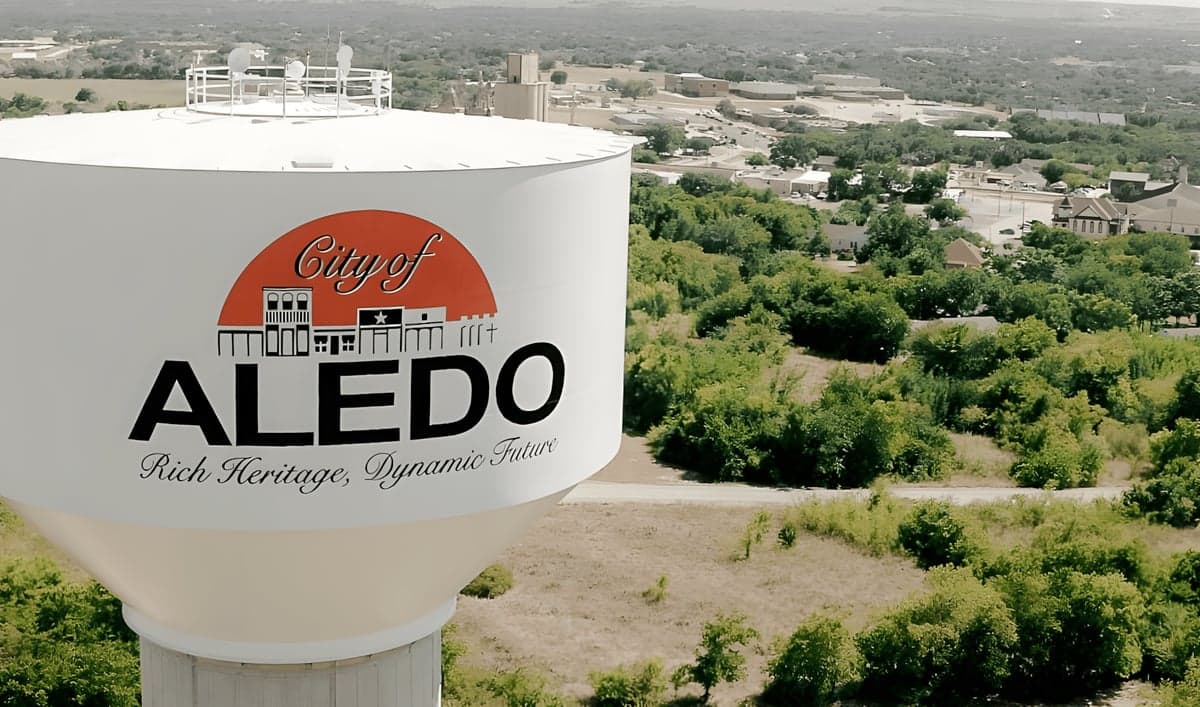
Aledo, Texas, sits in Parker County, a region where personal sovereignty is less an abstract ideal and more a working assumption woven into daily life. The town’s autonomy environment is shaped by a combination of Texas state law, a lightly structured local government, and a rural-to-suburban landscape that actively supports self-reliance. For a conservative-leaning individual or family, the default posture here is one of limited interference from governing bodies, with the expectation that residents will take charge of their own affairs—from keeping taxes low to exercising broad self-defense rights. This is not a place that seeks to manage citizens’ choices; it is a place that expects citizens to make them responsibly.
Tax burden and regulatory posture: How local governance affects your wallet
Texas’s lack of a state income tax is the foundation of Aledo’s low fiscal burden, but local property taxes are the primary driver of annual costs. In Parker County, where Aledo is located, the effective property tax rate hovers around 2.3% to 2.5% of market value, depending on the specific school district and city boundaries. A home valued at $450,000 would carry roughly $10,350 to $11,250 in annual property taxes, which, when combined with the absence of a payroll tax, can still leave you ahead compared to states with combined income and property tax loads. In relative terms, Parker County’s rates are moderate for Texas—higher than the state’s rural northern counties, but lower than many suburban Dallas districts. The regulatory posture is light-touch: Parker County does not mandate county-wide building codes or zoning outside incorporated city limits, leaving development largely to lot-size restrictions and deed restrictions. For those who find unincorporated land, there are no county-level building permits required for owner-built residences, only a permit for a septic system, which must comply with Texas Commission on Environmental Quality standards. Business and occupational licensing follows the state’s limited-reform model; of Texas’s estimated 2.7 million sole proprietors, fewer than 4% require an occupational license from the state. Aledo’s regulatory spirit is essentially libertarian: it requires permits for few activities and trusts residents to self-regulate within very broad boundaries.
Self-defense rights and firearm laws: What gun owners should know about Aledo
Aledo exists under the uniform Texas firearm code, which means that a person 21 or older can carry a handgun in public without a permit (permitless carry, since September 2021). There is no city ordinance in Aledo that prohibits open or concealed carry on public sidewalks; the town follows state preemption of local gun laws, meaning the city council cannot impose bans or magazine limits. For property owners, there are no stand-your-ground nuances beyond the state’s broad Stand Your Ground law, which allows any lawful occupant to use force, including deadly force, outside a home without a duty to retreat as long as they are in a lawfully occupied location (including your own yard, car, or workplace). The Parker County Sheriff’s Office reports fewer than five use-of-force incidents involving self-defense per year since 2022, suggesting that defensive gun use is extremely rare; as a practical matter, the law provides full coverage for that rare event. Hunting is permissible on private, landholder-owned, per Texas Parks and Wildlife, and there is no waiting period to purchase a private-party firearm. Aledo falls well within the “highly permissive” category for gun rights, with the state law only forbidding carry on specific posted premises like K-12 schools and hospitals.
Self-reliance and homesteading viability: Lot sizes, zoning, and off-grid feasibility
Homesteading real potential exists in Aledo, primarily because of its land-size options and zoning rules. Most incorporated residential lots in the city average 0.25 to 0.5 acres, but the areas just outside city limits. The city’s zoning code allows accessory dwellings, livestock per dwelling up to acreage, and gardens as permitted uses by right. The county requires shorts to be within five miles of a county-maintained road, and domestic animals (horses, goats, chickens) are allowed on parcels of at least three-quarters of an acre in unincorporated areas. Off-grid viability is good but not unlimited: rainwater harvesting is legal and actively encouraged (Texas has a state tax exemption on rainwater harvesting equipment), but any residence must connect to a septic system approved by the county health department. Solar panels face no local prohibitions; the city’s ordinances mimic the plain-vanilla Texas approach of “solar as a permitted accessory.” You can drill a water well on a least ten acres under Texas Water Law (local groundwater district must approve, but this is a straightforward fee based process). The weakest point is grid independence for electricity: Parker County allows battery storage (community-level), but the grid is reliable enough that only 2 hours of annual average outage in 2025. If you want to live entirely off the grid (with no utility meter), you would negotiate a purchase agreement with the local electric co-op, but residents report that paying the minimum monthly service connection fee (about $20) is simpler than petitioning for a full disconnect. For those who value self-reliance in food, the county extension office runs active Master Gardener classes, and the local farm stands offer stalks "garden-sourced" eggs and produce year-round.
Personal liberties: Parental rights, medical autonomy, speech, and property
Parental rights in Aledo are strongly protected under Texas law. Governor Abbott signed House Bill 1605 in 2023 regarding public school library content and parental opt-outs for classroom curriculum materials. Parker County school boards, including Aledo ISD, have adopted "parental bill of rights" policies that allow parents to review any educational material their child is exposed to, and school libraries maintain clear policies on "age-appropriate" material removal per public complaint. The state has banned mask mandates and vaccine proof requirements in schools (SB 29, 2023), so parents retain the right to decide whether their legal children—attending public school—receive spring virus vaccines. Medical autonomy for adults is not restricted notably: there is no state step therapy laws to limit doctor-patient treatment choices, and direct primary care (DPC) arrangements are common in Parker County, with five practices within 20 miles offering flat fees $100-150/month. You can order lab testing independently without a doctor’s letter if you choose, and health freedom supplements (kratom, CBD, limited-dosage hemp) are legally sold in local stores. Speech and censorship concerns are minimal; Aledo’s history includes city council meetings that attract local speakers, and the city does not enforce any social media or public speech permit. Property rights: "Build as you wish" policies in many counties that restrict no more than the 8-foot height around drainage and set backs, so if you want a 40-foot metal building or a tiny home on wheels, the municipality simply requires determination of if a foundation exists. The strong right-to-trespass warnings are legally enforced under the Texas Penal Code (trespass by enticement). In practice, the community enforces these values informally: you may enjoy self-governance if you can stay out of complainants’ republics.
Overall, the personal sovereignty in Aledo is a robust, integrated package: a serious but efficient tax structure paired with low regulatory overhead. The legal environment around firearms, health decisions, and education is clearly weighted toward individual and family choice. Aledo’s governing entity manages walk- and-use agreements without imposing overhead for those who want to modify land or run a business from a home. It is not a fully liberal approach to all private acts—septic and building are still inspected and environment is protected—but within the Texas spectrum, Aledo is one of suburban areas most closely aligned with the idea that the state should trust citizens to manage their lives without expensive permits or top-down oversight. For a family or individual seeking to maximize control over their day-to-day existence, Aledo is a highly viable option within the lower 48.

* Values derived from national, state, county, city and local statistics and may differ in a specific area. Last updated: 2026-09-11T16:58:10.000Z
Narrative content on this page is AI-generated and may contain mistakes. Verify any details that matter before acting on them.
ReloMaps may earn a commission from affiliate links at no extra cost to you.

