Political ClimatePolitical Climate in Prince Of Wales Hyder County
Showing state-level results — no local-only data available.
Local Political AnalysisPolitical Analysis of Prince Of Wales Hyder County
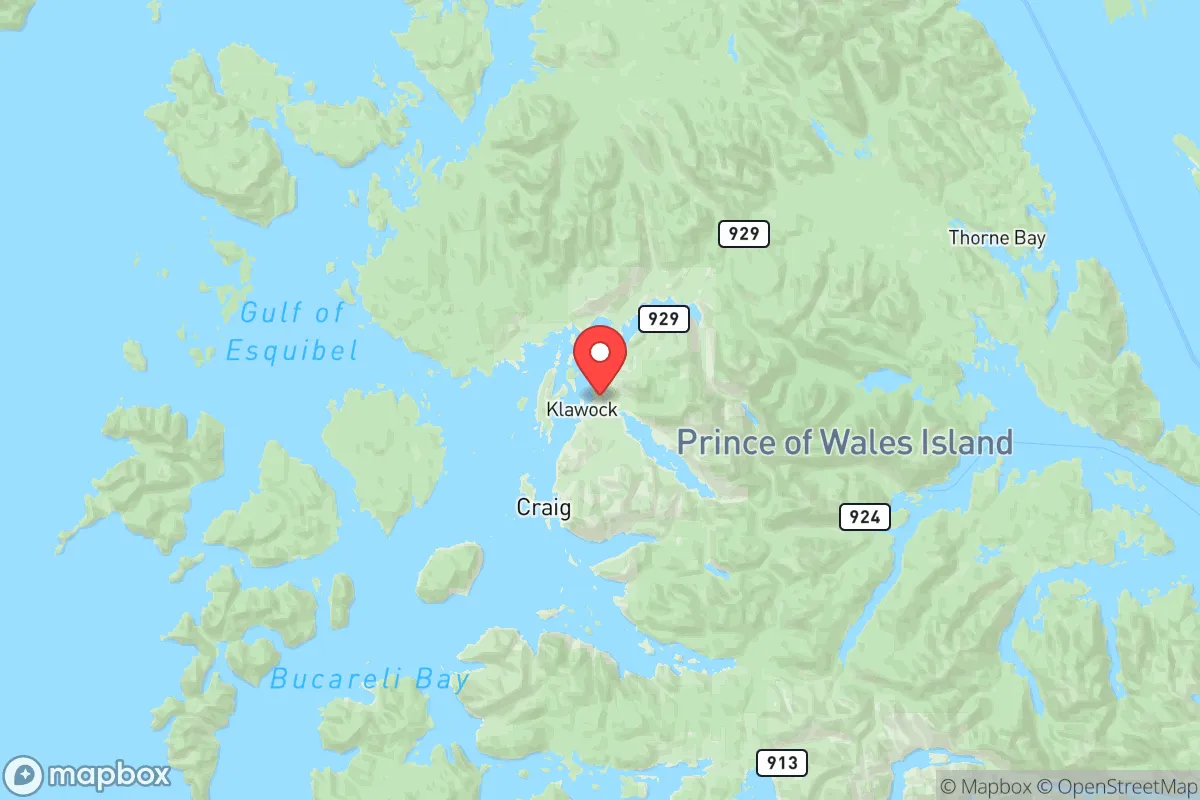
Prince of Wales-Hyder County, Alaska, leans Republican with a Cook PVI of R+6, matching the statewide average of R+6, but that surface-level similarity masks a more complex local reality. The county’s politics are shaped by its remote, resource-dependent economy and a population spread across small, distinct communities—from the fishing hub of Craig to the former mining town of Ketchikan (which, while technically in Ketchikan Gateway Borough, is the region’s commercial center and cultural touchstone). In practice, the county’s Republican lean is driven by strong conservative majorities in places like Klawock and Hydaburg, where subsistence lifestyles and skepticism of federal land management are deeply ingrained. But there’s a noticeable blue streak in Thorne Bay and Coffman Cove, where younger transplants and seasonal workers in tourism and fisheries tilt left, making those precincts swing spots in local elections.
How it compares
At first glance, Prince of Wales-Hyder County and Alaska share the same R+6 PVI, but the county is actually more volatile than the state as a whole. Statewide, Alaska has a stable Republican base anchored by Anchorage’s suburbs and the Mat-Su Valley, with Democratic strongholds limited to Juneau and parts of Fairbanks. In Prince of Wales-Hyder, the political landscape is more fragmented: the county’s small population (around 6,000) means a few dozen votes can flip a precinct. For example, in the 2022 gubernatorial race, the county split almost evenly between Republican Mike Dunleavy and independent Bill Walker, while the state overall gave Dunleavy a comfortable 10-point win. This reflects a local tradition of ticket-splitting and independent-mindedness—voters here are less loyal to party labels than to candidates who show up for community meetings in Craig or attend the All-Alaska Logging Championships in Ketchikan. The county’s R+6 rating is a statistical average, but the real story is a fluid, pragmatic electorate that rewards incumbents who deliver on ferry service, road maintenance, and timber jobs.
What this means for residents
For conservative residents, the county’s Republican lean means their values—limited government, strong Second Amendment rights, and support for resource extraction—are reflected in local school board and borough assembly decisions. The county commission, for instance, has consistently opposed federal proposals to expand the Tongass National Forest’s roadless areas, a stance that resonates with loggers and miners in Naukati Bay and Whale Pass. Liberal residents, meanwhile, find their voice in the county’s fishing communities, where environmental stewardship and tribal sovereignty are top priorities. In Craig, the local Democratic club is small but active, and progressive candidates often win by focusing on marine habitat protection and affordable housing for fishermen. The practical effect is that both sides can feel heard, but neither dominates—the county’s politics are a constant negotiation between the timber industry’s need for access and the fishing industry’s demand for clean water, with the state government in Juneau often acting as a distant referee.
Culturally, Prince of Wales-Hyder County stands apart from the rest of Alaska in its deep reliance on the Tongass National Forest and the Pacific Ocean. While Anchorage debates oil taxes and Fairbanks argues about the gas pipeline, this county’s political fights are about salmon habitat, ferry schedules, and the U.S. Forest Service’s management of old-growth timber. The county’s large Alaska Native population—primarily Tlingit and Haida—adds a layer of tribal politics that doesn’t exist in most of the state, with tribal councils in Hydaburg and Kasaan wielding significant influence over land-use decisions. This creates a unique political culture where environmentalism and resource extraction coexist uneasily, and where a candidate’s stance on the Alaska Marine Highway System can matter more than their party affiliation. For anyone moving here, the key takeaway is that local issues—not national partisan battles—drive the conversation, and the county’s R+6 label is less a prediction of how you’ll vote than a reminder that in a place this small, every vote truly counts.

State Political ClimatePolitical Climate in Alaska
State Political AnalysisPolitical Environment in the State
Alaska has long been a Republican-leaning state with a Cook PVI of R+6, but its political character is far more independent and libertarian than that number suggests. Over the past 20 years, the state has shifted from reliably red to a more volatile mix, with voters frequently splitting tickets and rejecting party-line orthodoxy — as seen in the 2022 election of Democrat Mary Peltola to the U.S. House and the simultaneous re-election of conservative Governor Mike Dunleavy. The dominant coalition is a blend of rural conservatives, resource-industry workers, and fiscally conservative but socially moderate independents, creating a political landscape that rewards pragmatism over party loyalty.
Urban vs. rural divide
The political map of Alaska breaks down along familiar urban-rural lines, but with a twist. Anchorage, home to roughly 40% of the state's population, is the swing region — its more liberal neighborhoods in midtown and downtown lean Democratic, while the Chugiak-Eagle River area and South Anchorage are reliably conservative. Fairbanks, the second-largest city, leans Republican but has a strong libertarian streak, with voters often favoring candidates who emphasize individual freedoms over government intervention. Juneau, the capital, is the most consistently Democratic city in the state, driven by a large government workforce and a more progressive local culture. The Mat-Su Valley, anchored by Wasilla and Palmer, is the state's conservative heartland — a fast-growing region of evangelical Christians, gun-rights advocates, and anti-tax activists. Rural Alaska, including the vast Bush and the North Slope, votes heavily Democratic due to the Alaska Native population's alignment with the party on subsistence rights, healthcare, and federal funding, though turnout is often low and unpredictable.
Policy environment
Alaska's policy environment is defined by its lack of a state income tax or statewide sales tax, relying instead on oil revenue and the Permanent Fund Dividend (PFD) — a direct annual payment to every resident that has become a sacred political third rail. The regulatory posture is generally light, especially for resource extraction, though environmental permitting for oil and gas projects remains a flashpoint. Education policy is decentralized, with local school boards holding significant authority, but the state has seen ongoing battles over education funding formulas and the role of charter schools. Healthcare is a major concern, with high costs and limited access in rural areas driving support for Medicaid expansion and the state's telehealth initiatives. Election laws are relatively open — Alaska adopted ranked-choice voting in 2020 via ballot initiative, a move that has reshaped campaign strategies and empowered moderate candidates. Voter registration is same-day, and absentee voting is widely available, making ballot access easier than in many red states.
Recent policy direction
Recent legislation in Alaska reflects a state grappling with its libertarian roots and modern partisan pressures. On gun rights, Alaska remains one of the most permissive states — no permit is required to carry a concealed firearm, and the state preempts local gun ordinances, a stance reaffirmed by the 2023 rejection of a proposed red-flag law. Parental rights and education saw a major fight in 2024 over a proposed school voucher expansion, which ultimately failed amid bipartisan opposition from rural districts worried about funding drains. On speech and privacy, Alaska has no broad surveillance law, but the state's small population and limited law enforcement resources mean privacy debates are less heated than in the Lower 48. Medical and bodily autonomy is a mixed bag: abortion remains legal up to viability under a 1997 state Supreme Court ruling, but the legislature has passed parental consent requirements and restrictions on public funding. Property rights are strong, with Alaska's constitution explicitly protecting the right to hunt, fish, and trap, though disputes over federal land management — the state is 60% federally owned — are constant. The PFD remains the defining tax-policy issue, with recent debates centering on whether to shrink the dividend to fund state services or maintain it as a check on government growth.
Civil unrest & political movements
Alaska has seen its share of political flashpoints, but they tend to be more localized and less violent than in the Lower 48. The most visible movements are around resource extraction — the debate over the Pebble Mine in Bristol Bay and the Willow oil project on the North Slope have drawn national attention and sparked protests from environmental activists and Alaska Native groups. The state has a strong secessionist and nullification undercurrent, with the Alaska Independence Party and various "Alaska First" groups regularly pushing for greater autonomy from federal control, though these movements have never gained mainstream traction. Election integrity controversies flared after the 2020 ranked-choice voting initiative, with conservative groups alleging confusion and fraud, but no major irregularities were found. Immigration politics are muted compared to the Lower 48, as Alaska's small foreign-born population and geographic isolation make it a low-priority issue. New residents will notice the strong presence of gun culture — open carry is common in rural areas and even in Anchorage — and a general distrust of government overreach that cuts across party lines.
Projection
Over the next 5-10 years, Alaska's political trajectory will be shaped by demographic shifts and economic pressures. In-migration from other states, particularly to the Mat-Su Valley and Anchorage suburbs, is bringing more partisan voters from the Lower 48, which could erode the state's independent streak and push it toward a more conventional red-blue divide. The aging of the oil industry and the ongoing debate over the PFD will force hard choices about the state's fiscal future, likely leading to either a state income tax or deep cuts to services — both of which will reshape political coalitions. Climate change is already altering the political landscape, with coastal erosion and permafrost thaw driving relocation of entire villages and creating new demands for federal aid. Someone moving to Alaska now should expect a state that remains politically unpredictable, where local issues like fish habitat and energy costs matter more than national partisan battles, but where the pressure to align with national parties is growing. The ranked-choice voting system will continue to reward candidates who can build cross-party coalitions, making Alaska one of the few places in the country where a moderate can still win.
For a new resident, the bottom line is this: Alaska offers a political environment that is genuinely different from the Lower 48, with a strong libertarian streak that values individual freedom and local control. Conservatives will find a welcoming home in the Mat-Su Valley or Fairbanks, with low taxes, strong gun rights, and a culture of self-reliance. Liberals will find their strongest communities in Juneau and parts of Anchorage, with a more progressive social environment and a political system that gives them a real voice through ranked-choice voting. The key is to understand that Alaska politics is not a simple red-blue map — it's a place where your neighbor might vote for a Republican governor and a Democratic House member, and where the biggest political fights are about fish, oil, and how much the state should pay you to live there. If you value independence over party loyalty, you'll fit right in.
* Values derived from national, state, county, city and local statistics and may differ in a specific area. Last updated: 2026-07-13T16:27:39.000Z
Narrative content on this page is AI-generated and may contain mistakes. Verify any details that matter before acting on them.
ReloMaps may earn a commission from affiliate links at no extra cost to you.

