Personal Sovereignty in Prince Of Wales Hyder County
Viable for self-reliance. Generally workable, though some barriers may limit total independence.
What does Personal Sovereignty tell us?
Personal Sovereignty measures your capacity for self-reliance and independence with minimal government friction. Higher scores mean fewer barriers between you and the way you want to live... but it assumes you have the space you need and good neighbors.
What does this tell us?
Personal Sovereignty measures your capacity for self-reliance and independence with minimal government friction. Higher scores mean fewer barriers between you and the way you want to live... but it assumes you have the space you need and good neighbors.
State Policy
Energy independence: Net exporter (350% of energy produced in-state)
Personal Liberty
Homesteading

Personal Liberty Analysis
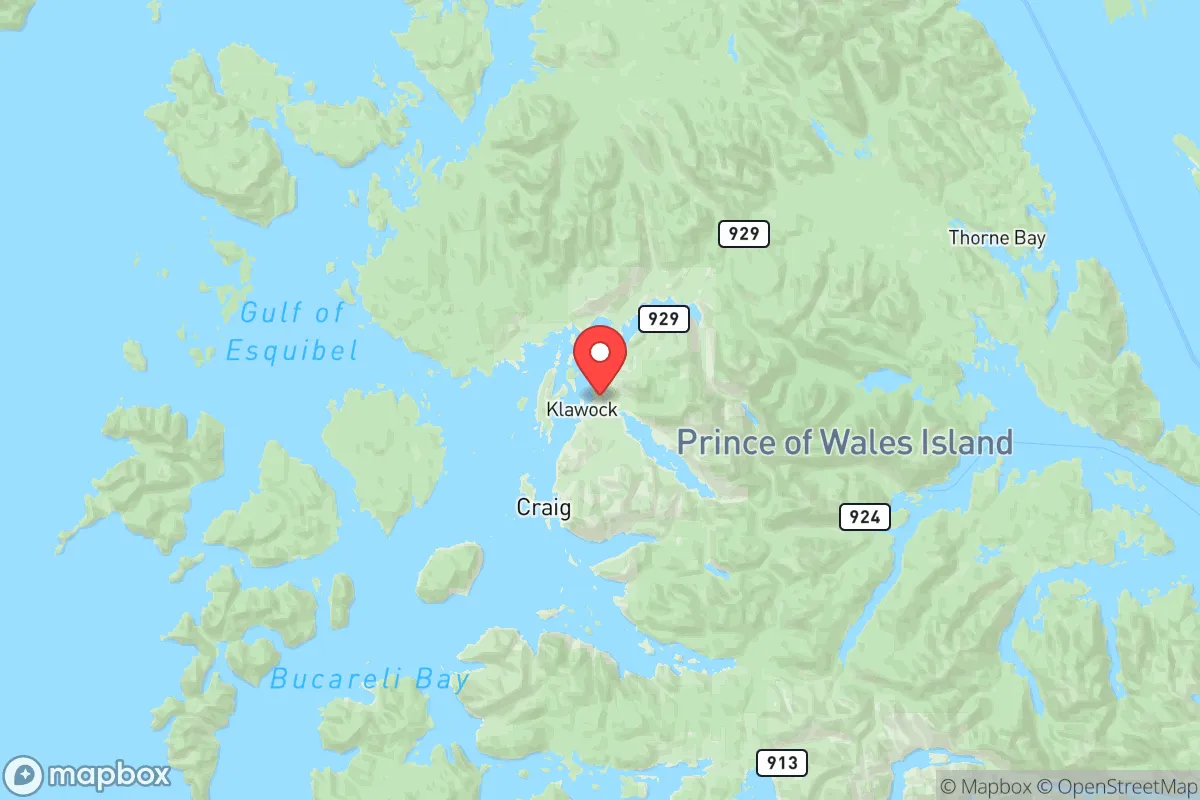
Prince of Wales-Hyder County, Alaska, offers one of the most expansive personal sovereignty environments in the United States, largely because the state constitution and the borough's remote geography create a de facto low-touch governance zone. The county encompasses the entire Prince of Wales Island plus the mainland community of Hyder, and its roughly 6,000 residents operate under Alaska's strong state-level protections for individual rights, minimal local zoning, and a legal framework that presumes personal liberty unless specifically restricted. For single individuals and families who prioritize autonomy over convenience, this area represents a rare blend of statutory freedom and practical self-reliance, though the trade-off is limited infrastructure and significant geographic isolation.
Tax burden and regulatory posture in Prince of Wales-Hyder County
Alaska has no state income tax and no state sales tax, and Prince of Wales-Hyder County does not impose a local sales tax or property tax on most residential real estate, making it one of the lightest tax jurisdictions in the nation. The borough's regulatory posture is minimal: there is no county-wide building code for unincorporated areas, no mandatory septic inspection program, and no zoning ordinances outside the small city limits of Craig, Klawock, and Hydaburg. In Thorne Bay and Coffman Cove, land use is governed primarily by state subdivision laws rather than local planning commissions, meaning a resident can build a cabin, park an RV, or start a home business with virtually no permitting beyond basic state health requirements for wells and septic. The Alaska Department of Environmental Conservation handles water quality oversight, but enforcement is complaint-driven and infrequent. For a freedom-oriented reader, the regulatory posture here is as light as it gets in the United States, comparable only to other unorganized Alaska boroughs.
Self-defense and gun law specifics in a remote island setting
Alaska is a constitutional carry state with no permit required for open or concealed carry of handguns, and Prince of Wales-Hyder County has no additional local firearm ordinances, meaning the state's permissive framework applies fully. The county has no gun registration, no waiting periods, and no magazine capacity restrictions. In Craig, the largest community on the island, firearms are common in vehicles and homes, and the local police department does not enforce any restrictions beyond state law. Hyder, accessible only by road through British Columbia, presents a unique complication: transporting firearms through Canada requires advance permits and compliance with Canadian law, so residents who live in Hyder or travel frequently to the mainland must navigate international firearm regulations. For self-defense against wildlife, which is a genuine concern given the island's high bear and wolf populations, Alaska law explicitly allows the use of deadly force against animals threatening life or property. Stand-your-ground and castle doctrine protections are codified in Alaska Statute 11.81.330, with no duty to retreat in any place where a person has a legal right to be.
Self-reliance and homesteading viability across the county
Prince of Wales-Hyder County is one of the most viable locations in the United States for off-grid homesteading, with state land sales, remote cabins, and minimal zoning creating a genuine frontier environment. The U.S. Forest Service manages roughly 80% of the island's land as part of the Tongass National Forest, but private parcels are available through state land auctions and remote cabin permits. In Naukati Bay and Whale Pass, lots of 5 to 40 acres are common, with prices ranging from $5,000 to $30,000 for raw land, and no county requirement for grid connection, road access, or utility hookups. Off-grid systems for solar, hydro, and propane are standard, and the county health department requires only a basic septic permit for new dwellings. Port Protection and Point Baker are entirely off-grid communities with no road connections to the rest of the island, accessible only by boat or floatplane, where residents generate their own power, collect rainwater, and rely on subsistence fishing and hunting. The Alaska Division of Agriculture offers small grants for homesteaders, and the state's right-to-farm law protects agricultural activities from nuisance lawsuits. For a family seeking self-reliance, the practical barriers are logistical — barge freight costs, limited medical access, and long winters — but the regulatory barriers are nearly nonexistent.
Personal liberties in education, medical choice, speech, and property
Alaska law protects parental rights in education through an open enrollment statute that allows families to choose between district schools, correspondence programs, and state-funded homeschooling with an allotment of roughly $4,500 per student for curriculum and materials. Prince of Wales-Hyder County has no local health mandates that exceed state law, and Alaska does not require childhood vaccination for school attendance, allowing philosophical exemptions. Medical autonomy is further supported by the Alaska Health Care Decisions Act, which gives residents broad authority to refuse or discontinue treatment, and the state's medical marijuana program, though recreational use is legal statewide. Free speech and assembly are protected under the Alaska Constitution's Article I, which provides stronger protections for political speech than the U.S. Constitution in some areas, including a specific guarantee of privacy. Property rights are robust: Alaska's right-to-take statute limits government condemnation for private development, and the state's exemption for owner-occupied cabins from property tax means many residents pay zero annual tax on their primary residence. In Kasaan and Hollis, where most land is private or tribal trust, property disputes are rare and typically resolved through informal mediation rather than county courts.
Compared to the Lower 48, Prince of Wales-Hyder County ranks among the top locations in the United States for personal sovereignty, with a tax burden near zero, no local gun restrictions, minimal zoning, and strong state-level protections for individual liberties. The trade-offs are real: limited emergency services, high transportation costs, and a climate that demands genuine self-sufficiency. For a conservative-leaning individual or family who values independence over convenience and is willing to accept the logistical challenges of remote island life, this county offers a level of personal freedom that is increasingly rare in the modern United States.

* Values derived from national, state, county, city and local statistics and may differ in a specific area. Last updated: 2026-07-13T16:27:39.000Z
Narrative content on this page is AI-generated and may contain mistakes. Verify any details that matter before acting on them.
ReloMaps may earn a commission from affiliate links at no extra cost to you.

