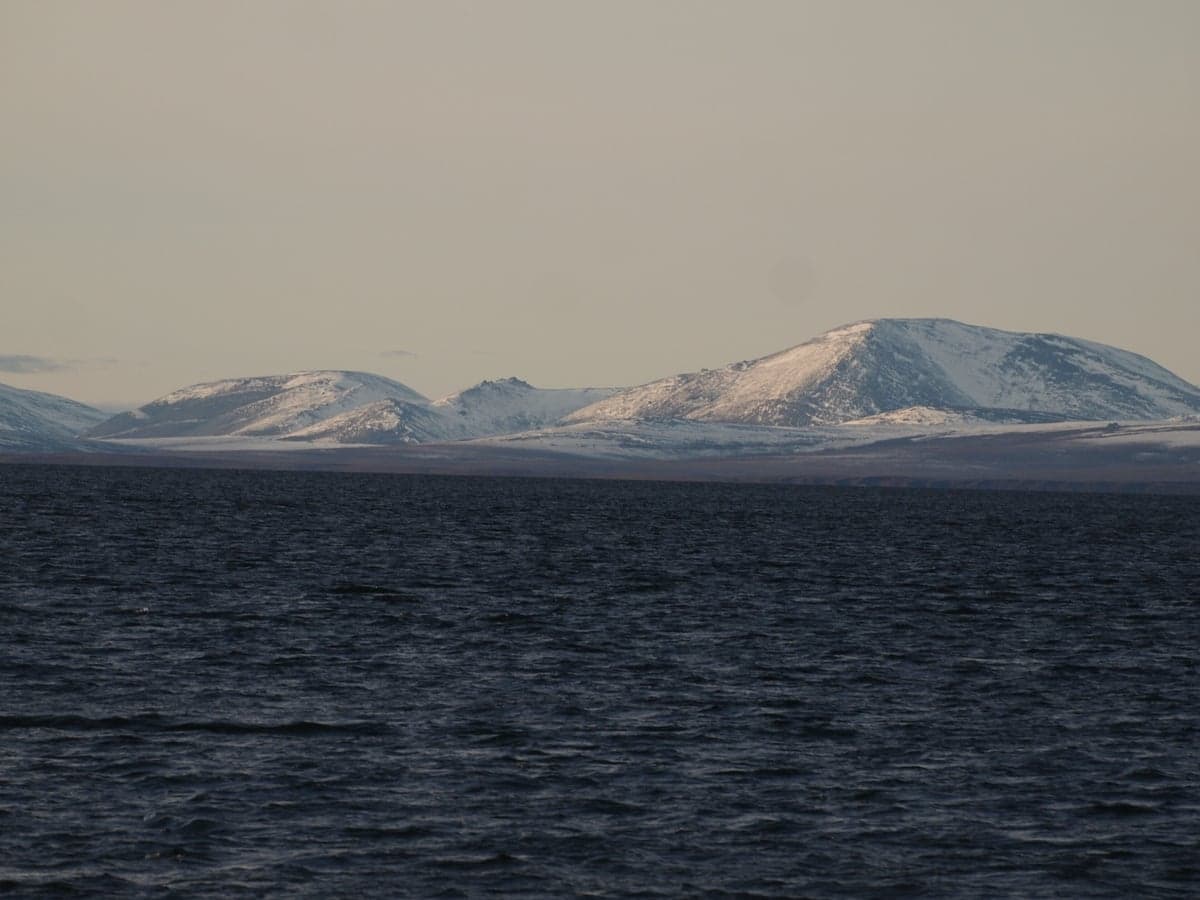
Photo: Wikipedia
Personal Sovereignty in Northwest Arctic County
Strong independent fundamentals that actively favor personal liberty and low regulation.
What does Personal Sovereignty tell us?
Personal Sovereignty measures your capacity for self-reliance and independence with minimal government friction. Higher scores mean fewer barriers between you and the way you want to live... but it assumes you have the space you need and good neighbors.
What does this tell us?
Personal Sovereignty measures your capacity for self-reliance and independence with minimal government friction. Higher scores mean fewer barriers between you and the way you want to live... but it assumes you have the space you need and good neighbors.
State Policy
Energy independence: Net exporter (350% of energy produced in-state)
Personal Liberty
Homesteading

Personal Liberty Analysis
Northwest Arctic County, Alaska, offers an environment of personal sovereignty that is among the most expansive in the United States, largely because state law and the region’s remote geography create a de facto low-touch regulatory atmosphere. The county’s 11 communities—including Kotzebue, the regional hub, and smaller villages like Noatak, Selawik, Kiana, Noorvik, and Ambler—operate under a mix of state preemption and local tribal governance, which together minimize bureaucratic interference in daily life. For a relocation-minded individual or family prioritizing autonomy, this area presents a unique trade-off: extreme personal freedom paired with extreme logistical challenges.
Tax burden and regulatory posture in Northwest Arctic communities
Alaska’s statewide absence of a personal income tax and a state sales tax is the foundation of Northwest Arctic County’s light tax burden. The county itself does not levy a property tax on residential real estate, though some communities, like Kotzebue, impose a local sales tax—typically around 5–7% on goods—which funds municipal services. There is no state-level estate or inheritance tax, and the Permanent Fund Dividend provides an annual cash payment to residents, effectively a negative tax for many households. Regulatory posture is similarly minimal: the county has no zoning ordinances outside of Kotzebue’s limited municipal code, and building permits are rarely required in unincorporated villages. The Alaska Department of Environmental Conservation oversees water and waste systems, but enforcement is thin due to the vast distances involved. For a reader accustomed to suburban HOA rules or coastal building restrictions, the contrast is stark—here, you can build a cabin on your own land without county approval, provided you meet basic state health and safety standards.
Self-defense and gun law specifics in Northwest Arctic Alaska
Alaska is a constitutional carry state, and Northwest Arctic County fully reflects that posture. No permit is required to carry a concealed firearm for anyone 21 or older who can legally possess a gun, and open carry is unrestricted. The county has no local firearm ordinances that exceed state law, so the same rules apply in Kotzebue as in Ambler or Noatak. Stand-your-ground laws are in effect, with no duty to retreat in any place where a person has a legal right to be. Background checks are only required for dealer sales; private transfers between individuals are unregulated. The practical reality in Northwest Arctic is that firearms are a tool for subsistence hunting and personal protection against wildlife—bears and moose are common—so gun ownership is near-universal and culturally normalized. There are no gun ranges in the county, but the tundra and river corridors serve as de facto shooting areas. For a reader concerned about self-defense rights, this region offers one of the most permissive legal environments in the nation, with the caveat that ammunition and firearm maintenance supplies must be flown or barged in, adding cost and planning.
Self-reliance and homesteading viability across the county
Homesteading in Northwest Arctic County is not a romantic ideal but a practical necessity for many residents. Land ownership is a mix of private allotments, Native corporation lands under the Alaska Native Claims Settlement Act (ANCSA), and state-selected parcels. In villages like Kiana and Noorvik, lot sizes are typically generous—often one to five acres—and there is no county zoning dictating what you can build or how you use the land. Off-grid living is the default: most homes in villages outside Kotzebue rely on diesel generators, solar panels, or wind turbines for electricity, and water is hauled from rivers or collected from rain. The county does not enforce building codes for single-family dwellings, so owner-built cabins, yurts, and even shipping-container homes are common. However, the feasibility of true self-reliance is constrained by the high cost of materials—everything from lumber to solar panels must be shipped via barge in summer or air freight year-round, often doubling mainland prices. In Kotzebue, a few lots are served by a municipal water and sewer system, but even there, many residents choose to maintain private wells and septic systems to avoid utility fees. For a family willing to invest in a barge shipment of building supplies and a reliable heating source (wood or fuel oil), the county offers a rare opportunity to live with minimal government oversight on land that is genuinely remote.
Personal liberties in daily life: parental rights, medical autonomy, and property
Parental rights in Alaska are broadly protected by state statute, and Northwest Arctic County’s small population means that local school boards—such as the Northwest Arctic Borough School District, which serves all 11 villages—are highly responsive to community input. Homeschooling is legal with minimal reporting requirements, and parents can opt out of any curriculum content they find objectionable without needing a formal waiver. Medical autonomy is shaped by the region’s isolation: Kotzebue’s Maniilaq Health Center provides primary and emergency care, but for anything beyond basic services, residents must fly to Anchorage. This has fostered a culture of self-care and alternative medicine, with no county-level restrictions on herbal remedies, supplements, or off-label treatments. Speech and assembly rights are fully protected under the First Amendment, and the county has no local ordinances that restrict political expression or public gathering. Property rights are strong: there is no county-level eminent domain beyond state transportation projects, and land use disputes are rare due to the low population density. The main constraint on personal liberty is not government but geography—the cost and difficulty of travel, communication, and supply chains mean that freedom from regulation comes with a high burden of self-sufficiency.
Overall, Northwest Arctic County ranks among the most sovereignty-friendly jurisdictions in the United States for those who can handle its isolation. The combination of no income tax, no property tax, constitutional carry, minimal zoning, and strong parental rights creates a legal framework that prioritizes individual choice. Compared to the Lower 48, where even rural counties often impose building codes, school mandates, and firearm restrictions, this region offers a genuinely light-touch environment. The trade-off is that personal sovereignty here is not just a legal status but a daily practice—you are free to build, hunt, and live as you see fit, but you must also haul your own water, fix your own generator, and fly out for a specialist doctor. For the right individual or family, that is not a drawback but the point.

* Values derived from national, state, county, city and local statistics and may differ in a specific area. Last updated: 2026-06-26T03:22:18.000Z
Narrative content on this page is AI-generated and may contain mistakes. Verify any details that matter before acting on them.
ReloMaps may earn a commission from affiliate links at no extra cost to you.

