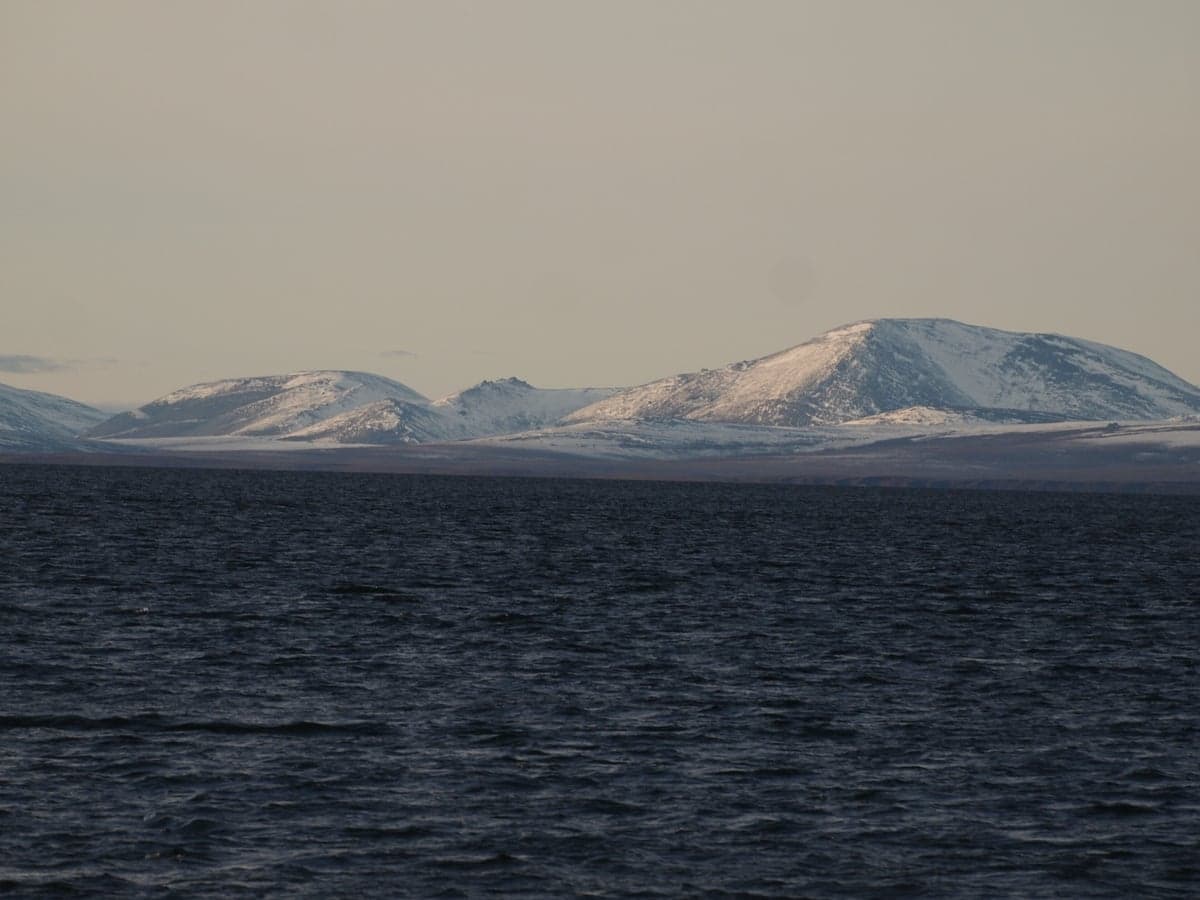
Photo: Wikipedia
Demographics of Northwest Arctic County
Affluence Level in Northwest Arctic County
A below-average socioeconomic profile. Incomes, home values, and educational attainment trail the U.S., with higher poverty and unemployment.
People of Northwest Arctic County
The people of Northwest Arctic County, Alaska, are overwhelmingly Iñupiat, with a population of 7,611 that is 9.7% White, 2.5% East/Southeast Asian, 2.1% Hispanic, 0.6% Black, and 0.0% Indian subcontinent. This is one of the most remote and least densely populated regions in the United States, where subsistence hunting and fishing remain central to daily life and cultural identity. The county’s distinctive character is shaped by its 11 small villages, none connected by road to the rest of Alaska, and a strong reliance on traditional knowledge alongside modern governance. For a conservative-leaning audience, this is a place where self-reliance, family bonds, and a deep connection to the land define the community far more than any outside influence.
Settlement & growth (pre-1960)
The human history of Northwest Arctic County begins with the Iñupiat, who have occupied this region for at least 10,000 years. These ancestors of today’s residents followed caribou herds and marine mammals along the coast and inland rivers, establishing seasonal camps that later became permanent villages. Key historic settlements include Kotzebue, the regional hub on a gravel spit at the mouth of the Kobuk River, and Kiana, Ambler, and Shungnak along the Kobuk River. The Iñupiat lived in autonomous, extended-family groups, with a social structure based on whaling captains and trade networks that stretched across the Arctic.
Russian contact in the 19th century was minimal, limited to a few traders and Orthodox missionaries who established a presence in Kotzebue. The United States purchased Alaska in 1867, but meaningful American influence did not arrive until the late 1890s, when gold discoveries on the Kobuk River brought a brief, small wave of White prospectors. These miners established camps near Candle and Kiana, but the gold rush was short-lived, and most left by 1900. The Iñupiat population remained largely unchanged, continuing their traditional subsistence lifestyle.
Federal policy in the early 20th century brought the next major change: the establishment of schools and reindeer herding programs. The Bureau of Indian Affairs built schools in Kotzebue and villages like Noatak and Selawik, drawing families into more concentrated settlements. Reindeer herding, introduced from Siberia, became an economic supplement, though it never replaced hunting and fishing. By 1960, the population was still nearly 100% Iñupiat, with a few White teachers, missionaries, and traders living in Kotzebue. The county’s population at that time was roughly 3,000, spread across 11 villages.
Modern era (post-1965)
The 1965 Hart-Cellar Act had virtually no impact on Northwest Arctic County, as immigration from outside the United States remains negligible—only 2.1% of the population is foreign-born today. Instead, the modern era has been defined by the Alaska Native Claims Settlement Act (ANCSA) of 1971, which fundamentally reshaped the region’s economy and governance. ANCSA created the NANA Regional Corporation, based in Kotzebue, which now manages land and resources for the Iñupiat shareholders. This corporate structure brought jobs, infrastructure, and a cash economy to villages like Kotzebue, Buckland, and Deering, while also introducing new tensions between traditional subsistence and modern development.
The Red Dog Mine, the world’s largest zinc mine, opened in 1989 on NANA land about 80 miles north of Kotzebue. It is a joint venture with Teck Resources and provides hundreds of high-paying jobs to Iñupiat workers, with a workforce that is roughly 50% Alaska Native. This mine has been the single largest economic driver in the county, drawing workers from villages across the region and anchoring the population in Kotzebue, where most mine employees live during their rotations. The mine’s tax revenue and royalties have funded schools, health clinics, and infrastructure in villages like Kivalina and Point Hope.
Domestic migration has been minimal. Some White professionals—teachers, healthcare workers, and mine managers—have moved to Kotzebue, but they rarely stay long-term. The East/Southeast Asian population (2.5%) is almost entirely Filipino healthcare workers and their families, concentrated in Kotzebue, where the Maniilaq Health Center is the largest employer. The Hispanic population (2.1%) is a mix of mine workers and service industry employees, also primarily in Kotzebue. The Black population (0.6%) is similarly small and transient. Suburbanization does not exist in any meaningful sense; the county has no suburbs, only the 11 villages, each with a few hundred residents, connected by snowmachine, boat, or small plane.
The future
The population of Northwest Arctic County is projected to remain stable or grow slowly, driven by high birth rates among the Iñupiat population. The county’s fertility rate is well above the national average, and the median age is about 28, compared to 38 nationally. This youth bulge means the population will likely remain overwhelmingly Iñupiat for the foreseeable future, with little change in racial or ethnic composition. The foreign-born share is unlikely to rise significantly, as the region’s remote location, harsh climate, and limited job market outside the mine offer little attraction for immigrants.
The biggest demographic challenge is out-migration of young adults for education and employment. Many Iñupiat youth leave for college or jobs in Anchorage, Fairbanks, or the Lower 48, and some do not return. However, the Red Dog Mine and NANA’s corporate structure provide enough economic opportunity to retain a significant portion of the population. Villages like Kotzebue are likely to continue growing slowly, while smaller villages like Kivalina face existential threats from coastal erosion and climate change, which may force relocation of entire communities. The cultural identity of the region remains strongly Iñupiat, with subsistence hunting, whaling, and the Iñupiaq language still widely practiced, though English is now universal.
For someone moving into Northwest Arctic County today, this is a place where community is defined by extended family and village ties, not by ethnic diversity or urban amenities. The population is stable, young, and deeply rooted in a subsistence lifestyle that has persisted for millennia, now overlaid with a modern corporate economy. The region offers a unique opportunity to live in one of the last predominantly Native American areas in the United States, but it demands a willingness to adapt to extreme isolation, a harsh climate, and a culture that values collective well-being over individual ambition.

* Values derived from national, state, county, city and local statistics and may differ in a specific area. Last updated: 2026-06-26T03:22:18.000Z
Narrative content on this page is AI-generated and may contain mistakes. Verify any details that matter before acting on them.
ReloMaps may earn a commission from affiliate links at no extra cost to you.

