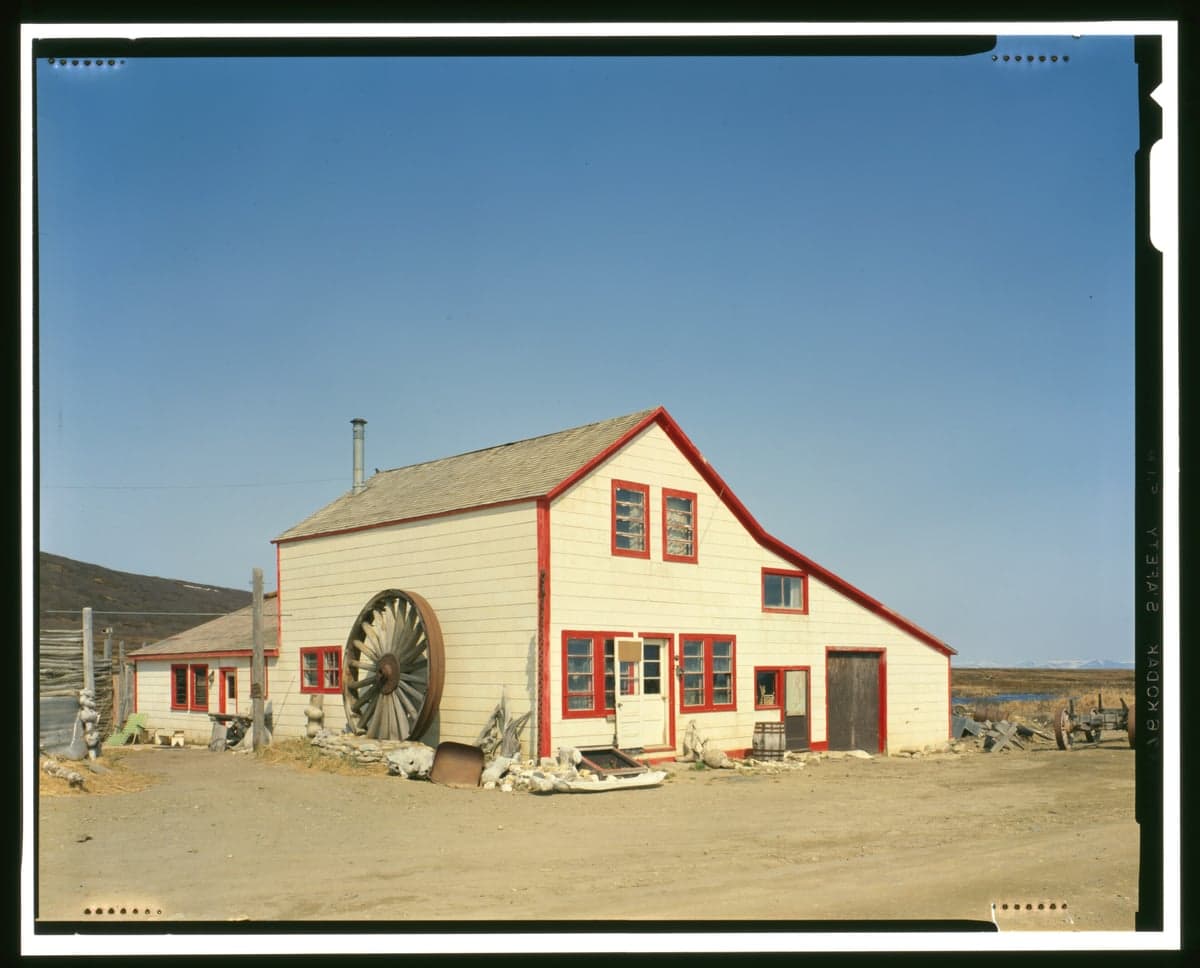
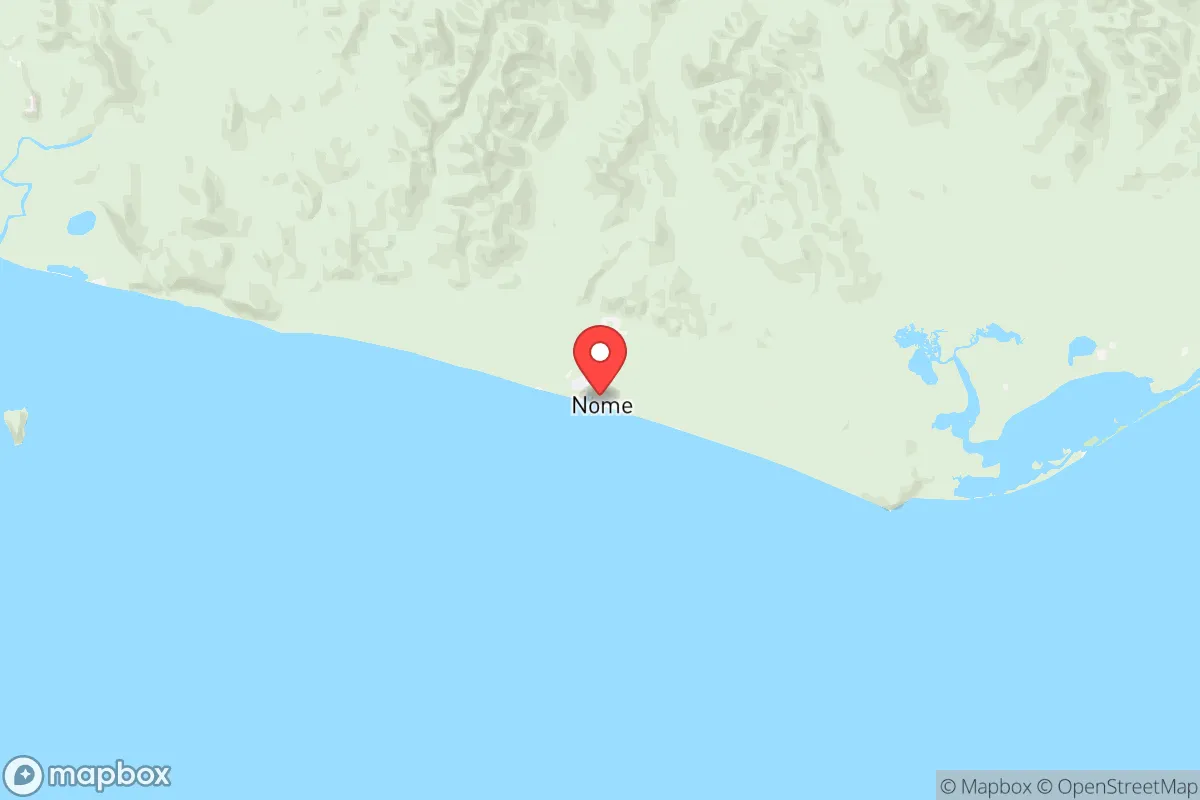
Photo: Wikipedia
Quality of Life in Nome County
A livable area that tracks near national norms for affordability, walkability, and neighborhood health.
What does Quality of Life tell us?
Quality of Life measures an area by evaluating factors like cost of living, nearby amenities, country club access, airport proximity, socioeconomic signals and neighborhood character. For large states, this is a general average — quality of life can vary dramatically between metro areas, suburbs, and rural communities within the same state.
What does this tell us?
Quality of Life measures an area by evaluating factors like cost of living, nearby amenities, country club access, airport proximity, socioeconomic signals and neighborhood character. For large states, this is a general average — quality of life can vary dramatically between metro areas, suburbs, and rural communities within the same state.
Cost of Living
3% below national average
134%
The Real Cost of Living in Nome County for 2026
| Tier | Individual | Family (4) |
|---|---|---|
| Survival | $21k | $40k |
| Comfortable | $39k | $57k |
| Luxury | $127k+ | $197k+ |
| Elite (Top 5%) | $150k+ | $232k+ |
Quality-of-Life Analysis
Nome County, Alaska, encompasses a vast and sparsely populated region of the Seward Peninsula, offering a quality-of-life spectrum that ranges from the regional hub of Nome itself to remote, roadless villages accessible only by air or sea. The county draws a mix of people: those seeking the services and community of a frontier town, subsistence-oriented residents in traditional villages, and individuals drawn to the extreme isolation and self-reliance of the Alaskan bush. The county's cost of living index of 97 (100 is the U.S. average) is surprisingly close to the national average, though this figure masks extreme variation in the actual cost of goods and housing between the hub and the outlying communities.
Largest town(s) & population centers
The only incorporated city and clear population center is Nome, the county seat and home to roughly 3,700 residents. Daily life in Nome is defined by its role as the regional service and transportation hub. It is the terminus of the Iditarod Trail Sled Dog Race and has a functional airport, a deep-water port (seasonal), and a hospital. Residents have access to a grocery store, several restaurants, a school system, and basic retail. Housing is a significant challenge: the median home value is $201,000 and median rent is $1,328, figures that are high for a town with no road connection to the rest of Alaska. The average commute of 19.5 minutes reflects the town's compact footprint, where most errands are done by foot, ATV, or short car trip. Life here is a balance of modern amenities and frontier practicality, attracting government workers, healthcare professionals, and those employed in mining or the local service economy.
Smaller towns & rural pockets
Beyond Nome, the county is dotted with 15 smaller Alaska Native villages, including Teller, Shishmaref, Koyuk, Brevig Mission, Elim, Golovin, White Mountain, St. Michael, Stebbins, Unalakleet, Savoonga, Gambell, Wales, Diomede, and Council (a largely abandoned gold rush ghost town). These communities are roadless and rely on air travel, snowmobiles, and boats for transportation. Daily life centers on subsistence hunting, fishing, and gathering, with cash economies driven by local government, schools, and seasonal work. Housing stock is often older and in need of repair, and the cost of fuel, food, and building materials is dramatically higher than in Nome due to shipping costs. The villages offer a deep sense of community, cultural continuity, and a pace of life dictated by the seasons and the land.
Cost & lifestyle range
The cost of living and available amenities vary enormously across Nome County. At one end of the spectrum is Nome itself, where the cost of living index is near the national average, but the actual cost of goods—especially food and fuel—is significantly higher than in the Lower 48. A gallon of milk in Nome can cost $8-$10, and heating fuel is a major annual expense. At the other extreme are villages like Diomede, located on a small island in the Bering Strait, or Shishmaref, a community facing severe coastal erosion. In these places, a gallon of milk can cost $12 or more, and housing is scarce and often substandard. The lifestyle in Nome includes a hospital, a police force, and a school system, while village life requires a higher degree of self-reliance, with limited access to healthcare, emergency services, and retail. The median home value of $201,000 applies almost entirely to Nome; in the villages, housing is often provided through tribal or city entities, and a conventional real estate market barely exists.
Nome County is a place for people who are deeply self-reliant, culturally adaptable, and comfortable with extreme isolation. Those who thrive here are typically Alaskan Natives maintaining traditional lifeways in the villages, or professionals and adventurers in Nome who are drawn to the unique challenges and rewards of living in a remote Arctic hub. The county offers a profound connection to the natural environment and a strong sense of community, but it demands a willingness to pay high prices for basic necessities and to accept a level of logistical complexity that is foreign to most Americans. It is not a place for those seeking convenience or a low cost of living, but for those seeking a life defined by place and purpose.

Crime in Nome County
Higher crime rates than 66% of comparable U.S. locations.
Violent CrimeViolent Crime Analysis
Property CrimeProperty Crime Analysis
Crime Analysis
Nome County, Alaska, presents a safety profile that demands careful consideration, with violent crime rates significantly exceeding national averages and property crime posing a persistent challenge across its vast, remote communities. The county's overall safety picture is shaped by a combination of geographic isolation, economic factors, and a justice system that, in recent years, has faced scrutiny over its handling of repeat offenders. While the raw numbers paint a concerning picture, the lived experience of safety varies considerably between the hub city of Nome and the smaller, more tightly-knit villages like Kotzebue, Unalakleet, and Teller, where community policing and local knowledge play a larger role.
Crime in context
With a reported violent crime rate of 732.2 per 100,000 residents, Nome County's rate is roughly double the national average, placing it among the higher-risk areas in Alaska. Property crime, at 1,917.5 per 100,000, also exceeds the national benchmark, though it is somewhat moderated by the logistical difficulties of fencing stolen goods in remote locations. These figures are heavily influenced by conditions in the regional hub of Nome, where alcohol-related offenses and domestic violence are prevalent. In contrast, villages like Shishmaref and Wales often report lower per-capita rates of serious violent crime, though underreporting remains a concern. The state's overall crime landscape is complicated by a judicial philosophy in many Alaska districts that has prioritized rehabilitation over incarceration for non-violent property offenders, a trend that critics argue has contributed to recidivism and a sense of impunity among habitual criminals in areas like the Norton Sound region.
What residents experience
For residents of Nome County, the most immediate safety concerns are often property-related—burglaries of unoccupied cabins, theft of snowmachines and ATVs, and vandalism—rather than random stranger violence. However, the violent crime that does occur is frequently severe, with high rates of aggravated assault and sexual assault linked to substance abuse. The judicial district covering Nome, part of the Second Judicial District, has seen a push in recent years toward restorative justice programs and pre-trial diversion for non-violent offenders. While well-intentioned, this approach has frustrated many residents in communities like Nome and Kotzebue, who report seeing the same individuals cycle through the system without meaningful consequences. This perceived leniency is a major factor in why some long-time residents in villages like Elim and Gambell feel the need to take personal security measures—such as forming informal neighborhood watches or securing property with heavy-duty locks and surveillance—that would be less necessary in a jurisdiction with a more traditional approach to law enforcement and sentencing.
Neighborhood-level variation within Nome County is stark, though data is sparse. The city of Nome itself has distinct zones: the downtown core and areas near the port experience higher rates of public intoxication and associated disorder, while residential streets farther from the center see more property crime. The outlying villages, by contrast, often have lower overall crime rates but face unique challenges related to isolation and the lack of a permanent police presence. In communities like Savoonga and Koyuk, the local village public safety officer (VPSO) may be the only law enforcement for hundreds of miles, meaning response times for serious incidents can be hours or even days. This reality underscores the importance for anyone relocating to Nome County to research not just the county-wide statistics, but the specific conditions and local justice climate of their intended community, as the safety experience in a remote village can be profoundly different from that in the regional hub.
* Values derived from national, state, county, city and local statistics and may differ in a specific area. Last updated: 2026-06-16T20:01:33.000Z
Narrative content on this page is AI-generated and may contain mistakes. Verify any details that matter before acting on them.
ReloMaps may earn a commission from affiliate links at no extra cost to you.

