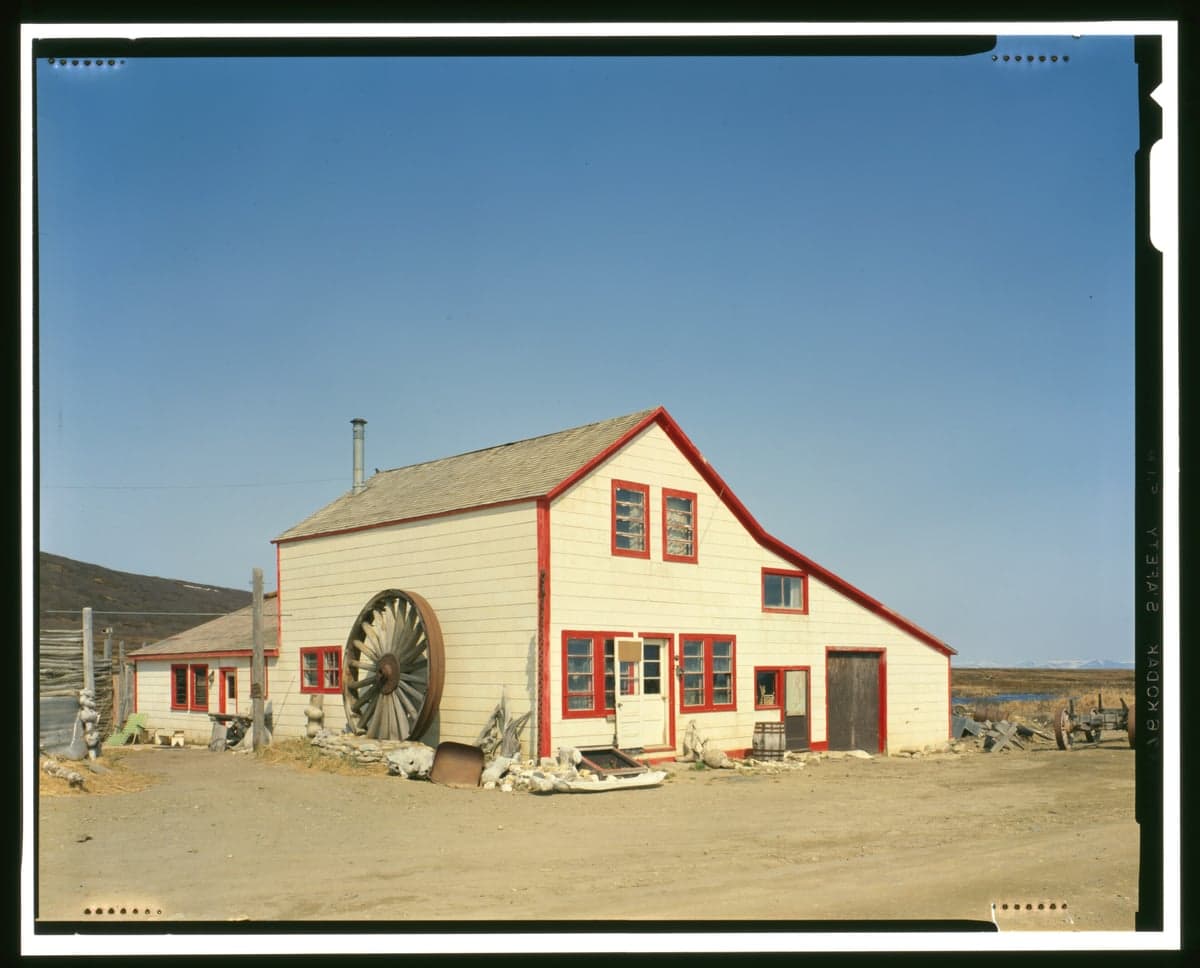
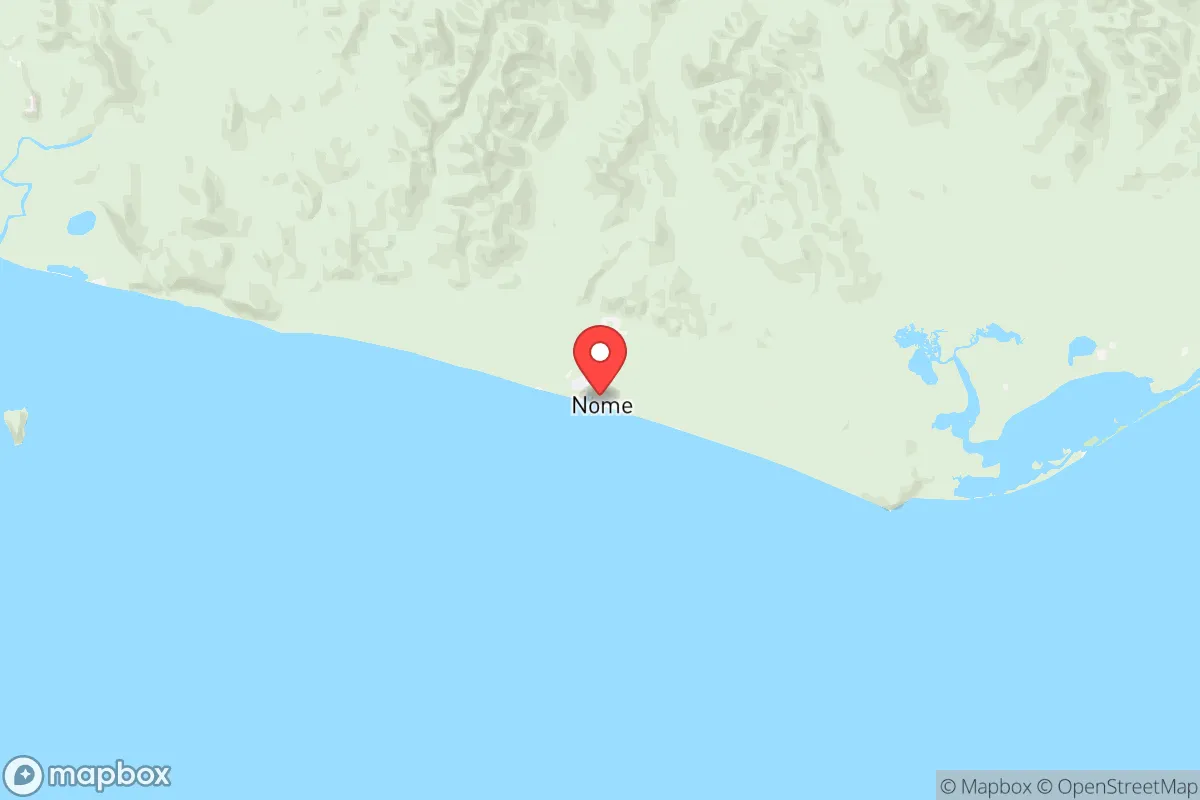
Photo: Wikipedia
Personal Sovereignty in Nome County
Strong independent fundamentals that actively favor personal liberty and low regulation.
What does Personal Sovereignty tell us?
Personal Sovereignty measures your capacity for self-reliance and independence with minimal government friction. Higher scores mean fewer barriers between you and the way you want to live... but it assumes you have the space you need and good neighbors.
What does this tell us?
Personal Sovereignty measures your capacity for self-reliance and independence with minimal government friction. Higher scores mean fewer barriers between you and the way you want to live... but it assumes you have the space you need and good neighbors.
State Policy
Energy independence: Net exporter (350% of energy produced in-state)
Personal Liberty
Homesteading

Personal Liberty Analysis
Nome County, Alaska, offers one of the most expansive personal sovereignty environments in the United States, rooted in a state constitution that explicitly protects individual privacy, property rights, and the right to keep and bear arms. The region’s vast, roadless geography and sparse population—roughly 10,000 residents spread across an area larger than West Virginia—create a de facto autonomy that few Lower 48 locations can match. For single individuals and families who prioritize self-reliance over government proximity, Nome County presents a regulatory landscape where state preemption laws limit local control, and the absence of a state income or sales tax leaves residents with more financial discretion. However, the practical realities of living in a subarctic environment, including reliance on air and sea transport for goods, mean that true independence requires significant preparation and capital.
Tax burden and regulatory posture in Nome County
Alaska’s lack of a state income tax and statewide sales tax is a foundational advantage for personal sovereignty, and Nome County (officially the Nome Census Area) does not impose a local sales tax, though the City of Nome itself levies a 6% sales tax on most goods. Property taxes are minimal by national standards, with the county’s mill rate hovering around 10 mills, and the state’s Permanent Fund Dividend provides an annual cash payment to every resident—$1,312 in 2024—effectively reducing the net tax burden. Regulatory posture is light-touch compared to urbanized states: there is no state-level building code enforced in unincorporated areas, no vehicle emissions testing, and no state income tax withholding. The City of Nome and smaller communities like Teller, Shishmaref, and Unalakleet have their own zoning and building ordinances, but outside these municipal boundaries, land use is governed primarily by state and federal agencies, including the Bureau of Land Management and the Alaska Department of Natural Resources. This creates a bifurcated environment: within city limits, permits and inspections are required for new construction, while rural homesteads and cabins on state or private land face far fewer bureaucratic hurdles. For a family seeking to build off-grid on a remote parcel, the regulatory friction is among the lowest in the nation, though the logistical challenges of transporting materials and fuel are substantial.
Self-defense and gun law specifics in Nome County
Alaska’s firearm laws are among the most permissive in the country, and Nome County residents enjoy the full scope of those protections. The state has constitutional carry—no permit required for open or concealed carry—and preempts all local firearm ordinances, meaning the City of Nome cannot enact restrictions stricter than state law. There is no waiting period, no firearm registration, and no permit required to purchase a handgun, rifle, or shotgun. Magazine capacity is unrestricted, and suppressors are legal for hunting and target shooting. The Nome area’s remote character makes firearms a practical necessity for protection against wildlife—brown bears and moose are common—and for subsistence hunting, which is a cornerstone of local culture. The Nome Police Department and Alaska State Troopers are the primary law enforcement agencies, but response times in outlying villages like Elim or Golovin can be hours or even days, reinforcing the expectation that individuals are responsible for their own security. Stand-your-ground and castle doctrine laws are fully in effect, with no duty to retreat in any place where a person has a legal right to be. For a reader prioritizing self-defense autonomy, Nome County offers a legal framework that imposes virtually no state-level barriers to firearm ownership or use.
Self-reliance and homesteading viability in Nome County
Homesteading in the traditional sense—claiming federal land—ended in Alaska in 1986, but the spirit of self-reliant living thrives in Nome County through state land sales, remote cabin permits, and private land purchases. The Alaska Department of Natural Resources periodically auctions or offers over-the-counter land parcels, often with no road access, at prices ranging from a few hundred to a few thousand dollars per acre. Off-grid feasibility is high: there are no statewide mandates for grid connection, and solar panels, wind turbines, and propane systems are common in communities like Council and Solomon, where residents live year-round without road access. Zoning in unincorporated areas is minimal; the county does not enforce minimum lot sizes or building setbacks outside municipal boundaries, though federal wetlands and coastal management regulations can affect construction near waterways. The City of Nome requires building permits and has a 5,000-square-foot minimum lot size for residential development, but adjacent rural areas have no such restrictions. Water and sewer are typically handled via wells and septic systems or, in remote cabins, hauled water and outhouses. The practical challenges are significant: heating fuel costs $5–$8 per gallon when barged in during summer, and fresh produce is expensive and limited. For a family willing to invest in a cargo barge delivery and a robust heating system, Nome County offers a genuine off-grid lifestyle with minimal government oversight, but it demands a level of physical and financial self-reliance that exceeds most Lower 48 homesteading scenarios.
Personal liberties in Nome County: parental rights, medical autonomy, and property
Alaska’s state constitution provides strong protections for individual privacy and parental rights, and Nome County’s local governance reflects that orientation. Parental rights in education are robust: Alaska law allows parents to opt their children out of any curriculum or activity without penalty, and the Bering Strait School District, which serves the region, has a policy of deferring to parental authority on sensitive topics. Homeschooling is common and lightly regulated—no notification is required for private or homeschool instruction, and there are no standardized testing mandates for homeschooled students. Medical autonomy is similarly broad: Alaska has no state-level vaccine mandate for adults or children, and the state’s health privacy laws restrict government access to medical records without consent. The Nome-based Norton Sound Health Corporation operates under tribal health compact rules, which can provide additional layers of patient control over treatment decisions. Property rights are protected by Alaska’s strict eminent domain laws, which require just compensation and a demonstrated public necessity, and the county does not impose rent control or landlord licensing. Free speech and assembly are protected under the state constitution, which includes an explicit right to privacy that courts have interpreted broadly. For a reader who values the ability to make medical, educational, and property decisions without government interference, Nome County’s legal environment is among the most accommodating in the nation.
Overall, Nome County ranks as one of the highest-sovereignty jurisdictions in the United States for individuals and families who can handle the logistical and climatic demands of subarctic living. The combination of no state income tax, constitutional carry, minimal zoning outside city limits, strong parental rights, and a culture of self-reliance creates an environment where personal autonomy is the default rather than the exception. Compared to areas like the Lower 48’s rural West—Montana or Idaho, for example—Nome County offers even lower regulatory density and greater practical independence, but at the cost of extreme isolation, high living expenses, and limited access to goods and services. For the right person, it is a place where freedom is not just legal but necessary.

* Values derived from national, state, county, city and local statistics and may differ in a specific area. Last updated: 2026-06-16T20:01:33.000Z
Narrative content on this page is AI-generated and may contain mistakes. Verify any details that matter before acting on them.
ReloMaps may earn a commission from affiliate links at no extra cost to you.

