Strategic Assessment of Matanuska Susitna County
Strong survivability profile. Good buffer from population centers, with manageable environmental and tactical risks.
What does the Strategic Assessment tell us?
Our Strategic Assessment grades tactical survivability of an area. Major population centers, military targets, fallout zones, natural disasters, and border exposure all drive risk — lower exposure means a more defensible position in a crisis.
This is heavily inspired by Joel Skousen's Strategic Relocation book. Highly recommended you checkout the book ($)What does this tell us?
Our Strategic Assessment grades tactical survivability of an area. Major population centers, military targets, fallout zones, natural disasters, and border exposure all drive risk — lower exposure means a more defensible position in a crisis.
This is heavily inspired by Joel Skousen's Strategic Relocation book. Highly recommended you checkout the book ($)Strategic Pillars

Key Distances
Strategic Assessment Analysis
Matanuska Susitna County, often called the Mat-Su, offers a compelling mix of geographic isolation and resource abundance that makes it a serious contender for those prioritizing long-term resilience and self-sufficiency. Its location, roughly 35 miles north of Anchorage, places it far from the lower 48's dense population corridors and industrial targets, yet within a region that boasts its own infrastructure and a robust, independent-minded population. For a relocator weighing disaster readiness, the Mat-Su’s key advantages are its distance from primary fallout-relevant targets, its local food and energy production, and its sprawling, low-density geography that provides natural defensibility.
Geographic position and natural advantages for long-term security
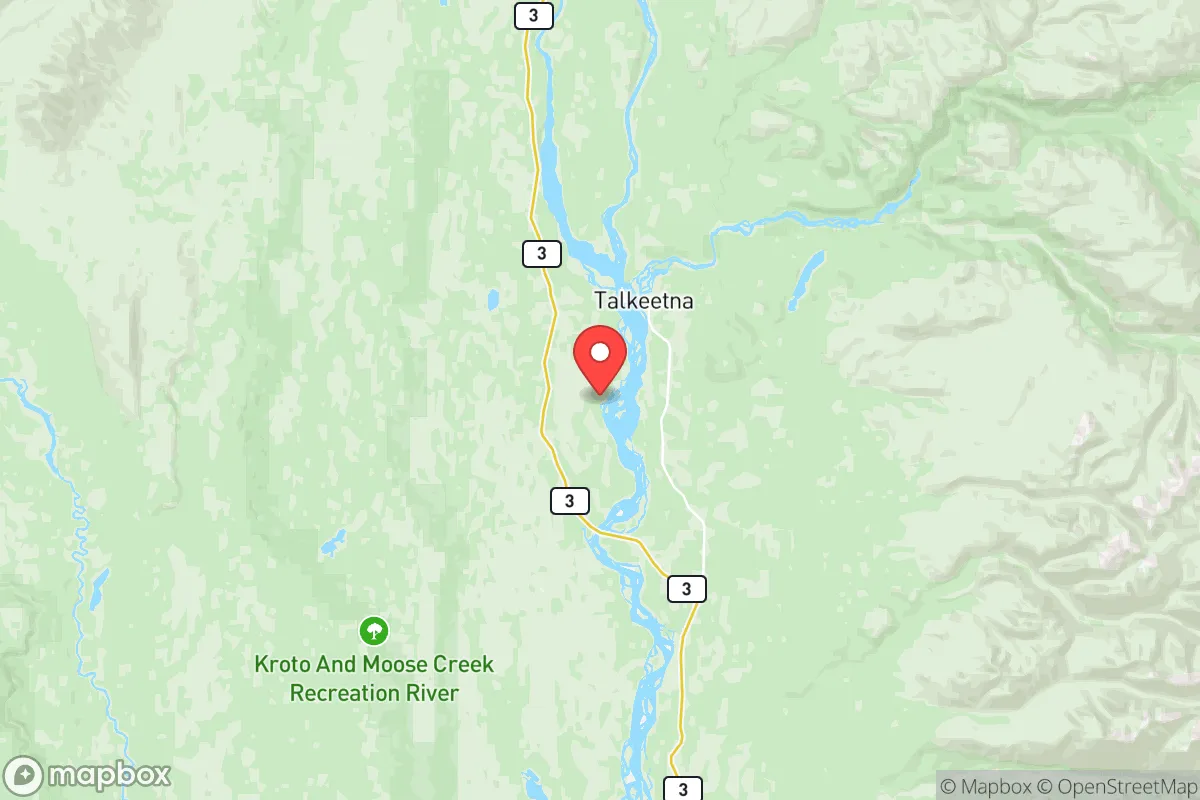
The Mat-Su Valley is framed by the Talkeetna Mountains to the north, the Chugach Mountains to the east, and Cook Inlet to the west, creating a natural basin that offers both protection and strategic access. The county seat, Palmer, and its larger neighbor Wasilla sit at the heart of this valley, roughly 40 miles from Anchorage via the Glenn Highway. This distance is significant: Anchorage, as Alaska’s largest city and primary port, is a plausible target in a major conflict, but the Mat-Su’s separation by mountain passes and open terrain reduces its exposure to immediate blast effects and initial fallout plumes, depending on wind direction. The county’s vast size—over 25,000 square miles—means that even within the Mat-Su, remote areas like Talkeetna or Willow offer deep buffer zones from any potential ground-zero impacts. The nearby Knik Arm and Cook Inlet provide water access for transport and fishing, but these are not concentrated industrial ports like those in Anchorage or Valdez, making them lower-priority targets. For a resilience-minded relocator, the Mat-Su’s mix of forest, farmland, and mountainous terrain creates multiple fallback zones within the same county.
Risks, exposures, and proximity to fallout-relevant landmarks
No area is risk-free, and the Mat-Su has its own vulnerabilities. The most significant risk is its proximity to Anchorage, which hosts the Port of Anchorage, a critical logistics hub for the entire state, and Joint Base Elmendorf-Richardson (JBER), a major military installation. In a large-scale conflict, these are high-value targets. While the Mat-Su is far enough to avoid direct blast effects, prevailing winds from the south could carry fallout from Anchorage northward into the valley. Historical weather patterns show that Anchorage’s southerly winds would push fallout toward the Kenai Peninsula more often than the Mat-Su, but it remains a variable to monitor. Additionally, the Railbelt energy infrastructure—including the natural gas pipelines and the Bradley Lake hydroelectric project on the Kenai—could be targeted, potentially disrupting power to the valley. Wildfire is a more immediate annual risk: the 2015 Sockeye Fire near Willow destroyed 55 structures and highlighted the dangers of the boreal forest during dry summers. Earthquake risk is high as well, with the 1964 Good Friday quake having impacted the region. However, these natural risks are manageable with proper planning (firebreaks, seismic retrofits) and are far less catastrophic than being near a major strategic target. The nearest major industrial sites beyond Anchorage are the Tesoro (now Marathon) refinery and the Petro Star refinery in Nikiski, roughly 80 miles southwest, which are on the Kenai Peninsula and separated by Cook Inlet—a buffer that limits direct fallout risk.
Practical resilience for a relocator: food, water, energy, and defensibility
The Mat-Su’s practical resilience is its strongest selling point. Food sovereignty is arguably the best of any region in Alaska: the valley’s agricultural heritage, centered around Palmer’s Alaska State Fair area and the Matanuska River Valley, produces a significant share of the state’s fresh vegetables, with the famous "Matanuska Thunder" potatoes and cabbage. Small-scale farmers and homesteaders are common, and a relocator with acreage can realistically attain a high degree of food independence through gardening, livestock, and hunting (moose, caribou, and salmon are abundant). Water abundance is another advantage: the region is laced with rivers (the Matanuska, Susitna, Knik, and Little Susitna), lakes, and groundwater, all of which are generally clean and accessible via well drilling. In a grid-down scenario, gravity-fed water from nearby streams is a viable option for many properties.
Energy resilience is more complex but manageable. The Railbelt electrical grid supplies most homes, but it is vulnerable to both earthquakes and fuel-supply disruptions. However, the Mat-Su has a high penetration of off-grid or hybrid energy systems: wood stoves are ubiquitous, solar panels are viable during the long summer days, and small-scale hydro or wind is possible in specific microclimates. The Willow and Yentna River regions are popular for off-grid cabins, many of which rely on propane and solar. Fuel storage is straightforward, with local suppliers in Wasilla and Palmer. Defensibility is a mixed bag: the valley’s open terrain makes some areas vulnerable to overland approach from Anchorage via the Glenn and Parks Highways, but those chokepoints can be monitored. More remote areas, like the Talkeetna Mountains foothills or the Susitna River valley west of Willow, offer natural barriers and limited access, creating strong options for those prioritizing security. The county’s population of roughly 110,000 is scattered, which reduces social friction and resource competition in a crisis compared to denser metro areas.
The overall strategic picture for Matanuska Susitna County is one of a well-positioned but not perfect haven for the resilience-minded relocator. Its chief strengths—distance from Anchorage, agricultural capacity, water resources, and low population density—outweigh its risks, which are primarily natural (wildfire, seismic) and secondary exposure to Anchorage’s target value. For a single individual or family planning for disruptions from geopolitical instability or infrastructure collapse, the Mat-Su offers a rare combination of resource independence and physical buffer that most lower-48 locations cannot match. The key is to choose a property with deliberate forethought: avoid fire-prone spruce stands, secure a reliable water source, and consider access to the valley’s broader supply chains (available at retail outlets in Wasilla and Palmer) as a supplement, not a crutch. In the calculus of where to plant roots for the long haul, the Mat-Su stands apart as a region where preparation meets opportunity, without the existential risk of living next to a major target.

* Values derived from national, state, county, city and local statistics and may differ in a specific area. Last updated: 2026-07-07T07:42:48.000Z
Narrative content on this page is AI-generated and may contain mistakes. Verify any details that matter before acting on them.
ReloMaps may earn a commission from affiliate links at no extra cost to you.

