Political ClimatePolitical Climate in Matanuska Susitna County
Showing state-level results — no local-only data available.
Local Political AnalysisPolitical Analysis of Matanuska Susitna County
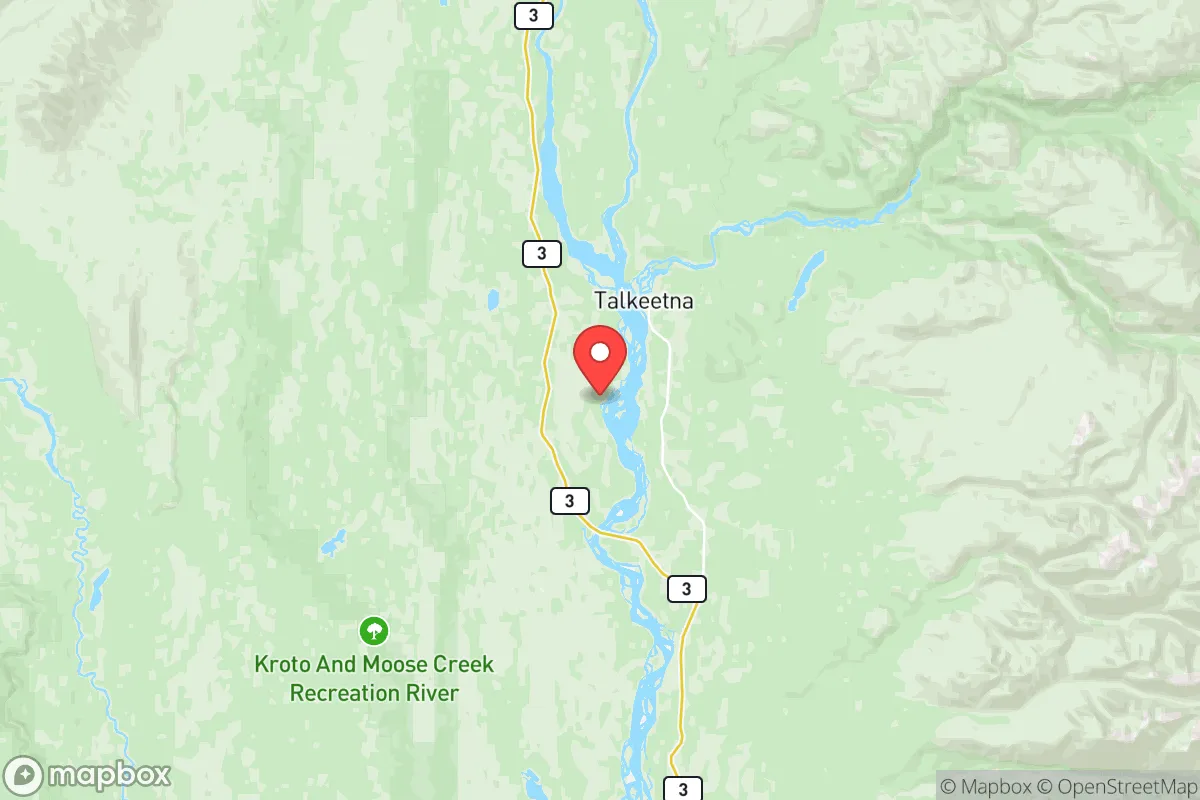
Matanuska Susitna County, often called the Mat-Su, has a political lean that’s reliably Republican, with a Cook PVI of R+6—identical to Alaska’s statewide rating. That number might suggest the county is a perfect mirror of the state, but the reality is more textured: the Mat-Su is actually a bit more conservative than Anchorage or Juneau, but it’s not a monolith. The county’s trajectory over the last decade has been a slow but steady shift rightward, driven by rapid population growth in exurban communities like Wasilla and Palmer, while smaller pockets like Talkeetna and Chickaloon have held as more moderate or even left-leaning outliers.
How it compares to Alaska
At face value, Mat-Su’s R+6 PVI matches Alaska’s statewide R+6, but that masks important internal differences. Alaska’s R+6 is an average of deep-red rural areas like the North Slope and Bristol Bay, combined with blue-leaning Anchorage (D+7) and Juneau (D+8). In contrast, Mat-Su is consistently red across most precincts, with the notable exception of a few precincts in Sutton and Talkeetna, where independent and Democratic candidates can pull 45-48% of the vote. The county’s growth has been concentrated in Wasilla and Palmer, both of which have become more conservative as new residents from out-of-state—often retirees or remote workers—seek lower taxes and fewer regulations. Meanwhile, Houston and Big Lake remain solidly red, with Republican margins often exceeding 20 points. Anchorage’s blue lean is a bigger contrast: a Mat-Su resident commuting to Anchorage for work lives in a different political world than the city’s more diverse, union-heavy electorate.
What this means for residents
For conservative residents, the Mat-Su’s lean means local government is a friendly space. The borough assembly and school board have been Republican-controlled for decades, and policies like minimal zoning and low property taxes are baked into the culture. A conservative family moving from, say, Portland, will find their values reflected in the local news, gun laws, and the lack of a state income tax. For liberal residents, life in the Mat-Su is more like being in a friendly opposition. You’ll find like-minded folks in Talkeetna’s artsy coffee shops or among the anti-establishment crowd in Sutton, but you won’t see many progressive policies getting passed. That said, the county is not a political battleground like some swing districts in the Lower 48—elections here are usually decided in the Republican primary, not the general. The median voter in Mat-Su is a libertarian-leaning conservative who distrusts both big government and corporate monopolies, which explains why the county has supported both Trump and the local pot shop boom.
Culturally, the Mat-Su stands apart from the rest of Alaska in its mix of frontier independence and suburban sprawl. You’ll see more “Don’t Tread on Me” flags than anywhere else in the state, but also a surprising number of “Food, Not Bombs” bumper stickers in Talkeetna. Policy-wise, the county has been a leader in fighting state mandates—remember the 2020 mask ordinance dispute? The borough government pushed back hard against Anchorage’s lockdowns. That independence extends to land use: the Mat-Su has some of the loosest building codes in Alaska, which attracts homesteaders and off-gridders but also creates friction with environmentalists worried about sprawl into the Susitna Valley. In the long term, expect the county to remain a red anchor for Alaska politics, but the growth of remote work and in-migration from blue states could slowly nudge the margins—maybe shifting from R+6 to R+4 by 2030. It’s still a deeply Republican place, but not a fortress.

State Political ClimatePolitical Climate in Alaska
State Political AnalysisPolitical Environment in the State
Alaska has long been a political outlier—a state where a fierce libertarian streak mixes with a deep conservatism, producing a political climate that is reliably Republican at the presidential level (Cook PVI: R+6) but far more volatile in local races. Over the past 20 years, the state has shifted from solid GOP dominance to a more fractured landscape, with independent and moderate candidates often outperforming partisan labels. The 2022 Senate race, won by Democrat Mary Peltola in a special election before falling back to Republican Dan Sullivan in 2024, perfectly illustrates this volatility. Anchorage and Juneau drive the state’s slim Democratic lean, while the vast rural and bush regions, including places like Wasilla and the Mat-Su Borough, remain deeply conservative strongholds.
Urban vs. rural divide
The political map of Alaska is starkly divided between its urban centers and everything else. Anchorage, home to roughly 40% of the state’s population, is a purple city that leans slightly Democratic in state races but often produces split tickets—the city’s municipal assembly has a progressive majority, while its state legislative delegation includes both moderate Republicans and Democrats. Juneau, the capital, is reliably blue, powered by state government workers and a small but active progressive community. Fairbanks, by contrast, is a conservative redoubt, with the University of Alaska presence adding a small but vocal liberal minority. The real engine of Alaska’s conservatism is the Matanuska-Susitna Borough (Mat-Su) north of Anchorage, encompassing towns like Wasilla and Palmer. This is the most Republican region in the state, a hotbed of Second Amendment activism, evangelical churches, and anti-government sentiment that has produced figures like former Governor Sarah Palin. The rural bush—places like Bethel, Nome, and Kotzebue—votes overwhelmingly Democratic, driven by strong support for the Alaska Native Claims Settlement Act (ANCSA) dividends and tribal sovereignty, though turnout is low and tends to favor incumbents.
Policy environment
Alaska’s policy environment is a direct reflection of its frontier individualism. The state has no income tax and no statewide sales tax, relying instead on oil revenue and the Permanent Fund dividend (PFD) to fund most services—a system that keeps the tax burden exceptionally low but creates vulnerability to oil price swings. Regulatory posture is light: Alaska has some of the most permissive gun laws in the nation, with no permit required for concealed carry (per 2014’s SB 103), and strong Stand Your Ground protections codified in state law. Education policy is a flashpoint: the state’s correspondence school program is one of the most flexible in the country, allowing families to use public funds for homeschooling or private school enrollment, though a 2023 lawsuit challenged the constitutionality of using public money for religious instruction. Healthcare policy leans conservative: Alaska did not expand Medicaid until 2015 under Governor Bill Walker (an independent), and the state has a weak certificate-of-need program that keeps hospital costs moderate but limits competition. Election laws are relatively open: Alaska uses a top-four primary system with ranked-choice voting (RCV), adopted by ballot initiative in 2020. This system allows candidates from any party to advance, which has weakened the GOP’s grip and made races more centrist—a feature PragerU and some conservative groups have criticized as voter confusion, though turnout has increased.
Recent policy direction
The last decade has seen Alaska veer between starkly different priorities. Under Governor Mike Dunleavy (R, 2018-present), the state aggressively cut spending and vetoed state funding for the University of Alaska system in 2019, though many cuts were restored. In 2023, the legislature passed HB 61, which expanded telehealth and allowed pharmacists to prescribe birth control, a rare win for progressive health policy. On gun rights, SB 62 (2022) clarified that firearms can be carried in state parks and on public transit without a permit, a further loosening of restrictions. Property rights remain strong: Alaska has no statewide property tax, but municipalities like Anchorage levy rates around 1-1.5% of assessed value. Privacy and surveillance are a mixed bag: the state bans warrantless cellphone tracking under SB 173 (2015), but the Alaska State Troopers operate a robust aviation patrol division that monitors remote areas with few oversight checks. Voting access saw a major change with the implementation of RCV in 2022; the first test (the special U.S. House election) saw a massive jump in ballot spoilage and confusion, though 2024’s general election ran smoother. The PFD, the state’s most direct expression of economic liberty, remains a perennial fight: Dunleavy has pushed for a full statutory formula (around $3,000 per person), while the legislature has often capped it at $1,000-$1,400 to fund services.
Civil unrest & political movements
Alaska has a long tradition of anti-government activism that predates modern partisan divides. The Alaska Independence Party (AIP), which advocates for secession and has included former governor Wally Hickel, remains a small but vocal presence in the Mat-Su Borough. In 2020, protests over police brutality in Anchorage were relatively small (a few hundred people), but the George Floyd demonstrations in Juneau were larger and more sustained, reflecting the capital’s liberal tilt. Immigration politics are muted—Alaska has a tiny foreign-born population (7%), but the issue flares around the annual debate over whether to let foreign fishing crews work Alaska’s waters. Sanctuary policies are virtually nonexistent; the Anchorage police department cooperates with ICE voluntarily. Election integrity has been a flashpoint since 2020: the Alaska Election Integrity Project, a conservative group, has filed lawsuits claiming RCV disenfranchises rural voters, while liberal groups argue it dilutes Native voting power. No major armed standoffs have occurred recently, but the Kenai Peninsula and the Mat-Su have a high density of militia-adjacent groups that patrol public lands and stockpile supplies.
Projection
Over the next decade, Alaska’s political trajectory is likely to remain volatile but tilting slightly more conservative as the in-migration demographics shift. The state is seeing an influx of remote workers from the Lower 48, many of whom are fiscally conservative and libertarian-leaning, drawn by low taxes and outdoor recreation. This is boosting the Mat-Su Borough and the Kenai Peninsula, while Anchorage’s population has stagnated. The Permanent Fund dividend fight will likely intensify: a full formula would mean a $3,000+ annual check per person, which could supercharge conservative support for the state’s model, but oil revenue volatility may force a tax debate—something Alaskans have historically resisted. The ranked-choice voting system is fragile; a 2024 repeal effort narrowly failed, but a 2026 attempt may succeed if voters become frustrated with the complexity. In 10 years, expect Alaska to be more Republican overall, possibly moving to R+8, but with strong independent and third-party candidates who can win local races by appealing to the state’s deep anti-establishment streak.
For a new resident, the bottom line is this: Alaska offers a low-tax, high-liberty environment that rewards self-reliance and punishes passive voters. Conservatives will feel at home in the Mat-Su or on the Kenai, with easy access to guns, homeschooling, and minimal government. Liberals will be more comfortable in Juneau or central Anchorage, but will find the state’s cultural conservatism and weak social services a challenge. The biggest practical takeaway is that Alaska’s political climate is less about party loyalty and more about individual autonomy—if you value being left alone with your money, your guns, and your family, this state will fit you well. If you want robust public services or a predictable political environment, you may find the chaos of the PFD fight and the RCV system frustrating. Either way, the state’s politics are as wild as its landscape.
* Values derived from national, state, county, city and local statistics and may differ in a specific area. Last updated: 2026-07-07T07:42:48.000Z
Narrative content on this page is AI-generated and may contain mistakes. Verify any details that matter before acting on them.
ReloMaps may earn a commission from affiliate links at no extra cost to you.

