Quality of Life in Matanuska Susitna County
A livable area that tracks near national norms for affordability, walkability, and neighborhood health.
What does Quality of Life tell us?
Quality of Life measures an area by evaluating factors like cost of living, nearby amenities, country club access, airport proximity, socioeconomic signals and neighborhood character. For large states, this is a general average — quality of life can vary dramatically between metro areas, suburbs, and rural communities within the same state.
What does this tell us?
Quality of Life measures an area by evaluating factors like cost of living, nearby amenities, country club access, airport proximity, socioeconomic signals and neighborhood character. For large states, this is a general average — quality of life can vary dramatically between metro areas, suburbs, and rural communities within the same state.
Cost of Living
10% above national average
99%
The Real Cost of Living in Matanuska Susitna County for 2026
| Tier | Individual | Family (4) |
|---|---|---|
| Survival | $20k | $38k |
| Comfortable | $62k | $91k |
| Luxury | $139k+ | $216k+ |
| Elite (Top 5%) | $164k+ | $254k+ |
Quality-of-Life Analysis
Matanuska Susitna County, often called the Mat-Su, is Alaska’s fastest-growing region, offering a spectrum of lifestyles that range from suburban Anchorage commuter hubs to remote off-grid homesteads. The county’s character shifts dramatically from the densely populated Wasilla-Palmer corridor to the sparse, road-accessible communities of the Susitna Valley, attracting everyone from young families seeking affordable housing to retirees chasing self-sufficient wilderness living.
Largest town(s) & population centers
The twin hubs of Wasilla and Palmer anchor the county’s population, together housing roughly 60% of the Mat-Su’s 115,000 residents. Wasilla, the commercial center, is defined by big-box retail, the Mat-Su Regional Medical Center, and a 40-minute average commute to Anchorage via the Glenn Highway. Palmer, the historic agricultural seat, retains a small-town downtown with the Alaska State Fairgrounds, the Matanuska Brewing Company, and a walkable core. Daily life in these towns revolves around the 34.8-minute average commute—the longest in Alaska—balanced by access to the Hatcher Pass ski area, the Iditarod Trail Sled Dog Race headquarters, and the Mat-Su Borough School District’s 46 schools. Housing here is a mix of 1990s-era subdivisions and newer developments, with median home values at $319,200, roughly 30% below Anchorage’s median.
Smaller towns & rural pockets
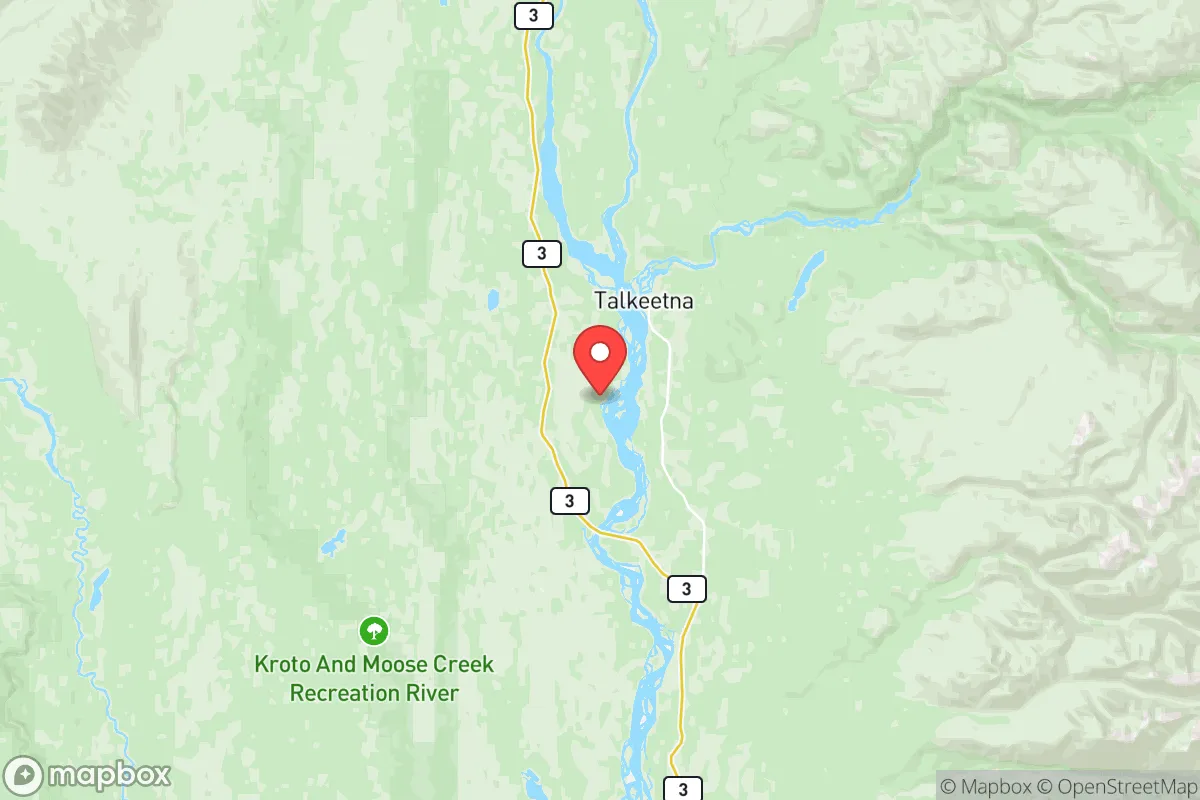
Beyond the corridor, the Mat-Su splinters into distinct communities. Houston, a 15-minute drive north of Wasilla, is a working-class town of 2,000 with a strong DIY ethos, known for its gravel roads and proximity to the Nancy Lake State Recreation Area. Big Lake offers lakefront cabins and year-round recreation, popular with weekenders and retirees, while Willow (population 2,100) is the official start of the Iditarod Trail and a hub for dog mushers and off-grid living. Further out, Talkeetna (population 900) is a tourist-oriented artist enclave at the confluence of three rivers, serving as the gateway to Denali climbing expeditions. The Susitna Valley—including communities like Skwentna and Y—is accessible only by plane or boat in summer and by snowmachine in winter, representing the county’s most remote, self-reliant lifestyle. These areas lack municipal services, relying on private wells, septic systems, and generator power.
Cost & lifestyle range
The Mat-Su’s cost of living index of 110 (10% above the U.S. average) masks a wide internal spread. At the affordable end, Houston and Willow offer median home prices near $250,000, with lower property taxes and no city sales tax, but residents face longer commutes and limited grocery options. At the premium end, Wasilla’s Settlers Bay neighborhood and Palmer’s Farm Loop area feature homes above $500,000 with paved roads, natural gas hookups, and fiber-optic internet. Median rent countywide is $1,258, but a two-bedroom apartment in Wasilla averages $1,400, while a similar unit in Talkeetna may run $1,100 with fewer amenities. The biggest lifestyle trade-off is commute time: residents of Big Lake or Houston often spend 45–60 minutes each way to Anchorage jobs, while those in Palmer’s downtown can walk to work or school. Utilities vary dramatically—natural gas is standard in Wasilla, but propane or heating oil dominates in rural areas, adding $200–$400 monthly to living costs.
This county suits people who value space and self-reliance over urban convenience. Families thrive in the Wasilla-Palmer corridor with its schools and services, while homesteaders, mushers, and remote workers find their niche in the Susitna Valley’s unincorporated communities. The Mat-Su’s defining trait is choice: residents can live in a subdivision with a 30-minute commute or on a 10-acre parcel with no neighbors, all within the same county—but the trade-offs in commute, utilities, and social isolation are real and must be weighed carefully.

Crime in Matanuska Susitna County
Higher crime rates than 66% of comparable U.S. locations.
Violent CrimeViolent Crime Analysis
Property CrimeProperty Crime Analysis
Crime Analysis
Matanuska-Susitna County, commonly called the Mat-Su Borough, presents a complex and concerning safety profile. With a violent crime rate of 732.2 per 100,000 and a property crime rate of 1,917.5 per 100,000, this rapidly growing region north of Anchorage records rates significantly higher than both the Alaska state average and national benchmarks. The borough’s challenge is unevenly distributed, with most serious incidents concentrated in a few population centers, leaving other communities comparatively safer.
Crime in context
To understand the scale of the problem, the Mat-Su Borough’s violent crime rate is 2.2 times the national average. Property crime, while high at almost double the national rate, is slightly below the Alaska state average of roughly 2,300 per 100,000. The borough’s largest city, Wasilla, along with Palmer (the borough seat), are the primary drivers of these statistics. Both cities have experienced population surges, and their proximity to Anchorage has brought heightened drug trafficking and associated property theft. The surrounding unincorporated areas and smaller towns like Houston and Talkeetna typically report lower per-capita crime numbers but still face challenges from regional transients.
What residents experience
For residents of Wasilla, the most common concerns involve vehicle theft, burglary, and drug-related incidents, particularly methamphetamine and heroin. The property crime rate of nearly 2,000 per 100,000 means that items left in vehicles or unsecured outbuildings are frequent targets. Violent offenses, while less frequent in Palmer than in Wasilla, still occur at a rate that concerns long-term locals. A significant factor many residents cite is the judicial philosophy of the Third Judicial District, which serves the Mat-Su area out of Palmer. Critics argue that a progressive and lenient approach by some district attorneys and judges—focused on rehabilitation over incarceration—has led to repeat offenders being released quickly back onto the streets. This pattern directly impacts public perception of safety, as residents see fewer consequences for property criminals and low-level violent offenders, eroding trust in the justice system.
Neighborhood-level variation
Safety in the Mat-Su Borough varies considerably by location and isolation. The densely developed residential areas of Wasilla’s Knik-Goose Bay Road corridor and Palmer’s downtown core see the highest concentrations of police calls. In contrast, the more rural subdivisions of Butte and Lazy Mountain (east of Palmer) experience far less street-level crime but are vulnerable to trespassing and theft from seasonal cabins. Communities farther from the Anchorage commuter shed, such as Chickaloon and Glennallen (the latter technically in a separate census area), report crime rates closer to the national average. Real estate agents and local safety forums consistently advise homebuyers to consider proximity to major roads and the presence of neighborhood watch programs, as these factors often correlate with lower incident rates. Despite the headline numbers, many residents in the borough’s quieter corners report feeling safe day-to-day, a testament to the geographic dispersion that defines life in this part of Alaska.
* Values derived from national, state, county, city and local statistics and may differ in a specific area. Last updated: 2026-07-07T07:42:48.000Z
Narrative content on this page is AI-generated and may contain mistakes. Verify any details that matter before acting on them.
ReloMaps may earn a commission from affiliate links at no extra cost to you.

