Personal Sovereignty in Matanuska Susitna County
Strong independent fundamentals that actively favor personal liberty and low regulation.
What does Personal Sovereignty tell us?
Personal Sovereignty measures your capacity for self-reliance and independence with minimal government friction. Higher scores mean fewer barriers between you and the way you want to live... but it assumes you have the space you need and good neighbors.
What does this tell us?
Personal Sovereignty measures your capacity for self-reliance and independence with minimal government friction. Higher scores mean fewer barriers between you and the way you want to live... but it assumes you have the space you need and good neighbors.
State Policy
Energy independence: Net exporter (350% of energy produced in-state)
Personal Liberty
Homesteading

Personal Liberty Analysis
Matanuska Susitna County, often called the Mat-Su, offers one of the strongest personal sovereignty environments in the United States, blending Alaska’s constitutional protections with a deeply ingrained culture of self-reliance. The borough’s regulatory posture is notably light, with no state income or sales tax, minimal zoning in unincorporated areas, and a legal framework that prioritizes individual autonomy over government oversight. For single individuals and families seeking to maximize personal freedom—from tax burden to self-defense law to off-grid living—the Mat-Su stands apart from the Lower 48, though the degree of sovereignty varies significantly between its urban nodes and its vast rural expanse.
Tax burden and regulatory posture in the Mat-Su Borough
Alaska’s absence of a state income tax and statewide sales tax is the foundation of the Mat-Su’s low-tax environment, but the borough itself adds only a modest property tax—typically around 10 to 12 mills, or roughly $1,000 to $1,200 annually on a $100,000 home—with no additional municipal sales tax in unincorporated areas. Towns like Wasilla and Palmer impose a local sales tax of about 3% to 4%, but this is often offset by Alaska’s Permanent Fund Dividend, which pays residents $1,000 to $2,000 per year. The regulatory posture is equally light: building permits are required only for structures over 200 square feet in most areas, and there is no statewide property tax on land value alone. In unincorporated zones like Willow or Talkeetna, property owners can build, develop, or subdivide with minimal bureaucratic interference, though the borough does enforce basic health and safety codes for septic systems and wells. This hands-off approach contrasts sharply with the Lower 48, where counties often layer on impact fees, zoning overlays, and environmental reviews that can delay projects for months.
Self-defense law and gun-friendly culture in the Mat-Su
Alaska is a constitutional carry state, meaning no permit is required to carry a concealed firearm for anyone 21 or older who can legally possess a gun, and the Mat-Su’s culture reflects this permissive stance. The borough has no local gun ordinances beyond state law, so residents in Houston or Big Lake can openly carry firearms without restriction, and the use of deadly force in self-defense is broadly protected under Alaska Statute 11.81.330, which does not require a duty to retreat in any place where the person has a legal right to be. Stand-your-ground protections apply, and the state’s castle doctrine extends to vehicles and occupied structures. Gun ownership rates in the Mat-Su are among the highest in the nation—estimated at over 60% of households—and the area hosts multiple gun ranges, including the Birchwood Shooting Range near Eagle River and the Mat-Su Shooting Sports Association range in Palmer. For families, this means a legal environment where self-defense choices are largely left to the individual, with no waiting periods, magazine capacity limits, or firearm registration requirements at the state or local level.
Self-reliance and homesteading viability: lot sizes, zoning, and off-grid feasibility
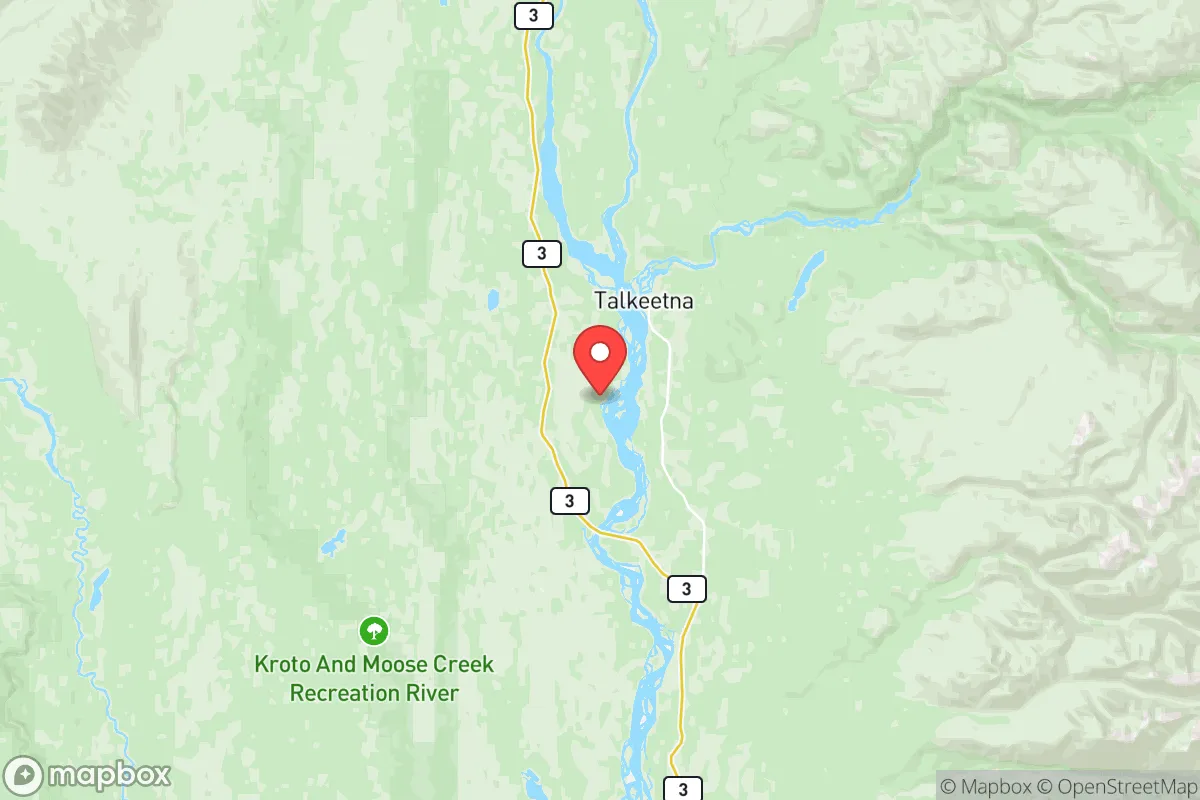
The Mat-Su is one of the few places in the United States where true off-grid homesteading remains viable within commuting distance of a regional hub. Unincorporated areas like Willow and Talkeetna have no zoning, allowing residents to build cabins, install solar panels, dig wells, and use composting toilets without permits, as long as they meet basic state health codes for water and waste. Minimum lot sizes in the borough’s rural zones are typically 5 to 10 acres, but in the vast unincorporated tracts north of Palmer, parcels of 20 to 40 acres are common, and the borough does not enforce subdivision regulations on land that is not subdivided for sale. Off-grid feasibility is high: the area receives over 300 days of sunshine annually for solar, and many properties have access to surface water or shallow groundwater. However, in denser areas like Wasilla and Palmer, the borough enforces zoning that restricts livestock, accessory structures, and commercial activities on residential lots under 2 acres. For families seeking maximum self-reliance, the sweet spot is the rural corridor along the Parks Highway between Wasilla and Talkeetna, where land is cheap—often $5,000 to $15,000 per acre—and regulatory oversight is minimal.
Personal liberties: parental rights, medical autonomy, speech, and property
Alaska’s constitution explicitly protects individual privacy, and the Mat-Su’s political culture leans heavily toward personal autonomy in family and medical decisions. Parental rights are strong: the state does not mandate vaccination for school attendance, and parents can opt out of any curriculum or activity without penalty. Medical autonomy is similarly broad—Alaska has no state-level vaccine mandates for adults, and the Mat-Su Borough has not enacted any local health orders that restrict personal medical choices since the pandemic era. Free speech protections are robust, with no local hate speech ordinances or content-based restrictions on public expression, and property rights are reinforced by the state’s strict eminent domain laws, which require just compensation and a public use that is narrowly defined. In practice, this means a resident in Butte or Point MacKenzie can build a home, homeschool their children, choose their medical treatments, and speak their mind without fear of local government overreach—a level of personal sovereignty that is increasingly rare in the contiguous United States.
Overall, the Matanuska Susitna County offers a personal sovereignty environment that rivals the most libertarian-leaning counties in the West, such as Owyhee County, Idaho, or Catron County, New Mexico, but with the added advantage of Alaska’s Permanent Fund Dividend and no state income tax. The borough’s light regulatory touch, constitutional carry, and off-grid viability make it a top choice for families and individuals who prioritize autonomy, though the trade-off is limited public services and a harsh winter climate that demands genuine self-reliance. For those willing to adapt, the Mat-Su delivers a level of personal freedom that few other regions in the United States can match.

* Values derived from national, state, county, city and local statistics and may differ in a specific area. Last updated: 2026-07-07T07:42:48.000Z
Narrative content on this page is AI-generated and may contain mistakes. Verify any details that matter before acting on them.
ReloMaps may earn a commission from affiliate links at no extra cost to you.

