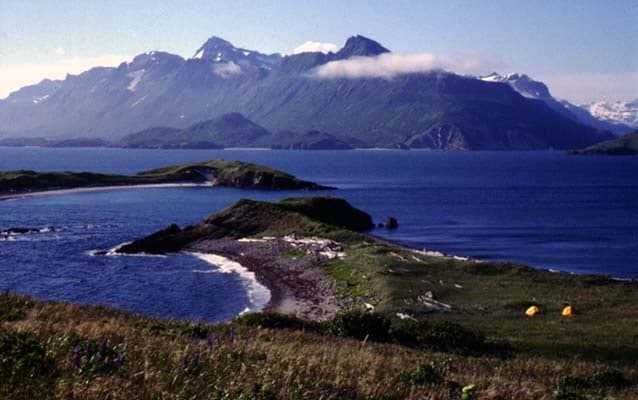
Photo: Wikipedia
Strategic Assessment of Dillingham County
Deep buffer from population centers and strategic targets. Low natural disaster risk and minimal exposure to border or coastal threats.
What does the Strategic Assessment tell us?
Our Strategic Assessment grades tactical survivability of an area. Major population centers, military targets, fallout zones, natural disasters, and border exposure all drive risk — lower exposure means a more defensible position in a crisis.
This is heavily inspired by Joel Skousen's Strategic Relocation book. Highly recommended you checkout the book ($)What does this tell us?
Our Strategic Assessment grades tactical survivability of an area. Major population centers, military targets, fallout zones, natural disasters, and border exposure all drive risk — lower exposure means a more defensible position in a crisis.
This is heavily inspired by Joel Skousen's Strategic Relocation book. Highly recommended you checkout the book ($)Strategic Pillars

Key Distances
Strategic Assessment Analysis
Dillingham County, Alaska, offers a unique strategic profile for relocators prioritizing resilience and self-sufficiency, anchored by its remote location on Nushagak Bay and the Wood River system. The area’s primary advantage is its extreme isolation from major population centers and industrial targets, with the nearest city of any size—Anchorage—lying over 300 air miles to the northeast. This distance, combined with the absence of road connections, makes Dillingham County one of the most defensible and fallout-safe regions in the United States for those serious about disaster preparedness.
Geographic position and natural advantages for long-term security
Dillingham County sits at the confluence of the Nushagak and Wood Rivers, providing direct access to Bristol Bay and the Bering Sea. This location offers a dual advantage: abundant freshwater from the rivers and a marine gateway for fishing and transport. The county’s terrain is a mix of tundra, boreal forest, and coastal wetlands, which naturally limits large-scale development and keeps population density extremely low—roughly 0.2 people per square mile. The primary settlement, the city of Dillingham, serves as the regional hub with about 2,000 residents, while smaller communities like Aleknagik, Clark’s Point, and Ekwok offer even deeper seclusion. The area’s position on the Nushagak River places it far from any major military installations, such as Joint Base Elmendorf-Richardson near Anchorage, or industrial complexes like the Trans-Alaska Pipeline System, which runs hundreds of miles to the east. For a relocator, this means minimal risk from targeted strikes or secondary fallout from infrastructure attacks. The surrounding Bristol Bay watershed is one of the world’s most productive salmon fisheries, providing a renewable, high-protein food source that is not dependent on fragile supply chains.
Risks, exposures, and proximity to fallout-relevant landmarks
While Dillingham County’s isolation is a strength, it also introduces specific vulnerabilities. The area is not near any major fallout-relevant landmarks—no nuclear power plants, refineries, or large military bases exist within 200 miles. The closest significant industrial site is the Red Dog Mine, a zinc-lead operation about 200 miles northwest, but its remote location and lack of strategic military value make it a low-priority target. The primary man-made risk comes from the region’s reliance on air and barge transport for fuel, medical supplies, and manufactured goods. Dillingham Airport (DLG) is the only year-round transportation link, and a disruption to aviation fuel deliveries—whether from a cyberattack, fuel shortage, or natural disaster—would severely impact the community’s ability to operate generators, vehicles, and heating systems. Natural risks include seasonal flooding from the Nushagak River, which can isolate neighborhoods during spring breakup, and the potential for volcanic ashfall from nearby active volcanoes like Mount Veniaminof (about 150 miles southeast) or Mount Katmai (about 180 miles east). Ashfall can contaminate water supplies, damage engines, and collapse roofs if heavy enough. The region also experiences frequent earthquakes, though the local building stock is generally wood-frame and single-story, which is more resilient than unreinforced masonry. For a relocator, the key takeaway is that the area’s risks are primarily natural and logistical, not man-made or fallout-related, making it a strong choice for those seeking to avoid the dangers of urban proximity.
Practical resilience for a relocator: food, water, energy, and defensibility
For a relocator serious about self-sufficiency, Dillingham County offers a mixed but workable picture. Food security is the area’s strongest asset: the Bristol Bay salmon run provides millions of fish annually, and residents can legally subsistence fish for salmon, halibut, and other species. Moose and caribou hunting are also viable, with the Mulchatna caribou herd passing through the region. Gardening is possible but challenging due to the short growing season (roughly 90 frost-free days) and acidic soils; raised beds and greenhouses are common. Water is abundant but requires treatment: the Nushagak and Wood Rivers provide ample surface water, but it must be filtered or boiled to remove parasites like giardia. Many residents rely on rainwater collection or drilled wells, though groundwater in some areas has high iron content. Energy is the critical vulnerability: nearly all electricity and heating fuel comes from diesel generators or heating oil, delivered by barge or air. Solar panels are viable during the long summer days (up to 18 hours of daylight in June), but winter brings near-total darkness, making battery storage and backup diesel essential. Wood heating is possible but limited by the slow-growing boreal forest; most residents import firewood or use coal. Defensibility is excellent: the lack of road access means any approach is by air or water, making it easy to monitor and control entry. The small, tight-knit community (population under 5,000 county-wide) means strangers are noticed quickly, and social networks are strong. However, this also means that a relocator must invest significant time in building relationships and learning local skills—subsistence living is not a solo endeavor. The cost of living is high: a gallon of milk can run $8, and a gallon of heating oil over $5, so financial preparedness is essential. For a family or individual willing to adapt, the county offers a rare combination of natural abundance and strategic isolation.
Overall, Dillingham County presents a compelling strategic option for the disaster-conscious relocator, particularly those who value distance from fallout risks and have the skills to thrive in a remote, subsistence-based environment. The area’s geographic isolation from major military and industrial targets—like the Port of Anchorage or the Kenai Peninsula refineries—makes it one of the safest locations in Alaska for avoiding man-made catastrophes. The trade-offs are real: high energy dependence, logistical fragility, and a harsh climate that demands year-round preparation. But for those who can master the learning curve, the county offers a defensible, resource-rich home base where community ties and self-reliance are not just ideals but daily necessities. The key is to arrive with a solid plan for energy independence, a willingness to learn from local experts, and enough capital to weather the first few years while building a sustainable homestead.

* Values derived from national, state, county, city and local statistics and may differ in a specific area. Last updated: 2026-07-15T00:22:18.000Z
Narrative content on this page is AI-generated and may contain mistakes. Verify any details that matter before acting on them.
ReloMaps may earn a commission from affiliate links at no extra cost to you.

