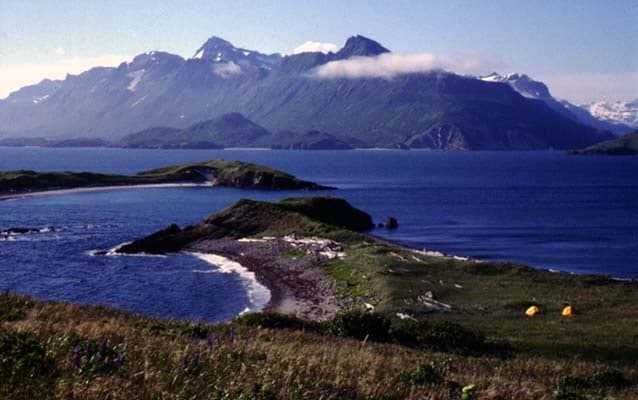
Photo: Wikipedia
Personal Sovereignty in Dillingham County
Strong independent fundamentals that actively favor personal liberty and low regulation.
What does Personal Sovereignty tell us?
Personal Sovereignty measures your capacity for self-reliance and independence with minimal government friction. Higher scores mean fewer barriers between you and the way you want to live... but it assumes you have the space you need and good neighbors.
What does this tell us?
Personal Sovereignty measures your capacity for self-reliance and independence with minimal government friction. Higher scores mean fewer barriers between you and the way you want to live... but it assumes you have the space you need and good neighbors.
State Policy
Energy independence: Net exporter (350% of energy produced in-state)
Personal Liberty
Homesteading

Personal Liberty Analysis
Dillingham County, Alaska, offers a personal sovereignty environment that is among the most hands-off in the United States, shaped by its remote location, sparse population of roughly 4,800 residents, and a state constitution that explicitly protects individual autonomy. The county seat of Dillingham, along with the villages of Aleknagik, Clark’s Point, Ekwok, Manokotak, Togiak, and Twin Hills, operate under a local governance structure that is minimal by design, with most regulatory authority resting at the state level. For a relocation-minded individual or family seeking maximum personal freedom, this area presents a unique blend of low taxation, permissive self-defense laws, and genuine off-grid living opportunities, though the trade-offs include extreme isolation, limited infrastructure, and a subsistence-based economy that demands high self-reliance.
Tax burden and regulatory posture in Dillingham County
Alaska’s state-level tax climate is among the most favorable in the nation, and Dillingham County reflects that reality directly. There is no state income tax, no state sales tax, and no statewide property tax, though the City of Dillingham imposes a local sales tax of 6% on most goods, with the villages of Aleknagik and Togiak levying their own rates of 3% and 5% respectively. Property taxes in the county are exceptionally low, with a mill rate of approximately 8.5 mills on assessed value, and the state’s Permanent Fund Dividend provides an annual cash payment to residents—roughly $1,600 per person in 2025—which effectively offsets some living costs. The regulatory posture is equally light: there are no county-level zoning ordinances outside the Dillingham city limits, meaning that in unincorporated areas like Clark’s Point or Ekwok, residents can build, modify, or demolish structures without permits or inspections. The state’s Department of Environmental Conservation handles basic health and safety oversight, but enforcement is minimal due to the county’s vast size and low population density. For a reader prioritizing low tax burden and minimal government interference, Dillingham County ranks among the most accommodating areas in the country, though the lack of regulation also means no formal building codes, which can complicate insurance and financing.
Self-defense and gun law specifics in Dillingham County
Alaska is a constitutional carry state, and Dillingham County fully embraces that framework. No permit is required to openly carry a firearm or to conceal carry for any resident 21 or older, and the state preempts local gun ordinances, meaning that the City of Dillingham, Aleknagik, and Togiak cannot impose their own restrictions beyond state law. The county’s remote character—accessible only by air or water, with no road connections to the rest of Alaska—makes firearm ownership a practical necessity for subsistence hunting and wildlife defense, particularly against brown bears, which are common in the region. Stand-your-ground laws apply statewide, with no duty to retreat in any place where a person has a legal right to be, and the state’s castle doctrine extends to vehicles and occupied structures. Magazine capacity, firearm registration, and waiting periods are all nonexistent. The only notable restriction is that firearms are prohibited in certain federal facilities, such as the Togiak National Wildlife Refuge headquarters, but this is a minor limitation in a county where most land is state-owned or private. For a reader who views self-defense as a core personal liberty, Dillingham County offers one of the most permissive legal environments in the United States, with the added practical reality that law enforcement response times can exceed 45 minutes in the villages and several hours in remote homesteads.
Self-reliance and homesteading viability in Dillingham County
Homesteading in Dillingham County is not a lifestyle choice—it is the default mode of existence for most residents, and the regulatory environment supports it strongly. Outside the city limits of Dillingham, there are no minimum lot size requirements, no building permits, and no zoning restrictions, meaning that a family can purchase a 5-acre parcel near Aleknagik Lake or a 40-acre tract along the Nushagak River and build a cabin, install a septic system, and harvest timber without any government approval. Off-grid living is standard: fewer than 30% of homes in the county are connected to a municipal power grid, with most relying on diesel generators, solar panels, or small wind turbines. The state’s Department of Natural Resources allows for remote cabin permits on state land, which grant a 10-year renewable lease for a recreational or permanent dwelling at an annual fee of roughly $500. Water rights are governed by the state’s prior appropriation system, but in practice, residents draw from wells, rivers, or rainwater collection without interference. The primary challenge is not regulatory but logistical: building materials must be barged or flown in, fuel costs are among the highest in the nation at over $6 per gallon in villages like Manokotak, and the growing season is limited to roughly 90 days, making large-scale gardening difficult. For a reader seeking genuine self-reliance, Dillingham County offers a level of homesteading freedom that is virtually unmatched in the lower 48, but it demands significant capital, mechanical skills, and tolerance for extreme isolation.
Personal liberties in Dillingham County: parental rights, medical autonomy, speech, and property
Alaska’s legal framework provides strong protections for personal liberties, and Dillingham County operates within that framework with minimal local interference. Parental rights are robust: the state’s compulsory education law allows for homeschooling without any notification or curriculum approval requirements, and the Bristol Bay Borough School District, which serves Dillingham and Aleknagik, offers a correspondence program for families who prefer a structured option. Medical autonomy is similarly permissive—Alaska has no state-level vaccine mandates for adults, and the state’s Health Insurance Portability and Accountability Act (HIPAA) protections are enforced rigorously, though the county’s limited healthcare infrastructure, with only one small hospital in Dillingham and no urgent care in the villages, means that medical decisions are often made in isolation. Free speech protections are standard under the First Amendment, and the county’s small population and tight-knit communities mean that social pressure, rather than legal restriction, is the primary constraint on expression. Property rights are strong: the state’s right-to-farm law protects agricultural activities from nuisance lawsuits, and there are no county-level rent control or landlord licensing ordinances. The Alaska Constitution’s privacy amendment, which explicitly protects individual privacy from government intrusion, is frequently cited in state court decisions and provides a legal foundation for personal autonomy that is rare nationally. For a reader who values these liberties, Dillingham County offers a legal environment that is consistently deferential to individual choice, though the practical realities of remote living—limited access to services, high costs, and a subsistence economy—mean that freedom comes with significant personal responsibility.
Overall, Dillingham County represents one of the most sovereignty-friendly jurisdictions in the United States for a relocation-minded individual or family, particularly when compared to urban centers like Anchorage or Juneau, where zoning, building codes, and local ordinances are far more restrictive. The combination of no state income tax, constitutional carry, minimal zoning, and strong privacy protections creates an environment where personal autonomy is the default, not the exception. However, this freedom is not costless: the county’s extreme isolation, high cost of living, and limited infrastructure mean that residents must be prepared to handle emergencies, maintain their own utilities, and accept a level of self-reliance that would be daunting in most other parts of the country. For a reader who prioritizes personal sovereignty above convenience and is willing to trade modern amenities for genuine independence, Dillingham County is a compelling option that delivers on its promises of low regulation and high autonomy.

* Values derived from national, state, county, city and local statistics and may differ in a specific area. Last updated: 2026-07-15T00:22:18.000Z
Narrative content on this page is AI-generated and may contain mistakes. Verify any details that matter before acting on them.
ReloMaps may earn a commission from affiliate links at no extra cost to you.

