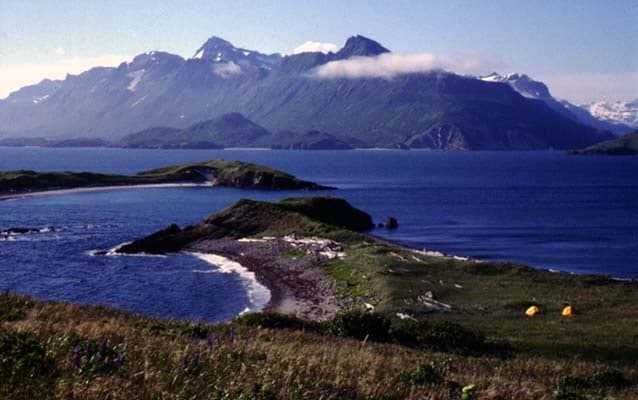
Photo: Wikipedia
Demographics of Dillingham County
Affluence Level in Dillingham County
A below-average socioeconomic profile. Incomes, home values, and educational attainment trail the U.S., with higher poverty and unemployment.
People of Dillingham County
Dillingham County, Alaska, is home to approximately 4,780 people, a population overwhelmingly defined by its Alaska Native heritage, with 14.3% of residents identifying as White and the vast majority—over 80%—claiming Indigenous ancestry, primarily Yup’ik and Alutiiq. The population is sparse, rural, and deeply connected to subsistence lifestyles, with the hub community of Dillingham (the city) serving as the commercial and administrative center, while villages like Aleknagik, Clark’s Point, Ekwok, Manokotak, and Togiak maintain distinct cultural identities. With a foreign-born population of just 1.2% and a college-educated rate of 19.4%, the county remains one of the most culturally homogeneous and geographically isolated regions in the United States, where English is a second language for many and traditional fishing, hunting, and berry-picking remain central to daily life.
Settlement & growth (pre-1960)
Human history in what is now Dillingham County stretches back thousands of years, long before any European contact. The region was and remains the ancestral homeland of the Yup’ik people, specifically the Bristol Bay Yup’ik, who lived in semi-permanent winter villages along the Nushagak River and its tributaries, moving seasonally to fish camps and hunting grounds. The area’s first sustained contact with outsiders came in the early 19th century, when Russian fur traders and Orthodox missionaries established a presence along the coast. The Russian-American Company built a trading post at Alexandrovsk (near present-day Dillingham) in 1818, and the Russian Orthodox Church founded a mission at Nushagak in 1837, which became a center for both trade and conversion. The Russian influence, though small in numbers, left a lasting mark: many Alaska Native families in the region today carry Russian surnames and practice Orthodox Christianity alongside traditional beliefs.
After the United States purchased Alaska in 1867, the region saw a slow trickle of American commercial interests, primarily in salmon fishing and canning. The first major non-Native settlement wave came in the 1880s and 1890s, when the Bristol Bay salmon fishery exploded. Canneries were established at Dillingham, Clark’s Point, and Ekwok, drawing seasonal workers from Scandinavia, Italy, and the Pacific Northwest. These workers were almost entirely male and transient; few stayed year-round, and the permanent non-Native population remained tiny. The U.S. government established a school and post office at Dillingham in 1904, and the town became the regional hub for the Nushagak River drainage. The Alaska Native population, however, continued to live primarily in outlying villages like Aleknagik, Manokotak, and Togiak, where subsistence fishing and trapping remained the economic backbone.
The 1920s and 1930s brought a small influx of Euro-American homesteaders and trappers, but the region’s isolation—no roads connect Dillingham County to the rest of Alaska—kept settlement minimal. The federal government’s Reindeer Act of 1937, which restricted reindeer ownership to Alaska Natives, further discouraged non-Native settlement in the interior. World War II brought a brief military presence, with the construction of an airfield at Dillingham, but the population remained overwhelmingly Alaska Native through the 1950s. The 1959 Alaska Statehood Act and the subsequent Alaska Native Claims Settlement Act (ANCSA) of 1971 would reshape land ownership and governance, but the demographic character of the county—rural, Indigenous, and subsistence-oriented—remained largely unchanged through the mid-20th century.
Modern era (post-1965)
The 1965 Hart-Cellar Act, which transformed immigration patterns in the Lower 48, had virtually no effect on Dillingham County. The region’s foreign-born population today stands at just 1.2%, and the county has seen no significant immigrant enclaves form. Instead, the post-1965 era has been defined by two forces: the implementation of ANCSA and the ongoing struggle between modernization and cultural preservation. ANCSA created regional and village corporations, including the Bristol Bay Native Corporation and village corporations for Dillingham, Aleknagik, Clark’s Point, Ekwok, Manokotak, and Togiak, which now manage land and distribute dividends to shareholders. This corporate structure has brought a degree of economic development—primarily in commercial fishing, seafood processing, and government services—but has also created tensions between traditional subsistence practices and corporate profit motives.
Domestic migration into Dillingham County has been minimal and largely temporary. The county attracts a small number of teachers, healthcare workers, and public safety officers from outside Alaska, most of whom stay for a few years before leaving. The non-Native population, which is concentrated in the city of Dillingham, has remained stable at around 14-15% since the 1980s. The Hispanic population (3.4%) and East/Southeast Asian population (1.0%) are small and primarily associated with seasonal seafood processing workers, many of whom come from the Philippines and Mexico. The Black population (0.6%) and Indian subcontinent population (0.7%) are negligible. The county’s racial and ethnic composition has remained remarkably stable: overwhelmingly Alaska Native, with a small White minority and tiny other groups.
Suburbanization, as understood in the Lower 48, does not exist in Dillingham County. There are no suburbs. The population is distributed between the hub city of Dillingham (population roughly 2,200) and the six federally recognized tribal villages: Aleknagik (pop. 220), Clark’s Point (pop. 60), Ekwok (pop. 115), Manokotak (pop. 450), Togiak (pop. 820), and the smaller community of Portage Creek. These villages have seen population declines in recent decades as young people move to Dillingham or Anchorage for education and employment, but the county’s overall population has remained relatively stable due to higher birth rates among Alaska Native families.
The future
The demographic future of Dillingham County is one of slow decline and cultural consolidation. The county’s population peaked at around 5,000 in the 1990s and has since slipped to 4,780, a trend driven by out-migration of young adults to urban centers like Anchorage and Fairbanks. The Alaska Native share of the population is likely to remain dominant or even increase, as the White population tends to be older and more transient. The county is not becoming more diverse in the conventional sense; the small Hispanic and Asian populations are tied to the seasonal seafood industry and are unlikely to settle permanently. The college-educated rate of 19.4% is low by national standards but typical for rural Alaska, and it is unlikely to rise significantly without major economic diversification.
Climate change poses a direct threat to the subsistence lifestyle that underpins the region’s culture and economy. Warmer winters, thinner river ice, and shifting salmon runs are already affecting traditional hunting and fishing patterns. The Bristol Bay watershed, which supports the world’s largest sockeye salmon run, faces ongoing pressure from the proposed Pebble Mine, a copper and gold project that could alter the region’s ecology and economy if developed. The county’s cultural identity—rooted in Yup’ik language, Orthodox Christianity, and subsistence—will likely persist, but it will do so in a context of economic fragility and environmental uncertainty.
For someone moving into Dillingham County today, this is a place where community is defined by clan, village, and the rhythms of the salmon run, not by suburban sprawl or ethnic enclaves. The population is stable, culturally cohesive, and deeply tied to the land. Newcomers—almost always White professionals in education, healthcare, or public service—will find a society that is welcoming but insular, where relationships are built over decades, not months. The county is not growing, diversifying, or suburbanizing; it is holding steady, preserving a way of life that has existed for millennia, even as the forces of modernity press in from all sides.

* Values derived from national, state, county, city and local statistics and may differ in a specific area. Last updated: 2026-07-15T00:22:18.000Z
Narrative content on this page is AI-generated and may contain mistakes. Verify any details that matter before acting on them.
ReloMaps may earn a commission from affiliate links at no extra cost to you.

