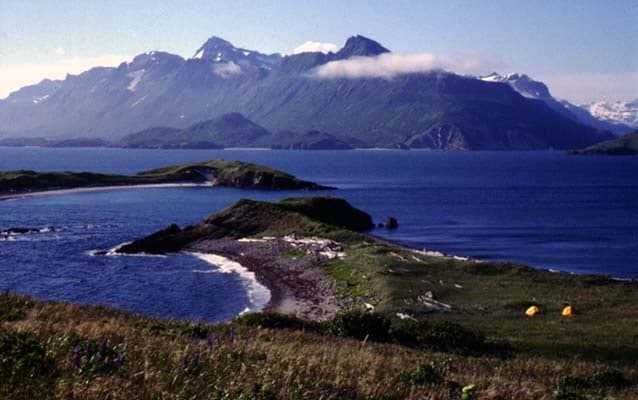
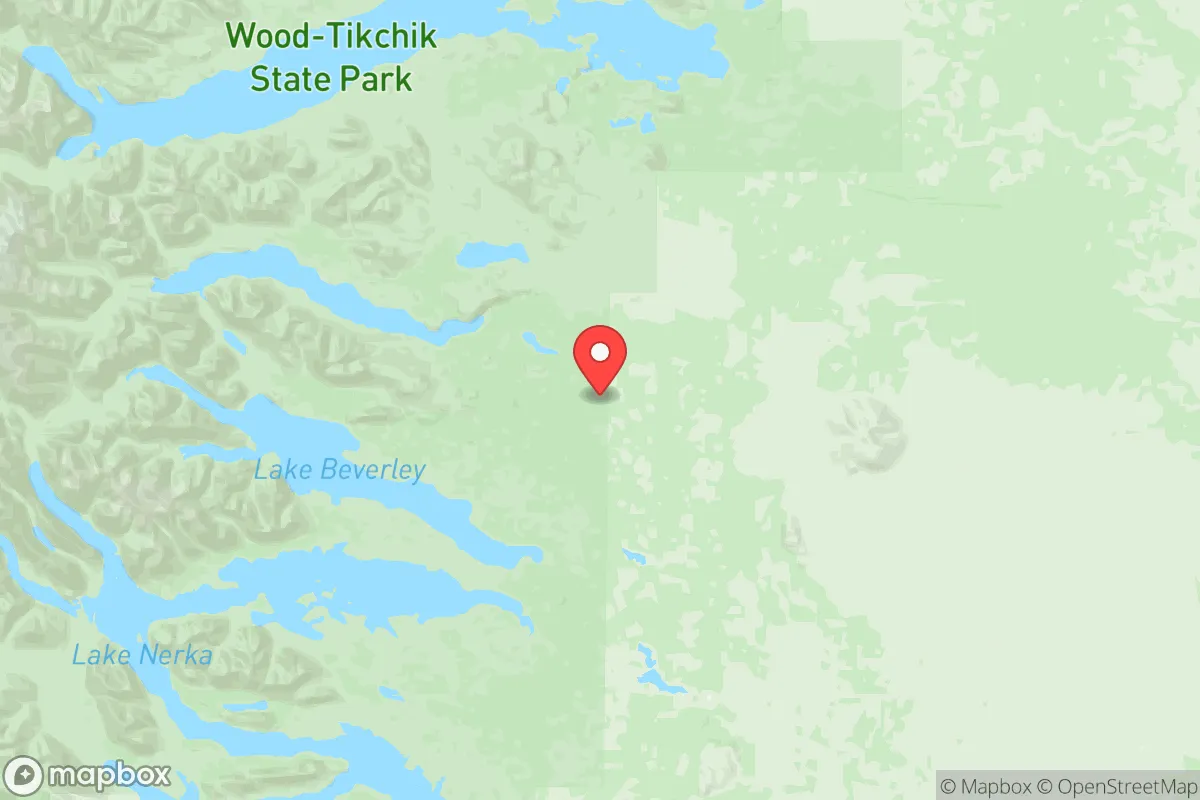
Photo: Wikipedia
Political ClimatePolitical Climate in Dillingham County
Showing state-level results — no local-only data available.
Local Political AnalysisPolitical Analysis of Dillingham County
Dillingham County, Alaska, leans Republican with a Cook PVI of R+6, matching the state of Alaska exactly. This means the county is about six points more Republican than the national average, a consistent pattern in recent presidential elections. The political reality here is more nuanced than a single number suggests, with distinct pockets of Democratic strength in the county's hub and a deeply conservative, subsistence-oriented vote in the outlying villages.
How it compares
While Dillingham County's R+6 rating mirrors Alaska's statewide PVI, the internal dynamics are quite different. The county seat, Dillingham, is the only incorporated city and serves as a regional commercial and transportation center. Here, the vote is more competitive, often leaning slightly Democratic in local races and presidential elections, reflecting a mix of government employees, healthcare workers, and fishing industry families. In contrast, the smaller villages like Aleknagik, Clark's Point, and Manokotak are overwhelmingly Republican, driven by strong support for gun rights, subsistence hunting and fishing protections, and opposition to federal land-use restrictions. The swing precincts are virtually nonexistent; the vote is polarized between the Dillingham city precinct and the rest of the county. This split is more pronounced than in many other parts of Alaska, where urban centers like Anchorage and Fairbanks show more internal variation. The county's trajectory is stable, with no major demographic shifts that would alter its R+6 lean in the near term.
What this means for residents
For a conservative resident, especially in the villages, the political climate feels comfortable and aligned with their values. Local government and the state legislature are reliably Republican, meaning issues like subsistence priority, rural road maintenance, and opposition to federal land designations get a sympathetic hearing. For a liberal resident in Dillingham town, the experience is different. They are a clear minority in countywide elections, but they often find their voice in the city council and school board races, where local issues like housing, healthcare access, and education funding take precedence over national partisan battles. The practical effect is that most residents, regardless of party, focus on shared challenges: the high cost of living, the fragility of the fishing economy, and the need for reliable infrastructure. Political arguments are less about ideology and more about how to solve these concrete problems.
What this means for residents
The cultural and policy distinctions in Dillingham County are shaped by its geography and economy. The dominant industry is commercial fishing, particularly for sockeye salmon in Bristol Bay. This creates a unique political dynamic where both Republicans and Democrats fiercely oppose large-scale mining projects like the proposed Pebble Mine, uniting the county across party lines. The state's Permanent Fund Dividend (PFD) is a near-sacred issue for all residents, and any candidate who threatens it is unlikely to win local support. The county also has a strong Alaska Native presence, with Yup'ik culture deeply influencing village life. This means that tribal sovereignty and subsistence rights are not just political talking points but daily realities. The local newspaper, the Bristol Bay Times, and the regional nonprofit Bristol Bay Native Association play significant roles in shaping public discourse. In practice, the political climate here is less about red vs. blue and more about rural vs. urban, subsistence vs. development, and local control vs. federal oversight. For a newcomer, the most important thing to understand is that party labels matter less than a candidate's stance on fish, fuel, and the PFD.

State Political ClimatePolitical Climate in Alaska
State Political AnalysisPolitical Environment in the State
Alaska has long been a Republican-leaning state with a Cook PVI of R+6, but its political character is far more independent and libertarian than a simple partisan label suggests. Over the past 20 years, the state has shifted from reliably red to a more volatile swing state, driven by a growing urban-liberal bloc in Anchorage and a persistent rural-conservative and Alaska Native voting base. The 2022 U.S. Senate race, where Republican Lisa Murkowski won via ranked-choice voting over a Trump-backed challenger, and the 2024 presidential election, where Donald Trump carried the state by 13 points, illustrate the tension between the state’s traditional GOP lean and its growing appetite for moderate, independent candidates.
Urban vs. rural divide
The political map of Alaska is starkly divided between its urban core and vast rural expanse. Anchorage, home to about 40% of the state’s population, is the key battleground: the city’s Assembly is controlled by a coalition of Democrats and independents, and it voted for Joe Biden in 2020 by a narrow margin. The Matanuska-Susitna Borough, just north of Anchorage, is the state’s conservative stronghold, with towns like Wasilla and Palmer reliably delivering 60-70% of their votes to Republican candidates. Fairbanks, the interior hub, leans Republican but has a sizable moderate and military-affiliated population that can swing elections. Southeast Alaska, including Juneau and Sitka, is more Democratic-leaning, driven by state government workers and a strong environmentalist presence. The rural Bush, including the North Slope and Western Alaska, votes heavily Democratic due to Alaska Native interests and reliance on federal programs, though turnout is often low. This geographic split means that statewide elections often hinge on turnout in Anchorage and the Mat-Su, with the rest of the state playing a supporting role.
Policy environment
Alaska’s policy environment is defined by its unique reliance on oil revenue and a deeply ingrained libertarian streak. There is no state income tax or statewide sales tax, making it one of the most tax-friendly states in the country. The Permanent Fund Dividend, an annual payment to every resident from oil royalties, is a sacred cow that both parties defend, though debates over its size and funding are constant. The state’s regulatory posture is generally light, especially for resource extraction, but environmental regulations from the federal government often create friction. Education policy is decentralized, with local school boards holding significant power, though the state has seen debates over parental rights and curriculum transparency, with a 2023 law requiring schools to post instructional materials online. Healthcare is a mixed bag: the state expanded Medicaid under the Affordable Care Act in 2015, but rural access remains poor, and the state has not enacted its own individual mandate. Election laws are notably progressive: Alaska adopted ranked-choice voting in 2020 via ballot initiative, a system that has boosted moderate candidates and frustrated hardline partisans on both sides. Voter registration is same-day, and absentee voting is no-excuse, making access relatively easy.
Recent policy direction
Recent legislation in Alaska reflects a state trying to balance individual liberty with practical governance. On gun rights, Alaska is a constitutional carry state with no permit required for concealed carry, and a 2022 law preempted local gun ordinances, ensuring uniform statewide standards. Self-defense law follows the Castle Doctrine, with no duty to retreat in any place where a person has a legal right to be. Parental rights have been a flashpoint: a 2023 law requires parental consent for minors to receive gender-affirming care, and a 2024 law mandates that schools notify parents of any changes to a student’s services or mental health. On speech and privacy, Alaska has no specific law protecting online speech from platform censorship, but the state constitution’s strong privacy clause has been used to challenge surveillance programs. Medical and bodily autonomy is a patchwork: abortion remains legal up to viability, with a 2023 law requiring parental notification for minors, but no further restrictions have passed. Property rights are strong, with no statewide zoning and a robust homestead exemption from creditors. Taxation remains the big draw: no income tax, no sales tax, and a cap on property tax increases at 10% annually. Voting access has been a battleground: ranked-choice voting survived a repeal attempt in 2024, but the system remains controversial, with critics arguing it confuses voters and benefits incumbents.
Civil unrest & political movements
Alaska has a history of low-key but persistent political activism, often centered on resource extraction and land use. The most visible flashpoints in recent years have been around the Pebble Mine project in Bristol Bay, which drew massive protests from environmentalists and Alaska Native tribes, and the Willow oil project on the North Slope, which saw smaller but vocal demonstrations in Anchorage. The state has a strong secessionist and nullification streak, with the Alaska Independence Party still active, though it has not won a major election since the 1990s. Election integrity controversies have been muted compared to the Lower 48, but the 2022 ranked-choice voting rollout saw accusations of confusion and disenfranchisement from conservative groups, leading to a failed repeal effort in 2024. Immigration politics are less charged than in border states, but there is a small but vocal anti-immigrant movement focused on the state’s limited refugee resettlement program. The most visible political movement is the Alaska Native vote, which has become increasingly organized and influential, particularly in opposing resource extraction projects and advocating for subsistence rights. A new resident would notice the lack of large-scale protests compared to the Lower 48, but the political discourse is sharp, especially in Anchorage and Fairbanks, where local news covers everything from school board meetings to oil tax debates.
Projection
Over the next 5-10 years, Alaska’s political trajectory points toward continued volatility and a slow shift toward the center. Demographic trends are working against the GOP: Anchorage is becoming more diverse and younger, while the Mat-Su is growing but aging. In-migration from other states, particularly from the West Coast, is bringing more moderate and liberal voters to the urban core, though the state’s high cost of living and harsh climate limit the scale. The oil revenue decline is the wild card: as production drops, the state will face pressure to either cut services or implement new taxes, which could reshape the political landscape. Ranked-choice voting is likely to stay, which will continue to favor moderate candidates and make it harder for hardline partisans to win statewide office. A new resident moving in now should expect to find a state where the political debate is less about culture wars and more about practical governance—how to fund schools, maintain roads, and preserve the Permanent Fund. The libertarian consensus will hold, but the partisan balance will remain close, with no single party dominating for long.
For a new resident, the bottom line is that Alaska offers a unique political environment where individual freedom is highly valued, but the practical challenges of living in a remote, resource-dependent state force a pragmatic approach to governance. Conservatives will appreciate the low taxes, strong gun rights, and parental control laws, while liberals will find a state that protects abortion access, has a robust Medicaid program, and uses ranked-choice voting to amplify moderate voices. The key is to be engaged locally: in Anchorage, the school board and Assembly elections matter more than national politics, and in the Mat-Su, the borough assembly and planning commission decisions shape daily life. Alaska is not a place where you can coast on national trends—your vote and your voice have outsized impact, and the political climate rewards those who show up and participate.
* Values derived from national, state, county, city and local statistics and may differ in a specific area. Last updated: 2026-07-15T00:22:18.000Z
Narrative content on this page is AI-generated and may contain mistakes. Verify any details that matter before acting on them.
ReloMaps may earn a commission from affiliate links at no extra cost to you.

