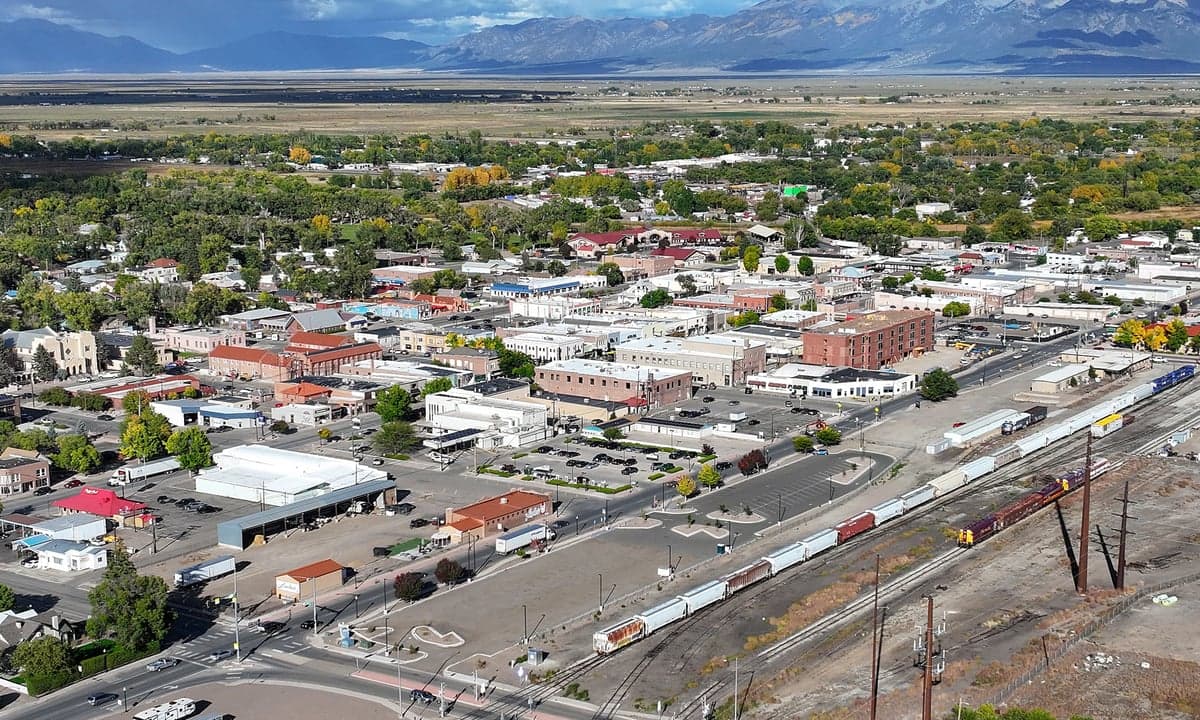
Photo: Wikipedia
Political ClimatePolitical Climate in Alamosa, CO
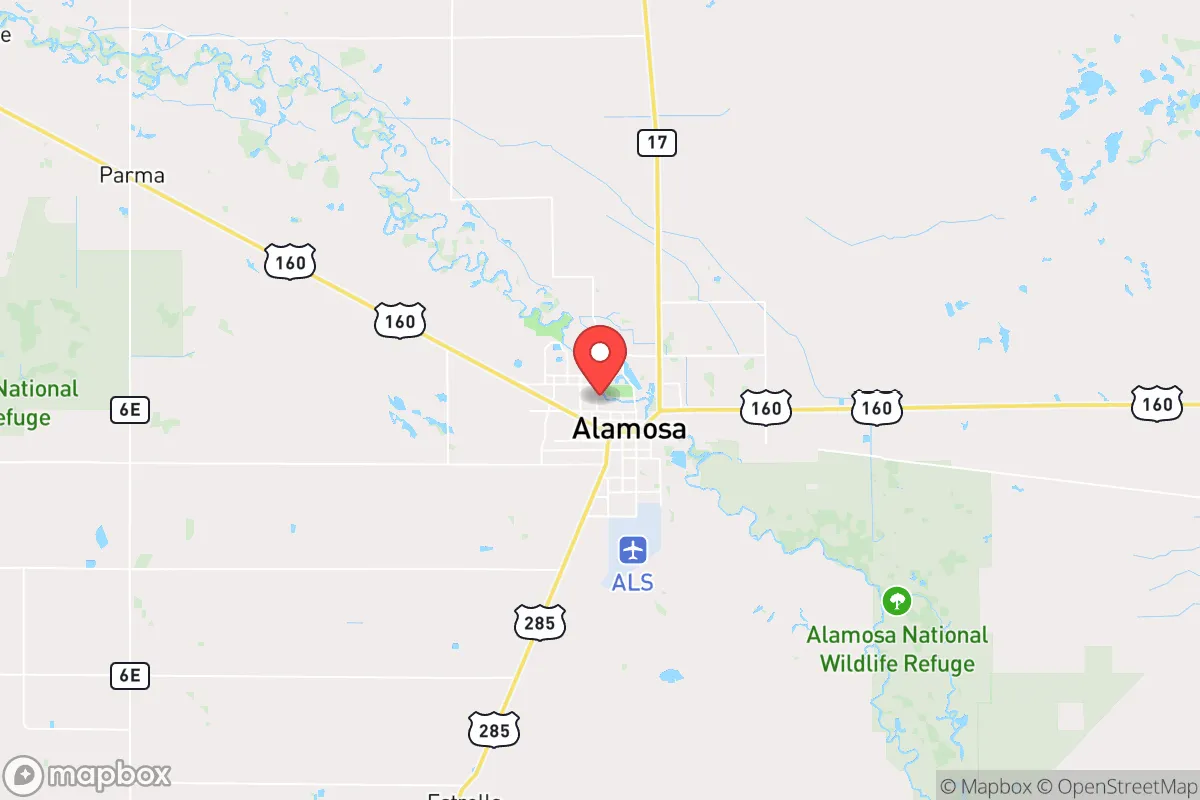
District shown is the primary district for this city’s centroid. Cities may span multiple districts.
Local Political AnalysisPolitical Analysis of Alamosa, CO
Alamosa sits in a bit of a political bubble, leaning conservative in a state that's gone hard blue. The area's Cook PVI of R+5 tells the real story—this is a place where folks still value local control and don't take kindly to being told how to live by Denver or D.C. But you can feel the pressure building, with Colorado's statewide PVI of D+6 showing just how out of step the rest of the state has become with the values that built this valley. The shift hasn't hit Alamosa as hard as places like Boulder or Denver, but the progressive creep is real, and it's something long-time residents are watching closely.
How it compares
Drive an hour north to Salida or an hour south to Taos, and you'll see the contrast immediately. Those towns have embraced the progressive wave—think higher taxes, more regulations on housing and land use, and a general attitude that government knows best. Alamosa, by contrast, still feels like the old Colorado. The surrounding San Luis Valley is agricultural, independent, and skeptical of outsiders telling ranchers and farmers how to run their operations. Alamosa County voted for Trump in 2020 by about 10 points, while neighboring Conejos County went even redder. Compare that to Colorado's Front Range, where counties like Boulder and Denver routinely vote 70%+ Democrat. The divide isn't just political—it's cultural. In Alamosa, people still believe in property rights, gun ownership without endless red tape, and keeping taxes low enough that a family can actually afford to live here. The state government's push for stricter environmental regulations and land-use mandates feels like a direct attack on that way of life.
What this means for residents
For now, Alamosa remains a refuge for those who want to live free from the worst of Colorado's progressive overreach. Local government here is still responsive to the people, not to outside interest groups or party bosses. You won't see the kind of zoning fights or business-killing regulations that have choked places like Durango or Crested Butte. But the threat is real. Every legislative session in Denver brings new bills aimed at restricting energy development, raising property taxes through backdoor measures, or limiting how you can use your own land. The state's push for electric vehicle mandates and renewable energy quotas hits rural areas hardest, where people depend on affordable gas and diesel to work the land. Alamosa's cost of living is still reasonable compared to the rest of Colorado, but that won't last if the state keeps piling on fees and regulations. The biggest concern is that as more people flee the Front Range's high prices and progressive policies, they'll bring those same ideas with them.
What sets Alamosa apart culturally is its stubborn independence. This is a place where people still wave at each other on the street and look out for their neighbors without being told to. The local schools and churches remain community anchors, not political battlegrounds. But you can see the writing on the wall—the same forces that turned Boulder from a quiet college town into a progressive stronghold are slowly making their way south. The question is whether Alamosa can hold the line or if it'll be swallowed by the same tide that's reshaped the rest of Colorado. For now, it's one of the last places in the state where you can still live by your own rules, but that window is closing fast.

State Political ClimatePolitical Climate in Colorado
State Political AnalysisPolitical Environment in the State
Colorado has shifted from a classic purple swing state to a solidly blue one over the past two decades, now carrying a Cook PVI of D+6. The dominant coalition is a mix of Denver-metro progressives, suburban swing voters who have moved left on cultural issues, and a growing Hispanic population in the Front Range. The trajectory has been a steady march leftward since 2004, when the state voted for George W. Bush, but the real acceleration came after 2016, when the state went from a lean-blue to a deep-blue posture on nearly every statewide race.
Urban vs. rural divide
The political map of Colorado is a tale of two worlds. The Denver-Boulder-Aurora corridor is the engine of Democratic power, with Boulder County routinely delivering 70-80% of its vote to Democrats. Denver itself is a deep-blue city, but the real shift has been in the suburbs: Jefferson County (Jeffco), Arapahoe County, and Adams County have all moved decisively left since 2016. Jeffco, once a bellwether that voted for George W. Bush twice, now reliably backs Democrats by double digits. Meanwhile, the rural eastern plains and the Western Slope remain deeply red. El Paso County (Colorado Springs) is the conservative stronghold, home to military bases, Focus on the Family, and a robust evangelical community. Weld County (Greeley) and Mesa County (Grand Junction) are also solidly Republican, but their populations are too small to offset the Front Range. The divide is stark: drive 30 minutes east of Denver and you're in Trump country; drive 30 minutes west and you're in a progressive enclave.
Policy environment
Colorado's policy environment reflects its blue governance. The state has a flat income tax rate of 4.4% (down from 4.63% after a 2024 ballot measure), but property taxes have been a flashpoint. In 2023, the legislature passed SB23-108, which capped property tax assessment rate increases, but voters rejected a more aggressive tax-cutting measure in 2024. On education, Colorado has a school choice system that includes charter schools and open enrollment, but the state has also moved to restrict parental rights. HB24-1039 (the "Protection of Student Data" bill) was sold as a privacy measure but critics argue it limits parents' ability to access classroom materials. On healthcare, the state expanded Medicaid under the ACA and has a state-run insurance exchange. Election laws have been a major concern: Colorado is a universal mail-in ballot state with same-day voter registration, which conservatives argue opens the door to fraud, though no major scandals have surfaced. The state also has a "red flag" law (HB19-1177) that allows courts to temporarily confiscate firearms from individuals deemed a risk, a policy that many conservatives see as a violation of due process.
Trajectory & freedom
Colorado is becoming less free by any conservative measure. The most alarming trend is on gun rights: in 2023, the legislature passed SB23-169, raising the minimum age to purchase any firearm to 21, and HB24-1349, which banned so-called "assault weapons" (a broad definition that includes many common semi-automatic rifles). Both laws are being challenged in court, but they represent a clear erosion of Second Amendment rights. On parental rights, SB24-032 expanded the definition of "gender-affirming care" and made it illegal for school districts to notify parents if a child changes their gender identity or pronouns at school, a direct assault on family autonomy. On property rights, the state has imposed strict land-use regulations through HB21-1117, which mandates local governments to plan for denser housing, effectively overriding local zoning control. The only bright spot for freedom advocates was the 2024 defeat of a ballot measure that would have repealed the state's Taxpayer's Bill of Rights (TABOR), which still limits state spending growth. But TABOR is under constant attack from the legislature, and its long-term survival is uncertain.
Civil unrest & political movements
Colorado has seen its share of political flashpoints. The 2020 protests in Denver were large and occasionally violent, with the city's "autonomous zone" lasting a few days before being cleared. More recently, the state has become a battleground over immigration. Denver has a sanctuary city policy, and in 2023-2024, the city struggled to house thousands of migrants bused from Texas, leading to tensions between local progressives and state Republicans. The "Three Governors" controversy of 2023 (where a disputed election led to a brief standoff) was a uniquely Colorado moment that highlighted election integrity concerns. On the right, the Colorado Republican Party has been fractured between establishment and populist factions, with the latter pushing for more aggressive nullification of federal gun laws. The Weld County secession movement (the "51st state" proposal) has fizzled but reflects deep rural frustration. A new resident would notice the constant political tension: yard signs for both sides, heated city council meetings, and a palpable sense that the two Colorados are increasingly unable to talk to each other.
Projection
Over the next 5-10 years, Colorado will likely continue its leftward drift, but the pace may slow. In-migration from California and other blue states has been a key driver, but that flow has moderated as housing costs in Denver have skyrocketed. The state's Hispanic population, concentrated in the Front Range, is growing and leans Democratic, but not uniformly — many Hispanic voters in the San Luis Valley and rural areas are more conservative. The wild card is the Colorado Springs area, which is growing fast and could become a more influential conservative counterweight if it can attract more families and businesses. However, the state's political structure — with its mail-in voting, independent redistricting commission, and progressive judiciary — makes a Republican comeback unlikely at the statewide level. A new resident should expect more gun control, more parental rights restrictions, and higher housing costs driven by land-use regulations. The state will remain a beautiful place to live, but the political climate will feel increasingly hostile to traditional conservative values.
Bottom line for a new resident: If you're moving to Colorado, understand that you're moving to a state where your vote for president or Senate will almost certainly not count in the national outcome. Your real influence will be at the local level — in city council races, school board elections, and county commissioner contests. Choose your county carefully: El Paso County offers a conservative community with strong military ties, while Douglas County is a purple-to-red suburban area that still values fiscal conservatism. Avoid Boulder and Denver proper if you want to avoid the most aggressive progressive policies. And be prepared to fight for your rights at the ballot box and in the courts — because the legislature in Denver is not going to stop pushing the envelope.
* Values derived from national, state, county, city and local statistics and may differ in a specific area. Last updated: 2026-05-11T22:08:49.000Z
Narrative content on this page is AI-generated and may contain mistakes. Verify any details that matter before acting on them.
ReloMaps may earn a commission from affiliate links at no extra cost to you.

