Photo: Wikipedia
Quality of Life in Alamosa, CO
A high quality of life with strong walkability, manageable living costs, healthy neighborhood signals, and solid amenity access.
What does Quality of Life tell us?
Quality of Life blends cost of living, nearby amenities, socioeconomic signals, and neighborhood character. City-level scores represent the whole municipality; individual neighborhoods can differ.
What does this tell us?
Quality of Life blends cost of living, nearby amenities, socioeconomic signals, and neighborhood character. City-level scores represent the whole municipality; individual neighborhoods can differ.
Cost of Living
26% below national average
The Real Cost of Living in Alamosa, CO for 2026
| Tier | Individual | Family (4) |
|---|---|---|
| Survival | $14k | $26k |
| Comfortable | $39k | $57k |
| Luxury | $85k+ | $132k+ |
| Elite (Top 5%) | $109k+ | $169k+ |
82%
The Area Signal
A metric tracking the socioeconomic signals of the area.
Hobbies
Explore the areaGroceries
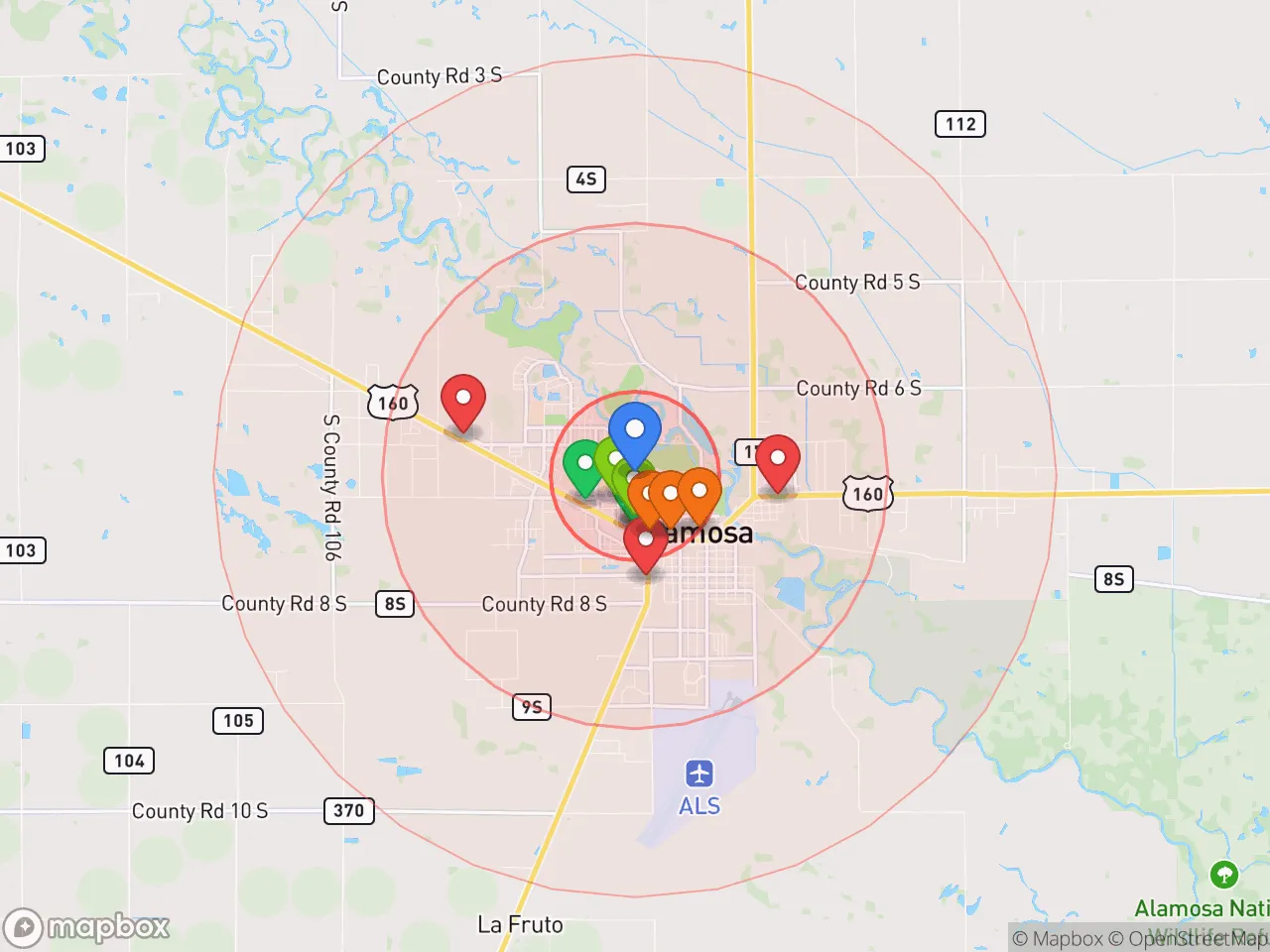
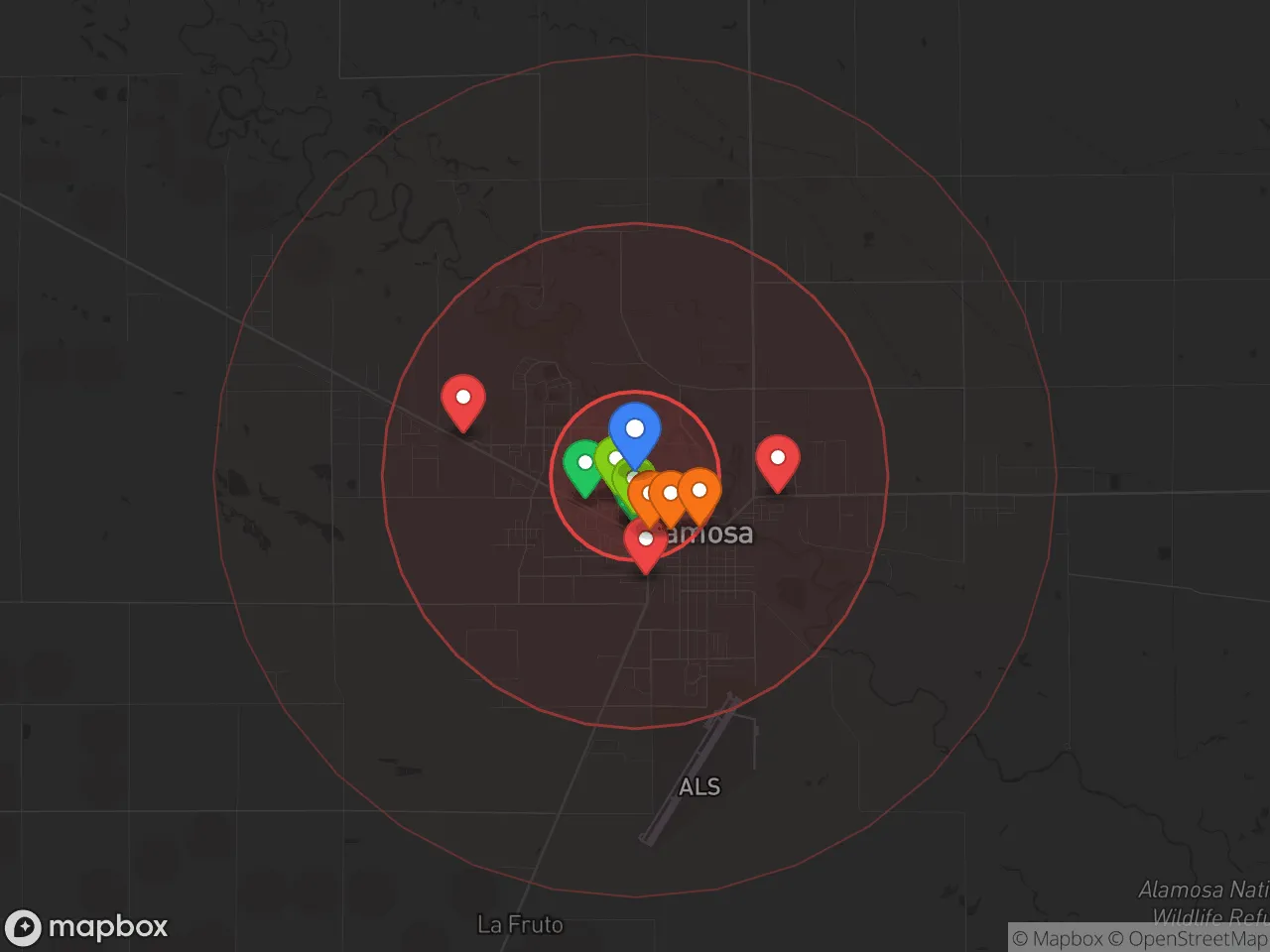
3 within 10 miles
Gas
8 within 10 miles
Hospital
2 within 20 miles
Airport
SAN — San Luis Valley Regional
Post Office
USPS — Alamosa, CO
Critical Amenities
Quality-of-Life Analysis
Alamosa, Colorado, offers a distinctly affordable quality of life in the high desert of the San Luis Valley, with a cost of living index of 74 (26% below the U.S. average) that attracts a mix of outdoor enthusiasts, Adams State University students and faculty, and remote workers seeking space and quiet. The city’s median household income hovers around $40,000, reflecting a community where many residents work in education, healthcare, and agriculture rather than high-paying tech or energy sectors. This creates a down-to-earth, family-oriented atmosphere where financial stress is lower than in Colorado’s Front Range cities, though career opportunities remain limited compared to Denver or Colorado Springs.
Cost of living, housing, and affordability compared to nearby areas
Alamosa’s housing market is among the most affordable in Colorado. The median home value sits at $200,200, and median rent is $881—roughly half of what you’d pay in Durango or Salida. For context, a comparable home in Monte Vista (15 miles north) might sell for $180,000, while in South Fork (40 miles west) prices jump to $350,000 due to tourist demand. The average commute of 25.5 minutes is manageable, with most residents driving to jobs at Adams State, the San Luis Valley Regional Medical Center, or local schools. Utilities and groceries also run below state averages, though gasoline prices can spike due to the valley’s isolation. Property taxes are low (around 0.5% of assessed value), but sales tax is 8.5%—a trade-off for minimal local services. Renters should note that vacancy rates are tight, especially near the university, so early searching is advised.
What daily life is like for families, students, and outdoor lovers
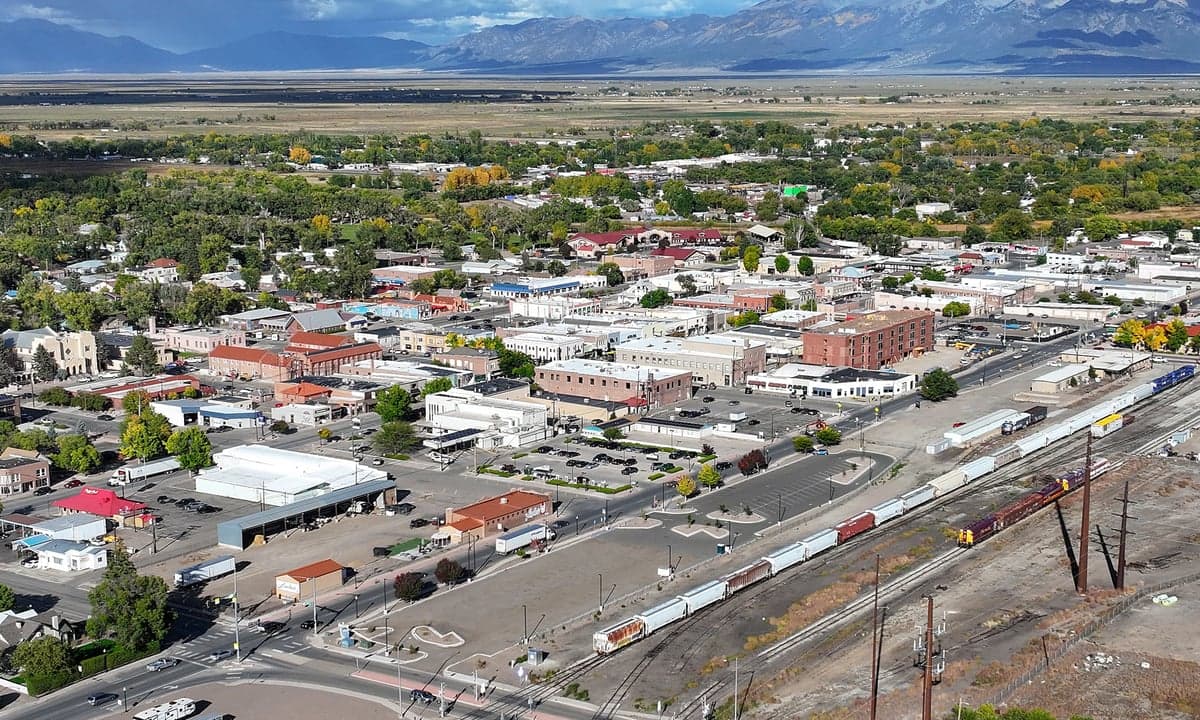
Daily life in Alamosa revolves around a compact downtown with a historic courthouse square, a handful of local restaurants like the San Luis Valley Brewing Company, and the sprawling campus of Adams State University. The city’s public schools, including Alamosa High School, serve about 2,600 students and have average test scores slightly below state benchmarks, though the district offers dual-language programs and strong special education support. For outdoor recreation, the nearby Great Sand Dunes National Park and Preserve is a 30-minute drive, offering hiking, sandboarding, and stargazing. The Rio Grande runs through town, providing fishing and tubing in summer, while winter brings cross-country skiing and snowshoeing in the surrounding Sangre de Cristo Mountains. Cultural amenities are limited—no major concert venues or shopping malls—but the community hosts the annual Alamosa Fiesta (a Mexican heritage celebration) and the Adams State music and theater series. Most errands require a car, as public transit is minimal, and the nearest major airport is in Colorado Springs (2.5 hours east).
Alamosa is best suited for people who prioritize affordability, outdoor access, and a slower pace over urban career opportunities and cultural density. Remote workers with stable incomes, early-career educators, and retirees on fixed budgets will find the low housing costs freeing. Families who value small-town safety and proximity to national parks will thrive here, though those seeking top-tier schools or diverse job markets may need to look toward the Front Range. The city’s isolation is both its charm and its limitation—residents trade convenience for space and quiet, making it a deliberate choice rather than a compromise.

Crime in Alamosa, CO
Significantly higher crime rates than 75% of comparable U.S. locations.
Violent CrimeViolent Crime Analysis
Property CrimeProperty Crime Analysis
Crime Analysis
Alamosa, Colorado, reports a violent crime rate of 785.5 per 100,000 residents and a property crime rate of 3,575 per 100,000, placing it well above both state and national averages. These figures indicate a community where safety is a significant concern, particularly when compared to the broader San Luis Valley region. The city's crime profile is shaped by a combination of socioeconomic factors and the local justice system's approach to prosecution and sentencing.
Crime in context
Alamosa's violent crime rate is roughly 2.2 times higher than the national average of about 380 per 100,000, while its property crime rate exceeds the national figure by approximately 40%. Within Colorado, Alamosa ranks among the most dangerous small cities, with crime density concentrated in the downtown core and along the U.S. 160 corridor. The city's proximity to the New Mexico border and its role as a regional hub for services and retail contribute to transient populations that can elevate crime statistics. Notably, property crimes—including theft, burglary, and motor vehicle theft—account for the majority of incidents, with larceny-theft being the most common offense.
What residents experience
Residents frequently report concerns about property crime, particularly vehicle break-ins and package thefts, which occur with regularity in residential neighborhoods near Adams State University and the downtown area. Violent crime, while less common, includes aggravated assault and robbery, with incidents often linked to domestic disputes or alcohol-related altercations. The Alamosa Police Department has implemented community policing initiatives and increased patrols in high-traffic areas, but response times can vary due to the department's size. Progressive judicial policies in Alamosa County, including diversion programs and reduced sentencing for non-violent offenders, have been cited by local law enforcement as factors that may contribute to recidivism and a perception of leniency. This approach, while intended to reduce incarceration rates, can result in repeat offenders cycling through the system, undermining public confidence in safety.
Neighborhood-level variation is notable: areas west of the Rio Grande and near the Alamosa National Wildlife Refuge tend to see lower crime rates, while the central business district and neighborhoods adjacent to the university experience higher incident densities. Gated communities and newer subdivisions on the city's east side report fewer property crimes, though no area is entirely immune. For prospective residents, consulting the Alamosa Police Department's crime mapping tool and speaking with local real estate agents about block-by-block trends is advisable before committing to a specific location.
* Values derived from national, state, county, city and local statistics and may differ in a specific area. Last updated: 2026-05-11T22:08:49.000Z
Narrative content on this page is AI-generated and may contain mistakes. Verify any details that matter before acting on them.
ReloMaps may earn a commission from affiliate links at no extra cost to you.

