Photo: Wikipedia
Demographics of Alamosa, CO
Affluence Level in Alamosa, CO
A below-average socioeconomic profile. Incomes, home values, and educational attainment trail the U.S., with higher poverty and unemployment.
People of Alamosa, CO
Alamosa's population of 9,847 is majority Hispanic at 56.3%, with a White non-Hispanic share of 35.8%, reflecting the city's deep roots as a regional hub in the San Luis Valley. The foreign-born population stands at just 4.0%, indicating that most Hispanic residents are U.S.-born families with generations of history in the area. Black residents make up 2.4% of the population, while East and Southeast Asian communities account for 0.6%, and Indian subcontinent representation is effectively zero. With 29.7% of adults holding a college degree, Alamosa combines a working-class heritage with a modest professional class anchored by Adams State University.
How the city was settled and grew
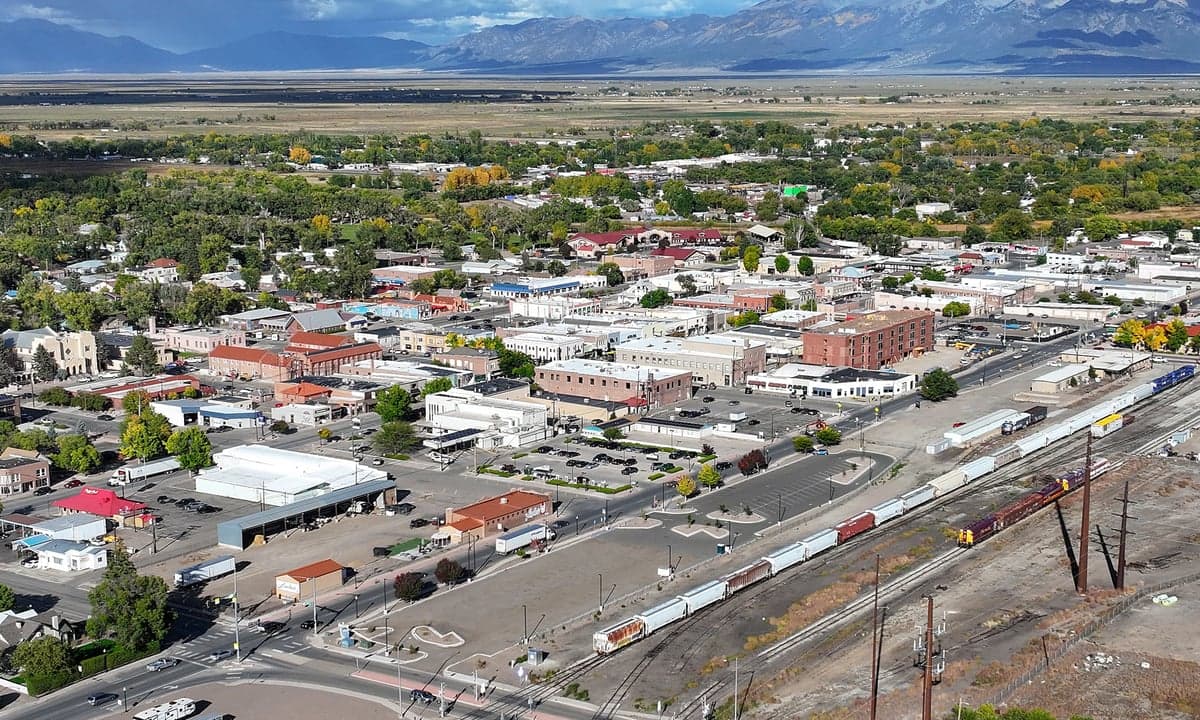
Alamosa was founded in 1878 as a railroad town along the Denver and Rio Grande Railway, drawing Anglo settlers, railroad workers, and merchants to what was then a frontier outpost in the San Luis Valley. The original Hispanic population came from nearby Spanish land grant villages like San Luis and Conejos, settling in what is now North Alamosa near the Rio Grande, where many of their descendants still live today. The railroad depot in Historic Downtown Alamosa became the commercial heart of the city, attracting European immigrants—primarily German and Irish—who worked on the rails and in the early agricultural economy. By the early 20th century, the establishment of Adams State Normal School (now Adams State University) in 1921 created a University District that drew educators and professionals, adding a small but influential college-educated cohort to the city's demographic mix. The agricultural boom of the 1940s and 1950s, centered on potato and barley farming, brought additional Hispanic laborers from northern New Mexico and southern Colorado, who settled in South Alamosa near the farming fields and rail yards.
Modern era (post-1965)
After the 1965 Immigration and Nationality Act, Alamosa's Hispanic population grew steadily through natural increase and continued migration from the surrounding San Luis Valley and northern New Mexico, rather than through large-scale foreign immigration—the foreign

* Values derived from national, state, county, city and local statistics and may differ in a specific area. Last updated: 2026-05-11T22:08:49.000Z
Narrative content on this page is AI-generated and may contain mistakes. Verify any details that matter before acting on them.
ReloMaps may earn a commission from affiliate links at no extra cost to you.

