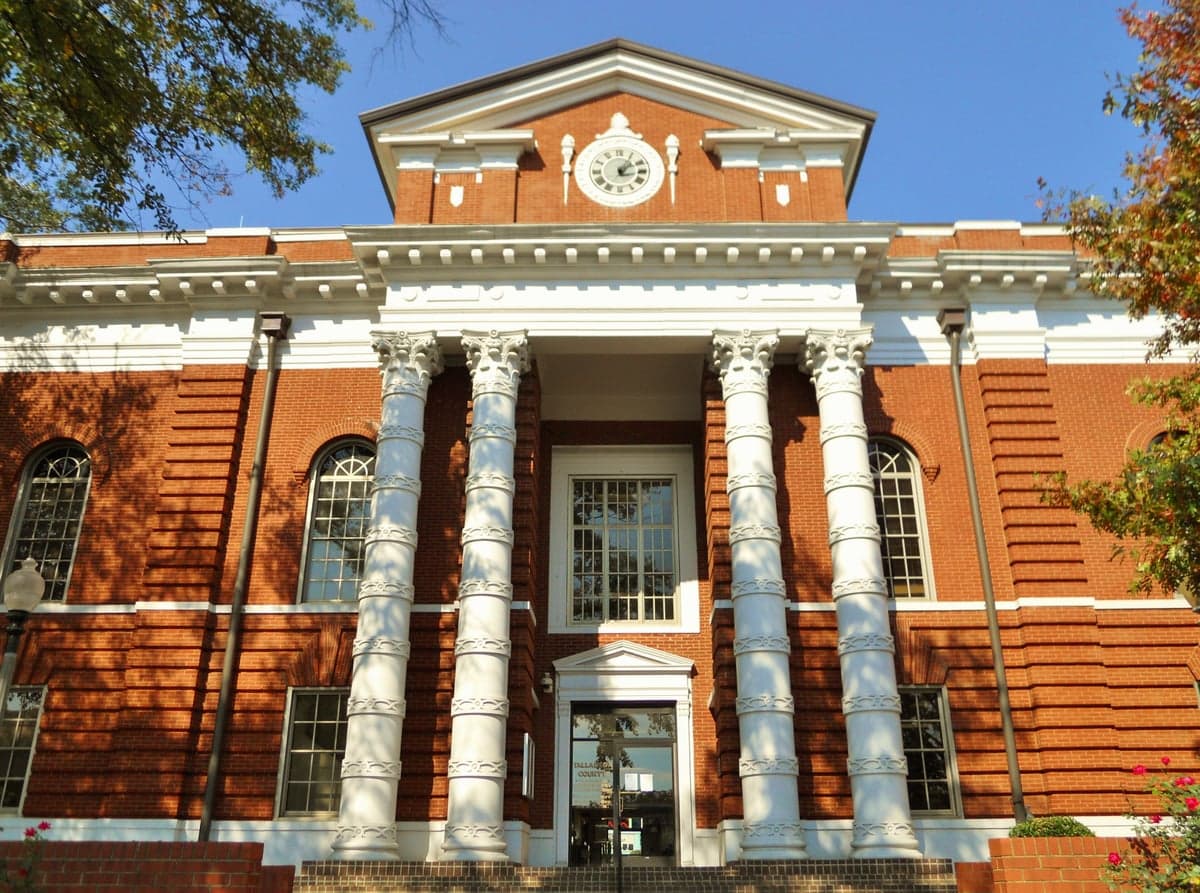
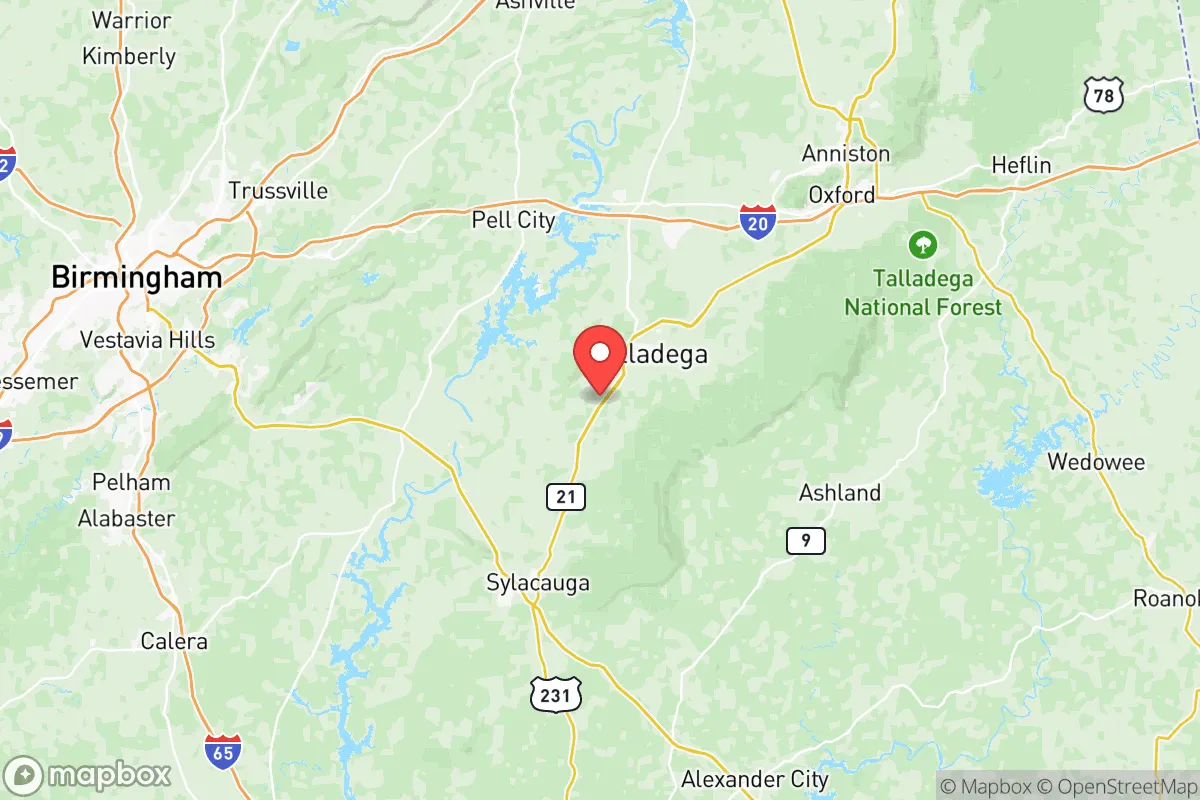
Photo: Wikipedia
Quality of Life in Talladega County
A livable area that tracks near national norms for affordability, walkability, and neighborhood health.
What does Quality of Life tell us?
Quality of Life measures an area by evaluating factors like cost of living, nearby amenities, country club access, airport proximity, socioeconomic signals and neighborhood character. For large states, this is a general average — quality of life can vary dramatically between metro areas, suburbs, and rural communities within the same state.
What does this tell us?
Quality of Life measures an area by evaluating factors like cost of living, nearby amenities, country club access, airport proximity, socioeconomic signals and neighborhood character. For large states, this is a general average — quality of life can vary dramatically between metro areas, suburbs, and rural communities within the same state.
Cost of Living
41% below national average
143%
The Real Cost of Living in Talladega County for 2026
| Tier | Individual | Family (4) |
|---|---|---|
| Survival | $12k | $23k |
| Comfortable | $27k | $39k |
| Luxury | $99k+ | $153k+ |
| Elite (Top 5%) | $116k+ | $180k+ |
Quality-of-Life Analysis
Talladega County, Alabama, offers a broad quality-of-life spectrum that ranges from the historic, amenity-rich city of Talladega to deeply rural unincorporated communities, all within a county where the cost of living index sits at 59—well below the national average of 100. The county draws a diverse mix of residents: NASCAR fans and college students gravitate toward the larger towns for their events and services, while families and retirees seeking land and quiet settle into the smaller crossroads communities. The median home value of $137,900 and median rent of $772 make the entire county affordable, but the experience of daily life shifts dramatically depending on whether one lives in a town center or a rural pocket.
Largest town(s) & population centers
The county's primary population center is the city of Talladega, home to roughly 15,000 residents and the county seat. Daily life here revolves around the Talladega Superspeedway, which draws massive crowds during race weeks, and the presence of the Alabama Institute for the Deaf and Blind, a major employer and educational anchor. The city offers a walkable historic downtown, a hospital, and a range of grocery and retail options that rural residents drive into town to access. The smaller city of Sylacauga, located in the county's southern end, serves as a secondary hub with its own hospital, schools, and the B.B. Comer Memorial Library. Sylacauga is known for its marble quarries and a more laid-back, family-oriented atmosphere. Both towns provide the bulk of the county's rental housing, with average rents near $772, and offer the shortest commutes—typically under 20 minutes within city limits—compared to the countywide average commute of 27.5 minutes.
Smaller towns & rural pockets
Beyond the main cities, Talladega County contains several distinct smaller towns and unincorporated communities that define its rural character. Lincoln, located near the interstate, has grown around the Honda Manufacturing of Alabama plant and offers newer subdivisions and a commuter-friendly location. Munford is a quiet, unincorporated community centered on its high school and a handful of local businesses, popular with families who want a small-town feel without being fully isolated. Childersburg, on the county's western edge, is one of Alabama's oldest settlements and provides a slower pace with access to the Talladega National Forest. Further off the main roads, communities like Alpine, Bon Air, and Waldo are essentially crossroads with a post office or a volunteer fire department, where residents live on acreage and commute 30-40 minutes to jobs in Talladega, Sylacauga, or even Anniston. These rural pockets offer the lowest property prices in the county, with some homes selling for under $80,000, but they lack public water and sewer in many areas.
Cost & lifestyle range
The cost of living in Talladega County is uniformly low by national standards, but the range of housing and lifestyle options is wide. At the higher end, newer subdivisions in Lincoln and the outskirts of Talladega feature homes in the $200,000–$300,000 range, often on half-acre lots with modern amenities and commutes under 20 minutes to the Honda plant or the interstate. At the lower end, older homes in Childersburg or rural Munford can be found for under $100,000, and the median county home value of $137,900 reflects this affordability. Renters pay a median of $772 per month, with the cheapest units concentrated in the older housing stock of Talladega's historic districts. Lifestyle differences are stark: residents in town centers have access to sidewalks, libraries, and fast internet, while those in communities like Alpine or Bon Air rely on wells, septic systems, and satellite internet, trading convenience for privacy and space. The county's average commute of 27.5 minutes masks the fact that rural residents often drive 35-45 minutes one way to reach employment centers, while town dwellers enjoy trips of 10-15 minutes.
The residents who thrive best in Talladega County are those who value affordability and space over urban density and who are willing to drive for certain amenities. Families and retirees who choose the rural communities of Munford or Alpine gain land and quiet but must accept longer commutes and fewer local services. Those who prefer walkable streets and cultural events are better suited to the city of Talladega or the family-oriented environment of Sylacauga. The county's low cost of living and diverse geography mean that a wide range of lifestyles—from small-town civic life to rural homesteading—are accessible within a single, affordable region.

Crime in Talladega County
Crime rates similar to the national median for U.S. locations.
Violent CrimeViolent Crime Analysis
Property CrimeProperty Crime Analysis
Crime Analysis
Talladega County, Alabama, presents a mixed safety picture where violent crime rates hover near the national average but property crime rates significantly exceed both state and national benchmarks. The county's overall violent crime rate of 345.7 per 100,000 residents is slightly below the U.S. average of roughly 380 per 100K, yet property crime at 1,468.6 per 100,000 runs well above the national figure of about 1,954 per 100K. These numbers, however, mask sharp disparities between the county's smaller, more rural communities and its larger, more urbanized towns, where progressive judicial policies in the 29th Judicial Circuit have drawn criticism for prioritizing offender rehabilitation over public safety.
Crime in context
When compared to Alabama's statewide violent crime rate of approximately 450 per 100K, Talladega County's 345.7 per 100K appears relatively moderate. The county's property crime rate, however, is a more pressing concern. At 1,468.6 per 100K, it is roughly 25% higher than the Alabama average of about 1,170 per 100K. The city of Talladega itself, the county seat, drives a disproportionate share of these incidents, particularly property crimes like larceny and motor vehicle theft. Nearby Sylacauga and Childersburg also report elevated property crime numbers, often linked to drug-related offenses and transient populations. In contrast, the smaller towns of Lincoln and Munford consistently report lower crime rates, benefiting from tighter-knit communities and more conservative local law enforcement approaches.
What residents experience
Residents in Talladega County's larger towns frequently express frustration with a justice system they perceive as lenient. The 29th Judicial Circuit, which covers Talladega County, has been criticized for progressive sentencing practices, including a heavy reliance on diversion programs and reduced bond amounts for repeat offenders. This approach, while intended to reduce jail overcrowding, has led to a revolving-door effect where individuals arrested for property crimes—often tied to methamphetamine and opioid addiction—are quickly back on the streets. In Talladega and Sylacauga, this has contributed to a sense of insecurity, with residents reporting that thefts from vehicles and burglaries are common, yet prosecutions are rare. Conversely, in Lincoln, which is closer to the more conservative St. Clair County judicial district, residents report faster police response times and a higher likelihood of charges being filed, fostering greater trust in public safety.
Neighborhood-level variation
Neighborhood-level safety in Talladega County varies dramatically. The historic downtown areas of Talladega and Childersburg see higher concentrations of violent crime, including aggravated assaults, often concentrated near low-income housing complexes and bars. Subdivisions on the outskirts of Sylacauga, such as those near Lake Howard, are generally safer, with property crime rates closer to the county's lower end. The unincorporated areas around Alpine and Bon Air report the lowest crime rates in the county, though residents there face longer emergency response times. For those considering relocation, the safest bets are Lincoln and the rural stretches east of Talladega city limits, where conservative policing and community watch programs are more established. The progressive judicial philosophy in the county's core, however, remains a legitimate concern for anyone prioritizing long-term safety and accountability.
* Values derived from national, state, county, city and local statistics and may differ in a specific area. Last updated: 2026-06-28T19:12:03.000Z
Narrative content on this page is AI-generated and may contain mistakes. Verify any details that matter before acting on them.
ReloMaps may earn a commission from affiliate links at no extra cost to you.

