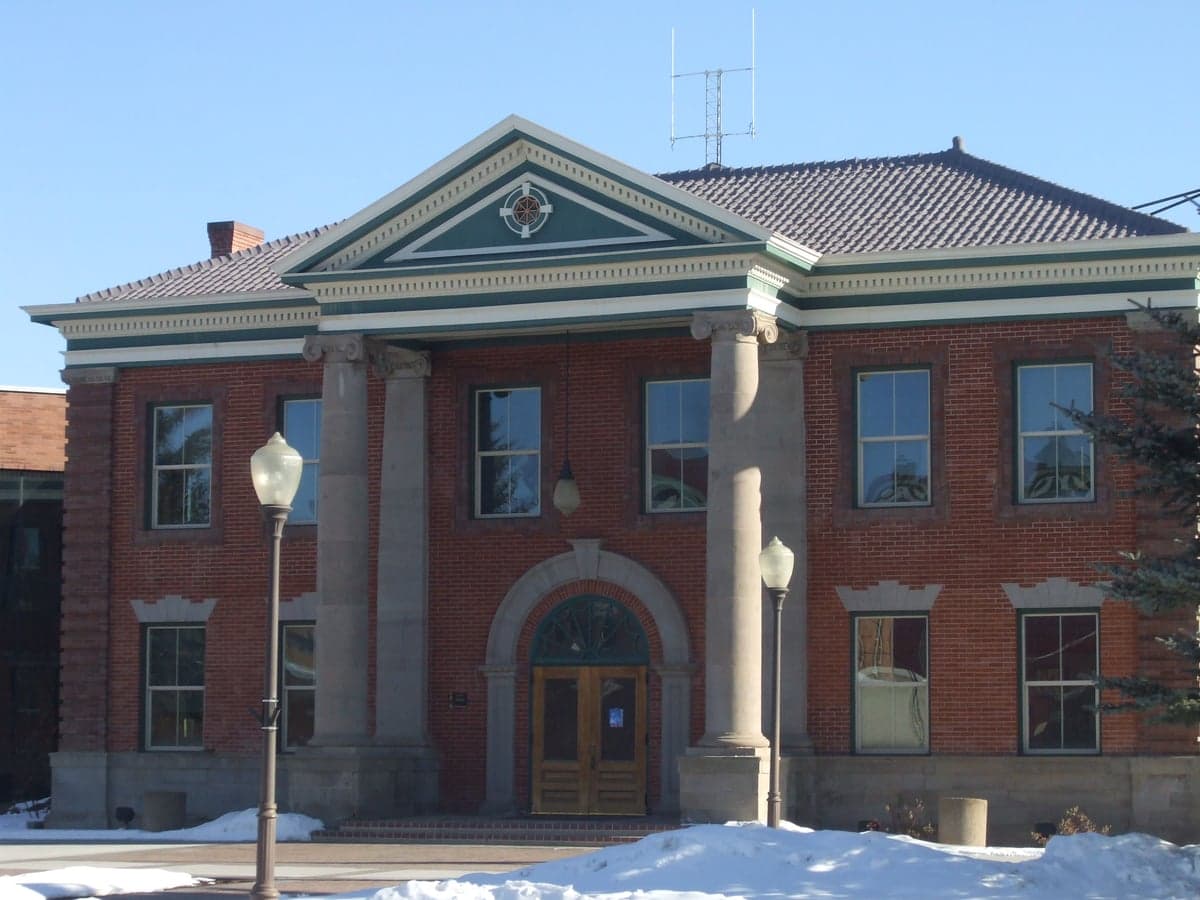
Photo: Wikipedia
Political ClimatePolitical Climate in Uinta County
Showing state-level results — no local-only data available.
Local Political AnalysisPolitical Analysis of Uinta County
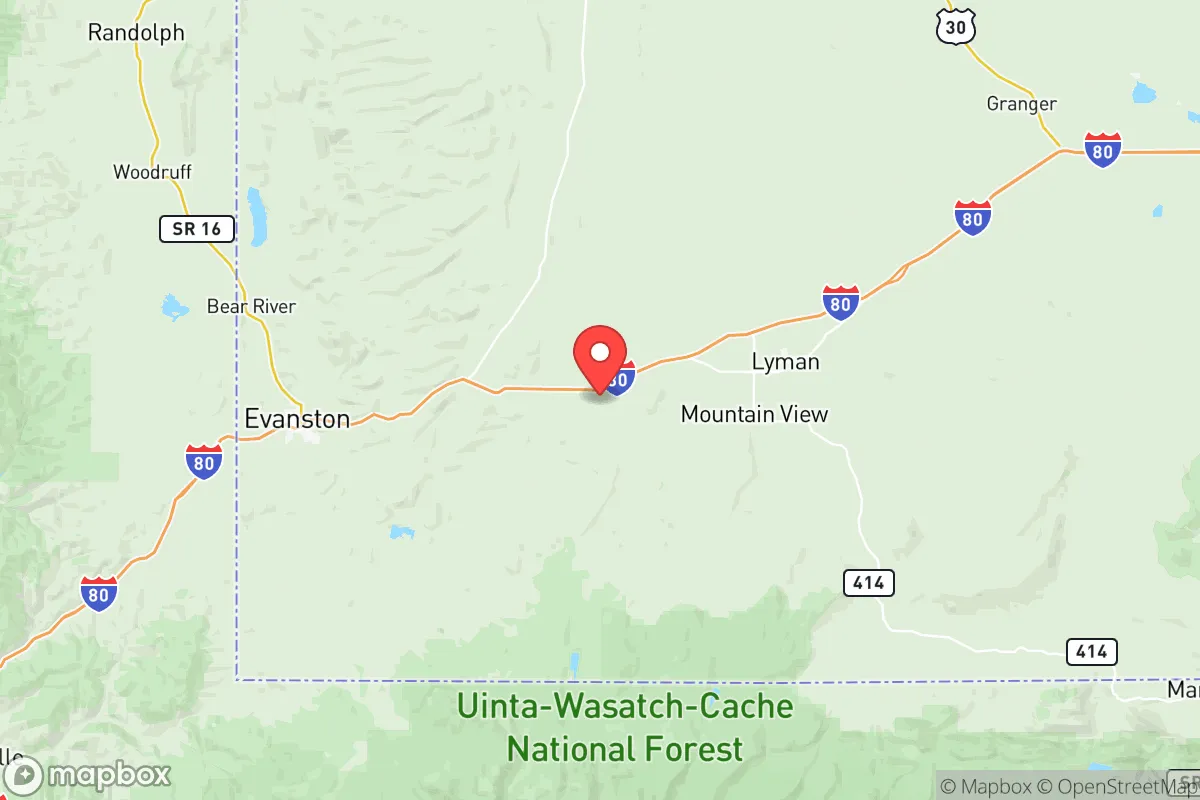
Uinta County, Wyoming, is a reliably Republican stronghold with a Cook Partisan Voting Index (PVI) of R+23, matching the state of Wyoming as a whole. This means the county consistently votes about 23 percentage points more Republican than the national average, a figure that has held steady through recent election cycles. While the county’s overall lean is deeply red, there are subtle variations between its communities—Evanston, the county seat, tends to be the most moderate area, while smaller towns like Lyman and Mountain View are among the most conservative precincts in the county.
How it compares
Uinta County’s R+23 PVI is identical to Wyoming’s statewide PVI, placing it in the same tier as other deeply red counties like Sublette and Lincoln. However, Uinta County is slightly less conservative than neighboring Sweetwater County (R+25) and noticeably more conservative than Teton County (R+13), which leans more moderate due to its tourism-driven economy and seasonal population. Within Uinta County itself, Evanston’s precincts near the downtown core and the Union Pacific railyard have historically shown slightly higher Democratic turnout—often 30-35% in presidential elections—while rural precincts around Lyman and Mountain View routinely deliver 80% or more for Republican candidates. The swing precincts are in the unincorporated areas along Interstate 80, where independent voters and energy-sector workers can shift outcomes in local races by 5-10 points.
What this means for residents
For conservative residents, Uinta County’s political climate means their values are reflected in local policy—from low property taxes to Second Amendment protections and limited land-use regulations. The county commission, sheriff’s office, and school board are all reliably Republican, so conservative priorities like energy development (oil and gas, trona mining) and agricultural interests get consistent support. For liberal or moderate residents, the reality is more nuanced: they are a clear minority, but not isolated. Evanston’s more diverse economy—anchored by the Wyoming State Hospital, the railyard, and tourism from the Bear River and Wasatch ranges—creates pockets where progressive voices are heard, especially on issues like public education funding and healthcare access. Socially, most residents across the political spectrum share a pragmatic, live-and-let-live attitude, though national partisan divides can surface during heated election cycles.
Culturally, Uinta County stands apart from Wyoming’s more famous tourist hubs like Jackson Hole or Cody. The county’s identity is rooted in working-class industries: rail, mining, and agriculture. This shapes a policy focus on economic stability rather than cultural flashpoints. For example, local debates often center on maintaining the county’s rural road infrastructure, supporting the Bear River State Park, and managing the impact of energy booms and busts. The presence of the Ute Tribe’s historical lands and the nearby Flaming Gorge National Recreation Area adds a layer of outdoor-recreation politics that sometimes crosses party lines. In practice, whether you’re a conservative rancher in Mountain View or a liberal teacher in Evanston, daily life in Uinta County is defined more by shared challenges—like winter weather, distance to healthcare, and economic diversification—than by partisan gridlock.

State Political ClimatePolitical Climate in Wyoming
State Political AnalysisPolitical Environment in the State
Wyoming is one of the most reliably Republican states in the nation, with a Cook Partisan Voting Index of R+23, meaning it votes about 23 points more Republican than the country as a whole. The state hasn't voted for a Democratic presidential candidate since 1964, and in 2024, Donald Trump carried it by roughly 40 points. Over the last 10-20 years, the dominant coalition has been a mix of traditional Western libertarians, fiscal conservatives, and a growing populist wing, though the state has shifted rightward even as its population has aged and in-migration from blue states has accelerated. The trajectory is toward a harder conservative edge, driven by energy politics and a deep distrust of federal land management.
Urban vs. rural divide
The political map of Wyoming is starkly divided between a handful of small urban centers and vast, sparsely populated rural counties. Cheyenne, the capital and largest city (pop. ~65,000), is the most moderate part of the state, with Laramie County occasionally voting within single digits of the national average in state-level races. Casper (Natrona County) leans Republican but has a notable blue-collar Democratic remnant tied to the oil and gas industry. Laramie, home to the University of Wyoming, is the state's liberal outlier—Albany County voted for Joe Biden in 2020 and has a small but active progressive scene. In contrast, rural counties like Sublette, Carbon, and Niobrara routinely deliver 80-90% of their votes to Republican candidates. The divide isn't just urban vs. rural; it's also about federal land. Counties with heavy federal ownership (like Teton County, home to Jackson Hole) are more moderate due to tourism and second-home wealth, while energy-dependent counties like Campbell (Gillette) are deeply conservative. Jackson itself is a blue dot in a red sea, with Teton County voting Democratic by wide margins in presidential elections, driven by wealthy transplants and seasonal workers.
Policy environment
Wyoming's policy environment is defined by low taxes, minimal regulation, and a strong emphasis on energy extraction. There is no state income tax, and the sales tax is a low 4% (with local options pushing it to around 6%). Property taxes are among the lowest in the nation, with no tax on retirement income. The state's regulatory posture is heavily pro-business, especially for mining, oil, and gas—permitting for drilling is streamlined, and the state actively fights federal environmental rules. Education policy is locally controlled, with school funding tied to mineral revenues, meaning boom-and-bust cycles affect classrooms. Healthcare is a mixed bag: Wyoming did not expand Medicaid under the ACA (though a ballot initiative in 2024 may change that), and rural hospital closures are a persistent issue. Election laws are straightforward: voter ID is required, same-day registration is allowed, and mail-in voting is available without an excuse. The state has no major gun control laws—permitless carry is legal, and there are no magazine capacity limits or assault weapon bans. Abortion is heavily restricted: a trigger law banned the procedure after Roe fell, with exceptions only for rape, incest, or life of the mother. Medical marijuana and recreational cannabis remain illegal, though a limited CBD law exists.
Recent policy direction
In the last five years, Wyoming has moved decisively toward a more assertive conservative posture. In 2021, the legislature passed a law banning nearly all abortions (HB0092), which took effect after Dobbs. In 2022, the state enacted a permitless carry law (SF0079), allowing any adult to carry a concealed firearm without a license. On education, the state passed a "Parents' Bill of Rights" (HB0105) in 2023, requiring schools to notify parents of curriculum changes and allowing them to opt children out of certain materials. On speech and privacy, Wyoming has no broad surveillance laws, but it passed a law in 2023 restricting the use of facial recognition by law enforcement (HB0070). Property rights are a flashpoint: the state has fought federal land management through lawsuits and resolutions, including a 2022 bill (SF0139) demanding the transfer of federal lands to state control. On voting, the state tightened ballot deadlines in 2021 (HB0075) but did not restrict mail-in voting. On medical and bodily autonomy, the state banned gender-affirming care for minors in 2024 (HB0099). The overall direction is toward maximizing individual liberty in the traditional Western sense—low taxes, gun rights, and local control—while restricting abortion and transgender care.
Civil unrest & political movements
Wyoming is not known for large-scale civil unrest, but there are persistent political movements that shape daily life. The most visible is the "land transfer" movement, which argues that federal ownership of 48% of the state's land violates the spirit of the Constitution. This has led to periodic standoffs, including the 2014 Bundy Ranch dispute in neighboring Nevada, which resonated strongly in Wyoming. In 2020, there were small Black Lives Matter protests in Cheyenne and Laramie, but they were dwarfed by pro-Trump rallies and "Back the Blue" events. Immigration politics are muted—Wyoming has a very small foreign-born population (about 3%), and there are no sanctuary cities. The state has a law (HB0168) requiring local law enforcement to cooperate with ICE. Election integrity controversies are minimal; the state uses paper ballots and has robust audits, and there was no major post-2020 fraud narrative. A notable flashpoint is the Pinedale area, where energy development clashes with environmental activism, leading to occasional protests at BLM offices. For a new resident, the most visible political expression is likely the prevalence of "Don't Tread on Me" flags and anti-federal government sentiment, especially in rural areas.
Projection
Over the next 5-10 years, Wyoming's political trajectory is likely to remain deeply conservative, but with growing internal tensions. In-migration from Colorado, California, and the Pacific Northwest is accelerating, particularly to Teton County and the I-25 corridor (Cheyenne, Laramie). These newcomers tend to be more moderate or liberal, which could slowly shift the urban centers leftward. However, the state's population is aging and native-born residents are leaving for warmer climates, meaning the rural conservative base may shrink in relative terms. The energy transition away from coal will hit places like Gillette and Rock Springs hard, potentially fueling populist anger and demands for federal compensation. The state's reliance on mineral revenues for education and infrastructure means that a sustained downturn in coal, oil, and gas could force tax reform—possibly a state income tax or higher sales taxes—which would be a seismic political shift. Expect continued fights over federal land management, with the state pushing for more local control and possibly a lawsuit seeking to force land transfers. For a relocator, the next decade will likely see Wyoming remain a red state, but with a more nuanced urban-rural split and a growing libertarian vs. populist divide within the GOP itself.
Bottom line for a new resident: If you're a conservative who values low taxes, gun rights, and wide-open spaces, Wyoming will feel like home. You'll find a state that generally leaves you alone, with minimal bureaucracy and a strong sense of local community. If you're liberal, you'll find a small but active community in Laramie and Jackson, but you'll need to accept that state policy will often run counter to your views. The practical takeaway is that Wyoming is a place where your personal freedoms are broad—you can carry a gun, homeschool your kids, and build on your land without much hassle—but your social safety net is thin, and the state's economy is tied to volatile energy markets. It's a trade-off that works well for self-reliant individuals and families, but less so for those who depend on public services or want a politically diverse environment.
* Values derived from national, state, county, city and local statistics and may differ in a specific area. Last updated: 2026-06-17T09:45:45.000Z
Narrative content on this page is AI-generated and may contain mistakes. Verify any details that matter before acting on them.
ReloMaps may earn a commission from affiliate links at no extra cost to you.

