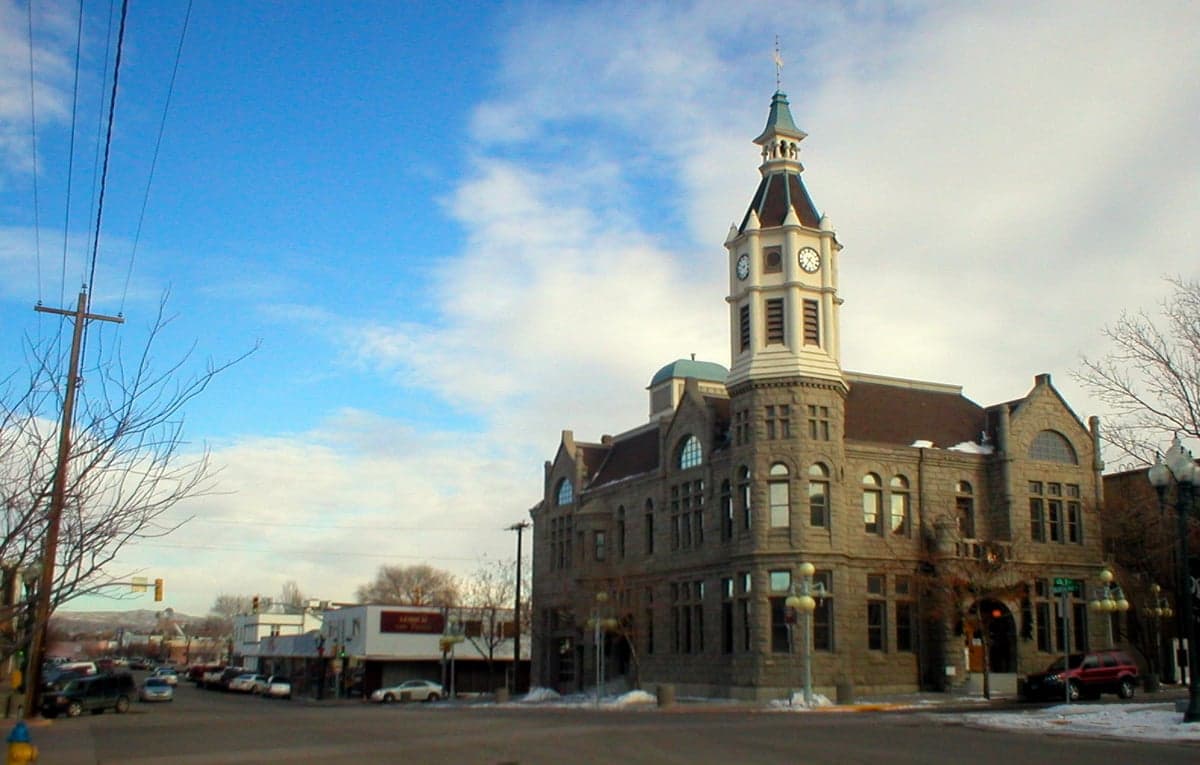
Photo: Wikipedia
Strategic Assessment of Sweetwater County
Deep buffer from population centers and strategic targets. Low natural disaster risk and minimal exposure to border or coastal threats.
What does the Strategic Assessment tell us?
Our Strategic Assessment grades tactical survivability of an area. Major population centers, military targets, fallout zones, natural disasters, and border exposure all drive risk — lower exposure means a more defensible position in a crisis.
This is heavily inspired by Joel Skousen's Strategic Relocation book. Highly recommended you checkout the book ($)What does this tell us?
Our Strategic Assessment grades tactical survivability of an area. Major population centers, military targets, fallout zones, natural disasters, and border exposure all drive risk — lower exposure means a more defensible position in a crisis.
This is heavily inspired by Joel Skousen's Strategic Relocation book. Highly recommended you checkout the book ($)Strategic Pillars

Key Distances
Strategic Assessment Analysis
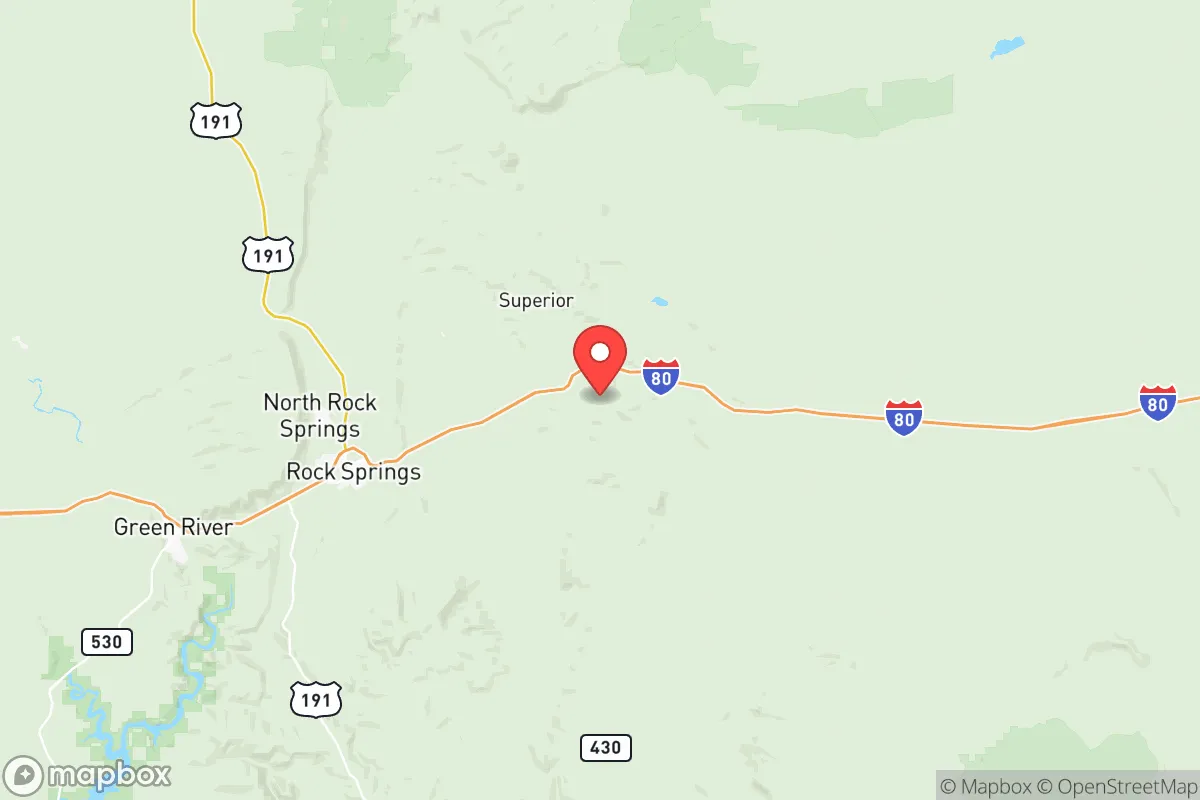
Sweetwater County, Wyoming, offers a compelling strategic profile for relocation-minded individuals and families prioritizing resilience and self-sufficiency, largely due to its remote geography and sparse population density. Anchored by the cities of Rock Springs and Green River, the county sits roughly 200 miles from any major metropolitan center, providing a natural buffer against the cascading failures that can plague densely populated regions. Its location along the I-80 corridor, while providing essential connectivity, does not compromise its fundamental isolation, making it a defensible position for those serious about long-term preparedness.
Geographic position and natural advantages for self-sufficiency
The county's most significant strategic asset is its sheer remoteness. Sweetwater County is the second-largest county by land area in Wyoming, yet it holds fewer than 45,000 residents, with the majority concentrated in Rock Springs and Green River. This low population density means that in a crisis, competition for resources would be far less intense than in suburban or urban environments. The area sits on the high desert of the Red Desert, which, while arid, offers excellent long-range visibility—a tactical advantage for security. The Green River, which runs through the county, provides a reliable freshwater source, and the Flaming Gorge National Recreation Area to the south offers additional water reserves and game habitat. The county's elevation (over 6,000 feet) and cold winters naturally deter many transient populations, adding another layer of isolation. For a relocator, the ability to control a large, defensible parcel of land here is far more attainable than in most of the lower 48 states.
Risks, exposures, and proximity to fallout-relevant landmarks
While Sweetwater County's isolation is a strength, it is not without strategic vulnerabilities. The county is home to the Jim Bridger Power Plant, one of the largest coal-fired power plants in the West, and the Trona mining and soda ash processing operations near Green River, which are among the largest in the world. These industrial sites, while economically vital, represent potential secondary targets or points of failure in a major conflict or grid-down scenario. More critically, the county lies roughly 150 miles northeast of Hill Air Force Base in Utah, a major logistics and nuclear weapons maintenance hub, and about 200 miles from the Idaho National Laboratory, a nuclear research facility. While not in a primary blast zone, these distances place Sweetwater County within a plausible fallout plume corridor depending on prevailing winds, particularly from a strike on Hill AFB. The county's own natural gas fields and the nearby Wamsutter gas fields also present a moderate risk of industrial accidents. For the relocator, the key takeaway is that while the county avoids the catastrophic proximity of targets like Cheyenne Mountain or the Denver metro area, it is not a zero-risk zone—it sits in a "gray zone" of secondary risk that requires a solid fallout shelter plan, not just a basement.
Practical resilience for a relocator: food, water, energy, and defensibility
On the practical front, Sweetwater County offers strong foundations for a self-sufficient lifestyle. Water is the county's most reliable resource, with the Green River and its tributaries providing year-round flow. Groundwater is also accessible via wells in many areas, though permits are required. For food, the growing season is short (roughly 90-100 frost-free days), making traditional gardening challenging but not impossible with cold frames or greenhouses. The surrounding high desert supports mule deer, pronghorn, and elk populations, offering a sustainable game meat source for those with hunting skills. The county's energy profile is robust: the Jim Bridger plant and numerous natural gas facilities mean the local grid is relatively stable, but for off-grid living, solar is viable despite the winter cloud cover, and wind is abundant. Defensibility is excellent due to the open terrain and low population—a single well-placed homestead on a ridge can monitor miles of approach. However, the county's reliance on I-80 for supply chains means that a major disruption to that corridor (e.g., a bridge failure or blockage at the Green River crossing) could isolate the area quickly. Stockpiling at least three months of supplies is a prudent baseline here, not an extreme measure.
The overall strategic picture for Sweetwater County is one of a high-resilience, moderate-risk location that rewards preparation. It avoids the existential threats of coastal cities, major military targets, and nuclear power plant zones, yet it is not a bunker—it is a working industrial and energy hub with real exposure to secondary effects. For a family or individual willing to invest in a well-drilled water system, a secure food storage plan, and a basic fallout shelter, the county offers a defensible, resource-rich environment that few other places in the continental U.S. can match. The trade-off is a harsh climate and a long drive to major medical or supply centers, but for those who view those as features rather than bugs, Sweetwater County represents a sound strategic bet for long-term resilience.

* Values derived from national, state, county, city and local statistics and may differ in a specific area. Last updated: 2026-07-06T23:48:15.000Z
Narrative content on this page is AI-generated and may contain mistakes. Verify any details that matter before acting on them.
ReloMaps may earn a commission from affiliate links at no extra cost to you.

