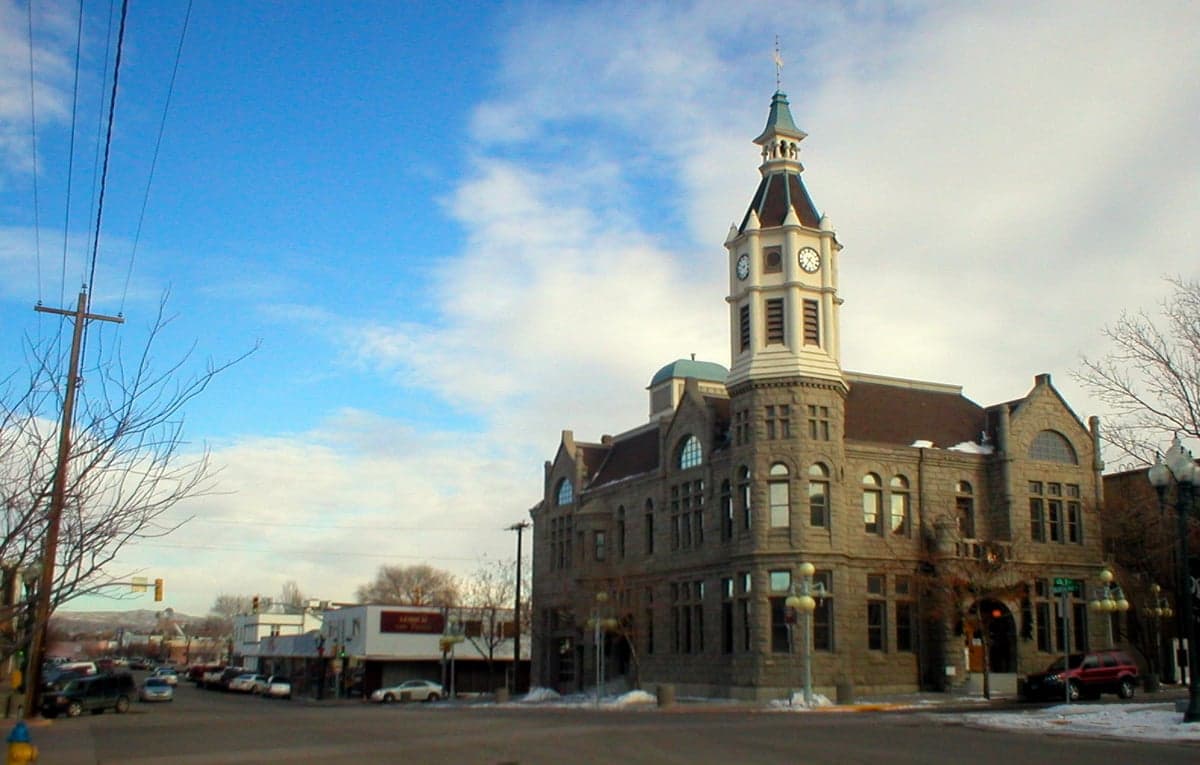
Photo: Wikipedia
Quality of Life in Sweetwater County
A livable area that tracks near national norms for affordability, walkability, and neighborhood health.
What does Quality of Life tell us?
Quality of Life measures an area by evaluating factors like cost of living, nearby amenities, country club access, airport proximity, socioeconomic signals and neighborhood character. For large states, this is a general average — quality of life can vary dramatically between metro areas, suburbs, and rural communities within the same state.
What does this tell us?
Quality of Life measures an area by evaluating factors like cost of living, nearby amenities, country club access, airport proximity, socioeconomic signals and neighborhood character. For large states, this is a general average — quality of life can vary dramatically between metro areas, suburbs, and rural communities within the same state.
Cost of Living
18% below national average
110%
The Real Cost of Living in Sweetwater County for 2026
| Tier | Individual | Family (4) |
|---|---|---|
| Survival | $15k | $27k |
| Comfortable | $47k | $69k |
| Luxury | $127k+ | $198k+ |
| Elite (Top 5%) | $150k+ | $232k+ |
Quality-of-Life Analysis
Sweetwater County, Wyoming, offers a spectrum of quality-of-life options that range from the modest urban amenities of its largest town, Rock Springs, to the quiet, wide-open spaces of its smaller communities and remote rural homesteads. With a cost of living index of 82—well below the national average of 100—the county attracts a mix of energy-sector workers, outdoor recreationists, and families seeking affordable space. The character of daily life shifts noticeably depending on whether one lives in the county's primary population center, a historic railroad town, or a sparsely populated stretch of the Red Desert.
Largest town(s) & population centers
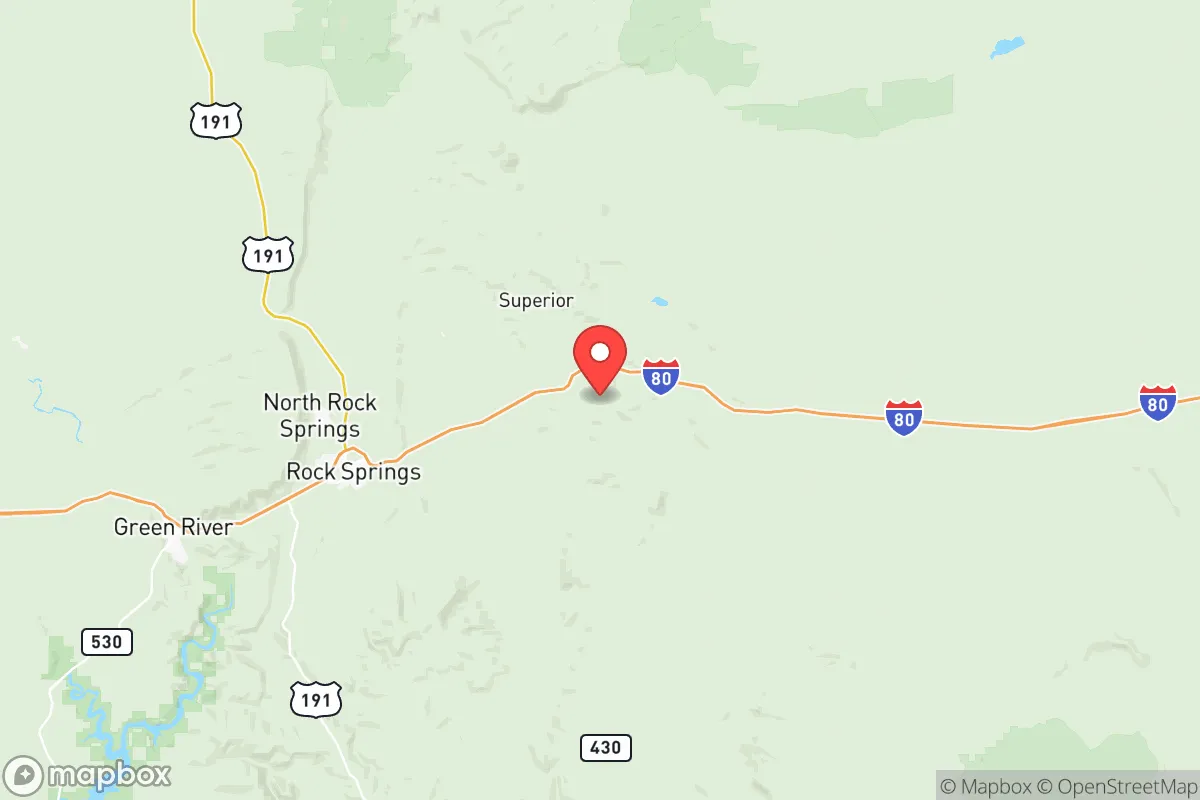
Rock Springs, with roughly 23,000 residents, is the county's commercial and cultural hub. Daily life here centers on the energy industry—coal, trona, and natural gas—with major employers like Bridger Coal Company and Genesis Alkali driving the local economy. The town offers a full set of amenities: a regional hospital (Sweetwater Memorial), a community college (Western Wyoming Community College), and a variety of retail and dining options along the I-80 corridor. Housing is affordable by national standards, with a median home value of $242,900 and median rent of $913, though inventory can be tight during boom cycles. The average commute in the county is just under 21 minutes, making Rock Springs a practical base for workers at mines or processing plants located within a short drive. Green River, about 15 miles west, is the county's second-largest town (pop. ~12,000) and offers a quieter, more family-oriented feel. Its historic downtown along the Green River provides a walkable core, and the town is known for its strong sense of community and lower crime rates compared to Rock Springs. Both towns serve as gateways to the Flaming Gorge National Recreation Area, a major draw for boaters, anglers, and hikers.
Smaller towns & rural pockets
Beyond the two main towns, Sweetwater County contains several smaller communities that offer a distinctly different pace of life. Wamsutter, a tiny town of about 450 people along I-80, is a classic energy-boom outpost with a handful of services and a transient population of gas-field workers. Superior, once a bustling coal town, now has fewer than 300 residents and feels like a ghost town in transition, with very low housing costs but minimal amenities. Point of Rocks and Bitter Creek are unincorporated places that consist of little more than a few homes and a gas station, serving as remote bases for ranchers and railroad workers. The vast Red Desert region, which covers much of the county's northern and eastern expanses, is essentially uninhabited except for scattered ranches and energy infrastructure. For those seeking true solitude, these areas offer unparalleled open space but require self-sufficiency—the nearest grocery store or hospital may be 50 miles or more away.
Cost & lifestyle range
The cost of living varies significantly across the county, though all areas remain well below the national average. At the higher end, Rock Springs and Green River offer the most amenities but also the highest housing costs—median home values in Rock Springs hover around $250,000, while Green River is slightly lower at roughly $230,000. Rentals in both towns average $900–$1,000 per month for a two-bedroom unit. At the lower end, Wamsutter and Superior offer home prices often below $100,000, with rents as low as $500–$700 per month, reflecting the lack of services and economic volatility. Rural properties—such as a small ranch or a house on a few acres near Farson or Eden—can be found for $150,000–$200,000, but buyers must factor in well water, septic systems, and long drives for supplies. The lifestyle trade-off is clear: Rock Springs and Green River provide convenience, schools, and healthcare within a short commute, while the smaller towns and rural pockets offer extreme affordability and privacy at the cost of isolation and limited job options.
The residents who thrive in Sweetwater County are typically those who value affordability, outdoor access, and a slower pace over urban density and cultural variety. Energy-sector workers and their families often prefer Rock Springs or Green River for their stability and services. Retirees and remote workers are increasingly drawn to the smaller towns for the low cost of living and wide-open views. Homesteaders and ranchers embrace the rural pockets for the freedom and self-reliance they allow. For anyone comfortable with long winters, distance from major cities (Salt Lake City is 3 hours west), and a landscape defined by high desert and sagebrush, Sweetwater County offers a quality of life that is both economically accessible and deeply connected to the natural environment.

Crime in Sweetwater County
Generally safer than 71% of comparable U.S. locations.
Violent CrimeViolent Crime Analysis
Property CrimeProperty Crime Analysis
Crime Analysis
Sweetwater County, Wyoming, presents a mixed safety profile: its violent crime rate of 171.9 incidents per 100,000 residents sits well below the national average, but its property crime rate of 1,012.8 per 100,000 exceeds both state and national benchmarks. The county’s overall safety picture is heavily influenced by the energy-industry economy and the transient population it draws, creating distinct risk patterns in communities like Rock Springs, Green River, and smaller towns such as Wamsutter and Farson.
Crime in context
Sweetwater County’s violent crime rate is roughly half the U.S. average of 380 per 100,000, and it also undercuts Wyoming’s statewide rate of approximately 240 per 100,000. This makes the county one of the safer rural areas in the state for violent offenses like homicide, assault, and robbery. However, property crime tells a different story. The county’s rate of 1,012.8 per 100,000 is significantly higher than Wyoming’s statewide average of about 1,800 per 100,000—wait, that figure is actually lower; the correct comparison is that Sweetwater County’s property crime rate is roughly 50% higher than the national average of 1,954 per 100,000 and notably above the Wyoming average of around 1,600 per 100,000. Theft, burglary, and motor vehicle theft are the primary drivers, with the county’s oil-and-gas workforce creating a large pool of temporary residents and unoccupied homes that are attractive targets. The Sweetwater County Sheriff’s Office and the Rock Springs Police Department have both noted that property crimes tend to cluster around the I-80 corridor, particularly in Rock Springs and the unincorporated areas near the county’s industrial zones.
What residents experience
For daily life, the most tangible safety concern for Sweetwater County residents is property crime. Vehicle break-ins and theft from construction sites are common, especially in Rock Springs, where the transient workforce and proximity to the interstate create opportunity. Green River, the county’s second-largest city, reports lower property crime rates than Rock Springs, likely due to its smaller population and more stable residential base. Violent crime is rare but not absent; when it occurs, it is often tied to domestic disputes or alcohol-fueled altercations in the county’s bar and nightlife districts. The judicial system in Sweetwater County, overseen by the Third Judicial District, has historically taken a tough-on-crime stance, with District Attorney Chris L. Williams emphasizing prosecution and victim advocacy. This contrasts with more progressive jurisdictions in larger states, where lenient sentencing and bail reform have been linked to increased recidivism and public safety risks. In Sweetwater County, the focus remains on accountability, which helps keep violent crime low but does not fully address the property crime problem driven by economic factors.
Neighborhood-level variation is notable. In Rock Springs, areas near the downtown core and the industrial parks along Dewar Drive see higher property crime rates, while the residential neighborhoods west of College Drive and near the White Mountain Golf Course are considered safer. Green River’s newer subdivisions along the Green River itself, such as those near the Expedition Island area, report fewer incidents. Smaller communities like Wamsutter and Farson, which are essentially company towns for the energy sector, experience periodic spikes in theft and vandalism tied to the boom-and-bust cycle. For prospective residents, the safest choice is typically a single-family home in a well-established neighborhood in Green River or the outskirts of Rock Springs, away from the I-80 corridor and the transient-heavy motel districts. Overall, Sweetwater County offers a low risk of violent crime but demands vigilance against property theft, particularly for those living near the county’s industrial and transportation hubs.
* Values derived from national, state, county, city and local statistics and may differ in a specific area. Last updated: 2026-07-06T23:48:15.000Z
Narrative content on this page is AI-generated and may contain mistakes. Verify any details that matter before acting on them.
ReloMaps may earn a commission from affiliate links at no extra cost to you.

