Photo: Wikipedia
Political ClimatePolitical Climate in Sublette County
Showing state-level results — no local-only data available.
Local Political AnalysisPolitical Analysis of Sublette County
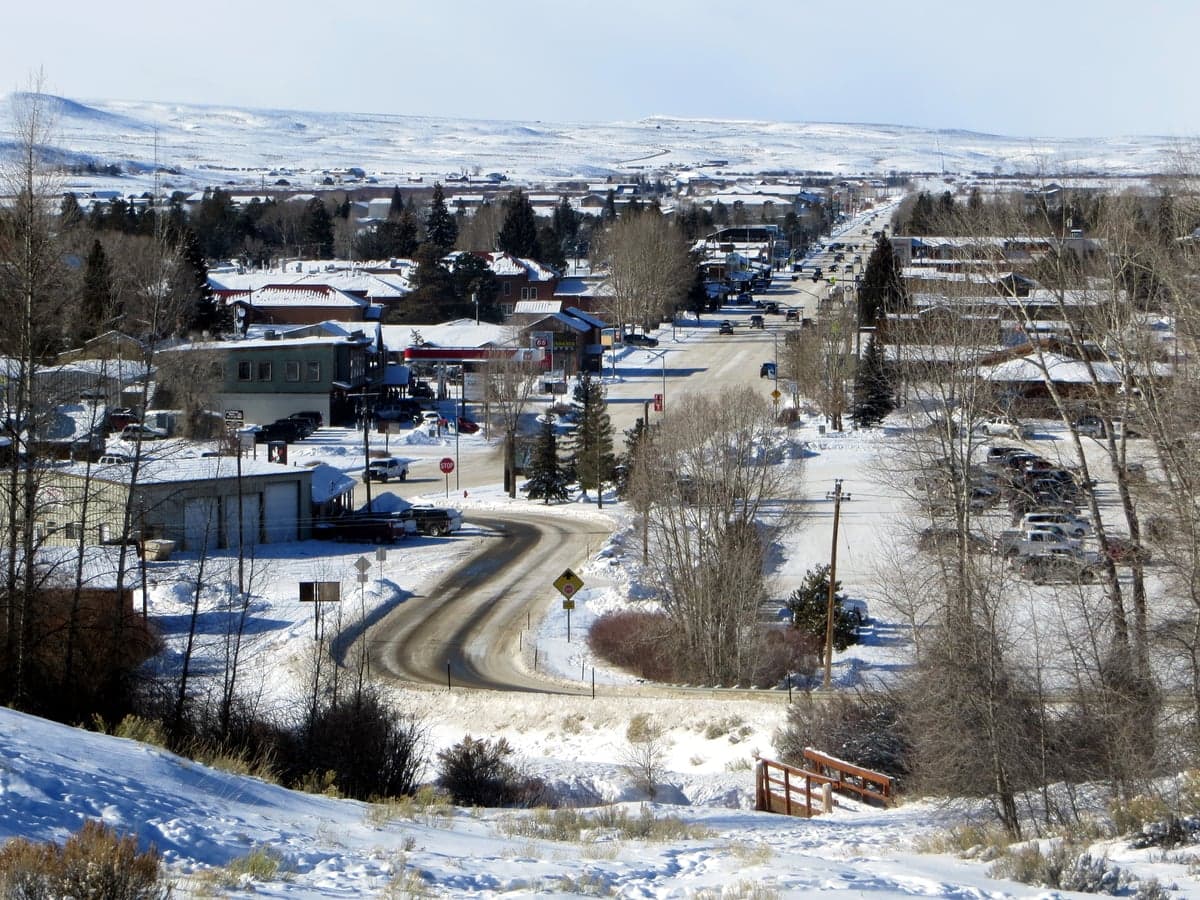
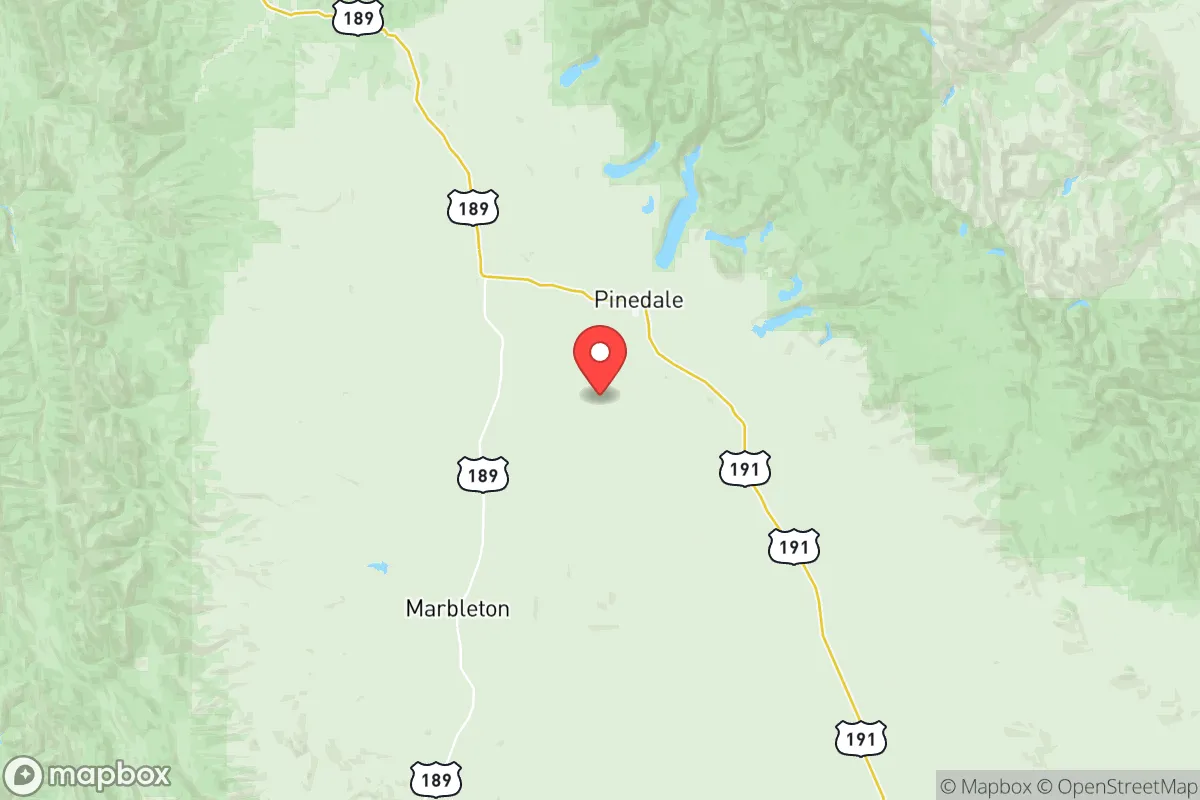
Sublette County is one of the most reliably Republican counties in Wyoming, with a Cook Partisan Voting Index (PVI) of R+23, meaning it votes about 23 points more Republican than the national average. This isn't a recent shift; the county has been a GOP stronghold for decades, though the flavor of that conservatism has evolved. In the 2020 presidential election, Donald Trump carried Sublette County with over 80% of the vote, a margin that has only widened in recent cycles as the county's energy-driven economy and rural character have become more politically polarized. The county seat, Pinedale, is the political and cultural hub, but even here, the local Democratic Party is a small, often invisible minority. The real political action in Sublette County isn't between Republicans and Democrats—it's between different factions of Republicans, particularly the old-guard, pro-industry conservatives and the newer, more libertarian-leaning or populist conservatives who are skeptical of federal land management and environmental regulations.
How it compares
Comparing Sublette County to the state of Wyoming as a whole is tricky because "Wyoming, WY" isn't a real place—it's a common search query that likely refers to the state's overall political climate. The state of Wyoming has a Cook PVI of R+25, making Sublette County slightly less Republican than the state average, but still deeply red. The key difference is that Sublette County is more internally homogeneous than the state as a whole. While Wyoming has a few small blue dots—like Teton County (Jackson Hole) and parts of Laramie County (Cheyenne)—Sublette County has no such liberal enclaves. The town of Big Piney, for example, is even more conservative than Pinedale, with a strong ranching and energy extraction heritage. The tiny community of Boulder, near the Green River, is similarly red, though its politics are more tied to outdoor recreation and conservation than to oil and gas. There are no swing precincts in Sublette County; the closest thing to a moderate area might be the Pinedale precincts near the schools or the hospital, where a handful of teachers and healthcare workers might vote for a moderate Republican in a primary, but they'd never break for a Democrat in a general election.
What this means for residents
For conservative residents, Sublette County is a comfortable place where their political views are the default. Local government, from the county commission to the school board, is dominated by Republicans, and policy debates tend to focus on property taxes, energy development, and federal land access. For liberal residents, the reality is more isolating. There is no organized Democratic Party presence in the county, and progressive viewpoints are often met with suspicion or outright hostility. That said, the county's small population (around 10,000) means that personal relationships can sometimes transcend political differences, especially in Pinedale, where the community is tight-knit. The biggest practical impact of the county's political lean is on land use and energy policy. Sublette County is at the center of Wyoming's natural gas boom, and the county commission has consistently supported drilling and mineral extraction, even as environmental concerns have grown. This has created a cultural divide between long-time ranchers and energy workers, who see the landscape as a resource, and newer residents, often from out of state, who value the area for its hunting, fishing, and scenic beauty.
One cultural distinction worth noting is the role of the Sublette County Library in Pinedale, which has become a flashpoint for national culture wars. In 2022, the library board faced pressure from conservative activists to remove certain books, a fight that mirrored similar battles across the country. This kind of conflict is relatively new to Sublette County, where politics was once more about local issues than national ones. Looking ahead, the county's political trajectory seems likely to stay the same or move further right, driven by in-migration of conservatives from other states and the continued dominance of the energy sector. The only wild card is the growing outdoor recreation economy, which could bring in a more diverse set of political views, but for now, Sublette County remains a place where the Republican primary is the only election that matters.

State Political ClimatePolitical Climate in Wyoming
State Political AnalysisPolitical Environment in the State
Wyoming is one of the most reliably Republican states in the nation, with a partisan lean that has only deepened over the past two decades. The state has not voted for a Democratic presidential candidate since 1964, and in 2024, Donald Trump carried it by roughly 40 points. The dominant coalition is a blend of libertarian-leaning ranchers, evangelical Christians, and energy-sector workers, but the real story is the state’s small, shrinking population and its fierce resistance to federal oversight. Over the last 10-20 years, the political center has shifted rightward, driven by out-migration of younger, more moderate residents and an influx of conservative retirees and remote workers seeking lower taxes and fewer regulations.
Urban vs. rural divide
The political map of Wyoming is not a story of urban vs. rural in the traditional sense—there are no major cities. Instead, the divide is between the state’s small population centers and its vast, sparsely populated hinterlands. Cheyenne, the capital and largest city (pop. ~65,000), is the most moderate area, occasionally electing Democrats to local office, but it still votes Republican by double digits. Casper, the second-largest city, is more conservative, anchored by the energy industry. Laramie, home to the University of Wyoming, is the state’s liberal outlier—it’s the only county (Albany) that regularly votes Democratic, though its influence is limited by its small size. Meanwhile, Jackson in Teton County is a curious case: it’s a wealthy, tourist-driven enclave that leans left locally, but its politics are more about land use and environmentalism than the cultural wars that dominate the rest of the state. The rural counties—Sublette, Campbell, Lincoln—are deeply conservative, often voting 80%+ Republican. The urban-rural gap in Wyoming is less about ideology and more about intensity: rural voters are more motivated by federal land policy and energy regulation, while urban voters in Cheyenne and Laramie care more about education funding and local services.
Policy environment
Wyoming’s policy environment is defined by low taxes, minimal regulation, and a hands-off approach to social issues. There is no state income tax, and the sales tax is a low 4% (though local options can push it to 6%). Property taxes are among the lowest in the nation, with no tax on retirement income. The state’s regulatory posture is aggressively pro-business, especially in energy extraction—coal, oil, and natural gas dominate the economy, and environmental permitting is streamlined. Education policy is a mixed bag: Wyoming spends more per pupil than most states (thanks to mineral revenue), but outcomes are middling, and the state has struggled to attract teachers. Healthcare is a weak spot—Wyoming has not expanded Medicaid, and rural hospital closures are a recurring issue. Election laws are restrictive by national standards: voter ID is required, same-day registration is not allowed, and mail-in voting is limited. The state also has a strong “sanctuary for the unborn” law, effectively banning abortion with few exceptions. For a conservative relocator, the policy environment is nearly ideal; for a liberal one, it’s a challenging place to live.
Recent policy direction
Wyoming’s recent legislative sessions have pushed the state further right, with a focus on gun rights, education choice, and federal defiance. In 2023, the legislature passed a permitless carry law, allowing any adult who can legally own a firearm to carry concealed without a permit. The same year, a law was enacted to ban gender-affirming care for minors, and the state has repeatedly passed “Second Amendment Sanctuary” resolutions. On education, Wyoming expanded school choice through a voucher-like program for special needs students and is considering broader education savings accounts. Property rights were strengthened with a law requiring compensation for landowners if federal regulations reduce property values—a direct challenge to federal land management. On privacy and surveillance, the state passed a law restricting the use of facial recognition technology by law enforcement. Voting access has tightened: the legislature shortened the absentee ballot request window and banned ballot drop boxes. The overall direction is toward maximum individual liberty in the traditional conservative sense—gun rights, property rights, and parental rights—while limiting government intervention in family and medical decisions, except where it conflicts with conservative social values.
Civil unrest & political movements
Wyoming is not a hotbed of civil unrest, but it has a long tradition of political activism centered on federal land control. The Sagebrush Rebellion of the 1970s and 1980s was born here, and its spirit lives on in the “Transfer of Public Lands” movement, which demands that the federal government hand over millions of acres to the state. This is not fringe—it’s mainstream Republican policy in Wyoming. In 2020, there were small protests in Cheyenne and Laramie over police brutality, but they were dwarfed by the pro-Trump rallies that drew thousands. Election integrity controversies are muted compared to swing states, but there is a persistent undercurrent of distrust in federal elections, with some local GOP officials pushing for hand-counting of ballots. Immigration politics are less visible than in border states, but the legislature has passed laws requiring law enforcement to cooperate with federal immigration authorities. There is no sanctuary city movement in Wyoming; in fact, the state has explicitly banned sanctuary policies. The most visible flashpoint for a new resident would be the tension between environmentalists and the energy industry, particularly in the Powder River Basin and around Jackson Hole, where fights over drilling and development are constant.
Projection
Over the next 5-10 years, Wyoming’s political trajectory is likely to continue its rightward drift, but with some interesting wrinkles. In-migration from blue states—especially remote workers and retirees drawn to Jackson, Laramie, and Cheyenne—could introduce a small but growing liberal-leaning population. However, these newcomers are often wealthier and less politically engaged, and they tend to settle in already-moderate areas. The bigger demographic story is the state’s aging population and youth out-migration: young people leave for college and don’t return, leaving an older, whiter, more conservative electorate. The energy transition will be a wild card—if coal continues to decline, the state’s economy and political identity could shift, potentially making room for more moderate voices. But for now, the dominant trend is consolidation of Republican control. A new resident moving in today should expect to find a state that is deeply conservative, with a government that is skeptical of federal authority, protective of gun rights, and resistant to social change. The practical takeaway is that Wyoming offers a high degree of personal freedom for those who align with its values, but it can feel isolating for those who don’t.
For a new resident, the bottom line is straightforward: Wyoming is a place where conservative values are not just dominant but woven into the fabric of daily life. If you’re looking for low taxes, minimal government, and a community that values self-reliance, you’ll find it here. If you’re liberal, you’ll need to be comfortable being in the minority—and you’ll likely find your political voice in Laramie or Jackson, but not much elsewhere. The state’s political climate is stable, predictable, and unlikely to change dramatically in the near future, which is exactly what many relocators are looking for.
* Values derived from national, state, county, city and local statistics and may differ in a specific area. Last updated: 2026-07-08T13:23:01.000Z
Narrative content on this page is AI-generated and may contain mistakes. Verify any details that matter before acting on them.
ReloMaps may earn a commission from affiliate links at no extra cost to you.

