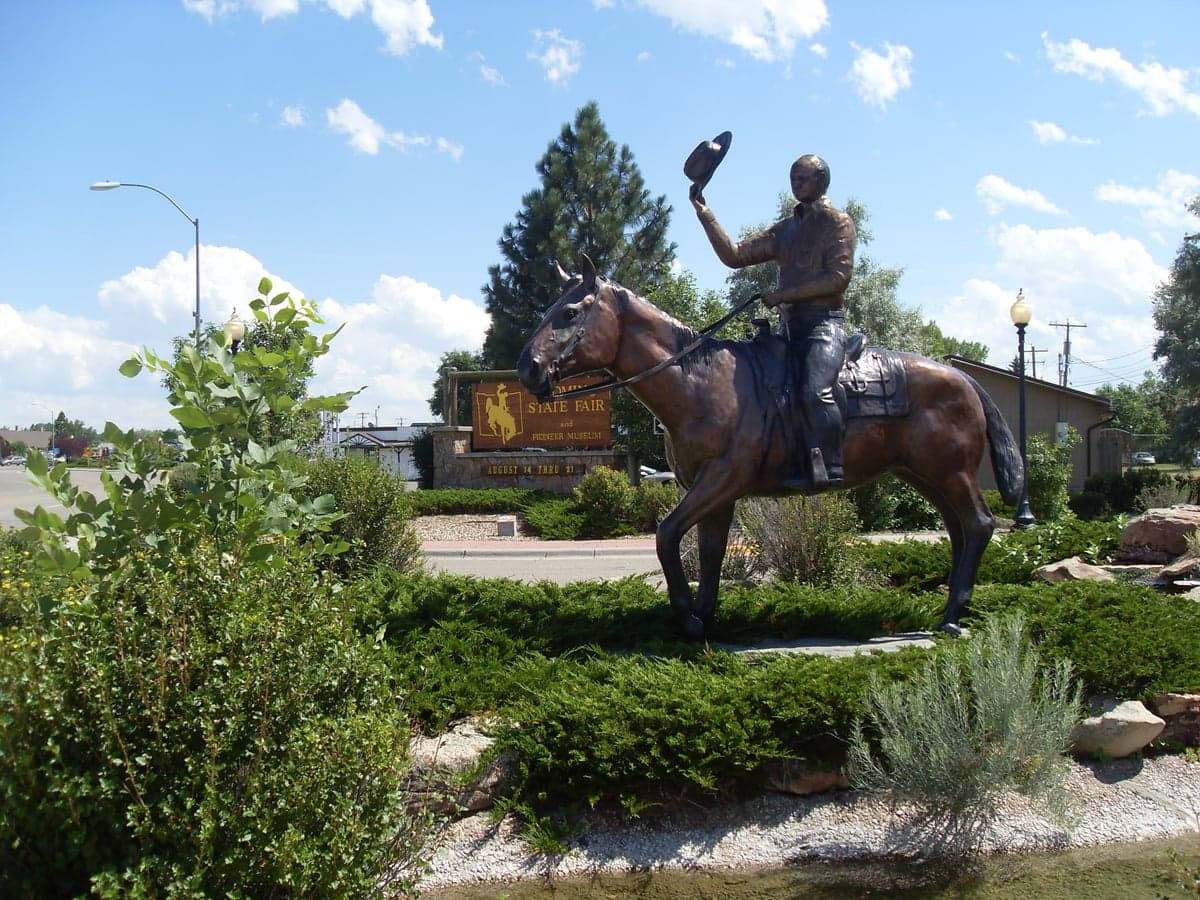
Photo: Wikipedia
Personal Sovereignty in Converse County
Viable for self-reliance. Generally workable, though some barriers may limit total independence.
What does Personal Sovereignty tell us?
Personal Sovereignty measures your capacity for self-reliance and independence with minimal government friction. Higher scores mean fewer barriers between you and the way you want to live... but it assumes you have the space you need and good neighbors.
What does this tell us?
Personal Sovereignty measures your capacity for self-reliance and independence with minimal government friction. Higher scores mean fewer barriers between you and the way you want to live... but it assumes you have the space you need and good neighbors.
State Policy
Energy independence: Net exporter (800% of energy produced in-state)
Personal Liberty
Homesteading

Personal Liberty Analysis
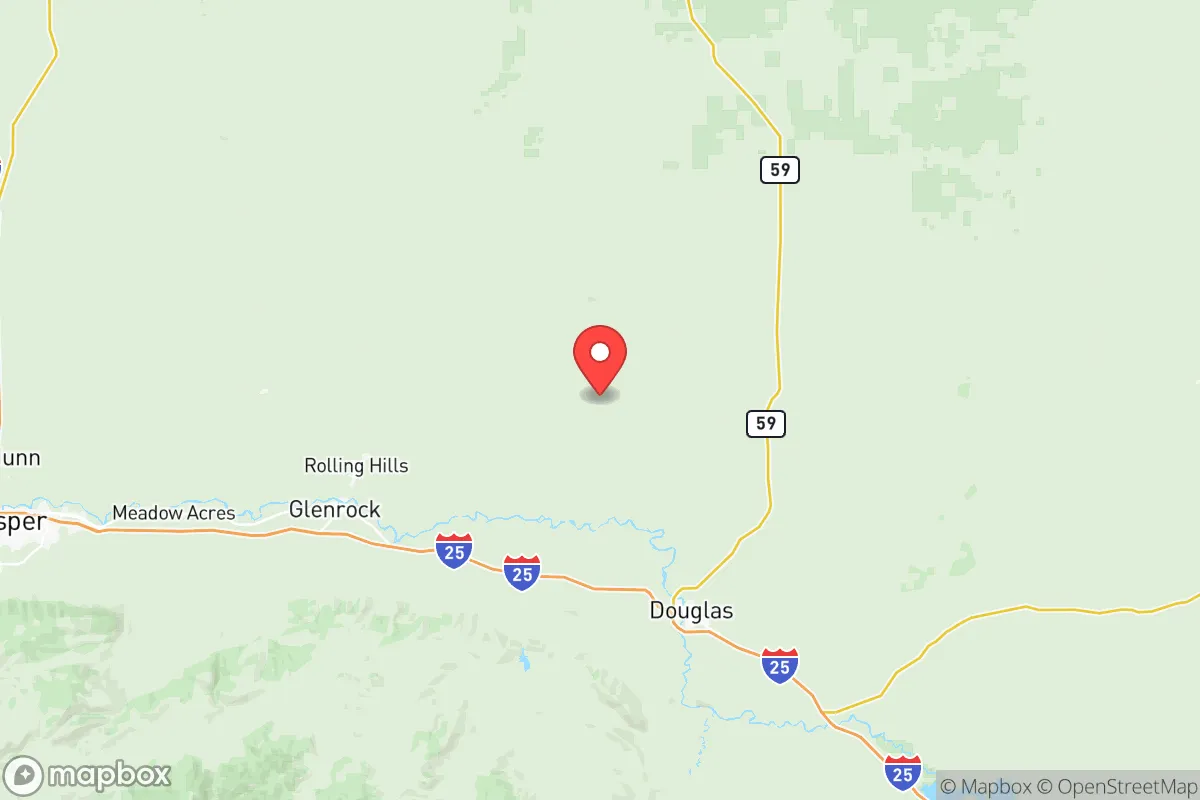
Converse County, Wyoming, offers one of the most robust personal sovereignty environments in the Rocky Mountain region, combining a deeply ingrained culture of self-reliance with some of the lightest state-level regulatory and tax burdens in the nation. For individuals and families who prioritize autonomy—whether in financial decisions, self-defense, or lifestyle choices—this county presents a compelling alternative to the increasingly restrictive climates found in Front Range Colorado or coastal states. The county seat, Douglas, and the smaller communities of Glenrock, Lost Springs, and Rolling Hills each reflect this ethos, though with distinct local nuances in housing density and access to services.
Tax burden and regulatory posture in Converse County
Wyoming’s absence of a state income tax is the cornerstone of its sovereignty appeal, and Converse County adds no additional county-level income tax. Property taxes are among the lowest in the nation, with the effective rate on residential property typically hovering around 0.6% of assessed value—roughly half the national average. Sales tax in Converse County is 5.5% (4% state, 1% county, 0.5% local), which is moderate but notably lower than the 8%+ rates common in Colorado’s I-25 corridor. The regulatory posture is consistently light-touch: no state-level business licensing requirements for most sole proprietorships, no annual vehicle emissions testing, and minimal zoning restrictions outside of Douglas’s city limits. In unincorporated areas like the rural stretches between Douglas and Glenrock, landowners face few permitting hurdles for building structures, though septic system approval through the county health department is required. This stands in stark contrast to the permitting gauntlet in places like Laramie County or Teton County, making Converse County a practical choice for those seeking to minimize government interaction in daily affairs.
Self-defense and gun law specifics in Converse County
Wyoming is a constitutional carry state, meaning no permit is required to carry a concealed firearm for anyone legally allowed to possess one. Converse County Sheriff’s Office issues permits for those who want reciprocity with other states, but the process is straightforward and typically completed within 30 days. The county’s gun culture is deeply embedded: shooting ranges are common on private land, and the Douglas Rifle Club offers a public range. There are no county-level restrictions on magazine capacity, firearm types, or ammunition purchases beyond state law. Open carry is legal without a permit, and the county has no ordinances restricting carry in parks or public buildings beyond those mandated by state law (e.g., courthouses, schools). For residents of Glenrock or the smaller community of Lost Springs, the ability to defend one’s property is further reinforced by Wyoming’s Castle Doctrine and Stand Your Ground laws, which impose no duty to retreat in any place where a person is lawfully present. This legal framework is among the most permissive in the nation, comparable to Texas or Montana, and is a primary draw for those relocating from states with more restrictive regimes like California or New York.
Self-reliance and homesteading viability in Converse County
Converse County’s geography and zoning make it one of the most viable areas in Wyoming for off-grid living and homesteading. The county’s land use regulations are minimal: in unincorporated areas, there are no minimum lot size requirements for single-family dwellings, though the county health department mandates a minimum of one acre for a septic system. This means that a 5-acre parcel near the town of Rolling Hills or a 20-acre tract south of Douglas can be developed with a well, septic, and solar array without needing a building permit for the structure itself (though electrical and plumbing work must meet state codes). The county’s average annual precipitation is only 12–14 inches, so rainwater catchment is legal but not a primary water source; most homesteaders rely on drilled wells, which typically cost $15,000–$25,000 to install. Solar energy is practical: the county averages over 260 sunny days per year, and net metering is available through Rocky Mountain Power, though the utility caps residential systems at 25 kW. For those seeking true self-sufficiency, the rural areas between Douglas and the Platte River offer abundant space for livestock, gardening, and timber harvesting, with no county-level restrictions on chickens, goats, or even larger livestock on parcels of 5 acres or more. The town of Glenrock, with its smaller lots and municipal water, is less suited for full off-grid living but still allows backyard chickens and small-scale gardening without permits.
Personal liberties in Converse County: parental rights, medical autonomy, speech, and property
Wyoming’s legal environment strongly supports parental rights in education and healthcare. The state has no laws mandating specific curricula on gender identity or sexual orientation in public schools, and parents in Converse County School District #1 (Douglas) and #2 (Glenrock) have the right to opt their children out of any instructional materials they find objectionable. Homeschooling is straightforward: parents must file a simple notice of intent with the county superintendent and provide a basic curriculum outline, but there are no standardized testing requirements or home visits. Medical autonomy is similarly robust: Wyoming has no state-level vaccine mandates for adults or children, and the state’s 2023 law prohibits discrimination against unvaccinated individuals in employment and public accommodations. The county’s healthcare system is limited—Douglas has a critical access hospital (Converse County Memorial Hospital) and a few clinics, but specialized care requires a 90-minute drive to Casper. Speech and assembly rights are protected by state law, and Converse County has no local ordinances restricting political signage, public gatherings, or expressive conduct. Property rights are strongly defended: the county has no rent control, no inclusionary zoning, and no transfer taxes on real estate sales. Eminent domain is rarely exercised, and the county’s planning department is known for a “hands-off” approach to land use disputes, deferring to neighbors to resolve issues through civil means rather than code enforcement.
Overall, Converse County ranks among the top 10% of U.S. counties for personal sovereignty, offering a legal and cultural environment where individuals can live with minimal government interference. The combination of no income tax, constitutional carry, minimal zoning, and strong parental and property rights creates a cohesive ecosystem for self-reliance. While the county’s remote location and limited services require a willingness to handle many challenges independently, for those who value freedom over convenience, it is a standout choice—especially when compared to the increasingly regulated environments of the Front Range or the Pacific Northwest. The towns of Douglas, Glenrock, and Rolling Hills each offer slightly different trade-offs in density and access, but the underlying sovereignty framework is consistent across the county.

* Values derived from national, state, county, city and local statistics and may differ in a specific area. Last updated: 2026-07-13T18:43:46.000Z
Narrative content on this page is AI-generated and may contain mistakes. Verify any details that matter before acting on them.
ReloMaps may earn a commission from affiliate links at no extra cost to you.

