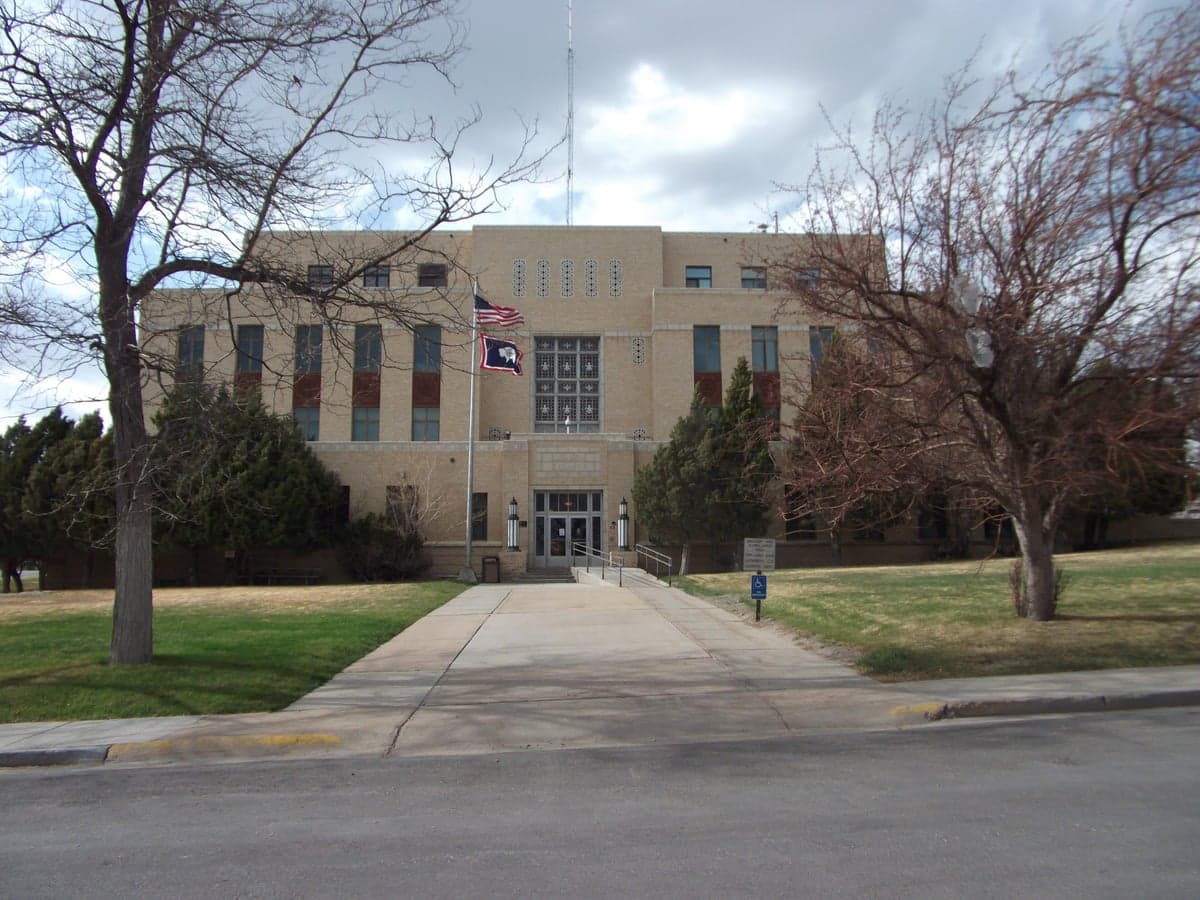
Photo: Wikipedia
Political ClimatePolitical Climate in Carbon County
Showing state-level results — no local-only data available.
Local Political AnalysisPolitical Analysis of Carbon County
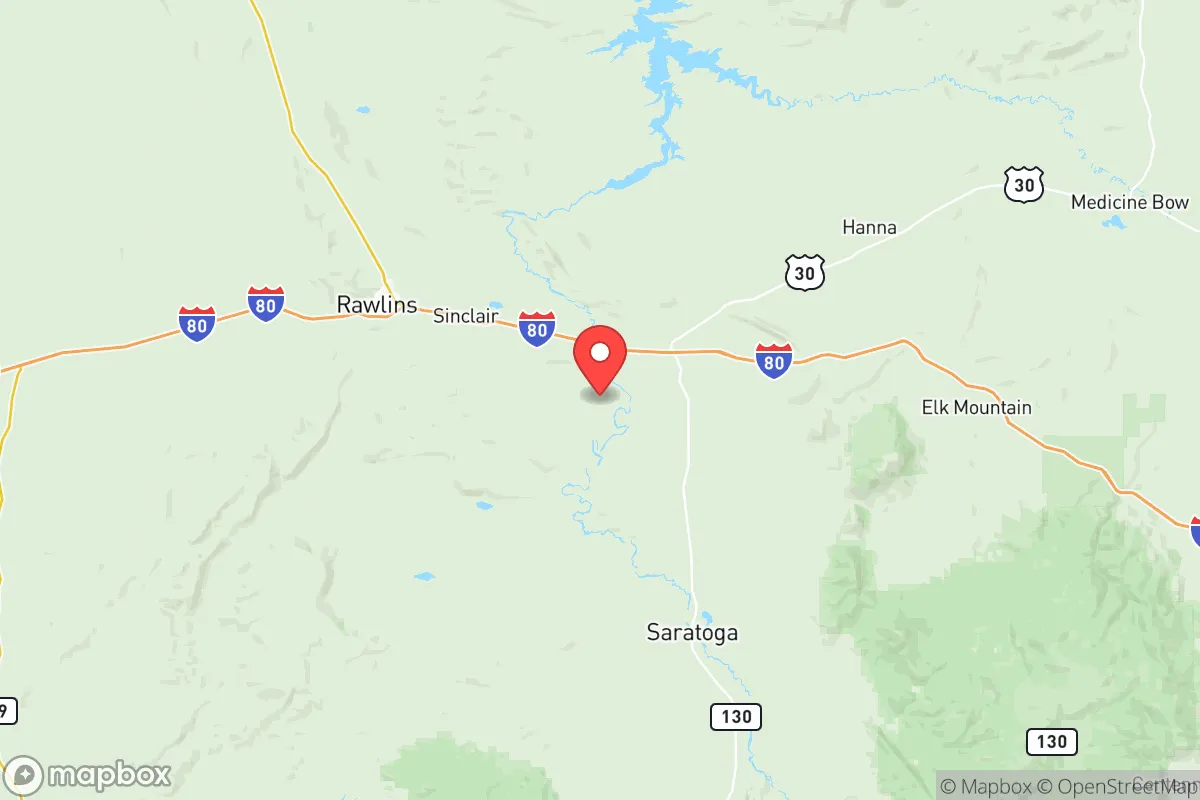
Carbon County, Wyoming, is a reliably Republican stronghold with a Cook PVI of R+23, matching the statewide average for Wyoming. However, the county’s political landscape is more nuanced than its deep-red rating suggests, with significant variation between its small towns and rural precincts. Rawlins, the county seat, tends to be the most conservative area, while Saratoga and Encampment show slightly more moderate or even Democratic-leaning tendencies in local races. The county has not voted for a Democratic presidential candidate since Lyndon B. Johnson in 1964, and Donald Trump carried it by over 40 points in 2020. Still, local elections often see competitive races, particularly in the southern part of the county where outdoor recreation and tourism drive a different economic and cultural vibe.
How it compares to Wyoming, WY
On paper, Carbon County and the state of Wyoming share the same Cook PVI of R+23, meaning the county is exactly as Republican as the state as a whole. But that statewide number masks real differences. Wyoming’s deep-red reputation is driven by places like Sublette and Campbell counties, which are even more conservative. Carbon County, by contrast, has a more mixed economy—energy extraction, ranching, and a growing tourism sector—that creates a slightly different political culture. In the town of Hanna, coal mining history fosters a union-friendly, working-class conservatism, while in Saratoga, the influx of second-home owners and fly-fishing enthusiasts has introduced a small but visible libertarian-leaning or even liberal minority. The county’s Democratic Party is weak but not nonexistent; it fields candidates for local offices and occasionally wins seats on the county commission or school board, something that would be unthinkable in the state’s most conservative counties.
What this means for residents
For conservative residents, Carbon County feels like home politically. The local government is reliably Republican, gun rights are broadly supported, and the cultural ethos of self-reliance and limited government is woven into daily life. Churches are active, and conservative social values are the norm in most public settings. For liberal or moderate residents, the experience is more complicated. They are a clear minority, but not an invisible one—especially in Saratoga and Encampment, where a small but vocal group of Democrats and independents organizes around environmental issues, public lands access, and education funding. Political discussions in local coffee shops or at community events are generally civil, but national politics can create tension. The county’s political trajectory is stable; there is no sign of a shift toward the left, but the growing recreation economy could slowly introduce more moderate voices over the next decade.
Culturally, Carbon County stands apart from the rest of Wyoming in a few notable ways. It has a stronger union presence due to its mining history, which occasionally puts local Republicans at odds with the national party’s free-trade orthodoxy. The county also has a higher proportion of public land—much of it managed by the U.S. Forest Service and Bureau of Land Management—which makes federal land policy a live issue. Residents on both sides of the aisle tend to agree on keeping public lands open for hunting, fishing, and grazing, even if they disagree on how those lands should be managed. The county’s small population (under 15,000) means that personal relationships often override partisan divides; it’s common to see neighbors with different yard signs working together on volunteer fire departments or school fundraisers. That local pragmatism is the real story of Carbon County politics, even as the national headlines focus on its deep-red registration numbers.

State Political ClimatePolitical Climate in Wyoming
State Political AnalysisPolitical Environment in the State
Wyoming is one of the most reliably Republican states in the nation, with a Cook Partisan Voting Index of R+23, meaning it votes about 23 points more Republican than the country as a whole. The state hasn't voted for a Democratic presidential candidate since 1964, and in 2024, Donald Trump carried it by roughly 45 points. Over the past two decades, the GOP's grip has only tightened as the state's small but growing urban centers have shifted rightward, while the vast rural expanse remains deeply conservative. For a relocator, this means you're moving into a place where conservative values aren't just dominant—they're baked into the culture and governance at every level.
Urban vs. rural divide
Wyoming's political map is less about urban-rural tension and more about shades of red. The largest city, Cheyenne (population ~65,000), leans Republican but is the state's most moderate area, with Laramie County occasionally electing Democrats to local office. Casper and Laramie (home to the University of Wyoming) are more mixed—Laramie in particular has a noticeable progressive student and faculty presence, though it still votes reliably red in statewide races. The real engine of Wyoming's conservatism is the rural expanse: counties like Sublette, Lincoln, and Niobrara routinely deliver 80-90% of their votes to Republican candidates. Jackson (Teton County) is the one blue outlier, a wealthy resort town where Democrats often win local races, but its population is too small to shift statewide outcomes. The divide isn't about competing visions—it's about a dominant conservative majority with a few small liberal pockets.
Policy environment
Wyoming's policy environment is built around low taxes, limited regulation, and a hands-off approach to personal liberties. There is no state income tax, and the sales tax is a low 4% (with local options pushing it to around 6% in some towns). Property taxes are among the lowest in the nation, though recent reassessments in high-demand areas like Teton County have caused some sticker shock. The state's economy is heavily tied to energy—coal, oil, and natural gas—so policy tends to favor extraction industries. Education is a mixed bag: per-pupil spending is above average, but outcomes lag, and the state has struggled to attract teachers to rural districts. Healthcare access is a real concern, especially in the eastern and central counties, where hospital closures have left long drives for care. Election laws are straightforward: voter ID is required, same-day registration is available, and mail-in voting is permitted without an excuse. There are no major barriers to ballot access, though turnout tends to be low in primary elections, where most races are effectively decided.
Recent policy direction
In the last few years, Wyoming has moved decisively to expand gun rights and parental control in education. In 2021, the state passed a constitutional carry law, allowing residents to carry concealed firearms without a permit. In 2023, it enacted a "Parents' Bill of Rights" that requires schools to notify parents about curriculum changes and medical services. On the medical front, Wyoming has one of the most restrictive abortion laws in the country—a near-total ban passed in 2022, though it's been tied up in court challenges. The state has also taken a strong stance on property rights, passing legislation to limit county-level zoning and restrict the use of eminent domain for carbon pipelines. On the privacy and surveillance front, Wyoming has been relatively quiet, though there's growing bipartisan concern about federal overreach, particularly around land management and energy regulation. Voting access remains stable, with no major changes to election laws in the past cycle. The overall direction is toward more individual autonomy in gun ownership, education, and property, while maintaining a tight regulatory leash on social issues.
Civil unrest & political movements
Wyoming is not a hotbed of civil unrest, but it has its flashpoints. The most visible political movements center on federal land management—the state is about 48% federally owned, and tensions over grazing rights, mining permits, and recreational access are constant. In 2016, the occupation of the Malheur National Wildlife Refuge in neighboring Oregon inspired some sympathy in Wyoming, but no direct action. More recently, the "Freedom Caucus" wing of the state legislature has pushed for nullification-style resolutions against federal gun laws and vaccine mandates, though these are largely symbolic. Immigration politics are muted—Wyoming has a very small foreign-born population (about 3%), and there are no sanctuary cities. The one area where you'll see visible activism is around energy: both pro-industry rallies in Gillette (the heart of coal country) and occasional environmental protests in Jackson. Election integrity controversies have been minimal, though some local GOP officials have called for hand-counting ballots in smaller counties. For a new resident, the political temperature is low—most people agree on the basics, and the disagreements that exist are about how far to push conservative policy, not whether to be conservative at all.
Projection
Over the next 5-10 years, Wyoming is likely to become even more Republican, but with a twist. In-migration from blue states—particularly Colorado and California—is bringing new residents to Jackson, Cheyenne, and the I-80 corridor. Many of these newcomers are themselves conservative, fleeing high taxes and regulation, so they reinforce the state's lean rather than diluting it. However, the energy transition poses an existential question: as coal declines, the state's tax base and political identity will be tested. There's already a push to diversify into crypto mining and data centers, which could bring a different kind of resident. The rural counties will likely hold steady, while Laramie and Jackson may become slightly more moderate as they grow. The big unknown is water—if drought intensifies, it could reshape agriculture and development, potentially driving new political conflicts. For now, the trajectory is clear: Wyoming will remain a deeply red state, but the flavor of that conservatism may shift from energy-focused to more libertarian and tech-oriented.
For a new resident, the bottom line is straightforward: if you're conservative, you'll find a state that reflects your values in policy and daily life. If you're liberal, you'll be in a clear minority, but you won't face hostility—Wyoming's culture is live-and-let-live, and most people are more concerned with the weather than your politics. The practical takeaway is that your vote in a primary election will matter far more than in the general, and your quality of life will be shaped more by access to services—healthcare, internet, schools—than by who's in office. Wyoming is a place where politics is present but not overwhelming, and where the biggest political decision you'll make is probably whether to put a Trump sign in your yard or not.
* Values derived from national, state, county, city and local statistics and may differ in a specific area. Last updated: 2026-06-17T18:34:06.000Z
Narrative content on this page is AI-generated and may contain mistakes. Verify any details that matter before acting on them.
ReloMaps may earn a commission from affiliate links at no extra cost to you.

