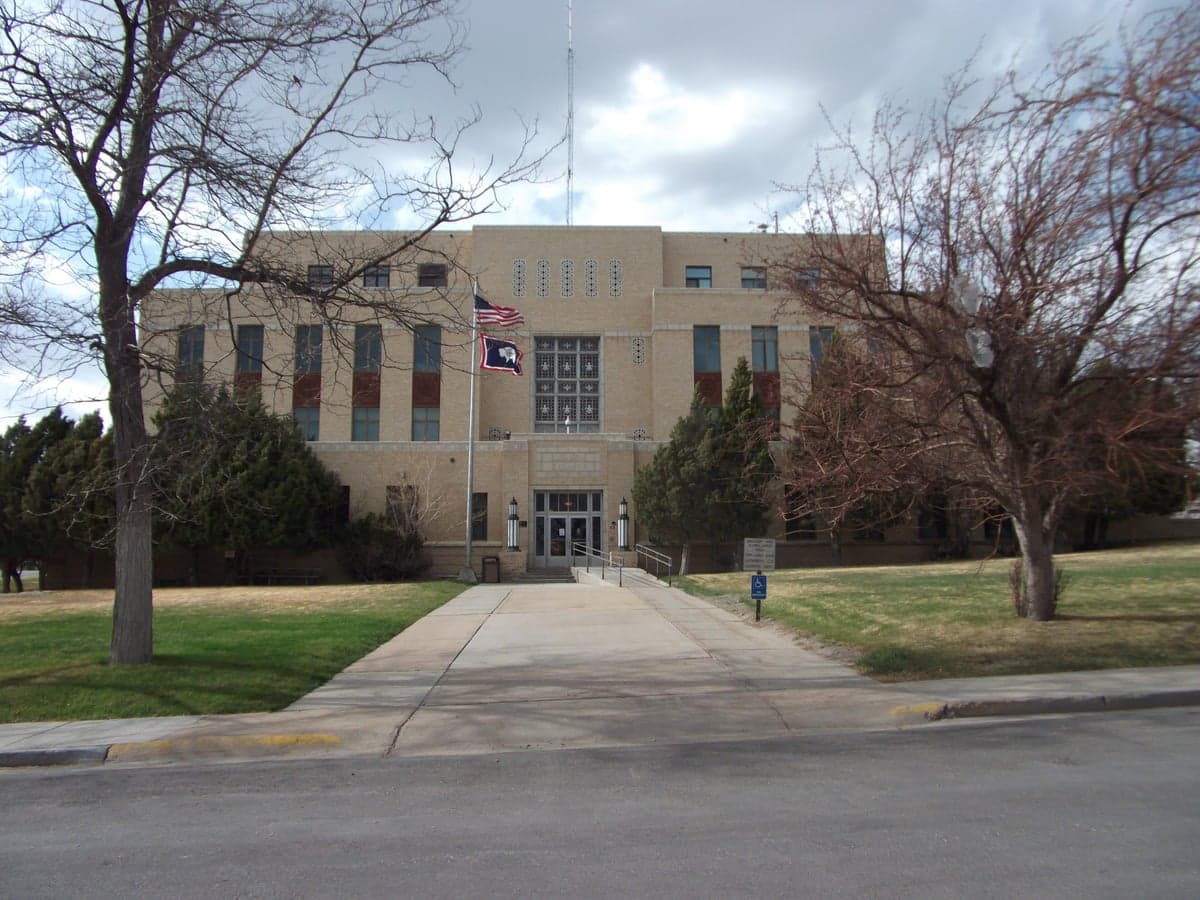
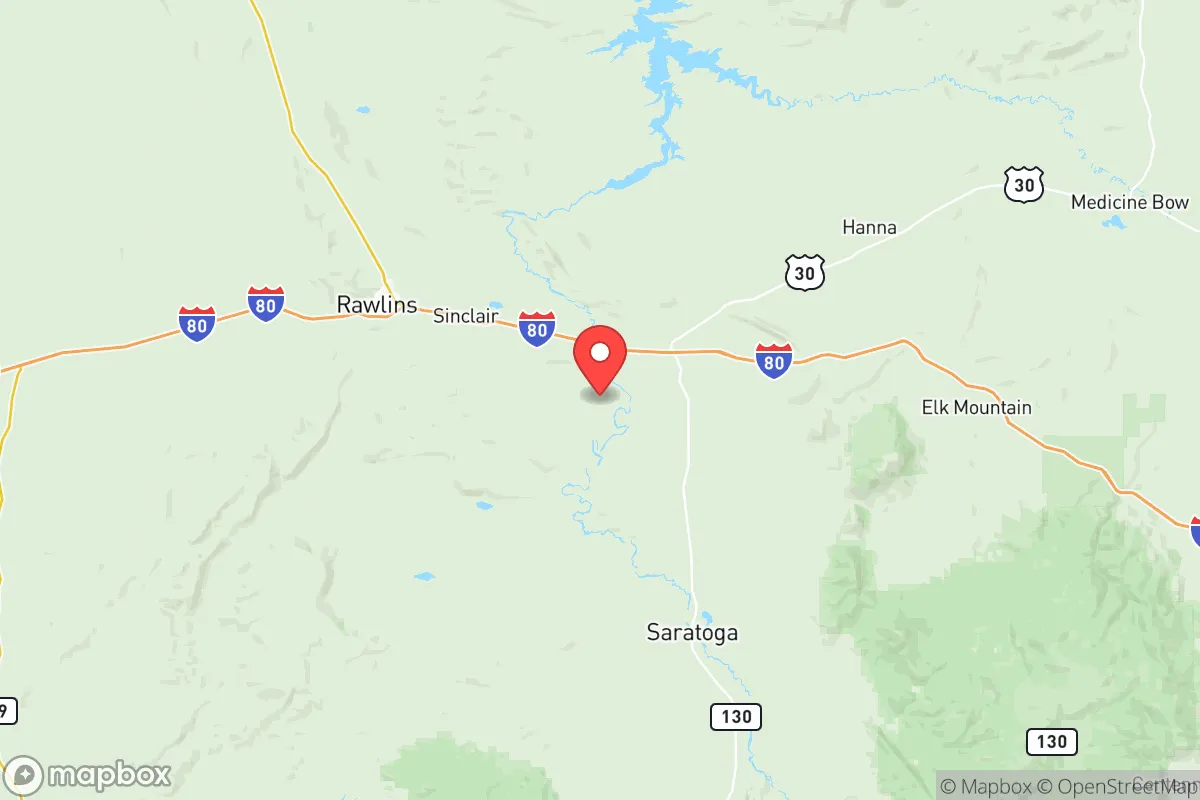
Photo: Wikipedia
Demographics of Carbon County
Affluence Level in Carbon County
A middle-class area roughly in line with national averages across income, home values, education, and employment.
People of Carbon County
Carbon County, Wyoming, is home to roughly 14,500 residents, making it one of the state's more sparsely populated counties despite its vast size. The population is predominantly white (76.3%) with a significant Hispanic minority (18.0%), a small Black community (1.3%), and very small Asian (0.2%) and Indian (0.5%) populations. The county's identity is shaped by its history as a railroad, coal mining, and ranching hub, with a population that is older and less college-educated (22.8%) than the national average, and a foreign-born share of just 3.4%.
Settlement & growth (pre-1960)
Before American settlement, the area that is now Carbon County was inhabited by nomadic Native American tribes, primarily the Shoshone, Arapaho, and later the Lakota Sioux, who followed bison herds across the high plains and into the Medicine Bow and Sierra Madre ranges. The region saw little permanent habitation until the arrival of the transcontinental railroad in the late 1860s. The Union Pacific Railroad pushed through the southern part of the county, establishing the towns of Rawlins (the county seat) and Hanna as division points and coaling stations. The railroad's need for coal to power steam locomotives drove the first major population wave: immigrant miners from Wales, England, Ireland, and Italy arrived in the 1870s and 1880s to work the vast underground coal seams. These groups settled in company towns like Hanna, Elk Mountain, and Carbon (now a ghost town), creating tight-knit ethnic enclaves centered on the mines and the Catholic and Episcopal churches they built.
A second wave came with the expansion of the livestock industry. After the defeat of the Plains tribes and the fencing of the open range in the 1880s and 1890s, cattle and sheep ranchers — many of them second-generation Americans from the Midwest and Great Plains — took up vast spreads in the county's valleys and basins. Towns like Saratoga and Encampment grew as supply centers for the ranching economy, attracting a more Anglo-American population of homesteaders and cowboys. The copper boom in the Encampment district around 1900 briefly drew a diverse mix of Cornish, Finnish, and Mexican miners, but the boom collapsed by 1910, leaving a lasting Hispanic presence in the area. The Dust Bowl and Great Depression of the 1930s sent few new settlers to Carbon County; the population actually declined as marginal farms and ranches failed. The post-World War II era saw a modest uptick as the Union Pacific continued to employ miners and railroad workers, but the county's population peaked around 1950 and then began a long, slow decline as coal mining mechanized and railroad employment shrank.
Modern era (post-1965)
The 1965 Hart-Cellar Act had a minimal direct impact on Carbon County, as the region did not attract the large-scale immigration seen in coastal or Sun Belt cities. The foreign-born population remains very low at 3.4%, and the county's demographic changes since 1965 have been driven more by domestic migration and natural increase than by international arrivals. The most significant shift has been the growth of the Hispanic population, which rose from a small, long-established presence in the mining and ranching towns to 18.0% of the county's total. This growth came primarily from Mexican-American families already in the region, supplemented by a modest inflow of workers drawn to the energy sector — coal mines, trona mining, and oil and gas fields — during the boom cycles of the 1970s and 2000s. The Hispanic community is concentrated in Rawlins and Saratoga, where they work in construction, services, and the energy industry.
The county's white population, while still the majority at 76.3%, has aged and declined in absolute numbers as younger residents leave for college and jobs in larger cities like Cheyenne, Denver, and Salt Lake City. The Black population (1.3%) is small and largely centered in Rawlins, with roots in the railroad and military presence (the Wyoming State Penitentiary and a small National Guard facility). The Asian (0.2%) and Indian (0.5%) populations are tiny, mostly professionals or business owners in Rawlins. Suburbanization has been minimal; there are no major suburbs, and the county's towns remain compact, with new residential development occurring on the edges of Rawlins and Saratoga, often in the form of single-family homes on larger lots. The county has not experienced the coastal flight or Rust Belt-to-Sun Belt migration that reshaped other parts of Wyoming, such as Teton County or Laramie County.
The future
Carbon County's population is projected to remain stable or decline slightly over the next 10-20 years, as the energy sector faces long-term uncertainty from the transition away from coal. The county's population is older than the state average, and outmigration of young adults will likely continue. The Hispanic share is expected to grow gradually, both through natural increase and continued in-migration for energy and service jobs, potentially reaching 22-25% by 2040. The white population will continue to age and shrink in absolute numbers. The Asian and Indian populations are likely to remain very small, as the county lacks the urban job base or university presence that attracts these groups. The county's cultural identity — rooted in ranching, mining, and railroad history — will persist, but may become more Hispanic-influenced, particularly in Rawlins and Saratoga, where bilingual services and Hispanic-owned businesses are already growing.
New communities are not forming in any significant way; instead, existing towns will see gradual infill and some new construction, particularly in Saratoga, which has become a modest retirement and recreation destination for its hot springs and fishing. The county will not become a diverse, cosmopolitan hub, but it will become slightly more Hispanic and slightly less white, while remaining one of Wyoming's most affordable and rural counties.
For someone moving in now, Carbon County offers a low-cost, low-density lifestyle with strong community ties and a conservative, self-reliant culture. The population is stable but aging, and newcomers will find a place where the economy depends on energy, government, and services, and where the demographic future is one of slow, incremental change rather than rapid transformation.

* Values derived from national, state, county, city and local statistics and may differ in a specific area. Last updated: 2026-06-17T18:34:06.000Z
Narrative content on this page is AI-generated and may contain mistakes. Verify any details that matter before acting on them.
ReloMaps may earn a commission from affiliate links at no extra cost to you.

