Photo: Wikipedia
Demographics of Woodruff, WI
Affluence Level in Woodruff, WI
A middle-class area roughly in line with national averages across income, home values, education, and employment.
People of Woodruff, WI
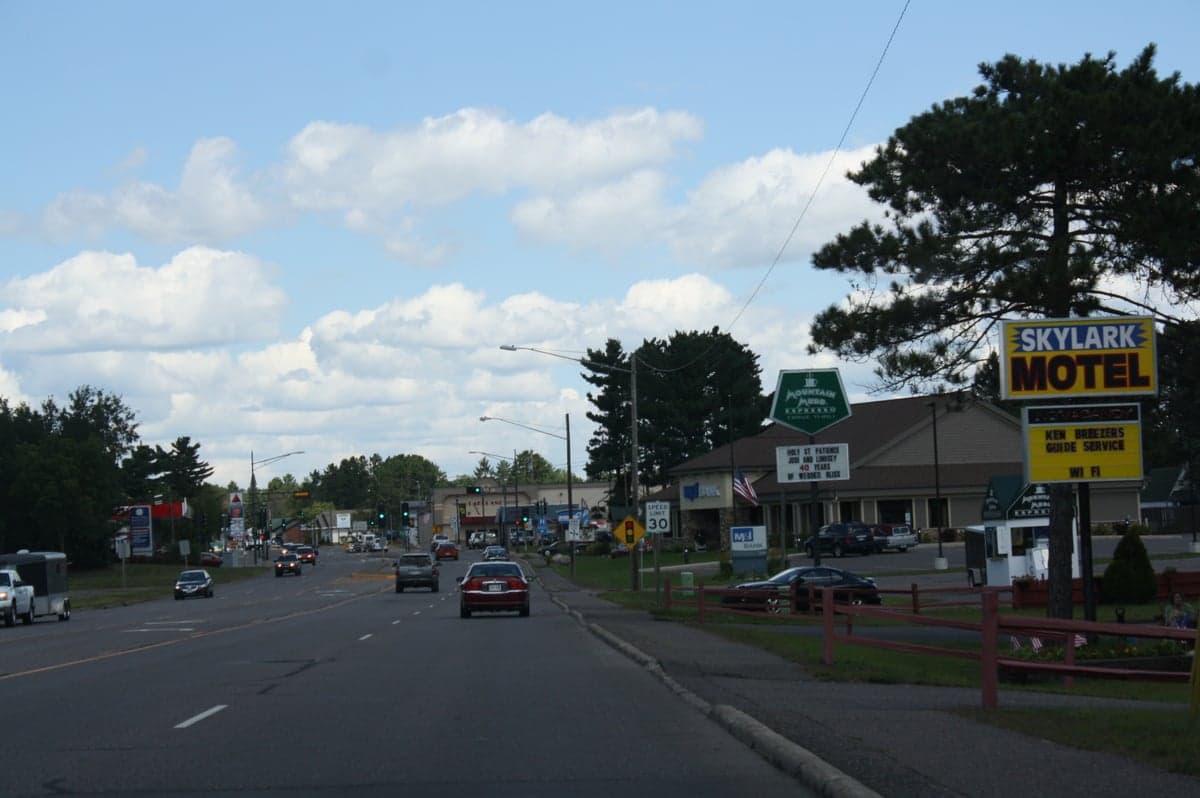
Woodruff, Wisconsin, is a small, tight-knit community of roughly 550 residents, where the population is overwhelmingly white (93.1%) and nearly entirely U.S.-born, with zero foreign-born residents reported. The city’s character is defined by its deep Northwoods roots, a quiet, family-oriented atmosphere, and a strong connection to the surrounding lakes and forests that have long shaped its economy and identity. With a college-educated rate of 27.6%, slightly below the national average, the workforce leans toward trades, tourism, and local services, reflecting a practical, self-reliant culture common in northern Wisconsin. For those moving in now, Woodruff offers a stable, homogeneous community where change comes slowly and tradition runs deep.
How the city was settled and grew
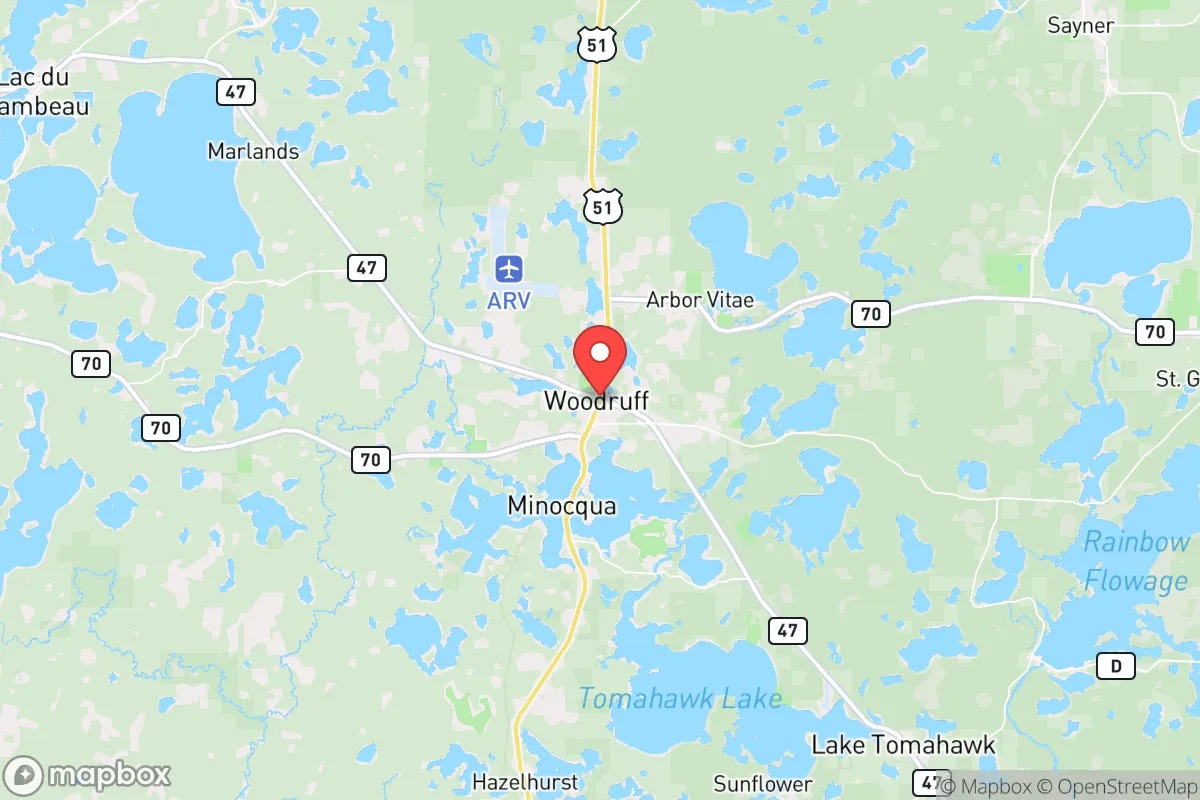
Woodruff’s human history begins with the Ojibwe people, who used the area’s lakes and portages for centuries before European settlement. The first permanent white settlers arrived in the 1880s, drawn by the logging boom that swept northern Wisconsin. The Chicago, Milwaukee, and St. Paul Railroad extended a line through the area in 1887, and the town was platted in 1888, named after a railroad official. These early settlers—mostly of German, Scandinavian, and Irish descent—built the first homes and businesses along what is now Main Street, the historic commercial core. The Downtown Woodruff district, centered around the intersection of Highway 47 and 51, became the hub for sawmills, general stores, and boarding houses that housed loggers and railroad workers. By 1900, the population had reached roughly 300, with families living in modest frame houses in the Lakewood Addition neighborhood, a residential area just east of downtown that still retains many of its original early-20th-century homes. The decline of logging after 1910 shifted the economy toward tourism, with summer cottages and fishing resorts springing up along the shores of Tomahawk Lake and Little St. Germain Lake, drawing visitors from Chicago and Milwaukee. The Tomahawk Lake District, a collection of seasonal cabins and year-round homes, became a distinct community within Woodruff, settled by vacationing families who later retired there permanently.
Modern era (post-1965)
After the 1965 Immigration and Nationality Act, Woodruff saw virtually no influx of foreign-born residents—the foreign-born share remains 0.0% today. Instead, the post-1965 period was marked by domestic in-migration from the Upper Midwest, particularly retirees and second-home buyers from Illinois and Minnesota. The Woodruff Shores subdivision, developed in the 1970s along the western edge of Tomahawk Lake, attracted these newcomers with lakefront lots and modern ranch-style homes. The population remained overwhelmingly white, with the Hispanic share growing only slightly to 3.3% by 2020, largely through families moving into the Pine Ridge neighborhood, a newer development of affordable single-family homes built in the 1990s near the Woodruff Town Hall. The city’s racial composition has stayed remarkably stable: Black, Asian, and Indian-subcontinent populations are all at 0.0%, reflecting the area’s limited economic diversification and its distance from major urban job centers. The Northwoods Business Park, established in the 1980s off Highway 47, brought light manufacturing and distribution jobs, but these did not attract significant ethnic diversity. Instead, the modern era solidified Woodruff as a predominantly white, native-born community where newcomers are overwhelmingly domestic migrants seeking a slower pace of life.
The future
Woodruff’s population is projected to remain stable or decline slightly over the next 10–20 years, mirroring trends across northern Wisconsin’s rural counties. The median age is rising—now estimated at 52—as younger adults leave for job opportunities in Wausau, Green Bay, or the Twin Cities, and retirees continue to move in. The Hispanic share may grow modestly, potentially reaching 5–7% by 2040, as families are drawn to lower housing costs and seasonal service jobs in the tourism sector. However, the city is unlikely to see significant racial or ethnic diversification, given the lack of major employers, limited rental housing, and the absence of immigrant-support infrastructure. New residential development is concentrated in the Woodruff Heights area, a planned subdivision of 40 lots approved in 2023, which is expected to attract more retirees and remote workers from the Midwest. The cultural identity of Woodruff will likely remain rooted in its Northwoods traditions—ice fishing, snowmobiling, and summer lake life—with a gradual shift toward a more service-oriented economy as the population ages.
For someone moving in now, Woodruff is becoming a quieter, older, and more retirement-focused community, where the population is stable, homogeneous, and deeply connected to the natural landscape. The city offers a predictable, low-crime environment with strong local institutions like the Woodruff Public Library and the Lakeland Union High School, but limited economic opportunity for younger families. It is a place where newcomers are welcomed if they embrace the local pace and values, and where the demographic future looks much like the present—white, native-born, and rooted in the Northwoods.

* Values derived from national, state, county, city and local statistics and may differ in a specific area. Last updated: 2026-11-22T19:03:53.000Z
Narrative content on this page is AI-generated and may contain mistakes. Verify any details that matter before acting on them.
ReloMaps may earn a commission from affiliate links at no extra cost to you.

