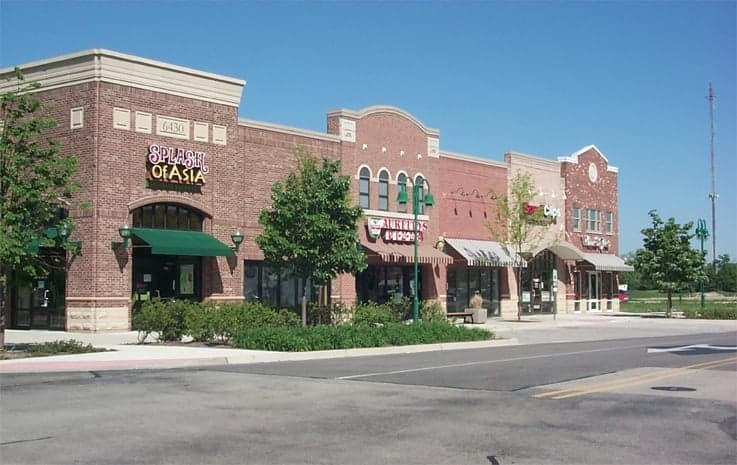
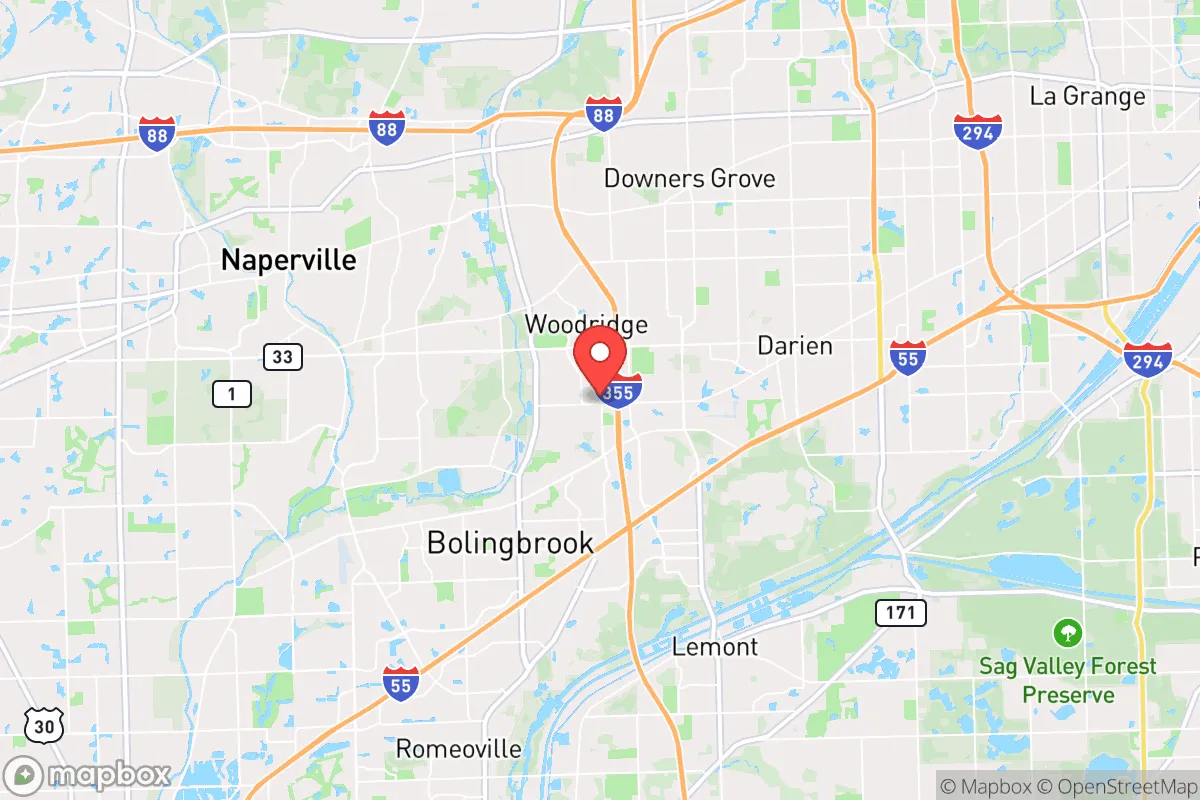
Photo: Wikipedia
Political ClimatePolitical Climate in Woodridge, IL
District shown is the primary district for this city’s centroid. Cities may span multiple districts.
* Lean and PVI are calculated from Woodridge, IL’s own 2020 presidential results (precinct returns summed to the city), with 2024 estimated from the surrounding county’s 2020–2024 shift, Cook-style. Sources: state election offices; VEST 2020 precinct results (CC BY 4.0).
Political rankings in Illinois
- Most Conservative Cities in Illinois
- Most Liberal Cities in Illinois
- Best Liberal-Leaning Towns in the Midwest
- Safest Liberal-Leaning Towns in the Midwest
- Safest Conservative-Leaning Towns in the Midwest
- Affordable Small Towns for Conservatives
- Most Affordable Liberal-Leaning Small Towns in the U.S.
- Safest Conservative-Leaning Cities in the U.S.
- Most Conservative Counties in Illinois
- Most Liberal Counties in Illinois
Local Political AnalysisPolitical Analysis of Woodridge, IL
Woodridge, Illinois, sits in a reliably Democratic part of DuPage County, with a Cook Partisan Voting Index (PVI) of D+6, meaning the district leans about six points more Democratic than the national average. That puts it just a shade to the right of Illinois as a whole, which carries a D+7 PVI, but in practice, Woodridge feels like a solidly blue suburb where local elections are often decided in the Democratic primary. The trajectory here has been steady: the area has been trending Democratic for decades, mirroring the broader suburban shift away from the GOP, and there’s no sign of that reversing anytime soon.
How it compares
Woodridge’s D+6 rating makes it slightly more competitive than the state’s D+7 average, but in real terms, that difference is negligible. The real contrast is with nearby towns that lean more conservative. Head west to Naperville or Lisle, and you’ll find pockets of Republican strength, especially in precincts around the northern and western edges of those cities. Drive east into Downers Grove or south into Bolingbrook, and the political mix gets more purple, though still Democratic-leaning. Woodridge itself is a bit of a bellwether for the region: it’s not as deep blue as Chicago’s inner-ring suburbs like Oak Park or Evanston, but it’s far from the redder exurbs like Yorkville or Oswego. The D+6 PVI means Woodridge votes Democratic in presidential races by a comfortable margin—think 55-60% for the Democratic candidate—but local races can be tighter, especially for county board or township positions where name recognition and turnout matter more than party label.
What this means for residents
For liberal residents, Woodridge is a comfortable place to live politically. You’ll find plenty of neighbors who share your views, and local government tends to align with progressive priorities on issues like environmental sustainability, public transit investment, and social services. The village council and school board are reliably Democratic, so policy debates usually happen within the party’s spectrum rather than across a partisan divide. For conservative residents, it’s a different story. You’re in the minority, but not a tiny one—roughly 35-40% of voters in Woodridge cast Republican ballots in recent elections. That means you can find like-minded folks at local churches, civic clubs, or through county GOP organizations, but you’ll likely feel out of step on local issues like zoning, taxes, and school curriculum. The good news is that Woodridge isn’t a place where political differences lead to social friction; it’s a middle-class suburb where people mostly keep their politics to themselves and focus on schools, parks, and property values.
One cultural distinction worth noting: Woodridge has a strong sense of local identity that sometimes transcends party lines. The village’s annual Friendship Festival, its extensive forest preserve system, and its reputation as a family-friendly community create a shared civic pride that softens political edges. You won’t see many yard signs or bumper stickers, and most residents would rather talk about the new brewery on 75th Street than argue about the latest state legislation. That said, the area’s Democratic lean does shape policy in tangible ways—Woodridge has adopted stricter environmental ordinances than neighboring Republican-leaning towns, and its school district (District 68) has maintained a more progressive approach to diversity and inclusion initiatives. For the foreseeable future, Woodridge will remain a reliably blue suburb in a blue state, but with enough internal diversity to keep things interesting for both sides.

State Political ClimatePolitical Climate in Illinois
State Political AnalysisPolitical Environment in the State
Illinois is a solidly Democratic state with a Cook PVI of D+7, meaning it votes about 7 points more Democratic than the national average in presidential elections. Over the past 10-20 years, the state has shifted leftward, driven by the massive Democratic machine in Cook County and the Chicago metro area, while the rest of the state has trended Republican. This creates a stark internal political battle that plays out in every statewide election, with the Democratic stronghold of Chicago and its suburbs consistently overpowering the GOP’s rural and downstate base.
Urban vs. rural divide
The political map of Illinois is a textbook example of the urban-rural split. Cook County, home to Chicago, casts about 40% of the state’s vote and reliably delivers margins of 60-70% for Democrats. The collar counties—DuPage, Lake, Kane, McHenry, and Will—have been trending blue over the last decade, especially in suburban areas like Naperville and Arlington Heights, where educated professionals have shifted away from the GOP. Meanwhile, downstate Illinois—places like Peoria, Springfield, and the southern tip around Carbondale—votes heavily Republican. In 2024, counties like Williamson and Jefferson in the south gave Trump over 70% of the vote. The divide is so sharp that you can drive 30 minutes west of Chicago and go from a precinct that votes 80% Democratic to one that votes 70% Republican. This geographic tension defines every statewide race, with Democrats relying on Chicago and its suburbs to outrun the GOP’s downstate margins.
Policy environment
Illinois’s policy environment is shaped by its Democratic supermajority in the legislature and a Republican governor from 2015-2019 (Bruce Rauner), followed by Democrat JB Pritzker since 2019. The state has a flat income tax rate of 4.95%, but it’s one of the highest in the Midwest. Property taxes are among the highest in the nation, averaging around 2.3% of home value, with Cook County often exceeding that. There’s no state-level right-to-work law, and union influence remains strong, especially in construction and public sector jobs. Education policy is centralized: the state funds schools through a formula that heavily weights property taxes, leading to wide disparities between wealthy suburbs like Glenview and poorer downstate districts. Healthcare is a mixed bag—Illinois expanded Medicaid under the ACA and has strong consumer protections, but rural hospital closures are a real concern. Election laws are relatively liberal: no voter ID requirement, automatic voter registration at DMVs, and early voting is widely available. Mail-in ballots are sent automatically to all registered voters, a change made permanent after 2020.
Recent policy direction
Over the last five years, Illinois has moved decisively left on several fronts. Gun laws have tightened significantly: in 2023, the state passed a ban on assault weapons and high-capacity magazines (the Protect Illinois Communities Act), which is currently being challenged in court but remains in effect. Self-defense law is restrictive—Illinois does not have a “stand your ground” statute, and concealed carry requires a license with a 16-hour training course. On education, the state eliminated cash bail in 2023 (the Pretrial Fairness Act), a move that sparked intense debate over public safety. Parental rights have been a flashpoint: the state mandates that schools allow students to use bathrooms and locker rooms matching their gender identity, and it prohibits schools from notifying parents if a child changes their name or pronouns without the child’s consent. Privacy and surveillance are mixed—Illinois has a strong biometric privacy law (BIPA) that allows private lawsuits, but police use of license plate readers and surveillance cameras is widespread in Chicago. Medical and bodily autonomy is broadly protected: abortion remains legal up to viability, and the state has become a regional haven for out-of-state patients. Property rights are constrained by high property taxes and strong zoning laws, especially in Cook County. Voting access has expanded, with same-day registration and no-excuse mail voting now permanent.
Civil unrest & political movements
Illinois has a history of organized political activism on both sides. Chicago saw major protests in 2020 after George Floyd’s death, with looting and property damage in the Loop and along Michigan Avenue, leading to ongoing debates about public safety and police funding. The left is well-organized through groups like the Illinois Network for Pretrial Justice and the Chicago Teachers Union, which has significant political clout. On the right, downstate counties have seen a rise in “constitutional sheriff” movements and Second Amendment sanctuary resolutions—over 80 counties have passed symbolic resolutions opposing the state’s gun ban. Immigration politics are a major flashpoint: Illinois is a sanctuary state, with a 2017 law (the TRUST Act) that limits local law enforcement cooperation with federal immigration authorities. Chicago has seen a surge of migrant buses from Texas since 2022, straining city resources and creating visible encampments in police station parking lots. Election integrity controversies have been relatively muted compared to other states, but downstate Republicans frequently allege that Cook County’s election machinery is opaque and prone to irregularities. Secession talk is mostly rhetorical—a few downstate counties have floated the idea of joining Indiana or forming a new state, but it’s not a serious movement.
Projection
Over the next 5-10 years, Illinois is likely to remain a solidly Democratic state, but the margin could narrow slightly. Demographic trends favor Democrats: the Chicago metro area is growing slowly, while downstate population is declining. However, the state is losing electoral clout—it’s projected to lose another congressional seat after 2030. In-migration patterns are a wild card: Illinois has been losing residents to Florida, Texas, and Indiana for years, but the people leaving tend to be more conservative, while new arrivals (often from other blue states) lean left. The state’s fiscal health is a persistent concern—Illinois has the worst-funded pension system in the country, and property taxes will likely continue to rise to cover it. A Republican comeback would require either a dramatic shift in suburban Cook County or a national realignment that makes the state competitive again, but neither seems likely in the near term. For a conservative relocator, the state will remain a challenging environment for gun rights, school choice, and tax burdens.
For a new resident, the bottom line is this: if you’re a conservative moving to Illinois, you’ll find a strong community in the downstate areas or in the outer suburbs like McHenry County, but you’ll be fighting an uphill battle on state policy. If you’re a liberal, you’ll find a state that largely aligns with your values, especially in Chicago and the inner suburbs. The practical takeaway is that your experience will depend almost entirely on where you live—the political climate of Naperville is very different from that of Effingham. Plan accordingly, and budget for high property taxes no matter where you land.
* Values derived from national, state, county, city and local statistics and may differ in a specific area. Last updated: 2026-11-13T05:14:09.000Z
Narrative content on this page is AI-generated and may contain mistakes. Verify any details that matter before acting on them.
ReloMaps may earn a commission from affiliate links at no extra cost to you.

