Photo: Wikipedia
Demographics of Woodridge, IL
Affluence Level in Woodridge, IL
A middle-class area roughly in line with national averages across income, home values, education, and employment.
People of Woodridge, IL
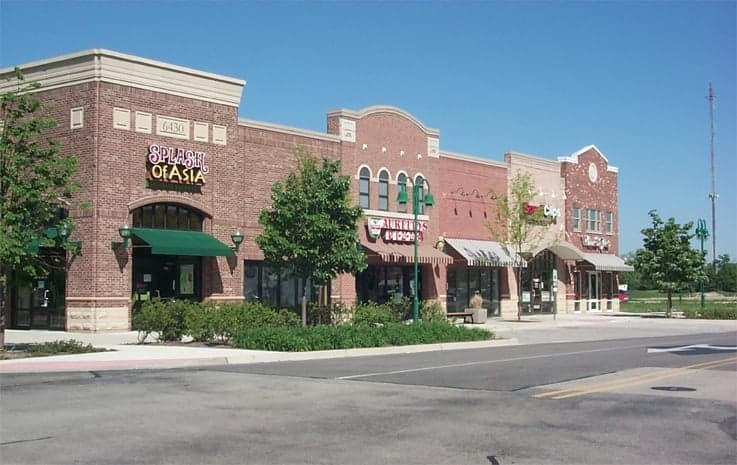
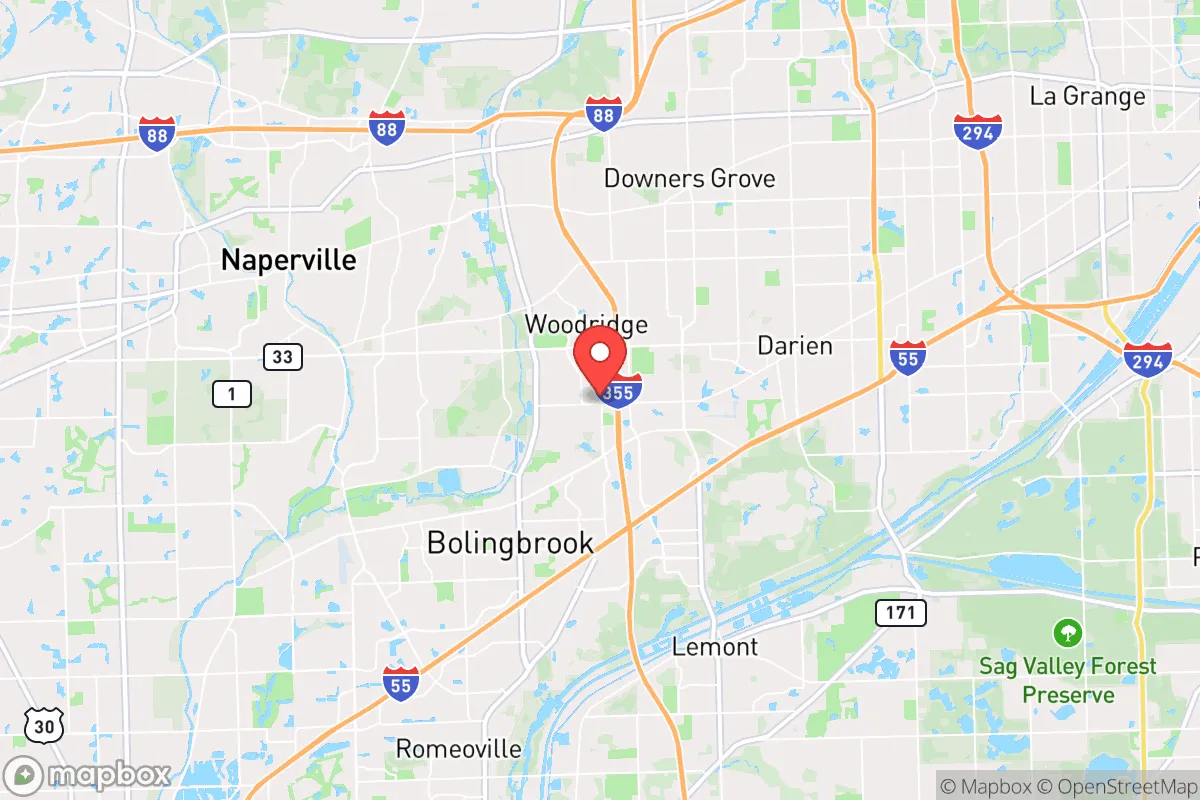
Woodridge, Illinois, today is a diverse, middle-class suburb of 33,889 residents, characterized by its blend of established single-family homes and modern townhouse developments. The city’s population is notably multi-ethnic, with a White majority (57.4%) alongside significant Hispanic (16.4%), Black (11.1%), East/Southeast Asian (7.0%), and Indian-subcontinent (4.3%) communities. A high college-educated rate (46.1%) and a 10.0% foreign-born share mark Woodridge as a stable, upwardly mobile suburb that has evolved from a quiet farming crossroads into a sought-after Chicago exurb.
How the city was settled and grew
Woodridge’s human history begins not with a grand founding, but with the slow agricultural settlement of the mid-19th century. The area was originally part of Downers Grove Township, and the first permanent residents were German and Irish farmers drawn by the fertile prairie soil and the promise of land through the 1862 Homestead Act. These early families established small homesteads along what is now 75th Street and Lemont Road, an area that would later become the Old Town Woodridge neighborhood. The arrival of the Chicago, Burlington & Quincy Railroad in the 1860s spurred a modest wave of Swedish and Norwegian immigrants, who built the first churches and schools near the rail stop at what is today the Woodridge Depot District. For nearly a century, Woodridge remained a sparsely populated farming hamlet, with fewer than 500 residents as late as 1950. The city’s true growth began in the 1950s and 1960s, when post-war suburbanization and the construction of the Stevenson Expressway (I-55) made the area accessible to Chicago commuters. Developers platted large subdivisions of ranch and split-level homes, attracting a wave of second- and third-generation European-American families—primarily of Polish, Italian, and Czech descent—who settled in neighborhoods like Seven Bridges and Woodridge Estates. This era established Woodridge’s character as a solidly middle-class, family-oriented suburb.
Modern era (post-1965)
The 1965 Hart-Cellar Immigration Act, combined with the continued expansion of the Chicago metro area, fundamentally reshaped Woodridge’s population. The 1970s and 1980s saw the first significant influx of Black families, many moving from Chicago’s South Side and southern suburbs, who concentrated in the Hobson Creek and Woodridge Pointe neighborhoods near the city’s eastern edge. Concurrently, a wave of East/Southeast Asian immigrants—primarily Chinese, Korean, and Filipino professionals—arrived, drawn by the area’s strong school system (District 68 and 99) and proximity to tech and healthcare employers along the I-88 corridor. These families settled throughout the city but formed a visible cluster in the Ashwood Park area. The 1990s and 2000s brought a substantial Hispanic population, largely of Mexican and Puerto Rican heritage, who found affordable housing in the older ranch homes of Westwood and the apartment complexes near 75th Street. The most recent demographic shift, accelerating after 2010, has been the arrival of Indian-subcontinent families—engineers, IT professionals, and medical workers—who have gravitated toward newer construction in the Woodridge Crossing development and the larger homes near Greene Valley Forest Preserve. This group now represents 4.3% of the population, a share that has doubled since 2010. The city’s foreign-born population (10.0%) is now a mix of established East Asian and newer Indian and Hispanic residents, reflecting a shift from European to Asian and Latin American origins.
The future
Woodridge’s population is projected to become more diverse and slightly older over the next decade. The White share (57.4%) is declining gradually as older European-American residents age in place and younger, more diverse families move in. The Hispanic and Indian-subcontinent shares are expected to grow most rapidly, driven by both domestic migration from Chicago and direct immigration. These new residents are dispersing across the city rather than clustering in a single neighborhood, though the Woodridge Crossing area and newer developments near the I-55 corridor are absorbing the largest share of Indian and East Asian families. The Black population (11.1%) is stable, with growth likely concentrated in the Hobson Creek area. The city’s cultural identity is evolving from a predominantly white, Catholic, union-family suburb into a multi-ethnic, professionally oriented community. The high college-education rate (46.1%) suggests that Woodridge will continue to attract knowledge-economy workers, while its relatively affordable housing (median home value around $290,000) compared to Naperville or Downers Grove will keep it accessible to first-time homebuyers and immigrant families.
For someone moving in now, Woodridge is becoming a stable, diverse, and well-educated suburb where no single ethnic group dominates. The city offers a middle ground between the high-cost, high-amenity suburbs to the north and the more industrial, less diverse suburbs to the south. Its population trajectory points toward continued diversification, with Indian and Hispanic communities growing fastest, while the city retains its family-oriented, commuter-friendly character. The key takeaway: Woodridge is not a static community—it is a suburb in demographic transition, and new arrivals will find a place that is increasingly multicultural and professionally driven, yet still grounded in its mid-century suburban roots.

* Values derived from national, state, county, city and local statistics and may differ in a specific area. Last updated: 2026-11-13T05:14:09.000Z
Narrative content on this page is AI-generated and may contain mistakes. Verify any details that matter before acting on them.
ReloMaps may earn a commission from affiliate links at no extra cost to you.

