
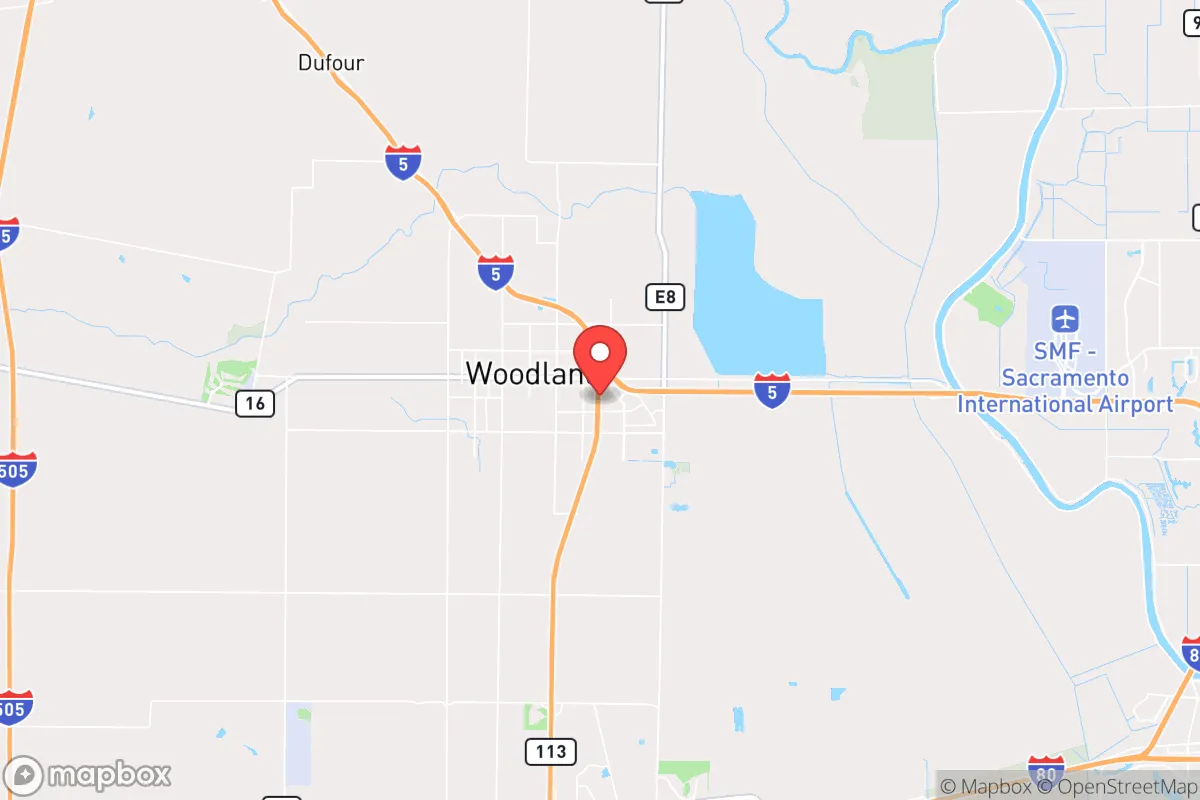
Photo: Wikipedia
Personal Sovereignty in Woodland, CA
Viable for self-reliance. Generally workable, though some barriers may limit total independence.
What does Personal Sovereignty tell us?
Personal Sovereignty measures your capacity for self-reliance and independence with minimal government friction. Higher scores mean fewer barriers between you and the way you want to live... but it assumes you have the space you need and good neighbors.
What does this tell us?
Personal Sovereignty measures your capacity for self-reliance and independence with minimal government friction. Higher scores mean fewer barriers between you and the way you want to live... but it assumes you have the space you need and good neighbors.
State Policy
Energy independence: Importer (25% of energy produced in-state)
Personal Liberty
Homesteading
Personal Liberty Analysis
Woodland, California, presents a complex personal sovereignty environment where state-level regulatory density often overrides local autonomy, creating a landscape that requires careful navigation for those prioritizing independence. As the Yolo County seat, Woodland sits within a state known for its expansive government reach, but the city’s agricultural roots and smaller-city character offer pockets of self-reliance that are harder to find in coastal metro areas. For single individuals and families with a conservative-leaning view of freedom, the trade-offs here are significant: lower local taxes and a quieter lifestyle come with strict state mandates on everything from energy to firearms.
Tax burden and regulatory posture in Woodland compared to surrounding areas
California’s overall tax burden ranks among the highest in the nation, and Woodland residents feel this directly through state income tax rates that top out at 13.3% and a state sales tax rate of 7.25%, which local add-ons push to roughly 8.25% in Yolo County. Property taxes are capped at 1% of assessed value under Proposition 13, which provides stability but does not shield homeowners from ongoing assessments or Mello-Roos community facility district fees common in newer Woodland subdivisions. The regulatory posture is heavily state-driven: California’s California Environmental Quality Act (CEQA) adds layers of review to any construction or business expansion, and Woodland’s own municipal code enforces strict building standards, including Title 24 energy requirements that raise construction costs by an estimated 10-15% compared to states with lighter codes. For a self-reliant individual, this means that starting a home-based business or adding a workshop often requires permits and inspections that can take months. However, Woodland’s city government is generally more business-friendly than neighboring Davis or Sacramento, with a streamlined planning department for smaller projects and a lower local business license fee—typically under $100 annually for most home occupations. The trade-off is clear: you get less regulatory friction at the local level, but state-level compliance is non-negotiable and adds both time and expense to any independent endeavor.
Self-defense and gun law specifics in Woodland and Yolo County
California’s firearm laws are among the most restrictive in the United States, and Woodland residents must comply with a dense web of state statutes that leave little room for local variation. The state requires a 10-day waiting period for all firearm purchases, a background check through the California Department of Justice, and a Firearm Safety Certificate for each transaction. Semi-automatic rifles with “assault weapon” features—such as pistol grips, flash suppressors, or adjustable stocks—are banned, as are magazines capable of holding more than 10 rounds. For concealed carry, Yolo County is a “may-issue” jurisdiction, meaning the sheriff has discretion to grant or deny a CCW permit. As of 2025, Yolo County Sheriff Tom Lopez has maintained a relatively moderate stance, issuing permits to applicants who demonstrate “good cause,” which typically requires documentation of specific threats or a compelling self-defense need—not merely a general desire to carry. This contrasts with more permissive “shall-issue” counties in the state’s rural interior, such as Shasta or Tehama, where permits are routinely granted. Open carry of handguns is prohibited in California, and carrying a loaded firearm in a vehicle requires a CCW permit. For self-defense at home, no permit is needed to own a handgun, rifle, or shotgun (subject to the assault weapon ban), but ammunition purchases now require a background check and a $1 fee per transaction. The practical effect for a Woodland resident is that self-defense preparation requires significant advance planning, legal research, and potentially a multi-month wait for a CCW permit—if granted at all. This is a high-friction environment for gun owners compared to states like Arizona or Texas, where permitless carry is law.
Self-reliance and homesteading viability: lot sizes, zoning, and off-grid feasibility
Woodland’s agricultural heritage provides a more favorable environment for homesteading than most California cities, though state regulations still impose limits on full self-sufficiency. Residential lots within city limits typically range from 6,000 to 10,000 square feet in older neighborhoods, while newer subdivisions often feature smaller lots around 4,000-5,000 square feet. Zoning codes in Woodland’s R-1 (single-family residential) districts allow for backyard chickens (up to 4 hens, no roosters) and small vegetable gardens without a permit, but goats, pigs, or larger livestock are prohibited within city limits. For those seeking true homesteading, unincorporated Yolo County land—such as areas near Dunnigan or Esparto—offers parcels of 1 to 20 acres with agricultural zoning that permits livestock, orchards, and even small-scale farming operations. Off-grid feasibility is severely constrained by state law: California requires all habitable dwellings to be connected to the electrical grid or have a permitted solar-plus-battery system that meets Title 24 standards, and rainwater catchment is limited to 2,500 gallons per property without a permit from the State Water Resources Control Board. Well drilling is allowed on parcels of 1 acre or more in unincorporated areas, but requires a permit and testing for nitrates and coliform bacteria, which are common in the Sacramento Valley’s agricultural runoff. Composting toilets are legal under California’s alternative wastewater systems regulations, but require a septic system permit and annual inspection. The net assessment: Woodland itself offers modest homesteading potential for the dedicated suburbanite, but true off-grid independence is effectively illegal within city limits and heavily regulated even in rural Yolo County. For a family willing to navigate permits and invest in permitted solar, a 5-acre parcel in the county can support a semi-self-sufficient lifestyle, but it will not be the low-regulation experience found in states like Idaho or Missouri.
Personal liberties: parental rights, medical autonomy, speech, and property
California’s legal framework significantly shapes personal liberties in Woodland, often prioritizing state-level mandates over local or individual choice. Parental rights are constrained by state education law: California was one of the first states to require LGBTQ+ inclusive curriculum in public schools (FAIR Education Act), and parents cannot opt their children out of specific lessons on sexual orientation or gender identity, though they can request alternative assignments. School vaccine requirements are strict—all 10 state-mandated vaccines are required for attendance, with no personal belief exemption; only medical exemptions are accepted, and these are subject to state review. Medical autonomy is similarly limited: California has some of the nation’s tightest restrictions on alternative medicine, requiring licensed physicians to oversee any treatment claiming to cure serious illness, and the state’s medical board actively investigates unlicensed practitioners. On the positive side for liberty-minded individuals, California’s medical marijuana program (Proposition 215) and adult-use cannabis legalization (Proposition 64) allow for personal cultivation of up to 6 plants per household, though Woodland’s local zoning prohibits outdoor grows visible from public streets. Free speech is broadly protected under the First Amendment, but California’s “safe place” laws restrict carrying firearms at public protests, and the state’s anti-SLAPP statute provides strong protections against lawsuits intended to silence criticism. Property rights are heavily circumscribed: California’s coastal and environmental regulations can limit development even on private land, and the California Public Records Act means that property ownership information is publicly accessible. For a conservative-leaning family, the key takeaway is that Woodland offers a relatively high degree of personal autonomy in lifestyle choices—what you do on your property, how you raise your children at home, and what you say in public—but state law consistently overrides local preferences on education, healthcare, and firearms. This is not a jurisdiction where “live and let live” extends to opting out of state mandates.
Overall, Woodland’s personal sovereignty profile is best described as moderate within California’s high-regulation context, offering a more practical environment for self-reliance than coastal cities but falling well short of the autonomy found in states with weaker governments. The city’s agricultural roots and lower cost of living relative to the Bay Area provide tangible benefits for those seeking independence—cheaper land, a slower pace, and a local government that is generally responsive to property owners. However, the state’s comprehensive regulatory apparatus means that true self-sufficiency in housing, energy, education, and self-defense requires navigating a thicket of permits, fees, and mandates. For a single individual or family willing to work within these constraints, Woodland can be a viable base for a self-directed life, but it is not a low-freedom environment by national standards. Those who prioritize maximum personal sovereignty should compare Woodland to jurisdictions in Nevada, Texas, or the Mountain West, where tax burdens are lower, gun laws are more permissive, and off-grid living is legally straightforward.

* Values derived from national, state, county, city and local statistics and may differ in a specific area. Last updated: 2026-11-25T15:38:32.000Z
Narrative content on this page is AI-generated and may contain mistakes. Verify any details that matter before acting on them.
ReloMaps may earn a commission from affiliate links at no extra cost to you.

