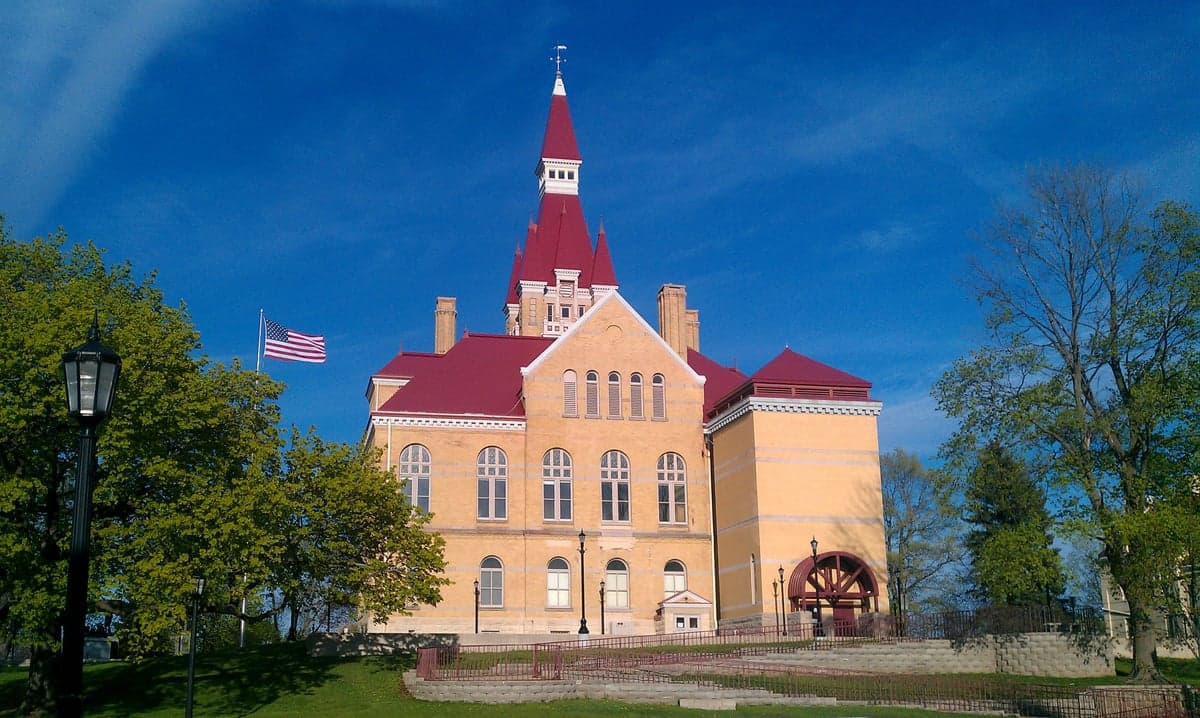
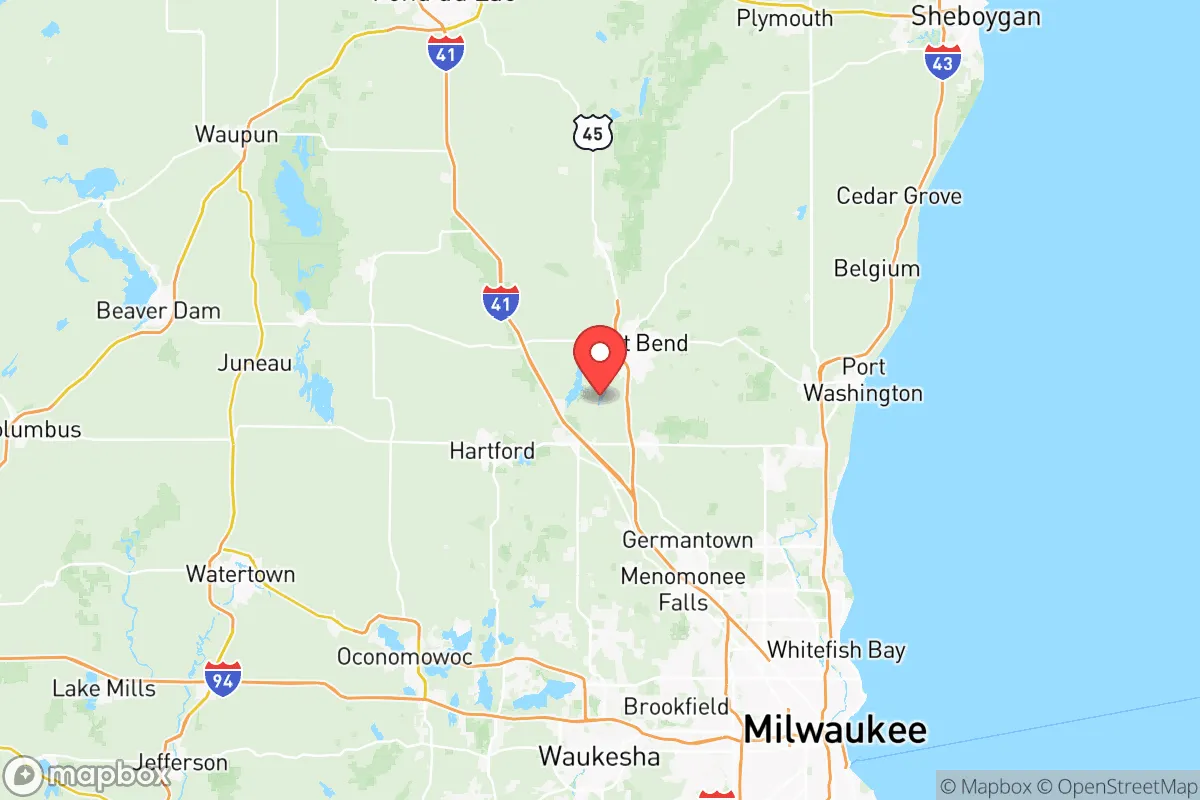
Photo: Wikipedia
Demographics of Washington County
Affluence Level in Washington County
An upper-middle-class area. Household wealth, education levels, and homeownership run ahead of national benchmarks.
People of Washington County
Washington County, Wisconsin, is a predominantly white, family-oriented suburban and exurban area with a population of 137,320 that retains a strong German-American cultural foundation. The county is characterized by a low foreign-born rate of 1.2% and a population that is 90.8% white, with a modest but growing Hispanic community at 3.7%. Residents often describe the area as a quieter, more conservative alternative to the Milwaukee metro area, with a strong emphasis on local community, outdoor recreation, and a slower pace of life that appeals to families and individuals seeking space and safety.
Settlement & growth (pre-1960)
Before European settlement, the area now known as Washington County was inhabited by the Potawatomi and Menominee Native American nations. The region was part of a vast network of forests and lakes that supported seasonal hunting and fishing. The first European Americans to arrive were Yankee settlers from New England and New York in the 1830s and 1840s, drawn by the promise of cheap land under the federal land grant system. These early pioneers established the first permanent settlements, including the county seat of West Bend, founded in 1845, and the village of Hartford, founded in 1842. These communities initially served as agricultural hubs, with the Milwaukee River providing water power for early gristmills and sawmills.
The defining demographic wave for Washington County, however, was the massive influx of German immigrants that began in the 1840s and continued through the 1880s. These immigrants, fleeing economic hardship and political unrest in the German states, were drawn to the area by the availability of fertile farmland and the promise of a close-knit ethnic community. They settled heavily in the towns of Germantown (founded 1849), Jackson, and Slinger, as well as in the villages of Kewaskum and Richfield. German became the dominant language in many homes and churches well into the early 20th century. The county's economy diversified beyond agriculture as these settlers established breweries, tanneries, and small manufacturing shops. The German cultural imprint remains strong today, visible in the prevalence of Lutheran and Catholic churches, local festivals like West Bend's Germanfest, and the surnames of a majority of long-time residents.
By the early 20th century, Washington County's population was overwhelmingly German-American and rural. The post-World War II era brought a modest wave of domestic migration from other parts of Wisconsin and the upper Midwest, as returning veterans and their families sought affordable housing and jobs in the growing manufacturing sector. Towns like West Bend and Hartford saw the expansion of factories producing tools, machinery, and automotive parts. However, the county remained largely insulated from the larger immigration waves that transformed other parts of the United States. The population grew steadily but slowly, reaching roughly 50,000 by 1960, with a demographic profile that was nearly 99% white and overwhelmingly of German descent.
Modern era (post-1965)
The 1965 Hart-Cellar Act, which dramatically reshaped U.S. immigration patterns, had a minimal direct impact on Washington County. Unlike major urban centers or Sun Belt suburbs, the county did not experience a significant influx of new immigrant groups from Asia, Latin America, or Africa during the late 20th century. The foreign-born population today remains very low at 1.2%, a figure that is far below the national average and even below the Wisconsin state average. The county's demographic story in the modern era is primarily one of domestic migration and suburban expansion rather than international immigration.
The most significant demographic shift since 1965 has been the gradual suburbanization of the Milwaukee metropolitan area. As Milwaukee's urban core experienced population decline and industrial restructuring in the 1970s and 1980s, white, middle-class families began moving outward to surrounding counties, including Washington County. This "white flight" phenomenon accelerated in the 1990s and 2000s, with communities like Germantown and Richfield transforming from rural villages into sprawling suburban bedroom communities. New housing developments, big-box retail, and corporate parks sprouted along the Interstate 41 corridor, attracting families seeking larger lots, lower taxes, and highly rated schools. The county's population more than doubled between 1970 and 2020, from roughly 63,000 to over 136,000.
During this same period, the county's racial and ethnic composition remained remarkably stable. The white population share has declined only slightly, from over 98% in 1980 to 90.8% today. The Hispanic population, now at 3.7%, is the largest minority group, with many families settling in West Bend and Hartford for work in manufacturing, construction, and service industries. The Black population (1.5%) and East/Southeast Asian population (1.0%) are small but present, often concentrated among professionals and families moving for jobs in healthcare, engineering, and education. The Indian subcontinent population (0.5%) is a very recent addition, primarily consisting of tech and medical professionals working in the broader Milwaukee region. These minority communities are dispersed rather than forming distinct ethnic enclaves, reflecting the county's overall pattern of low diversity.
The future
Washington County is projected to continue its slow, steady growth over the next 10-20 years, driven primarily by domestic migration from the Milwaukee metro area and other parts of the Midwest. The population is expected to become slightly more diverse, but at a pace that will keep it among the least diverse counties in Wisconsin. The Hispanic population is likely to grow the fastest, potentially reaching 5-6% of the total by 2040, as younger families move in for affordable housing and jobs in the region's expanding logistics and manufacturing sectors. The East/Southeast Asian and Indian subcontinent populations will likely grow slowly, primarily through professional migration tied to healthcare and technology employers in West Bend and Germantown.
The county's cultural identity is evolving, but slowly. The strong German-American heritage will remain a defining feature, but newer residents — including those from other Midwestern states and a small but growing number of Hispanic families — are gradually broadening the county's social and cultural landscape. The most significant demographic challenge will be an aging population, as many long-time residents retire while younger families move in. Communities like Kewaskum and Slinger are likely to see the most growth as they offer more affordable housing than the closer-in suburbs. The county is not expected to become a destination for significant international immigration, meaning its demographic future will be shaped primarily by internal migration patterns and the natural growth of its existing population.
For someone moving in now, Washington County offers a stable, safe, and culturally homogeneous environment with strong schools and a family-oriented lifestyle. The population is becoming slightly more diverse and more suburban, but the core identity — rooted in German-American heritage, conservative values, and a connection to the land — remains intact. New residents, particularly those from more diverse or urban backgrounds, should expect a community that is welcoming but not rapidly changing, where the pace of life is slow and the sense of local belonging is strong.

* Values derived from national, state, county, city and local statistics and may differ in a specific area. Last updated: 2026-07-10T13:04:43.000Z
Narrative content on this page is AI-generated and may contain mistakes. Verify any details that matter before acting on them.
ReloMaps may earn a commission from affiliate links at no extra cost to you.

