Photo: Wikipedia
Political ClimatePolitical Climate in Eau Claire County
Showing district-level results — no local-only data available.
Local Political AnalysisPolitical Analysis of Eau Claire County
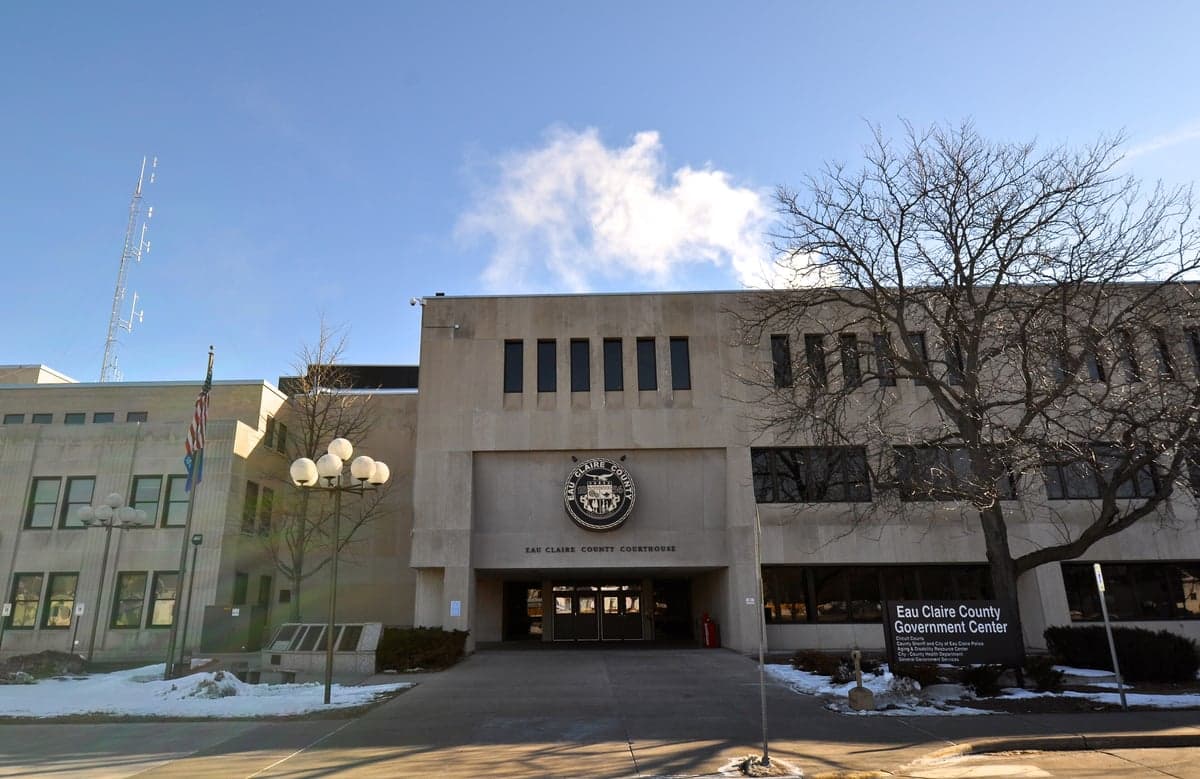
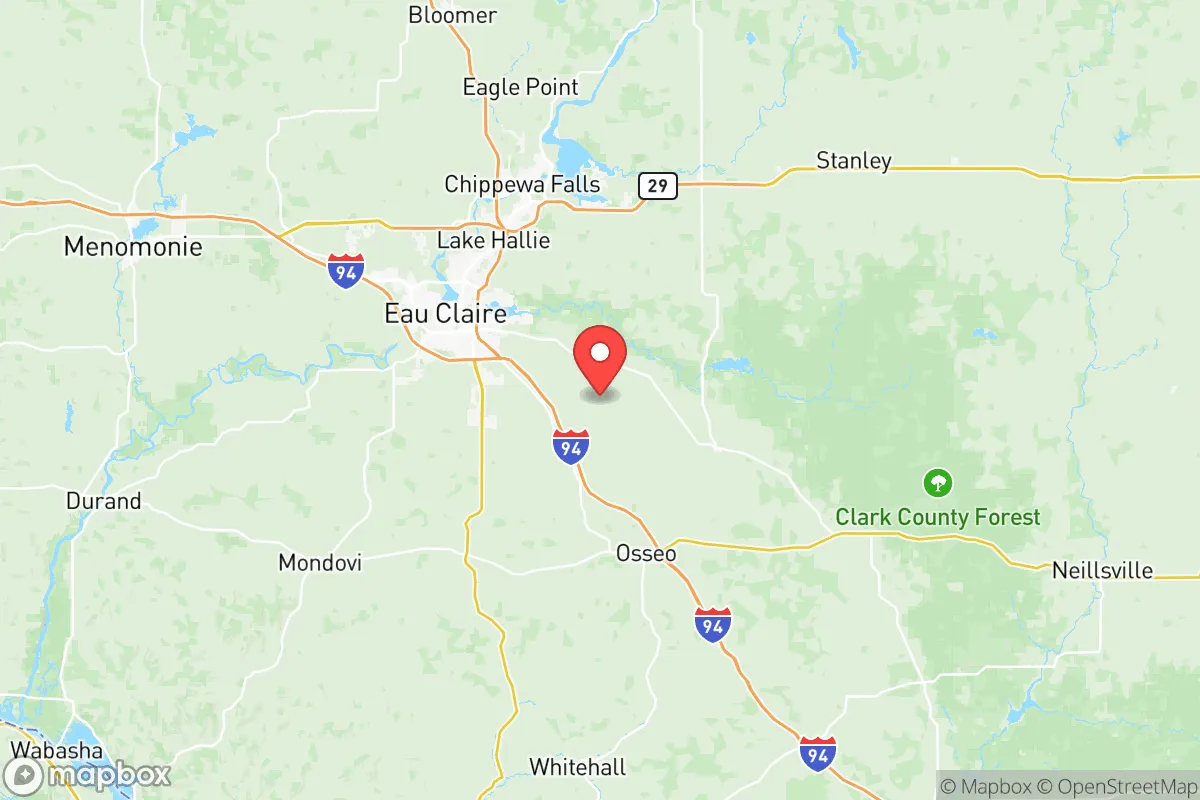
Eau Claire County has shifted from a reliable blue anchor in western Wisconsin to a genuine battleground, currently carrying a Cook PVI of R+3 while the state as a whole sits at EVEN. That rightward drift is real, but it's not uniform across the county — the city of Eau Claire itself, anchored by the University of Wisconsin-Eau Claire campus and a growing downtown, still votes solidly Democratic, while the surrounding townships and smaller communities like Altoona, Lake Hallie, and Fall Creek have moved decisively red over the past decade. The result is a county that feels politically split right down the middle, with the outcome of any given election often determined by turnout in a handful of swing precincts around the city's edges.
How it compares
Wisconsin's statewide PVI of EVEN reflects its status as the ultimate toss-up state, but Eau Claire County's R+3 rating puts it slightly to the right of that — a notable shift from the 2000s and early 2010s, when the county often voted more Democratic than the state average. Back in 2012, Barack Obama carried Eau Claire County by about 8 points; by 2020, Donald Trump won it by roughly 2 points. That swing of roughly 10 points mirrors what happened across much of western Wisconsin, but it's especially stark here because the city of Eau Claire itself hasn't flipped — it's the surrounding rural and exurban areas that have pulled the county rightward. Compare that to neighboring Dunn County (home to Menomonie), which has a similar urban-rural split but leans slightly bluer, or Chippewa County to the east, which is more consistently red. The county's political identity now sits somewhere between the liberal stronghold of the city and the conservative countryside, making it a microcosm of Wisconsin's broader polarization.
What this means for residents
For conservative residents, the county's rightward tilt means they're no longer a permanent minority in local elections — Republicans now hold a majority on the county board, and candidates who align with the GOP can win countywide races, especially in the townships and smaller municipalities. For liberal residents, the city of Eau Claire remains a reliable blue base, and the presence of the university and a growing creative class means progressive policies still have strong local support, particularly on issues like environmental protection and public transit. In practice, this split means that whoever controls the state legislature and governor's office has outsized influence on what actually happens here — local ordinances on things like short-term rentals or solar panel siting can pass in the city but face resistance at the county level, creating a patchwork of rules that residents navigate depending on which side of the city limits they live on.
Culturally, the divide shows up in everyday life. The city of Eau Claire has a vibrant arts scene, farmers' markets, and a bike-friendly downtown that feels distinctly progressive, while towns like Augusta, Fairchild, and Osseo are more likely to have church suppers, gun shops, and Trump flags on pickup trucks. The county's political identity is still evolving — the 2024 election will be a real test of whether the R+3 lean holds or if the city's growing population can pull the county back toward the center. For now, it's a place where both sides feel they have a fighting chance, which is about as Wisconsin as it gets.

State Political ClimatePolitical Climate in Wisconsin
State Political AnalysisPolitical Environment in the State
Wisconsin is the ultimate swing state, and I mean that in the most literal sense. With a Cook Partisan Voting Index of EVEN, it’s a perfect 50/50 battleground that has flipped from blue to red and back again over the last two decades. The state voted for Barack Obama twice, then flipped to Donald Trump in 2016 by less than 23,000 votes, then flipped back to Joe Biden in 2020 by about 20,000 votes. That razor-thin margin tells you everything: Wisconsin is decided by the suburbs of Milwaukee and the rural counties in the Driftless Region, not by Madison or Milwaukee alone. For a relocator, this means your vote genuinely matters here, but it also means the political conversation is constant and often heated.
Urban vs. rural divide
The political map of Wisconsin is a textbook case of the urban-rural split. The two big blue anchors are Milwaukee and Madison. Milwaukee County, home to the state’s largest city, consistently delivers massive Democratic margins — think 70-30 or wider — driven by union households, Black voters, and a strong progressive base. Madison, the state capital and home to the University of Wisconsin, is even more liberal, routinely voting 80-20 Democratic. Those two counties alone generate enough votes to keep Democrats competitive statewide. On the flip side, the rural and exurban counties are deeply red. Waukesha County, just west of Milwaukee, is the Republican stronghold — it’s the kind of place where GOP candidates routinely win by 30 points. Ozaukee and Washington counties round out the "WOW" counties (Waukesha, Ozaukee, Washington) that form the Republican firewall. Then you have the vast rural stretches: Marathon County (Wausau), Brown County (Green Bay), and the western Wisconsin counties along the Mississippi River like Pierce and St. Croix. These areas have been trending redder over the past decade, especially as the Democratic base has concentrated in the cities. The real battlegrounds are the suburban and exurban counties like Brown and Racine, which can swing either way depending on the cycle. If you’re moving to Wisconsin, your political experience will be radically different depending on whether you land in Madison, a WOW county suburb, or a small town in the Northwoods.
Policy environment
Wisconsin’s policy environment is a mixed bag that reflects its divided government. The state has a flat income tax rate of 4.4% as of 2026, down from 7.65% a decade ago, thanks to Republican-led tax cuts. Property taxes are moderate — about 1.6% of home value on average — but they vary significantly by district. The state has a right-to-work law (passed in 2015) and is a "shall-issue" state for concealed carry permits, with no permit required for open carry. On education, Wisconsin has a robust school choice program: the Milwaukee Parental Choice Program is one of the oldest and largest in the nation, and the state expanded voucher programs statewide under Governor Scott Walker. The University of Wisconsin system is a major asset, but it’s been under political pressure, with debates over tenure, free speech, and diversity initiatives. Healthcare policy is a flashpoint: Wisconsin did not expand Medicaid under the Affordable Care Act, leaving a coverage gap for about 80,000 low-income adults. Election laws are relatively moderate — no-excuse absentee voting is allowed, but voter ID is required. The state has a nonpartisan redistricting commission? No, actually — Wisconsin is one of the most gerrymandered states in the country, with maps drawn by the Republican legislature in 2011 that have been heavily criticized for entrenching GOP control even when Democrats win statewide races.
Recent policy direction
The last five years have seen Wisconsin lurch rightward on several fronts, even as the state remains evenly split. In 2023, the Republican legislature passed a slate of bills that Governor Tony Evers vetoed, including a 14-week abortion ban, a ban on gender-affirming care for minors, and a bill requiring schools to notify parents if a student changes their name or pronouns. On guns, Wisconsin is a "shall-issue" state with no waiting period, no universal background checks, and no red flag law — though a red flag bill has been proposed repeatedly. In 2024, the legislature passed a bill allowing permitless concealed carry, but Evers vetoed it. On education, the state expanded school choice funding and passed a law requiring schools to post curriculum materials online for parental review. On voting, the legislature passed a bill banning private grant funding for election administration (the "Zuckerbucks" ban), which Evers allowed to become law. On property rights, Wisconsin has relatively weak eminent domain protections compared to some states, but it does have a strong "right to farm" law that shields agricultural operations from nuisance lawsuits. On privacy, the state has no comprehensive data privacy law, though a bill is pending. On medical freedom, Wisconsin did not impose mask or vaccine mandates during COVID beyond federal requirements, and the legislature passed a bill banning vaccine passports, which Evers signed. The overall direction is conservative on fiscal and education policy, with a strong parental rights bent, but the governor’s veto pen has blocked the most socially conservative legislation.
Civil unrest & political movements
Wisconsin has a history of intense political activism. The 2011 Act 10 protests against Governor Scott Walker’s union bargaining restrictions drew over 100,000 people to the Capitol in Madison — the largest state capitol protests since the Vietnam era. That movement birthed a generation of progressive activists and led to the 2012 recall election, which Walker survived. On the right, the "WOW" counties are a hotbed of grassroots conservative organizing, with groups like the Wisconsin Family Action and the Republican Party of Waukesha County being highly active. The 2020 election aftermath was particularly intense in Wisconsin. The state was ground zero for election integrity debates, with Trump’s campaign challenging results in Milwaukee and Dane counties. The Wisconsin Supreme Court, now with a 4-3 liberal majority after Janet Protasiewicz’s 2023 election, has been a battleground over redistricting and election law. Immigration politics are less visible here than in border states, but there have been flashpoints: in 2024, the city of Madison declared itself a "welcoming city" with limited cooperation with ICE, while the legislature passed a bill requiring local law enforcement to cooperate with federal immigration authorities (vetoed by Evers). You won’t see daily protests in most of the state, but if you move to Madison or Milwaukee, you’ll encounter regular demonstrations on issues from abortion to climate change. In smaller towns, political engagement tends to be more about local school board races and county board meetings than street protests.
Projection
Over the next 5-10 years, Wisconsin is likely to remain a toss-up, but the demographic trends are slowly shifting. The state’s population is aging and growing slowly, with most growth concentrated in the Madison and Milwaukee suburbs. The "WOW" counties are becoming slightly more diverse and slightly less Republican as young professionals move in, but they’re still deeply red. The rural areas are losing population and getting older, which could make them even more Republican. The wild card is the Milwaukee suburbs: places like Wauwatosa and Brookfield are seeing an influx of younger, more moderate voters who could shift the balance. The 2024 election will be a key test — if Democrats can hold the "blue wall" states, Wisconsin stays competitive; if Republicans flip it back, the state could settle into a lean-red pattern. The state Supreme Court’s new liberal majority will likely redraw legislative maps before 2026, which could make the Assembly and Senate more competitive and shift policy. For a relocator, the bottom line is that Wisconsin will remain a place where your vote counts, where the political conversation is inescapable, and where the policy environment can swing dramatically depending on who controls the governor’s mansion and the legislature. If you’re conservative, you’ll find a welcoming home in the suburbs and rural areas, with a legislature that reflects your values. If you’re liberal, you’ll find a vibrant community in Madison and Milwaukee, with a governor who can block the most conservative bills. Either way, you’ll be living in a state that is perpetually in the national spotlight.
For a new resident, the practical takeaway is this: Wisconsin’s political climate is not for the faint of heart. If you’re moving here, expect to hear about politics constantly — at the bar, at the grocery store, at the kids’ soccer game. The state is evenly divided, and people care deeply. That means your vote matters more here than in almost any other state, but it also means you’ll need to be comfortable with neighbors who disagree with you. If you’re looking for a place where politics fades into the background, Wisconsin is not it. But if you want to live in a state where your voice actually counts, where the policy debates are real and consequential, and where you can see the impact of your vote every election cycle, you’ve come to the right place.
* Values derived from national, state, county, city and local statistics and may differ in a specific area. Last updated: 2026-06-30T19:56:03.000Z
Narrative content on this page is AI-generated and may contain mistakes. Verify any details that matter before acting on them.
ReloMaps may earn a commission from affiliate links at no extra cost to you.

